
Ever felt your study session slip into a blur, only to forget half the material by bedtime? You’re not alone – that scattered focus is a common frustration for students and remote workers alike.
What if you could harness the proven Pomodoro timer to give your brain the focused bursts it craves, then let spaced repetition cement those nuggets of knowledge before they fade?
That’s the sweet spot we’re aiming for: marrying the rhythm of 25‑minute work sprints with the science‑backed timing of spaced review. In practice, it looks like a Pomodoro session followed by a quick flash‑card round, then a longer review a day later, a week later, and so on.
Let me walk you through a real‑world example. Sarah, a university student, sets a Pomodoro for her chemistry chapter. At the end of the 25 minutes, instead of scrolling social media, she flips through a set of Anki cards covering the same concepts. The immediate recall reinforces what she just read, turning a passive read into an active memory test.
Meanwhile, Jake, a freelance web developer, uses Pomodoros to code features. After each sprint, he spends his 5‑minute break jotting down key syntax tricks on a spaced‑repetition app. Over the next few days, the app nudges him to review those snippets, so they become second nature when a client asks for a quick fix.
Why does this combo work? Research shows that spaced repetition combats the forgetting curve, while Pomodoro intervals guard against mental fatigue. By alternating focus and review, you keep the brain in an optimal learning state, reducing the need for marathon cram sessions.
Ready to try it yourself? Start by mapping out a study or work block: 25 minutes of deep work, 5 minutes of spaced‑review flashcards, then a short break. Repeat four times, then take a longer 15‑minute pause where you can stretch, hydrate, or even record quick voice notes of insights.
To fine‑tune the review schedule, check out our guide on Designing an Effective Spaced Repetition Schedule. It walks you through setting intervals that align with your personal workflow, whether you’re prepping for finals or juggling multiple client deadlines.
Pro tip: during the 5‑minute review, focus on retrieval, not recognition. Hide the answers, force yourself to recall, then check. That extra effort sharpens memory far more than passive scrolling.
Another tip for remote workers: use the Pomodoro break to log action items in a simple note‑taking app. When the next Pomodoro starts, you’ve already cleared the mental clutter, so you can dive straight back into focused work.
And don’t forget to track your cycles. A quick glance at your Pomodoro timer stats can reveal patterns – maybe you’re most alert in the morning, or perhaps certain subjects need longer review gaps. Adjust accordingly.
So, does blending Pomodoro with spaced repetition feel doable? Absolutely. Start small, experiment with the timing, and let the data guide you. Before you know it, the material sticks, productivity spikes, and those end‑of‑day doubts melt away.
TL;DR
Combine Pomodoro sprints with spaced‑repetition flashcards to lock in knowledge fast, letting 25‑minute focus bursts drive deeper recall and keep you sharp, avoiding the dreaded mental fog.
Set a 5‑minute review after each sprint, schedule longer reviews using the app’s timer stats, and watch productivity and retention rise consistently and significantly.
Step 1: Set Up Pomodoro Intervals
Let me be completely honest: getting into a rhythm that actually sticks is half science, half patience. If you’ve tried marathon study sessions only to crash mid‑afternoon, you’re not alone.
If you’re wondering how to combine pomodoro and spaced repetition in a real‑world study routine, this is the place to start.
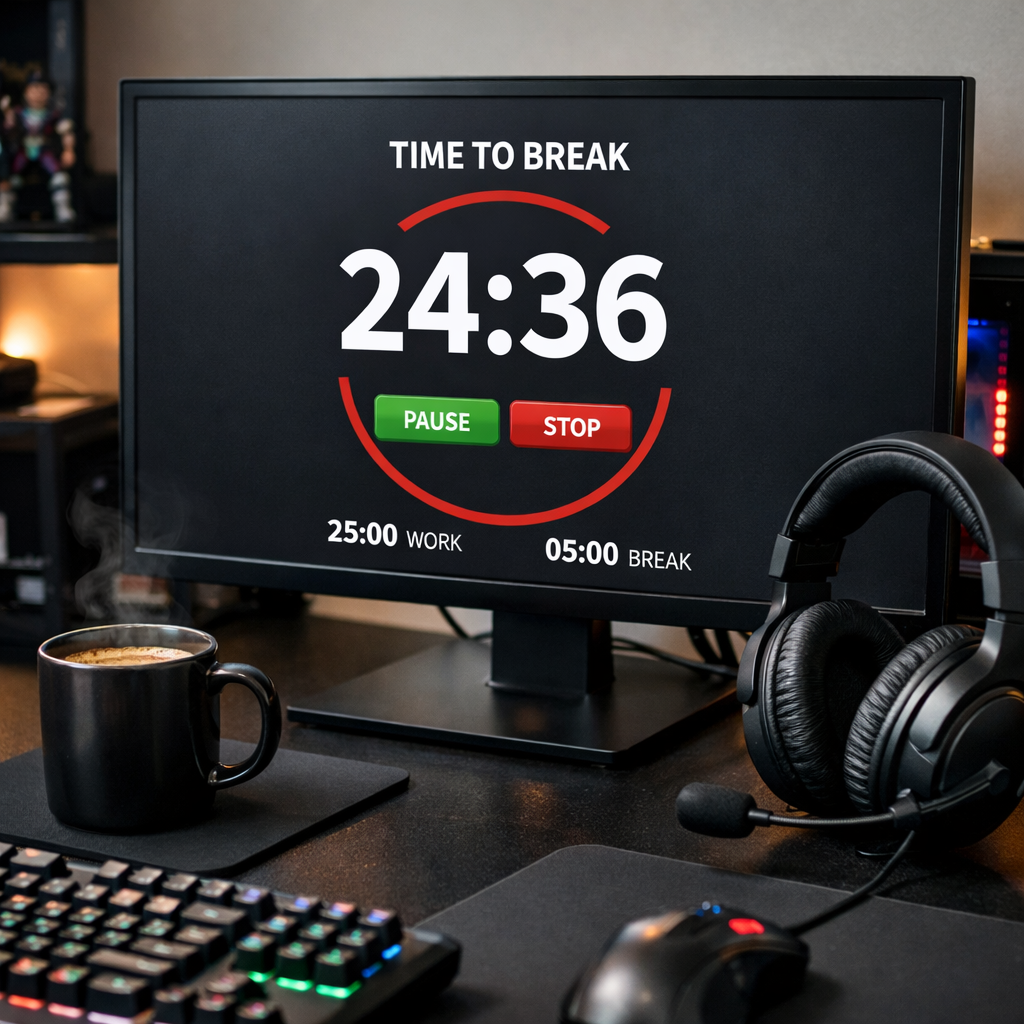
Here’s how to start: pick a focused window of 25 minutes and start a timer. After the sprint, take a 5‑minute break to reset. During that break you can jot a quick note, glance at a flashcard, or stretch—whatever clears your mind. With Focus Keeper, you can predefine this 25/5 pattern so you don’t have to think about the numbers every day.
And yes, the rhythm matters. Short, intense bursts help you soldier through tough chapters—chemistry equations, programming logic, you name it—without the brain fog of long cram sessions. You’ll train your brain to expect a reset after each sprint, which makes it easier to dive back in. So, what should you do next?
First, set a default: 25 minutes of deep work, 5 minutes of quick review. Build four such rounds, then take a longer break. This is the backbone of the setup stage and the part that makes spaced repetition feel natural later on.
During the 5‑minute breaks, switch from passive scrolling to active recall. Flip through a deck of flashcards or a few quick prompts on your spaced repetition app. The goal is retrieval practice, not recognition. If you’re using a tool like Focus Keeper, you can sync the timer with your flashcard review so each sprint ends with an actionable micro‑review.
Next, make a plan for how long you’ll keep this up. Consistency beats intensity. Even if you only manage two Pomodoro cycles on days you’re busy, you’re still making progress. And yes, you’ll be surprised how quickly this becomes your default routine.
So, does this really work? The simple answer is yes—when you pair the rhythm with deliberate recall, you’re building a durable memory trace.
In our experience, Focus Keeper makes this setup easy by letting you lock a Pomodoro template that automatically triggers a quick 5‑minute review after each sprint.
If you’re hammering through stats for a statistics class, or refining a prototype for a client project, this cadence scales. You start small and grow comfortable, then the routine begins to look after itself.
For a quick takeaway, think of the rhythm this way: set it and forget it. The timer becomes your accountability partner, and the 5‑minute break becomes your mini‑review session. Your focus will thank you.
Below is a visual you can imagine as you set this up. It’s a reminder that pomodoro isn’t just about ticking clocks; it’s about building a sustainable learning loop that combines timed focus with spaced recall.

Step 2: Identify Spaced Repetition Items
Now that your Pomodoro timer is ticking, the next question is: which bits of what you just studied actually deserve a second look? That’s the heart of step 2 – picking the right items to feed into your spaced‑repetition deck.
Start with the “golden nuggets”
After a 25‑minute sprint, skim your notes and highlight anything that felt fuzzy, any term you had to look up, or a formula you only half‑remembered. Those are the cards that will give you the biggest boost when you review them later.
For students, that might be a chemistry reaction mechanism; for remote developers, a new API status code; for freelancers, a client‑specific workflow shortcut. The key is to be specific – instead of “React hooks”, write “useEffect cleanup pattern”.
Does it sound like a lot? Trust me, you only need 5‑10 items per Pomodoro to keep the review bite‑sized.
Turn raw material into flashcards
Take each highlighted nugget and ask yourself: what’s the simplest prompt that forces you to retrieve the answer? A good prompt is a question, a fill‑in‑the‑blank, or a code snippet with a missing line.
Example: Prompt – “What HTTP status code signals ‘Unauthorized’?” Answer – “401”.
If you’re learning a language, the prompt could be the foreign word and the answer the translation. HeyLama breaks this down nicely in its guide to spaced repetition spaced repetition basics, showing why active recall beats passive rereading.
Prioritise by forgetting curve
Research tells us that we forget most of what we learn within a day unless we review it just before the memory fades. That’s the forgetting curve in action. By feeding the items you’re most likely to forget into the next Pomodoro’s 5‑minute review, you’re essentially “closing the gap” before it widens.
RemNote explains how the algorithm schedules cards when the chance of forgetting hits roughly 10 % how spaced repetition works. You don’t need the app to follow the principle – just aim for a quick “today, tomorrow, week” pattern.
Quick checklist for each Pomodoro
- Mark 1‑2 concepts that felt shaky.
- Write a clear prompt for each.
- Tag them as “today” for the immediate 5‑minute review.
- Schedule a “tomorrow” and “week‑later” reminder in your calendar or app.
Table: What to pull into your deck
| Item type | Why it belongs in review | Quick tip |
|---|---|---|
| Key definition or term | Often confused with similar concepts | Use a fill‑in‑the‑blank prompt. |
| Formula or code snippet | Requires exact recall for problem‑solving | Hide one line and ask for it. |
| Process step or workflow | Sequence matters for execution | Ask “What’s the third step?” |
Pro tip: if you use Focus Keeper’s built‑in stats, glance at the “most reviewed topics” chart after each day. Those spikes tell you exactly which cards need a tighter review schedule, letting you adjust intervals on the fly.
Once you’ve built this tiny deck, pop it into the 5‑minute slot that follows your Pomodoro. You’ll notice that the act of retrieving the answer feels a little effortful – that’s the sweet spot where memory strengthens.
And here’s a little secret: you don’t have to create a brand‑new card every sprint. If a concept survived three reviews with ease, downgrade its priority or move it to a “monthly” slot. This keeps your daily load light and your long‑term recall sharp.
So, what should you do next? Grab a sticky note, jot down the three items that tripped you up in this session, turn them into prompts, and slot them into your next 5‑minute review. That’s step 2 done, and you’re ready to let the spacing effect do the heavy lifting.
Step 3: Integrate Pomodoro with Flashcard Reviews
Alright, you’ve already set the timer and you’ve pulled the nuggets that tripped you up. Now it’s time to stitch those two pieces together so the 5‑minute break becomes a memory‑boosting sprint instead of a coffee run.
Set up the review slot
When the Pomodoro dings, don’t scramble to check your phone. Keep a dedicated flashcard deck open – whether it’s Anki, Quizlet, or the built‑in Focus Keeper review pane. The moment you switch, you’re still in the same mental mode: “I just finished a focused burst, now I’m going to test what I just learned.” That tiny context switch is what makes the recall effort feel just hard enough to strengthen the memory.
For students, it might look like opening a chemistry deck right after a 25‑minute read of reaction mechanisms. For remote developers, it could be pulling a code‑snippet deck the instant you finish a feature branch. The key is to make the flashcard app the first thing you click, not a later after‑thought.
Pick the right cards
Only the items you marked in Step 2 belong here. Grab the 3‑5 prompts you wrote, shuffle them, and run through them one by one. Use the “type‑in‑answer” mode instead of multiple‑choice – the extra effort triggers deeper encoding.
Don’t try to cram ten cards into five minutes; you’ll end up skimming and the brain won’t register the effort. If a card feels too easy, set its interval to “later” and focus on the tougher ones. In our experience, a 70‑30 split – 70% effort, 30% easy – keeps the session productive without burning out.
Keep the flow smooth
While you’re typing answers, keep the Pomodoro timer running in the background. If you finish early, use the spare seconds to write a quick note about why the answer mattered. That tiny reflection cements the link between the concept and its real‑world use.
And if you run out of time, no worries. Just mark the unfinished card as “review today” and let the spaced‑repetition algorithm bring it back tomorrow. The system is forgiving; the consistency matters more than perfection.
Fine‑tune over time
After a week of cycles, glance at your review stats. You’ll start to see patterns – maybe you breeze through syntax questions but stumble on algorithmic reasoning. Adjust the card tags accordingly: move the easy ones to a “weekly” bucket and create new prompts for the sticky topics.
Remote workers often discover that the biggest gain comes from pairing Pomodoro sprints with “action‑item” cards – short prompts like “What’s the next step in the client onboarding flow?” This turns a productivity technique into a double‑edged sword that sharpens both focus and procedural memory.
Freelancers juggling multiple projects can set up separate decks for each client and switch decks at the end of each Pomodoro. That way the brain gets a natural context reset, and you avoid mixing up requirements between gigs.
Finally, remember the rhythm: 25‑minute focus → 5‑minute active recall → short break → repeat. If you ever feel the recall part dragging, shrink the card set or lengthen the break by a minute. The system is elastic; you’re the one tuning the tempo.
So, what’s the next move? Grab your flashcard app, line up the three prompts you wrote after the last sprint, and let the timer guide you straight into a quick retrieval round. That’s the sweet spot where Pomodoro meets spaced repetition, and you’ll start noticing concepts sticking without the dreaded end‑of‑day “what did I even learn?” feeling.
Step 4: Use Digital Tools to Automate the Process
Now that you’ve got the rhythm down, the real magic happens when you let software do the grunt work. Imagine a system that starts your next Pomodoro the moment you finish a review, or nudges you with the right flashcards at just the right moment – that’s what we call automation, and it’s the missing link in how to combine pomodoro and spaced repetition.

First, pick tools that play nicely together. You already use Focus Keeper for the timer; pair it with a flashcard platform that offers an API or Zapier integration – think Anki, Quizlet, or any app that lets you push new cards via a webhook. The goal isn’t to collect every fancy feature, just a reliable bridge that moves data without you lifting a finger.
Why Zapier? Because it talks to hundreds of apps and lets you create “if this, then that” flows in minutes. Set a trigger – the end of a Pomodoro cycle – and an action – add today’s review cards to your deck or move them to a “ready” queue. If you prefer a native solution, many spaced‑repetition apps now have built‑in Pomodoro timers; you can enable the “auto‑add” option and let the app handle the hand‑off.
Here’s a quick checklist you can copy‑paste into your favorite notes app:
- Connect Focus Keeper to Zapier (or use the app’s webhooks).
- Choose the flashcard service as the action endpoint.
- Map the “card content” fields from your Pomodoro notes to the flashcard template.
- Test the flow with a single card – you should see it appear instantly after the timer dings.
Once the connection is live, you’ll notice the timer automatically opening your deck as soon as the break begins. No more scrambling to find the right file; the system nudges you with a pop‑up that says “Review 3 cards now.” That tiny prompt is enough to keep the habit strong, especially for freelancers juggling multiple client decks.
For remote workers, add a second layer: a calendar event that marks the “long‑term review” slot. Zapier can also create a Google Calendar entry for tomorrow, next week, and a month later, pulling the same card IDs each time. When the reminder pops up, you simply hit “review” and the app updates the interval based on your answer – the classic spaced‑repetition algorithm running in the background.
What about students who prefer a single‑device workflow? Many use Anki’s “anki-connect” plugin, which listens for HTTP requests. A tiny script on your laptop watches the Focus Keeper log file; when it sees a completed Pomodoro, it calls the plugin to add the day’s cards. The whole loop runs in under five seconds, leaving you free to stretch, sip coffee, or glance at your notes.
Automation isn’t a set‑it‑and‑forget‑it magic wand, though. You still need to audit the data flow every week. Open your flashcard app’s statistics page and look for cards that never moved out of the “today” bucket. Those are the sticky concepts that need a stronger prompt or a shorter interval. Adjust the Zapier filter or tweak the card wording, and the system will self‑correct over time.
Does this feel overwhelming? Start small. Connect just the timer to one deck, run it for three days, and note how much smoother the transition feels. Then add the calendar reminder. Each addition builds confidence, and before you know it you have a fully automated learning engine that keeps your focus high and your memory sharp.
Remember, the purpose of automation is to remove friction, not to add another layer of complexity. Keep your workflows as simple as a 25‑minute sprint: trigger, action, review, repeat. When the process becomes invisible, you’ll find more mental bandwidth for the actual work you love.
Step 5: Track Progress and Adjust Your Schedule
Now that your Pomodoro‑flashcard loop is humming, the real test is whether the data matches what you actually remember. If you’re staring at a stats screen and wondering why some cards feel “sticky” while others vanish after one review, you’re in the right place.
First thing’s first: open the analytics view in your spaced‑repetition app. Most tools show a simple table – card, last review date, interval, and a success‑rate bar. Those little percentages are gold. They tell you exactly where your brain is lagging.
Spot the lagging cards
Look for any item that sits in the “today” or “due soon” bucket for more than two cycles. That usually means the prompt isn’t specific enough, or the concept is still fuzzy. A quick fix is to rewrite the question to force active recall – turn a vague “Explain X” into “What’s the first step of X?”
Does this happen often? You’ll know the moment you see a card lingering for three Pomodoros straight. It’s a sign to either shorten the interval or add a mnemonic.
Use a weekly audit checklist
- Pull the “review overdue” list every Sunday.
- Mark cards with a success rate below 70%.
- Adjust their tags to “review tomorrow” and add a note about why they trip you up.
This tiny ritual takes less than five minutes, but it prevents the dreaded “I thought I knew that” surprise during a test or a client demo.
And what about the Pomodoro side of the equation? Open Focus Keeper’s session log (you’ll find a CSV export under Settings). Spot patterns like “most breaks taken after the third sprint” or “drop in focus after 2 pm.” Those clues tell you when to shift your work blocks.
For example, if you notice a dip at 3 pm, try moving a 25‑minute sprint to the morning and using the afternoon for lighter review cards. Your brain’s natural energy curve will thank you.
Adjust intervals with the 2357 method
One proven framework is the 2357 spacing pattern – review after 2 days, then 3, then 5, then 7. It mirrors the forgetting curve and keeps material fresh without overloading you. If a card consistently hits a 70% success mark, keep the current interval. If it falls below, pull it back into the 2‑day slot.
That advice lines up with what researchers at Birmingham City University explain about spaced repetition and the forgetting curve spaced repetition research. They stress reviewing “just before you’re most likely to forget” – exactly what the 2357 steps aim to do.
So, how do you make that happen automatically? In Zapier, add a filter that checks a card’s success‑rate field. If it’s under 70, the zap creates a “short‑interval” tag for the next day. If it’s above, the zap lets the app’s native algorithm push it to the longer slot. You end up with a self‑correcting schedule that mirrors your real‑time performance.
Turn numbers into habits
Data is only useful when you act on it. Here’s a quick habit loop you can copy‑paste into your notes app:
- End of each Pomodoro: glance at the timer’s “focus score” (if you enable it).
- After four cycles: open the flashcard stats page.
- Spend two minutes flagging any card below 70%.
- Update its interval or rewrite the prompt.
It may sound like a lot, but after a week you’ll notice the routine becomes second nature. The brain loves consistency, and the habit loop reinforces the very behaviours you’re trying to build.
What about remote workers juggling multiple projects? Create a separate deck for each client, then run the same audit each Friday. You’ll see which project’s terminology needs more reinforcement and can allocate an extra 5‑minute Pomodoro on Monday to close that gap.
Students, try a “exam‑week sprint”: double the review frequency for cards flagged as weak, then taper back once the exam passes. Freelancers can do the same after a big deliverable – a quick post‑project audit keeps the knowledge fresh for the next pitch.
Bottom line: tracking isn’t a one‑time thing; it’s a feedback loop. The moment you see a metric dip, you tweak the schedule, run another Pomodoro, and watch the number climb again. That cycle of measure‑adjust‑repeat is the engine that turns a simple timer‑card combo into a high‑performance learning system.
Ready to put it into practice? Grab your Focus Keeper stats, pull the overdue cards list, and make three tiny adjustments today. You’ll feel the difference by tomorrow’s sprint, and the momentum will keep rolling.
Step 6: Optimize Your Schedule for Long‑Term Retention
Now that you’ve built the Pomodoro‑flashcard loop, the next challenge is making sure the knowledge sticks months, not just days, which is the core of how to combine pomodoro and spaced repetition for long‑term retention.
Ever wonder why some cards feel “fresh” even after a week while others slip back into the fog? The secret is timing – you need a schedule that nudges you just before the forgetting curve starts to dip.
Map the natural rhythm of your workday
Start by looking at your Focus Keeper stats for the past week. Do you notice a productivity peak at 9 am? A slump around 3 pm? Align your longest Pomodoro blocks with the high‑energy windows, and reserve your quick 5‑minute review sprints for lower‑energy slots.
For students, that might mean a 25‑minute study sprint at 10 am followed by a 5‑minute card run, then a short break. For remote workers, schedule a mid‑morning sprint, a lunchtime “review burst”, and an afternoon wrap‑up sprint.
Introduce spaced‑review checkpoints
Instead of reviewing every card every day, adopt a tiered cadence: “today”, “tomorrow”, “in 3 days”, “in 7 days”, then “in 14 days”. The first two reviews reinforce the fresh material, the 3‑day gap lets the brain consolidate, and the later intervals cement long‑term recall.
Here’s a quick cheat‑sheet you can copy into your notes app:
- Day 0 – Pomodoro + 5‑minute retrieval.
- Day 1 – Quick 3‑card review during the next break.
- Day 3 – Add the same cards to a dedicated “3‑day” deck.
- Day 7 – Run a 7‑day review sprint (5 minutes max).
- Day 14 – Final check‑in before you archive the card.
Notice how each step fits inside a Pomodoro break or a short stand‑alone sprint. That way you never feel like you’re adding extra work – you’re just reshuffling the same 5‑minute window.
Automate the interval triggers
Most spaced‑repetition apps let you tag cards with a due‑date. In our experience, pairing those tags with Focus Keeper’s session log makes the whole process invisible. After you finish a Pomodoro, the app can automatically pull any “today” cards into the review pane.
If you’re comfortable with Zapier, set a “new Pomodoro completed” trigger that adds a “review tomorrow” tag to all cards you just answered. The next day, a second Zap moves those cards into the “3‑day” queue. You end up with a self‑adjusting schedule that mirrors your real‑time performance.
Weekly audit – the feedback loop
Every Sunday, spend five minutes scanning two places: your Focus Keeper session summary and the spaced‑repetition stats page. Look for any card whose success rate is below 70 % or any Pomodoro block where your focus score dipped.
For each weak card, do one of three things:
- Rewrite the prompt to make it more specific.
- Pull it into tomorrow’s “review” batch.
- Add a mnemonic or visual cue to the note.
For each low‑focus block, consider shifting that sprint to a different time of day or shortening the interval to 20 minutes. Small tweaks compound into big gains over weeks.
Personalize the cadence
Remember, the “2357” pattern (2‑day, 3‑day, 5‑day, 7‑day) is a solid baseline, but it isn’t set in stone. If you’re a freelancer juggling multiple clients, you might create separate decks and apply the pattern only to the most critical client‑specific cards.
Busy professionals often find that a “project‑end review” works better – after closing a major deliverable, schedule a 10‑minute Pomodoro just to run through the top three takeaways. That single sprint can transform a one‑off learning moment into a repeatable habit.
And students? Try a “exam‑week sprint”: double the review frequency (today, tomorrow, day 2, day 4) for any card flagged as “weak” in the week leading up to the test. After the exam, taper back to the standard schedule.
So, what’s the next move?
Grab your Focus Keeper app, open the “stats” tab, and note the two times of day when you’re most alert. Then, open your flashcard deck and tag today’s cards with “review tomorrow”. Finally, add a calendar reminder for the 3‑day and 7‑day checkpoints. Do that once, and you’ve built a schedule that keeps knowledge alive long after the Pomodoro timer stops ticking.
FAQ
What’s the simplest way to start mixing Pomodoro with spaced‑repetition?
First, set a 25‑minute focus block in Focus Keeper. When the timer dings, jump straight to a tiny flashcard deck you built during the sprint. Keep the review to five minutes – just enough to pull the cards, type the answer, and check yourself. That quick hand‑off trains your brain to retrieve right after you’ve been in deep work mode.
Doing it this way feels natural, because you’re still in the same mental groove. No extra apps, no complicated setup, just a timer and a few cards.
How long should my Pomodoro intervals be when I’m using flashcards?
If you’re new to the combo, stick with the classic 25/5 split. It gives you a solid chunk of focus and a short window for active recall. Power users often stretch to 30 minutes for dense material, then keep the break at five minutes for the card sprint.
The key is consistency – your brain learns to expect “work, then recall”. If you notice fatigue creeping in, shave a few minutes off the work block and add a minute to the break so the review stays relaxed.
Can I use the same deck for different projects or subjects?
Absolutely. Tag each card with a project label – “client‑X”, “organic‑chem”, “UX‑copy”. When a Pomodoro ends, filter the deck by the tag that matches the work you just finished. That way you never mix up a React hook question with a marketing metric.
Keeping the decks separate but within one app also lets you see which area needs the most repeats. If “client‑X” cards stay in the “today” bucket for three cycles, you know that client’s workflow deserves extra attention.
How do I know when to adjust the review intervals?
Watch the success rate in your spaced‑repetition app. When a card drops below about 70 %, move it back to a shorter interval – today or tomorrow instead of the 3‑day slot. Conversely, if you’re breezing through a card with 90 %+ accuracy for a week, push it to the 7‑day or even 14‑day queue.
Another cue is the Focus Keeper stats: if your focus score dips during a sprint that follows a tough review, it might mean you’re over‑reviewing that topic. Trim the interval and let the brain recover.
What should I do if I miss a Pomodoro or a review session?
Don’t stress. Add the missed cards to a “catch‑up” pile and schedule a quick 5‑minute sprint later in the day. If you miss an entire day, treat the overdue cards as “today” items in the next Pomodoro – the extra effort actually reinforces the memory.
Consistency beats perfection, so a few hiccups won’t derail the whole system. Just make sure the backlog never grows larger than what you can squeeze into one short review block.
Are there any tools that automate the hand‑off between timer and cards?
In our experience, Focus Keeper’s export feature can feed directly into most flashcard apps via CSV. Export the list of “today” cards at the end of a session, import them into Anki or Quizlet, and the next Pomodoro automatically pulls them up.
If you’re comfortable with Zapier, you can set a “timer finished” trigger that adds a new tag to the cards you just created. The tag then shows up in the review pane the moment the break starts, making the switch virtually seamless.
How can I track my progress without feeling overwhelmed?
Pick two metrics: Pomodoro focus score and flashcard success rate. Spend the last two minutes of every fourth sprint glancing at both dashboards. Jot down one insight – maybe “need more code‑snippet cards” or “breaks are better after 3 pm”.
That tiny habit turns raw numbers into actionable tweaks, and you’ll see improvement without drowning in data. Over time the pattern becomes obvious: high focus scores + steady success rates = a rhythm that works for you.
Conclusion
So, after all the tweaking, what’s the bottom line on how to combine pomodoro and spaced repetition?
You’ve built a rhythm: a focused sprint, a quick recall burst, a short break, then repeat.
If the timer feels too tight, shave a minute or two – the system is elastic, not a prison.
What matters most is the feedback loop: glance at your focus score, spot a lagging card, tweak the interval, and you’ll see the numbers climb.
Students can keep their chemistry formulas fresh, freelancers can lock in client‑specific steps, and remote workers can avoid mixing up API codes – all without adding extra hours to the day.
Remember, the magic isn’t in the tool itself but in the habit of pairing a 25‑minute block with a 5‑minute retrieval sprint.
A quick audit every Sunday – check your Pomodoro stats and flashcard success rates – keeps the system honest and lets you fine‑tune before fatigue sets in.
And if you ever miss a session, don’t panic; just treat the missed cards as today’s batch in the next sprint – the extra effort actually reinforces memory.
In short, combine the timer and the cards, watch the data, adjust the cadence, and you’ll turn scattered study sessions into a steady, high‑output learning engine.
Ready to give it a spin? Open Focus Keeper, fire up your first Pomodoro, and let the next five minutes be your memory‑boost checkpoint.