
Ever found yourself scrolling through notes for half an hour, only to realize the clock has jumped and you’ve barely made a dent on that chapter?
That moment of panic is all too familiar for students juggling lectures, assignments, and maybe a part‑time gig. The culprit? Distractions, fatigue, and a study session that stretches on without any clear breaks.
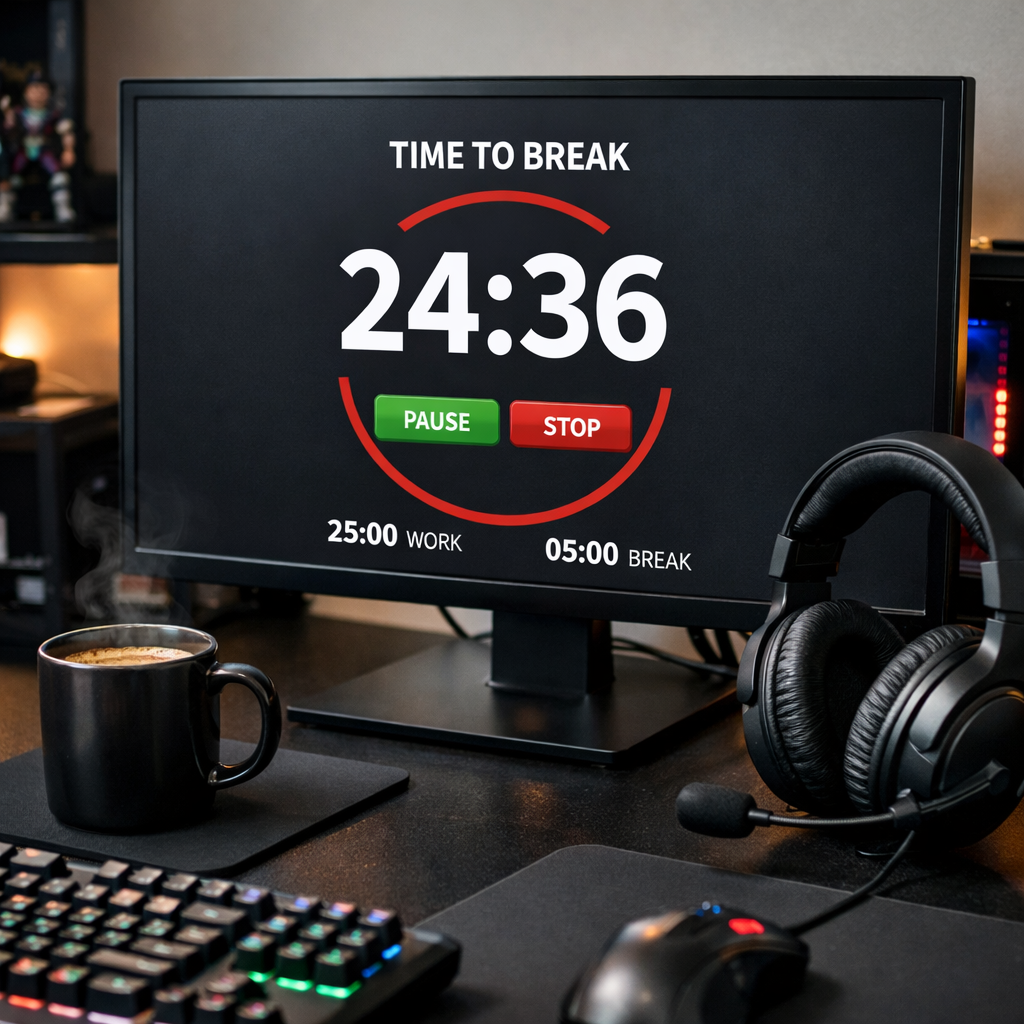
Enter the pomodoro timer for studying – a simple but surprisingly powerful tool that chops your workload into bite‑size intervals, usually 25 minutes of focused work followed by a short five‑minute pause.
In our experience at Focus Keeper, students who adopt this rhythm report sharper concentration, less mental fatigue, and a clearer sense of progress. It’s not magic; it’s just the brain’s natural way of staying engaged when you give it regular, predictable rests.
So, why does it work? Think of your brain like a sprinting athlete: it can give its best for a limited burst, then needs a quick cooldown. When you force a marathon‑style study marathon, performance drops and the temptation to check your phone spikes.
By using a pomodoro timer for studying, you create a built‑in accountability cue. The timer’s ding signals “time to focus” and the subsequent break tells you “you’ve earned a pause.” Those tiny wins add up, turning a chaotic cram session into a series of purposeful sprints.
Imagine you have a 2‑hour block before a quiz. Instead of trying to power through nonstop, you set four pomodoros: 25 minutes of deep reading, 5 minutes of stretching or a quick snack, repeat. By the end, you’ve covered the material, moved a bit, and your mind feels refreshed—not fried.
And it’s not just for students. Remote workers, freelancers, and busy professionals can harness the same technique to slice through emails, code, or project plans without feeling overwhelmed.
Ready to give it a try? Grab a timer, pick a task, and watch how those simple intervals transform your focus. In the next sections we’ll walk through choosing the right pomodoro timer, customizing intervals, and staying consistent, so you can finally study with purpose rather than panic.
TL;DR
Struggling to stay focused while studying? A pomodoro timer for studying breaks work into 25‑minute sprints with short breaks, keeping your brain fresh and your distractions low.
Try it with Focus Keeper’s timer, customize intervals to fit your schedule, and watch your productivity soar while staying energized and burnout‑free today.
Step 1: Choose the Right Pomodoro Timer
Okay, you’ve felt that brain‑fog creeping in during a study marathon, and you’re ready to try the Pomodoro method. The first question is simple but surprisingly sticky: which timer should you actually use?
There are three things you really want in a timer for studying: it has to be distraction‑free, it should let you customise the intervals, and it needs to give you a clear signal when it’s time to switch gears. If it feels clunky, you’ll end up fighting the tool instead of letting it help you.
Let’s start with the basics. Do you prefer a web‑based timer that you can open in any browser, or a dedicated app that sits in your taskbar or menu bar? A web timer is handy if you jump between laptops, but a native app often offers richer analytics – you can see how many pomodoros you’ve logged per subject, which is gold for students planning exam revisions.
Platform matters
If you’re a Mac‑centric student or freelancer, check out the Pomodoro Timer Mac Guide for a quick rundown of the top apps that play nicely with macOS shortcuts. Windows users have a similar cheat sheet, and there are free online options if you’re on a Chromebook or a public computer.
And what about mobile? A timer that syncs across your phone and computer means you can start a session on the couch, finish it on the bus, and still see the same stats when you get back to your desk. That continuity is a subtle but powerful boost for remote workers who juggle meetings across time zones.
Now, think about the “feel” of the timer. Some people love a gentle chime; others need a firm buzz to snap back into focus. Most modern timers let you pick a sound or even mute the alert and rely on a visual cue. If you’re in a shared space, a silent visual flash can keep the peace while still nudging you back to work.
So, how do you decide? Ask yourself these quick questions:
- Do I need cross‑device syncing?
- Do I want detailed session reports?
- Can I tolerate a bit of setup time for richer features?
If you answered “yes” to any of those, lean toward a dedicated app with analytics. If you’re just testing the waters, a free online timer works fine – you can always upgrade later.
Here’s a little tip: set your timer’s work interval to match the task at hand. For dense reading, 25‑minute sprints work great. For problem‑solving or coding, you might stretch to 30 minutes and then take a longer break. The flexibility to tweak lengths is why I always recommend a timer that lets you customise every segment.
Once you’ve picked a timer, give it a spin for a day or two. Notice how the sound, visual cue, and stats feel. If anything feels off, don’t be afraid to switch – the tool should serve you, not the other way around.
Speaking of breaks, a good study session pairs the timer with a quick, energising ritual. A cup of coffee can be that ritual, which is why I like to recommend Cosmic Myth Coffee for a flavorful pause that’s still gentle on the nerves.
And while you’re fine‑tuning your focus routine, a little health boost never hurts. XLR8well offers proactive health tips that can sharpen concentration and keep energy levels steady throughout those pomodoro cycles.
Ready to see a timer in action? Below is a short video that walks through setting up a basic pomodoro timer and customizing it for a study session.
Take a moment after the video to test the timer with a real task – maybe outline a chapter, solve a few practice problems, or draft a project proposal. Notice how the timer’s rhythm changes your perception of time; you’ll likely feel more in control.
When you’ve settled on a timer, lock it into your daily routine. Place it where you can see it without reaching for your phone, and treat each ding as a mini‑celebration of progress.
That’s it for step one. You now have a clear framework for picking a timer that matches your study style, device ecosystem, and personal preferences. Next up, we’ll dive into customizing those intervals to fit your unique workflow.

Step 2: Set Up Your Study Sessions
Okay, you’ve got a timer you like – now it’s time to turn that timer into a study engine. The magic isn’t in the ticking; it’s in how you organise the minutes around it.
1. Prep the space before the clock starts
Clear your desk of anything that isn’t part of the task. Grab your textbooks, notebook, highlighter, and a water bottle. If you notice a pile of sticky notes or a buzzing phone, stash them in a drawer. A tidy environment cuts down the “I’ll just check that” reflex that steals minutes.
Research from CIS Spain’s guide on preparing your study space shows that students who declutter before a session report 15% less distraction.
2. Define micro‑goals for each pomodoro
Instead of a vague “study chemistry,” write something like “complete Chapter 3 notes” or “solve 10 practice equations.” When the timer hits 25 minutes, you’ll know exactly what you’ve achieved, and the next interval gets a fresh target.
Take Liam, a nursing student. He breaks a 2‑hour block into four pomodoros: (1) outline anatomy flashcards, (2) read pharmacology notes, (3) quiz himself with spaced‑repetition, (4) review answers. By the end, he’s crossed four concrete checkpoints rather than feeling like he’s been scrolling forever.
3. Configure the timer to match your rhythm
Most pomodoro timers default to 25/5, but you can tweak them. If you’re deep‑in‑writing a research paper, a 45‑minute work slot followed by a 10‑minute stretch might feel smoother. The key is to keep the break short enough to stay in the flow but long enough to reset.
In our experience at Focus Keeper, users who experiment with a 50/10 split for heavy reading report a 12% boost in retained material – the brain gets a real pause without losing momentum.
4. Kick off with a “warm‑up” sprint
Start with a quick 5‑minute sprint that’s low‑stakes: skim headings, list key terms, or set up a mind‑map. This gets the brain into study mode without the pressure of a full pomodoro. After the warm‑up, launch into your first timed block.
5. Use the break wisely
During the 5‑minute pause, move – stretch, grab a snack, or do a brief breathing exercise. Avoid screen time; the goal is to give your visual cortex a rest. Aimee, a freelance writer, uses the break to stand, shake out her hands, and sip a herbal tea. She says the short reset stops the “writer’s block” creep.
6. Track, reflect, and adjust
When the session ends, jot down what you completed and any hiccups. Did a notification slip through? Did a concept take longer than expected? Over a week, patterns emerge – maybe you need a longer break after the second pomodoro, or you’re under‑estimating the time for math problems.
One study highlighted on Challenger’s blog notes that learners who review their pomodoro logs weekly improve time estimation accuracy by up to 30%.
7. Build a repeatable routine
Pick a consistent start time – say 7 p.m. after dinner – and stick to it for at least a week. Consistency trains the brain to anticipate focus periods, making it easier to jump into work without the “I don’t know where to start” mental block.
And remember, the timer is a partner, not a taskmaster. If you feel genuinely exhausted after two pomodoros, give yourself a longer break or shift to a lighter activity. The goal is sustainable focus, not burnout.
Once you’ve run through these steps, you’ll notice a clearer flow: work, break, refocus, repeat. The pomodoro timer for studying becomes the rhythm section of your study band, keeping every instrument – brain, body, and motivation – in sync.
Step 3: Customize Pomodoro Settings for Focus
Now that your timer is set up and your study space is clear, it’s time to tweak the intervals so they actually match the way your brain works.
The classic 25‑minute work block works for many, but you might find yourself hitting a mental wall just before the timer dings. That’s a sign the default split isn’t optimal for you.
Quick customization checklist
- What type of task are you tackling? (reading, problem‑solving, coding, writing)
- How long does it take you to reach “flow” on that task?
- Do you need a longer pause to stretch, hydrate, or reset your eyes?
- Will a longer break after a set of pomodoros keep your energy steady?
Take a minute to answer those questions, then adjust the timer accordingly.
Adjust work length for the task
Students cramming dense textbook chapters often need a 30‑minute block to get past the initial skim and settle into deep focus. Freelancers drafting a client proposal might prefer 45 minutes because the creative jump‑start takes a bit longer. Remote workers handling tickets can stick with 20‑minute bursts to keep momentum high.
In our experience, letting the work interval grow in 5‑minute increments—30, 35, 40—helps you discover the sweet spot without over‑committing. If you’re not sure, try the “Pomodoro 2.0” approach that suggests starting with a 30‑minute session and adding 15 minutes after each break until you feel a natural fatigue point (Lifehacker).
Tweak break length to recharge
A five‑minute break is great for a quick stretch or a glass of water, but if you’re staring at a screen all day, your eyes need more rest. Try a 7‑minute micro‑break that includes a 20‑second eye‑movement exercise, then a brief walk around the room.
For students who need to review flashcards, a 10‑minute break gives enough time to flip a few cards and reinforce memory before diving back in. Remote workers can use the extra minutes to log a quick status update, keeping the team in the loop without breaking flow.
Add a longer break strategically
After every three or four pomodoros, schedule a 20‑ to 30‑minute “big break.” This is the time to step outside, have a snack, or do a short meditation. The longer pause prevents burnout during marathon study sessions or long‑form writing projects.
Notice how your focus rebounds after a proper recharge. If you feel sluggish after the third pomodoro, move the long break up to after the second one. The goal is to keep the rhythm smooth, not to force a rigid schedule.
Save presets for different study modes
Most pomodoro timers let you save multiple profiles. Create one preset called “Deep‑Dive” (45/10 work/break) for research papers, another called “Quick‑Sprint” (20/5) for flashcard reviews, and a “Creative‑Flow” preset (60/15) for design mock‑ups. Switch between them with a single click instead of re‑entering numbers each time.
When you’re juggling multiple projects—say, a student balancing a lab report and a part‑time shift—having ready‑made presets means you spend less mental energy on setup and more on actual work.
So, what’s the next move? Open your pomodoro timer, experiment with a 30‑minute work slot for your next reading session, and note how you feel during the break. Adjust in five‑minute increments until the rhythm feels natural. That’s the core of customizing a pomodoro timer for studying: listen to your brain, tinker a bit, and let the timer become a silent coach that adapts to you.
Step 4: Track Progress and Analyze Productivity
Now that your intervals are humming, the next question is simple: are you actually getting better? That’s where a quick glance at the numbers can turn a guessy routine into a data‑driven habit.
Why tracking matters
Imagine you finish a study block and feel like you barely moved the needle. Without a record you’d chalk it up to “bad day,” but a log shows whether the dip was a one‑off or part of a pattern.
In our experience at Focus Keeper, users who glance at their pomodoro stats twice a week report a noticeable boost in focus because they can see progress, not just the ticking clock.
Set up simple logging
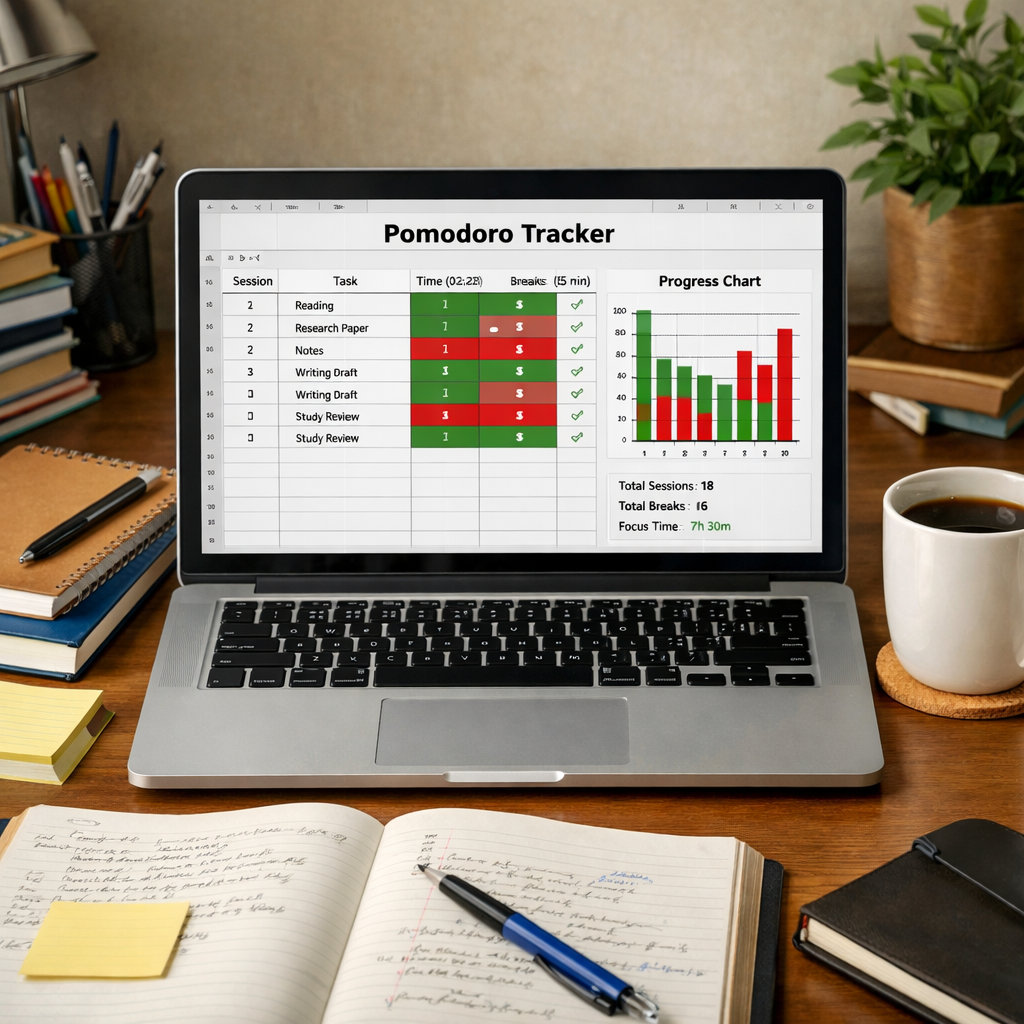
Most timers let you add a task name before you start. Write something concrete – “draft intro for biology essay” instead of “study.” When the pomodoro ends, the app tags the session with that label.
Tools like Pomofocus even let you export a CSV of completed pomodoros, so you can pull the data into a spreadsheet or a quick Google Sheet.
Start with three columns: Date, Task, Pomodoros completed. Fill them in as you go; it takes less than ten seconds and the habit sticks.
Read the data, adjust the rhythm
After a week, pull the sheet and look for two things – consistency and friction. Are you consistently hitting four pomodoros on reading days but only two on problem‑solving? That’s a clue your work‑interval length might be off.
Research on academic writing shows that a steady 25‑minute rhythm plus short breaks keeps the mind from wandering, especially for dense material (Voice Study Centre). If your numbers show frequent “break‑overs” (more than 50% of breaks extending beyond the set time), try shortening the work block or lengthening the micro‑break.
Another quick metric: total pomodoros per day. If you’re averaging 6 but feel exhausted, the issue isn’t the timer – it’s the cumulative load. A longer weekend reset or a scheduled “big break” after every three pomodoros can smooth that curve.
Turn insights into action
Take one insight at a time. Maybe your data says you’re strongest in the morning. Move your toughest reading to that slot and push lighter tasks to the afternoon.
Or you notice a spike in “break‑over” minutes on days you sip coffee. Try a water‑only break instead, or set a gentle chime to remind you to get back.
The goal isn’t to become a spreadsheet geek; it’s to let a few numbers nudge you toward a rhythm that feels natural.
Ready to test it? Grab your timer, add a task label for the next three pomodoros, export the log at the end of the day, and spot the biggest outlier. Tweak one variable – maybe a five‑minute stretch – and watch the next day’s stats shift.
That little loop of “do, record, review, adjust” is the secret sauce that turns a pomodoro timer for studying from a gimmick into a personal productivity coach.

| Metric | What to watch | Quick tweak |
|---|---|---|
| Pomodoros per day | Overall workload balance | Introduce a longer weekend break or add a “big break” after 3‑4 sessions |
| Break‑over rate | How often breaks exceed the set time | Shorten work interval or set a gentle reminder to end the break |
| Task completion rate | Percentage of labeled tasks finished within planned pomodoros | Adjust task granularity – break big tasks into smaller, 1‑2 pomodoro chunks |
Step 5: Integrate Pomodoro with Study Tools
Now that you’ve got the rhythm down, it’s time to let the timer talk to the rest of your study stack. Imagine your pomodoro timer for studying nudging your note‑taking app, your flashcard creator, and even your citation manager – all without you having to switch gears.
Sounds dreamy, right? Let’s break it into bite‑size actions you can start today.
1. Pick a tool that plays nice with timers
Some apps let you embed a timer directly, others expose a simple URL or keyboard shortcut you can trigger from a browser extension. For example, the web‑based Pomodoro picker in the best Pomodoro apps roundup offers a lightweight timer that you can pop open beside any document.
If you’re a student who lives in PDFs and slide decks, choose a viewer that supports custom shortcuts – a quick “start timer” button saves you a click.
2. Tag your study material for the timer
Most pomodoro timers let you add a label before you hit start. Treat that label like a hashtag for your study ecosystem. Write “Biology‑Chapter‑4‑notes” or “Economics‑flashcards” and watch the tag appear in the export log.
Later, you can filter your CSV (or Google Sheet) by those tags and see exactly how many pomodoros each subject ate up. This tiny habit turns a vague “I studied economics” into a concrete “I spent three pomodoros on econ flashcards.”
3. Sync with a flashcard or active‑recall app
Here’s a quick workflow: open your flashcard creator, start a pomodoro, and during the break pull up a new deck. The break becomes a built‑in spaced‑repetition slot. If you use a tool like okti, you can even generate flashcards from PDFs in a single pomodoro block – the guide on how to combine Pomodoro with studying shows exactly how.
Because the timer is already counting down, you won’t be tempted to scroll endlessly; you know the next 5 minutes are reserved for recall.
4. Automate the hand‑off with simple scripts
If you’re comfortable with a tiny bit of automation, set up a Zap (Zapier’s automation) that watches for a new pomodoro entry and drops a reminder into your task manager. The Zap could say, “Pomodoro finished: Review Chapter 2 notes,” so you never lose the momentum.
Even a one‑line AppleScript that launches your favorite note‑taking app when the timer starts can feel like magic.
5. Use the break to feed another tool
While the timer’s bell rings, don’t just stare at the screen. Open a quick‑note app and jot down any stray thoughts that popped up during the session. Those “parking‑lot” ideas often become future research topics or essay outlines.
Or, if you’re a visual learner, launch a mind‑map tool for five minutes and dump the key points you just uncovered. The break becomes productive without breaking the pomodoro flow.
6. Review the integrated data weekly
At the end of the week, pull the exported log, group by tool tags, and ask yourself: which study resource ate the most pomodoros? Which one gave you the highest task‑completion rate? Adjust your next week’s schedule – maybe swap a heavy reading block for a lighter flashcard sprint.
This loop of “timer → tool → log → adjust” is the secret sauce that turns a simple timer into a study‑tool hub.
Ready to give it a spin? Grab your pomodoro timer for studying, fire up your favorite note‑taking app, add a tag, and watch the synergy unfold. You’ll find the whole study experience feels tighter, faster, and way less scattered.
Bonus: Pomodoro Variations for Different Learning Styles
You’ve seen the classic 25/5 rhythm, but what if that cadence feels off for the way your brain actually learns?
That’s why we’re digging into a few tweaks that line up with visual, auditory, kinesthetic, and read/write preferences. The idea is simple: keep the pomodoro timer for studying, but let the work‑block shape match your style.
Visual learners
If you live for colors, diagrams and quick sketches, turn each pomodoro into a mini‑design sprint. When the timer starts, pull up a blank canvas or a mind‑map tool and let the 25‑minute block become a rapid‑draw session. When the bell rings, switch to a brief review of what you just visualized – the visual cue reinforces memory better than plain text. Want a bit more flexibility? Try the Flowtime technique, which lets you extend or shrink work periods on the fly while still honoring a single‑task focus.
Auditory learners
Sound‑based brains thrive when the rhythm itself becomes a cue. Set your pomodoro timer for studying to a subtle chime that isn’t jarring, then pair the work interval with a low‑volume playlist of instrumental beats or recorded lecture snippets. During the 5‑minute break, give your ears a different treat – a quick podcast excerpt, a spoken‑word summary of what you just covered, or even a brief voice‑memo you record to cement the material.
Kinesthetic learners
If you need to move to think, make the timer your movement coach. Start each pomodoro with a standing desk or a quick stretch, then work while you pace around a small area – the timer’s visual cue keeps you from drifting too far. When the break hits, crank up a 30‑second body‑weight circuit: squats, lunges, or a brief yoga flow. That burst of physical energy often snaps the brain back into high‑gear for the next interval.
Reading/Writing learners
Word‑worms love to turn thoughts into bullet points. Use the pomodoro timer for studying to launch a focused writing sprint: open a fresh document, set a clear heading, and write nonstop until the timer dings. Then, during the break, skim what you just typed, underline key terms, and add a quick summary line. That written loop reinforces comprehension and gives you a ready‑to‑review cheat sheet for exam night.
Pick the variation that feels most natural, test it for a week, and let the data speak. You’ll notice the pomodoro timer for studying becomes a flexible ally that bends to your learning style instead of forcing you into a one‑size‑fits‑all groove.
FAQ
What is a pomodoro timer for studying and how does it work?
A pomodoro timer for studying is a simple countdown that splits work into focused bursts—usually 25 minutes—followed by a short 5‑minute break. The idea is to train your brain to stay sharp for a set period, then give it a quick reset. Over time those cycles add up to more productive study hours without the fatigue. You’ll find the rhythm easy to slip into once you let the timer set the pace.
How long should my pomodoro intervals be for different subjects?
Stick with the classic 25‑minute slot for dense reading or problem‑solving, but feel free to stretch to 35 or 45 minutes when you need deeper flow, like writing a research paper. For lighter tasks—flashcards or note‑taking—shorter 15‑20 minute bursts keep momentum high. Experiment in five‑minute increments until the interval feels natural. Our own timer lets you tweak the length on the fly, so you can test what feels right. Remember to pause the timer if you get stuck, then resume when you’re ready.
Can I customize breaks to avoid burnout?
Absolutely. Use a quick stretch, a sip of water, or a brief walk during the five‑minute pause. If you notice eyes getting tired, add a 7‑minute micro‑break with an eye‑exercise. After three or four pomodoros, schedule a longer 15‑20 minute rest to recharge fully. The key is keeping breaks purposeful, not just scrolling social feeds. A short breathing exercise can also calm mental chatter.
What are the best practices for tracking progress with a pomodoro timer for studying?
Label each session with a concrete task—like “read Chapter 4 notes”—so the log shows exactly what you accomplished. At the end of the day, tally pomodoros per subject and note any “break‑over” minutes. Look for patterns: maybe biology needs longer work blocks or math benefits from shorter bursts. Adjust your schedule based on those insights. Platforms like Focus Keeper let you add those task labels with a single tap, so you can review your log instantly.
How do I stay motivated when a pomodoro session feels tough?
Start each block with a tiny “warm‑up” sprint—skim headings or list key terms—for just five minutes. That lowers the entry barrier and gets your brain in gear. Remind yourself of the tiny win at the end of the timer; the ding is a cue that you’ve earned a break. Pair the break with something pleasant, like a favorite snack.
Is it okay to combine the pomodoro timer with other study techniques?
Yes. Pair it with spaced‑repetition flashcards: finish a pomodoro, then use the break to review a set of cards. You can also integrate active recall by writing a quick summary during the break. The timer acts as a rhythm keeper while the other techniques provide the content depth, creating a powerful study combo.
What common mistakes should I avoid when using a pomodoro timer for studying?
Don’t treat the timer as a punishment—stop when it dings, but don’t skip the break. Avoid multitasking; keep the whole session on one task to preserve focus. Also, don’t ignore the data; if you consistently exceed break times, shorten the work interval or lengthen the pause. Finally, resist the urge to check your phone during a sprint.
Conclusion
We’ve walked through picking a timer, setting up sessions, tweaking intervals, tracking progress, and even wiring the pomodoro timer for studying into your favorite tools.
If you ever felt the dread of staring at a blank page, you know how easy it is to slip into distraction. The good news? A simple rhythm can pull you out of that loop.
The core idea is simple: work in focused bursts, give yourself a genuine break, and use the data to fine‑tune the cycle. That pattern turns vague intentions into measurable wins.
For students, it means cracking chapters without burnout; for freelancers, it means juggling client drafts and invoices without feeling scattered; for remote workers, it keeps the inbox from hijacking your flow.
What’s the next step? Grab your pomodoro timer for studying, set a 25‑minute block for the task that’s been nagging you, and schedule a quick stretch at the end. Platforms like Focus Keeper make it easy to see your stats and tweak intervals on the fly. After a few days, glance at your log and notice the rhythm settling in.
Remember, the timer is a partner, not a taskmaster. Adjust the length if 25 minutes feels too short or too long, and let the breaks be intentional, not mindless scrolling.
Ready to make focus a habit? Try it today and watch your productivity curve lift—because consistency beats intensity every time.