
Ever found yourself staring at a textbook, mind wandering, and wondering why the minutes feel like hours? You’re not alone—most students hit that wall after just 20‑30 minutes of nonstop reading.
That’s exactly where the pomodoro technique for students steps in. By chopping study time into focused bursts followed by short breaks, you trick your brain into staying sharp, kind of like a sprint instead of a marathon. In practice, a 25‑minute pomodoro feels surprisingly doable, and the five‑minute pause lets the mental fog lift.
Think about Maya (not a real name, just a typical sophomore) who used to cram all night before exams. She switched to three pomodoros of algebra, took a quick walk, then returned for another round. Her grades jumped from a C average to solid Bs, and she stopped feeling exhausted. That little rhythm helped her retain more info because each break gave her brain a chance to consolidate.
What we’ve seen work best is pairing pomodoros with specific study tactics. For example, during the first 5 minutes of a session, skim the chapter headings and write down three questions you want answered. Spend the next 20 minutes hunting answers, then use the break to jot quick notes or stretch. This structure keeps the session purposeful and prevents aimless scrolling.
If you’re juggling multiple subjects, try the “cluster” method: line up two related topics back‑to‑back, like physics and chemistry, and allocate a pomodoro to each. The quick switch keeps things fresh, and the short break acts as a mental reset. A university survey in 2025 showed that students who used clustered pomodoros reported a 15 % increase in study efficiency compared to traditional marathon sessions.
Of course, a quiet environment is key. One simple upgrade is using quality earplugs to block out dorm chatter or street noise. How to pick the right earplugs for a distraction‑free study space can make a big difference.
Finally, if you need a hassle‑free timer, our own Focus Keeper app lets you set custom intervals, track completed pomodoros, and even see weekly trends. You can read more about the fundamentals in our What is pomodoro technique basics? – Focuskeeper Glossary page, which breaks down the core components step by step, keeping you on track.
TL;DR
The pomodoro technique for students breaks study time into focused 25‑minute bursts with short breaks, turning long‑haul reading into manageable sprints that boost concentration and retention. Using a simple timer app like Focus Keeper helps you track intervals, stay on track, and quickly finish more chapters without daily, ever‑lasting burnout.
Step 1: Set Up Your Pomodoro Timer
Alright, let’s get your study space ready for the pomodoro technique for students. First thing’s first – you need a timer that you can trust not to glitch in the middle of a 25‑minute sprint. If you’re on a phone, the built‑in clock works, but most of us prefer something that feels a bit more dedicated.
Pick a timer that fits your workflow
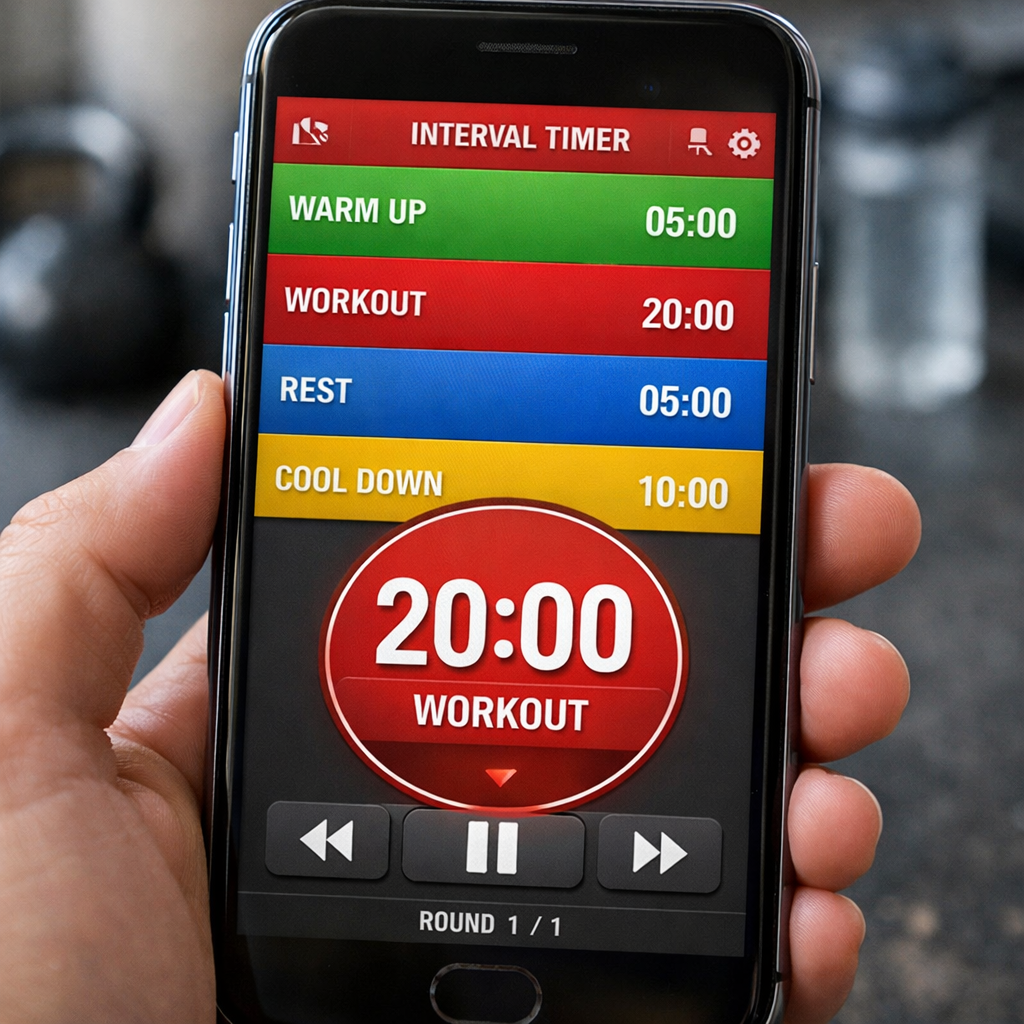
There are three routes most students take: a simple kitchen timer, a phone app, or a web‑based timer you can pop up on your laptop. The kitchen timer is cheap and tactile – you hear the click, you know the time’s up. A phone app gives you notifications and lets you log how many pomodoros you’ve completed; that’s where a tool like Focus Keeper shines, but any solid app will do.
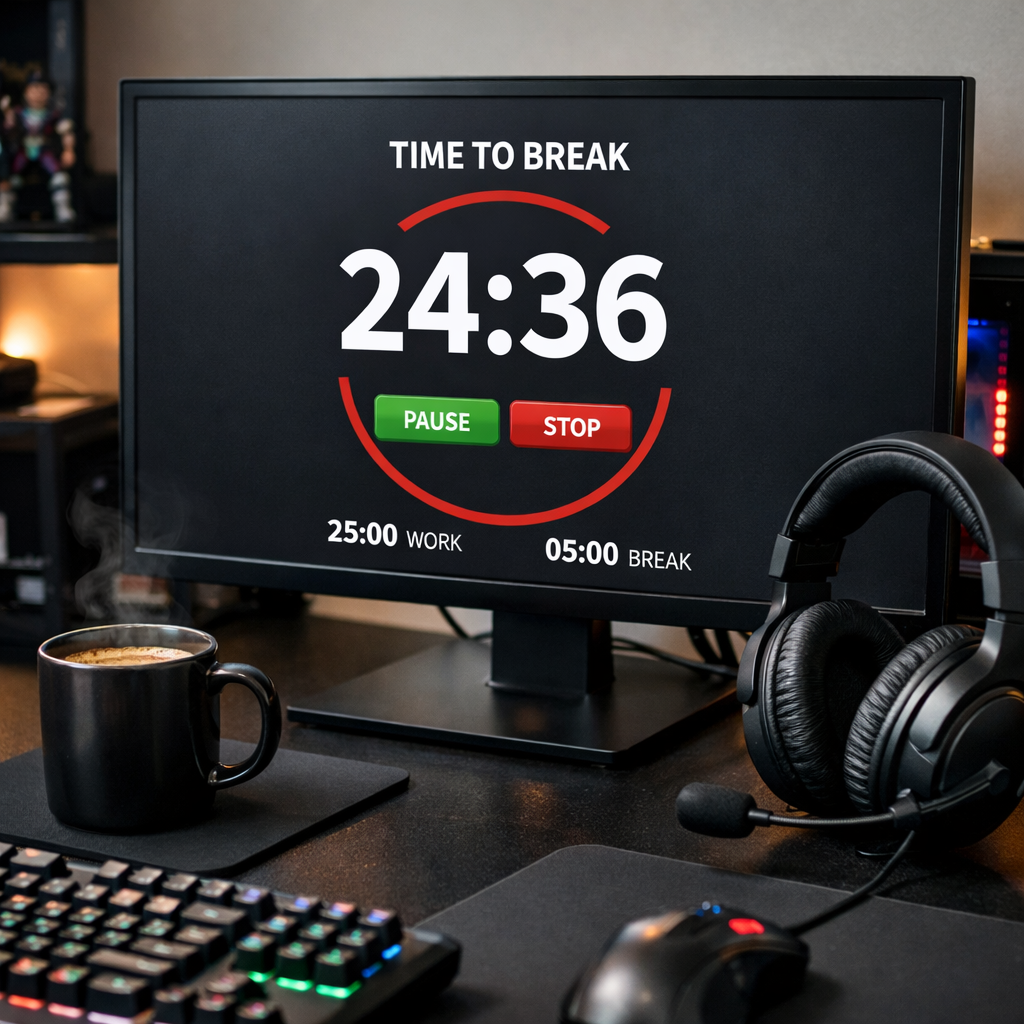
And if you’re the kind of person who likes a visual cue, try a web timer that shows a growing circle or a progress bar. The key is consistency – once you pick one, stick with it for at least a week before swapping.
Set the default intervals
Standard pomodoros are 25 minutes of work followed by a 5‑minute break. You can adjust that if 25 feels too short or too long, but keep the break proportionate. For example, 45 minutes of study and a 10‑minute pause works for longer reading sessions.
Here’s a quick checklist you can copy onto a sticky note:
- Work interval: 25 min (or your preferred length)
- Short break: 5 min
- After four cycles, take a longer break – 15‑30 min
Write it down, set it in your timer, and you’ll have a repeatable rhythm without having to think about it each time.
Sync your timer with your study plan
Before you start, glance at your syllabus or to‑do list. Choose a specific goal for the first pomodoro – maybe “read and annotate pages 10‑15 of Chapter 3” or “solve ten algebra problems.” Having a concrete target keeps the mind focused and makes the timer feel like a teammate rather than a metronome.
Does it feel weird to announce your goal out loud? Try it. Saying, “I’m diving into Chapter 3 for the next 25 minutes,” tricks your brain into a mini‑commitment.
And when the timer dings, celebrate the win. Even a tiny fist pump signals progress and primes you for the next round.
Now, let’s see the whole thing in action. Below is a short video that walks you through setting up a basic pomodoro timer on a popular free app. It’s a visual cue that can help you avoid the “where did I click?” moment.
Take a breather after the video and think about what you’ll tackle in your first session. While you’re at it, consider a little self‑care ritual during those 5‑minute breaks. A quick splash of lavender soap can reset your senses and keep you from feeling cramped. Check out this guide on the top benefits of lavender soap for a study‑friendly routine: lavender soap benefits.
Another tip: stay hydrated but avoid chugging a huge soda that might crash your energy. A light, natural drink from a wellness site like XL R8 Well can give you a steady boost without the jitters.
Once you’ve set your timer, your goal, and your micro‑ritual, you’re ready to launch the first pomodoro. Hit start, close distracting tabs, and let the countdown do the heavy lifting.
Remember, the whole point isn’t perfection; it’s momentum. If you drift off, reset the timer and jump back in. Over time, those 25‑minute bursts become second nature, and you’ll notice your focus stretching further than you thought possible.

Step 2: Choose the Right Study Tasks
Alright, you’ve got your timer humming. The next puzzle is figuring out exactly what to tackle in each pomodoro. It’s easy to stare at a mountain of notes and wonder, “Where do I even start?” The trick is to slice the mountain into bite‑size chunks that feel doable and keep you moving forward.
Start with a quick brain dump
Grab a fresh piece of paper or a digital note and write down every assignment, reading, or problem set that’s on your radar this week. Don’t worry about order or importance yet – just get it all out of your head. That moment of emptying the mental clutter is surprisingly relieving, and it gives you a clear inventory to work from.
Once it’s on the page, you’ll notice natural groupings: “Chapter 4 flashcards,” “lab report intro,” “essay outline.” Those groupings become your first candidates for pomodoro tasks.
Prioritize by deadline and effort
Now ask yourself two quick questions for each item: When is it due, and how much mental energy will it take? If something is due tomorrow but only needs a quick 15‑minute review, slot it into a short pomodoro right after you finish a longer block. Conversely, a big project that feels overwhelming can be broken into a series of micro‑tasks – research, outline, draft – each getting its own pomodoro.
One helpful trick is the “2‑minute rule”: if you can finish a task in two minutes or less, do it now, then move on to the next pomodoro. It clears the small stuff that would otherwise distract you later.
Match task type to your energy curve
Notice how your focus ebbs and flows throughout the day. Some students find their brain is razor‑sharp first thing in the morning, while others hit their stride after an afternoon coffee. Align the most demanding tasks – like solving complex equations or drafting a thesis paragraph – with your peak energy windows. Use lighter activities – flashcard review, summarising a lecture slide – for the post‑break slots when you’re easing back in.
In our experience at Focus Keeper, users who pair high‑cognitive tasks with their natural focus peaks report fewer mid‑session lapses and a smoother flow between pomodoros.
Give each pomodoro a crystal‑clear goal
Instead of a vague “study biology,” write something like “annotate pages 12‑14 of Chapter 3” or “solve 5 practice problems on osmosis.” The clearer the goal, the less you’ll waste time figuring out what to do once the timer starts. It also makes the quick check‑mark at the end feel rewarding.
When the timer dings, jot a quick note about what you accomplished – a star, a tick, or even a tiny doodle of a tomato. That tiny ritual reinforces progress and keeps the momentum alive.
Build in variety to beat boredom
If you notice the same subject draining you after a few cycles, swap it out for a different type of work. The “cluster” method we mentioned earlier works great here: pair a reading session with a short problem‑solving sprint, then take a break. Your brain gets a reset, and you avoid the dreaded “study slump.”
For more on how to stay focused while juggling assignments, check out Class Tracker’s practical tips for staying focused during assignments. Their advice on high‑quality breaks aligns perfectly with the pomodoro rhythm.
Plan your break activities
Breaks aren’t just “do nothing.” Use them to move your body, hydrate, or glance at a quick flashcard. Avoid scrolling social media – that usually turns a 5‑minute pause into a 30‑minute rabbit hole. Instead, try a mini‑stretch, a sip of water, or a 30‑second walk to the kitchen. The Oregon State University guide on Pomodoro recommends “high quality breaks” that recharge both mind and body here.
After a longer 20‑30 minute break (after four pomodoros), give yourself a bigger reward: a snack, a short chat with a roommate, or a quick episode of your favourite show. Those larger pauses keep the overall study day sustainable.
Review and adjust daily
At the end of each study session, glance back at your task list. Which pomodoros felt smooth? Which felt forced? Jot down a note – “need shorter blocks for chemistry equations” or “break after two pomodoros works better.” Over time you’ll fine‑tune your task selection, making every pomodoro feel purposeful.
Remember, the goal isn’t to cram every minute of the day but to create a rhythm where you’re consistently moving toward your deadlines without burning out. Choose tasks that match your energy, keep goals razor‑sharp, and let the pomodoro technique for students become your personal study soundtrack.
Step 3: Implement Effective Break Strategies
Breaks aren’t optional; they’re the fuel that keeps your brain sharp. You might worry you’re wasting time, but the right breaks actually boost retention and cut fatigue.
Let’s get practical. Here’s how to implement break strategies you can start today, especially if you’re a student juggling classes and assignments.
Why breaks matter
After a solid pomodoro, your brain needs a moment to consolidate what you just learned. Short pauses reset your attention, reduce cognitive load, and prevent the dreaded afternoon brain fog. In 2026, students report sharper recall when breaks are intentional rather than rushed.
So, what should you do next?
Four break strategies that actually recharge your focus
- Short, regular breaks after each pomodoro. A quick five minutes to stand, stretch, or grab a glass of water keeps the next sprint clean and focused.
- Longer breaks after a few cycles. After four pomodoros, take 15-30 minutes to recharge with a snack, a walk, or a quick chat with a roommate. Your energy will thank you later.
- Move your body during breaks. Light activity, like arm circles, a hallway stroll, or a few gentle squats, boosts blood flow and helps you return with more clarity.
- Do a mental reset. Deep breathing, a one-minute journaling note, or a tiny mindfulness moment can reset stress and sharpen focus for the next block.
If you’re worried about losing momentum, try pairing a break with a tiny task, like refilling your water bottle, tidying your desk, or flipping through flashcards. Small wins build momentum and make the rhythm feel automatic.
Plan and track your breaks
In our experience, a well-designed break routine is as important as the study blocks themselves. You can tailor interval lengths to your energy, track completed pomodoros, and spot patterns over the week. A simple log helps you answer: which breaks refresh you best, and when do you start dragging?
Focus Keeper helps you customize break lengths, log each pomodoro, and view weekly trends so you can fine-tune your rhythm. The goal isn’t perfection; it’s a reliable pattern you can count on.
For more concrete break ideas, here’s a handy collection: 26 things to do during Pomodoro breaks. It’s a quick dose of inspiration you can skim between study sessions. 26 ideas for Pomodoro breaks.
Day-by-day example
Imagine you’re studying for a biology quiz in the morning. Start with a 25-minute notes block, a 5-minute walk, a second 25-minute questions block, then a quick 5-minute wrap-up.
Common mistakes to avoid
- Ending breaks by scrolling wastes time and energy.
- Letting breaks run long kills momentum.
Consistency beats perfection. If you’re using Focus Keeper, set a simple 4 pomodoros plan to begin. The key is to start small, adjust, and keep showing up. Let’s try this tomorrow.
Step 4: Track Progress & Adjust Your Sessions
Okay, you’ve got your pomodoros rolling and your breaks feeling just right. The next question most students ask is, “How do I know it’s actually working?” The answer lives in the data you collect – even if it’s just a few scribbles on a notebook.
First off, treat each pomodoro like a tiny experiment. You start, you finish, you note what happened, and then you tweak. It’s the same curiosity you felt the night before a big exam, only now you’re applying it to every 25‑minute sprint.
What to log, and why it matters
In our experience, the simplest logs win. Jot three things after every session: the task you tackled, how focused you felt on a 1‑5 scale, and any interruption that popped up. That three‑column habit takes less than a minute, but over a week you’ll see patterns pop out like constellations.
For example, you might notice a 4‑point focus score on chemistry problems in the morning, but a 2‑point dip when you switch to reading philosophy after lunch. Those spikes tell you where to schedule your toughest subjects.
Need a template to get started? The Emory University guide breaks down the classic six‑step Pomodoro process and even suggests a printable sheet you can adapt here. It’s a solid foundation if you prefer paper over a digital app.
Digital vs. analog – pick what sticks
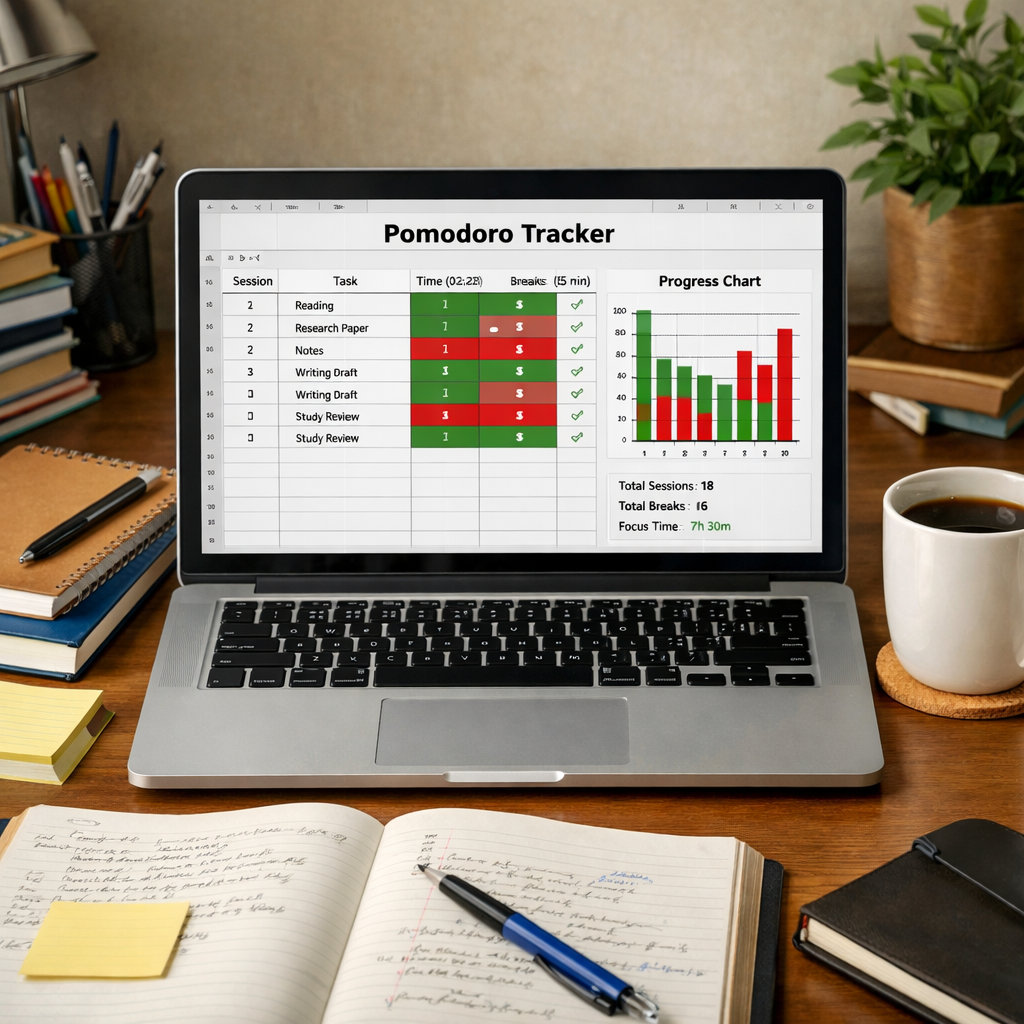
Some students swear by a spreadsheet that auto‑charts completed pomodoros; others love the tactile feel of crossing off a paper list. The key is consistency, not the tool. If you’re already using Focus Keeper, the built‑in log shows you weekly totals and lets you spot a “mid‑day slump” at a glance.
Want a ready‑made digital board? Notion offers a community‑crafted pomodoro tracker you can duplicate here. It syncs with your phone, so you never have to switch apps mid‑study.
Turning data into adjustments
Once you’ve collected a handful of days, ask yourself three quick questions: 1) Which tasks consistently earn a 4‑5 focus rating? 2) When do interruptions spike? 3) Are your break activities truly recharging you?
If the answer to #1 is “biology flashcards,” schedule those during your natural energy peak – maybe right after your first class. If #2 reveals a pattern of “checking emails at 2 pm,” create a dedicated 5‑minute buffer outside of pomodoro time to handle that, keeping your study blocks clean.
And #3? If you discover that scrolling Instagram during breaks leaves you feeling more drained, replace it with a quick stretch or a glass of water. The adjustment feels tiny, but over a semester those micro‑wins add up to a noticeable boost in retention.
Another practical tweak is the “pomodoro length test.” Some students find 20‑minute bursts keep their mind fresher, especially for dense reading. Try a week of 20‑minute sessions, log the focus scores, then compare to your usual 25‑minute baseline. The data will tell you which rhythm syncs best with your brain.
Finally, celebrate the small victories. When you see a row of green checkmarks or a chart trending upward, give yourself a mini reward – a favorite snack, a quick meme break, or a short walk outside. That positive feedback loop reinforces the habit and makes the whole process feel less like work and more like a game you’re winning.

Quick‑reference tracking table
| Tracking Method | What to Log | Quick Insight |
|---|---|---|
| Paper checklist | Task, 1‑5 focus rating, interruption note | Instant visual pattern; no tech needed |
| Focus Keeper app | Pomodoro count, break length, weekly trend | Auto‑charts productivity spikes |
| Notion template | Session date, subject, duration, notes | Customizable view; syncs across devices |
Remember, tracking isn’t about becoming a data‑nerd; it’s about giving your brain the feedback it craves. When you see what works, you can fine‑tune your schedule, keep the momentum flowing, and make every study hour count.
Step 5: Integrate Pomodoro with Your Academic Calendar
Ever felt like your study sessions are fighting against your class timetable? You’re not alone – the clash between lecture times, labs, and social commitments is the reason many students abandon the pomodoro technique for students before they even see a benefit.
What if you could make your calendar do the heavy lifting? Instead of forcing pomodoros into a chaotic day, you line them up with the rhythm of your semester. The result? A study plan that feels as natural as your morning coffee run.
1. Map out every fixed commitment first
Grab your university schedule – lectures, tutorials, labs, even the weekly club meeting you can’t miss. Plot them on a digital calendar (Google Calendar works great) or a paper planner. Give each event a colour so you can see at a glance where the immovable blocks sit.
Do you notice any gaps longer than 30 minutes? Those are your golden windows for pomodoros.
2. Identify your personal energy peaks
Most students hit their focus sweet spot in the first two hours after waking up or after a mid‑day break. Run a quick experiment for a week: log the time of day you feel most alert and note how many pomodoros you comfortably complete. In AcademyNC’s ultimate guide it’s explained that our brains maintain peak concentration for about 25‑30 minutes before attention dips – perfect for a standard pomodoro.
Once you know your peak, earmark those slots for the hardest subjects – calculus, organic chemistry, or any dense reading.
3. Slot pomodoros around the fixed blocks
Take each gap you highlighted and break it into 25‑minute work intervals with 5‑minute breaks. If a gap is 90 minutes, you could fit three pomodoros (25+5+25+5+25) and still have a 5‑minute buffer before the next lecture.
Example: You have a 10 am lecture, a 12 pm lab, and a 2 pm tutorial. Your morning looks like this:
- 7:30‑8:00 – Breakfast + light review (not a pomodoro, just a warm‑up).
- 8:00‑8:25 – Pomodoro: solve physics problem set.
- 8:25‑8:30 – Break: stretch, grab water.
- 8:30‑8:55 – Pomodoro: annotate biology chapter.
- 8:55‑9:00 – Break: quick walk.
- 9:00‑9:25 – Pomodoro: draft outline for history essay.
- 9:25‑9:30 – Break, then prep for lecture.
Notice how the schedule respects the 10 am start time and still gives you three focused bursts.
4. Build in longer “recovery” breaks
After four pomodoros, the technique recommends a 15‑30 minute pause. Treat that as a mini‑study‑day reset – a snack, a short walk, or a quick chat with a roommate. If you have a long gap (say, the afternoon after a lab), turn it into a 2‑hour study block with two cycles of four pomodoros each, separated by a 20‑minute recharge.
5. Use visual cues to keep the flow
Colour‑code pomodoro blocks in your calendar the same way you colour‑coded classes. Green for “high‑energy” subjects, blue for “review” sessions. When you glance at the week, you instantly see where the focus peaks are.
Some students also print a tiny weekly grid and stick it on their desk – a tactile reminder that the day is already organized.
6. Tweak the length when needed
Not every topic fits neatly into 25 minutes. ChallengerCME points out that adjusting intervals – say, 30‑minute pomodoros for deep‑reading or 20‑minute sprints for flashcard drills – can boost retention and keep procrastination at bay. The key is to experiment and record which length yields the highest focus rating.
7. Review and iterate each week
At the end of Sunday, glance at your calendar. Which pomodoros landed on time? Which got cut short by a surprise meeting? Jot a quick note: “Need longer break after chemistry,” or “Move literature review to afternoon.” Over a few weeks you’ll have a custom‑crafted study rhythm that aligns perfectly with your academic obligations.
Quick actionable checklist
- Print or open your semester timetable.
- Highlight every fixed class, lab, or commitment.
- Identify 2‑3 daily energy‑peak windows.
- Fill each free gap with 25‑minute pomodoros, adding 5‑minute breaks.
- After every four pomodoros, schedule a 20‑minute recharge.
- Colour‑code pomodoro blocks for instant visual cues.
- Review weekly, adjust interval length, and note any interruptions.
When you let your academic calendar dictate the rhythm, the pomodoro technique for students becomes less of a forced habit and more of a seamless extension of your day. Give it a try this week – you might just find that the “busy” feeling turns into a well‑orchestrated study jam session.
Step 6: Overcome Common Distractions
Ever sit down for a pomodoro and suddenly the whole world bursts in – a notification ping, a roommate asking about dinner, that meme you just HAVE to scroll through? It’s the classic study‑day storm, and you’re not alone.
First, let’s call out the biggest culprits: phone alerts, noisy environments, and the dreaded “just one more” social media scroll. They feel harmless in the moment, but they hijack the focus spark you built during the previous pomodoro.
1. Create a distraction‑free zone, even in a shared space
Think about the spot where you usually study. Is it a cluttered desk next to a TV? Grab a pair of noise‑blocking earplugs – we’ve seen students swear by them – and set up a visual cue that says, “Do not disturb.” A simple folded towel over the chair or a small “study in progress” sign can do wonders.
If you can’t lock the room, try the “micro‑zone” trick: face a wall, put a blanket over the desk edge, and keep only the essentials (laptop, textbook, timer). The fewer objects, the fewer eyes that wander.
2. Tame the phone without turning it into a prison
Turn off non‑essential notifications before you start. On iOS or Android, the “Do Not Disturb” schedule lets you silence everything except emergency contacts. If you still need a quick reference, move the apps you’ll use for study (like a citation manager) to a separate folder on the home screen.
And here’s a hack we love: set a 5‑minute “buffer” timer on the same app you use for pomodoros. When it dings, you’re allowed one quick glance at messages, then you shut it down and jump back in. It satisfies the urge without derailing the session.
3. Block digital rabbit holes before they start
Browser extensions like StayFocusd or LeechBlock let you blacklist distracting sites for the duration of your pomodoro. If you can’t install extensions (college computers can be locked down), just bookmark a single “study tab” and keep that window open. The visual reminder of a single tab can be surprisingly grounding.
Another low‑tech trick: write down the website you *need* for the task on a sticky note. If you drift to something else, the note acts like a gentle tap on the shoulder: “Hey, remember why you’re here.”
4. Manage the social pull
Roommates, friends, and family mean well, but their timing can shatter your flow. Let them know your study windows in advance – a quick text saying, “I’m in a pomodoro until 11:30, then I’m free for a break,” sets expectations.
If you’re in a dorm hallway, consider using a “focus flag” – a small desk lamp turned on only when you’re in a pomodoro. It’s a visual signal that you’re in a dedicated work mode.
5. Use the break wisely to reset, not to re‑distract
Your 5‑minute break is a power‑up, not a free pass to binge‑watch a series. Stand up, stretch, sip water, or do a quick breathing exercise. Those tiny movements flush out mental fatigue and keep the next pomodoro fresh.
Resist the temptation to grab your phone. If you *must* check messages, set a strict 30‑second timer. When the timer ends, put the phone face‑down and jump back to your work.
6. Build a personal distraction‑audit
After each study block, jot down any interruption that slipped in – “dog bark at 10:12,” “group chat ping at 10:18.” Over a week you’ll spot patterns: maybe the campus bus passes by every hour, or a certain class always triggers a chat burst.
Knowing the pattern lets you pre‑empt it. For example, if the bus noise spikes at 2 pm, shift your pomodoros to 1 pm–2 pm and 3 pm onward.
7. Leverage Focus Keeper’s simple tools
In our experience, the Focus Keeper app makes the “no‑interrupt” rule easier by dimming the screen during a pomodoro and flashing a gentle reminder when the break starts. The visual cue reinforces the habit without feeling like a nag.
Give it a try: set up a custom sound that’s pleasant but distinct, so you don’t have to glance at the screen to know when the timer ends.
So, what’s the next step? Pick one distraction you struggle with most, apply the corresponding hack today, and watch how the next pomodoro feels smoother. The pomodoro technique for students isn’t just about timing; it’s about protecting that precious focus bubble you’ve built. Keep tweaking, stay honest with yourself, and soon the only thing breaking your flow will be a well‑earned high‑five.
Conclusion
We’ve walked through every piece of the pomodoro technique for students, from setting up the timer to tweaking breaks and tracking progress.
So, what does it all mean for you? It means you now have a simple rhythm that turns chaotic study sessions into bite‑size, focused sprints.
When a 25‑minute block ends, you’ve already accomplished a clear micro‑goal – whether that’s annotating a page or solving a few equations. The short break that follows isn’t a waste; it’s a mental reset that keeps fatigue at bay.
In our experience, students who pair the method with a distraction‑free app like Focus Keeper notice fewer mid‑session slips and a steadier flow of energy.
Want to keep the momentum going? Pick one habit you’ve just learned – maybe logging interruptions or customizing break activities – and apply it tomorrow. Watch how that tiny tweak compounds over a week.
Remember, the pomodoro technique for students isn’t a rigid rulebook; it’s a flexible framework you can reshape to fit your class schedule, energy peaks, and personal quirks.
Give yourself a quick win tonight: set a timer for the next study session, define a single task, and stick to the five‑minute break rule. You’ll feel the difference before the next lecture rolls around.
Ready to make focus your default mode? Dive back into your planner, slot those pomodoros, and let the habit do the heavy lifting.
FAQ
How exactly does the pomodoro technique work for students, and why should you try it?
Here’s the gist: you work in focused 25‑minute blocks, then take a 5‑minute break. That cadence isn’t random; it matches how study energy tends to rebound in short bursts. For students, it turns a daunting chapter into a series of doable micro‑goals—read a page, solve five problems, summarize a slide. With a timer in hand, you notice less wandering and more momentum. If you want a buddy system, a simple app like Focus Keeper can help you track those blocks and stay honest with yourself.
How to adapt to a busy schedule for pomodoro study?
How to adapt to a busy schedule: map fixed classes first, block those times in your calendar, then tuck pomodoros into the gaps. If you have a 15‑minute hallway wait, that’s enough for one short pomodoro. Use longer gaps for longer blocks. The key is consistency: a predictable rhythm beats trying to squeeze in sessions between chaos. In Focus Keeper you can schedule around your classes and see the day at a glance. That view helps you avoid conflicts and stay calm.
What should you do when distractions creep in during a pomodoro?
Distractions happen. When your brain slips, reset with a quick note: you’re building a habit, not chasing perfection. Pause the timer, log what pulled you away, and resume. Use Do Not Disturb, close unnecessary tabs, and stash a ‘distraction list’ to revisit after the current pomodoro. Our experience shows that having a simple process reduces guilt and keeps you moving.
Is 25 minutes sacred, or should I test different lengths?
Is 25 minutes sacred? Not really. Some students prefer 20 or 30 minutes depending on the task. Try a week with 25, then swap to 20 or 30 and compare focus scores. Track how long you stay on task before needing a reset. Small experiments like this help you tailor the rhythm to you, not the other way around. If you’re unsure, start with 25 minutes, test one week, and adjust gradually.
Can pomodoros be effective for math, science, or reading tasks?
Can you apply pomodoros to math, science, or reading? Yes. High‑cognitive subjects often pair with the peak energy window, while lighter tasks fit into breaks. For math, use the pomodoro to do a guided problem set; for reading, annotate as you go. The trick is to set a precise goal for each block (e.g., ‘solve 6 problems’ or ‘annotate pages 45–47’).
What should you log to know if the rhythm is actually helping?
What should you log to know if it works? After each block, jot down the task, a focus rating, and any interruption. Over a week, patterns emerge—some subjects drain you, some blocks are smoother. Look for what yields the highest focus, when interruptions spike, and which break activities recharge you most. Use that data to optimize your schedule and keep momentum. Tracking trends like this makes it clear when to push harder or pull back without burning out altogether.