
Ever walked into a classroom feeling like the morning bell just set off a chaotic race, and you’re not sure where to start?
That’s the exact moment many teachers realize they’re juggling lesson plans, grading, and a hundred little interruptions—all at once.
What if you could slice that madness into bite-size intervals, give yourself and your students a clear rhythm, and actually finish the day with a sense of calm?
That’s basically what learning how to use pomodoro timer for teachers is all about.
In our experience at Focus Keeper, we’ve seen teachers transform a noisy period into a series of focused bursts, followed by quick, energizing breaks that keep kids moving without losing momentum.
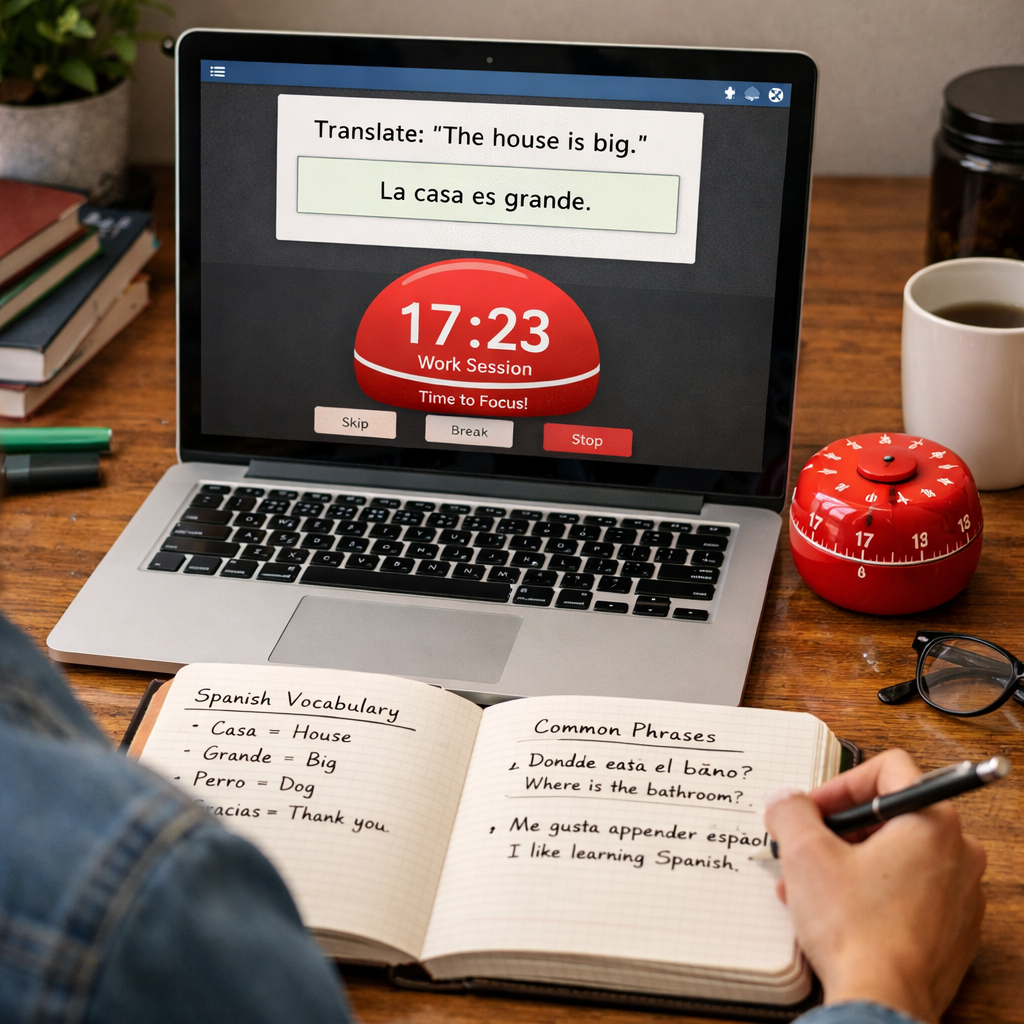
Imagine a 25-minute ‘focus sprint’ where everyone works on a single activity—like a reading passage or a math problem set—while a soft timer ticks in the background.
When the timer dings, you signal a five-minute stretch break: students can grab a water bottle, chat, or do a quick hallway walk. The pause resets their attention, so the next sprint feels fresh.
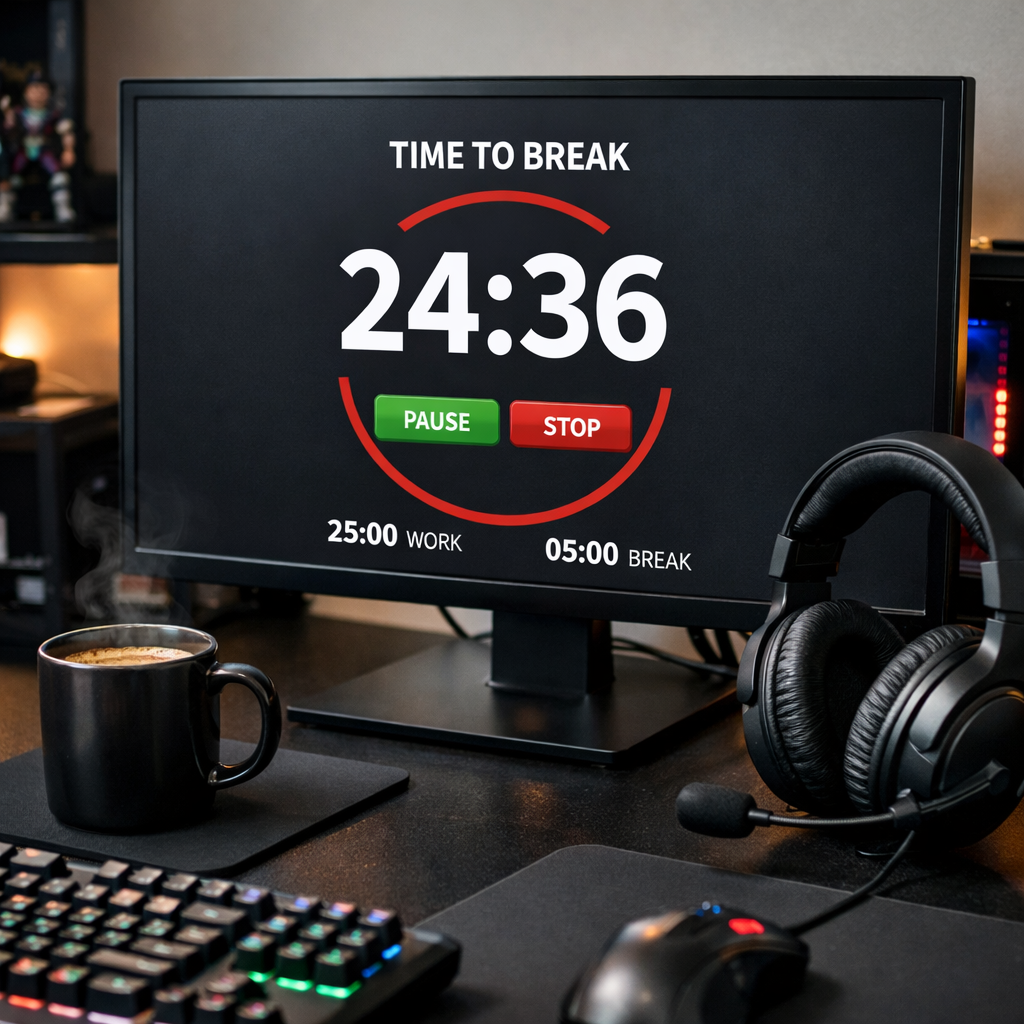
Here’s a quick mental picture: you start the timer, students see it on the board, and the whole room settles into a silent, purposeful hum. No more ‘Can I go to the bathroom?’ whispers every two minutes because the next break is already scheduled.
But it’s not just about timing. The Pomodoro technique nudges teachers to plan micro-goals—’finish the vocabulary quiz’ or ‘complete the lab observation’—instead of vague ‘work on the unit.’ Those concrete targets make it easier to track progress and celebrate small wins.
And because the intervals are short, you can adapt them on the fly. Need a longer slot for a science demo? Switch to a 40-minute session and push the break to ten minutes. The flexibility fits any subject, grade level, or school schedule.
So, if you’re ready to trade the endless to-do list for a clear, repeatable rhythm, stick around. We’ll walk through setting up your first pomodoro timer, choosing the right length for your class, and using the breaks to boost engagement.
Let’s dive in and see how a simple timer can become your classroom’s new secret weapon.
TL;DR
If you want calm classrooms, quick wins, and energized students, learning how to use pomodoro timer for teachers gives you a simple rhythm that turns chaos into focused bursts. Just set a 25‑minute sprint, pick a micro‑goal, let the timer cue a five‑minute stretch, and watch engagement rise without extra prep.
Step 1: Set Up Your Pomodoro Timer for Teaching Sessions
Let me be honest: in a hectic classroom, a reliable rhythm is a lifeline. You’re juggling lesson prep, quick grading, and a flood of interruptions. A clear Pomodoro setup can turn that chaos into focused bursts your students actually respond to.
So let’s get your first focused sprint up and running—today.
Pick the right Pomodoro length for your class
The classic 25‑minute sprint works for most lessons, but you might tweak it for younger students or longer demos. In Focus Keeper, you can adjust both focus blocks and breaks to fit your period, energy, and subject matter.
Explain the rhythm to your class as a shared workflow: one task, one timer, one moment to breathe, then a short break. It gives students a predictable pattern and cuts down on the constant “how much longer?” questions.
Set micro-goals for each sprint
Instead of vague “work on the unit,” set a tiny, concrete target for every sprint—like “read the passage and highlight three key ideas” or “solve five problems and justify each answer.” When the timer rings, celebrate that precise win, not an abstract feeling of progress.
Plan a quick five‑minute stretch or movement break after each sprint. Use that pause to reset attention and reset expectations for the next sprint. It sounds simple, but it’s powerful in keeping kids engaged during a busy period.
To make this concrete in your classroom, think about visuals you can print or post. For example, printable timers or cue cards from JiffyPrintOnline can help you display the rhythm at the front of the room, while short reading lists from Lyndsey Crawford Publishing give you ready-to-use materials to pair with timed blocks. If burnout worries creep in, you might explore a faith-based guide on burnout for teachers, like this burnout faith-based guide for additional perspective.
If you want a deeper, step‑by‑step comparison, check our guide on the Best Pomodoro Timer for Teachers: Boost Classroom Focus. It’s a practical companion as you set up, monitor, and adjust your sessions over the first week of implementation.
Here’s a quick demonstration you can glance at right away:
Does seeing it in action make the idea click? Great. Use that momentum to decide your default sprint length, your goal types, and when you’ll run a longer “demo” block. The more you practice, the more natural the rhythm becomes for both you and your students.
Once you’ve nailed your first week, you can document results, adjust micro-goals, and celebrate small wins with a quick class check‑in. A simple, repeatable rhythm is what turns a busy period into a move you can rely on, day after day.

Step 2: Structure Lesson Plans Around Pomodoro Cycles
Okay, so you’ve got the timer humming and a micro‑goal in mind. The next question is: how do you actually fit an entire lesson into those 25‑minute bursts without it feeling like a scramble?
Think of your lesson like a mini‑movie. You need an opening scene, a rising action, a climax, and a neat wrap‑up. The Pomodoro cycles become your storyboard.
First, break the lesson objective into bite‑size chunks that each fit comfortably into a single Pomodoro. For a 40‑minute math block, you might plan a 20‑minute concept intro, a 10‑minute guided practice, and a 10‑minute independent work sprint. Each chunk gets its own timer so everyone knows exactly what’s happening and when the next break is coming.
Does that sound too rigid? Not at all. The beauty of the method is that you can shuffle the chunks on the fly. If the class is buzzing with questions, you can extend the guided practice by five minutes and shrink the independent work – the timer is just a guide, not a jail.
Here’s a quick checklist you can paste on your desk:
- Write the overall lesson goal.
- List the sub‑tasks that lead to that goal.
- Assign a Pomodoro length (usually 20‑30 min) to each sub‑task.
- Decide on a break activity that recharges without derailing focus.
Once you have that list, it’s time to cue the break. A five‑minute stretch, a quick “brain‑break” song, or a water‑bottle run works wonders. The key is consistency – students start to associate the timer ding with a predictable, energizing pause.
But what if you teach a subject that naturally needs longer focus, like a science lab? You can stack two Pomodoros back‑to‑back and treat the combined block as a “deep‑work” session, then follow it with a longer 15‑minute break. It’s the same rhythm, just a different cadence.
So, how does this look in a real classroom? Picture this: you project the timer on the whiteboard, announce, “We’ve got 25 minutes to draft our thesis statements,” and the room settles. When the timer dings, you flip the slide to a quick “pop‑corn” stretch video. Students get up, shake out the stiffness, and return ready for the next sprint. The flow feels natural, not forced.
One teacher we heard about on six ways to use the Pomodoro method split grading into three Pomodoros: math, reading, and behavior notes. By the end of the afternoon, she’d knocked out more than half her stack, and the breaks kept her energy from crashing.
Need a visual aid? Below is a simple table that maps common subjects to recommended Pomodoro lengths and break ideas.
| Subject | Pomodoro Length | Break Idea |
|---|---|---|
| Math (problem sets) | 20 min | Quick stretch + deep breaths |
| English (writing workshop) | 25 min | “GoNoodle” dance break |
| Science (lab demo) | 40 min (two back‑to‑back) | 15‑min walk or water break |
Notice how the break matches the activity’s intensity. Shorter, high‑energy tasks get a brief reset; longer, hands‑on work earns a more substantial recharge.
And don’t forget to log each cycle. A quick note in your planner – date, subject, Pomodoros used – builds a habit loop. After a week you’ll spot patterns: maybe you crush reading in the morning but need an extra five minutes for afternoon labs.
Here’s a short video that walks through setting up a lesson plan with Pomodoro blocks. Watch it, then pause to map your own next class.
Give yourself permission to experiment. Start with one subject, tweak the timings, and watch the rhythm settle. Before you know it, you’ll have a whole day of focused sprints that feel less like a marathon and more like a series of achievable checkpoints.
Step 3: Integrate Break Activities and Student Engagement
So far you’ve set up the timer and lined up the cycles. Now the real magic happens: breaks aren’t just pauses, they’re intentional recharges that boost focus and buy you more steady momentum in class.
In our experience at Focus Keeper, when breaks are purposeful, you’ll notice fewer off‑task moments and more predictable energy. Students start to ride the rhythm—knowing a reset is coming makes the next sprint feel doable, not daunting.
Does this really work? Let’s break down how to integrate break activities so engagement stays high and learning stays on track.
3.1 Align break activities with the focus task
Short, quiet tasks like reading passages or vocabulary drills benefit from quick, low‑effort resets—think a 60–90 second stretch or a deep breath sequence. For longer, hands‑on work like labs or projects, a longer movement break (2–5 minutes) can refresh body and mind without derailing the flow. The key is matching break content to the cognitive load of the task ahead.
When the break aligns with the work, transitions feel natural rather than jolting. This alignment helps students stay engaged across subjects—from reading to math to science—and keeps the room calmer overall.
3.2 Quick break ideas that actually work
- Two‑minute stretching with shoulder rolls and a slow neck release. It nudges circulation without making students lose focus.
- A brisk hallway walk or a quick drink of water. Movement signals a reset and returns energy to the brain.
- A tiny, structured brain‑break such as naming three things you learned or summarizing a concept in one sentence. Simple, purposeful, repeatable.
- A one‑song dance or a rapid tapping rhythm on desks. It’s enough to wake the nervous system without turning the class into a party.
3.3 Use the timer as a cognitive cue, not just a countdown
Frame the ding as a signal to switch between cognitive modes—focus to reflection, or passive reception to active production. Encourage students to set a mini‑goal for the next sprint, like “finish the paragraph analysis” or “complete three math problems.” When they know the ding is the gate to the next step, attention steadies.
You’ll also benefit from a consistent break cue. A tiny poster or a hand signal shows, clearly and quickly, what counts as a successful break and what comes next.
3.4 Involve students in choosing breaks
Give kids ownership: ask them to suggest a short break activity and vote on a monthly rotation. When students help pick the options, they’re more likely to participate and less likely to drift during transitions. Keep a small “break bank” with 6–8 ideas so you can rotate without re‑inventing the wheel.
To keep it practical, write the break options on a sticky note near the timer and rotate responsibilities so students can lead a quick stretch or a brain‑break song when it’s their turn.
3.5 Track, reflect, and iterate
End each day with a quick, 60‑second reflection:Was the break length right for today’s blocks?Which activities sparked the most engagement?Use those notes to refine your schedule for tomorrow. Focus Keeper makes this easy by letting you log sessions and observe patterns over a week or two.
In short: plan breaks with intention, choose activities that fit the task, and invite students to shape the rhythm. Start small, measure what shifts, and you’ll watch engagement rise without you having to nag for attention.
Next up, we’ll tailor interval lengths by subject and grade level so you can dial in the exact rhythm your class needs. For now, try a 25‑minute sprint for a reading block, then a five‑minute break with a light stretch—see how the room responds.
Step 4: Track Progress and Adjust Timing
Now that you’ve got the timer humming and the break cue ready, the real secret sauce is watching what actually happens in the room. Think of it like a coach reviewing game footage – you’re not just playing, you’re learning from each play.
Start each day with a quick “pulse check.” After the first Pomodoro, ask yourself: did the kids stay on task? Did the break feel long enough? Jot down a single word or a short phrase on a sticky note. It takes less than 30 seconds, but over a week those notes become a treasure map.
Why tracking matters
Research on the Pomodoro Technique shows that people who log their intervals are up to 30 % more likely to finish tasks on time. In a classroom, that translates to fewer unfinished worksheets and a calmer end‑of‑day vibe.
When you can see patterns – maybe you’re sharper in the morning or a 20‑minute math sprint works better than 25 – you gain the power to tweak the rhythm instead of guessing.
Step‑by‑step tracking routine
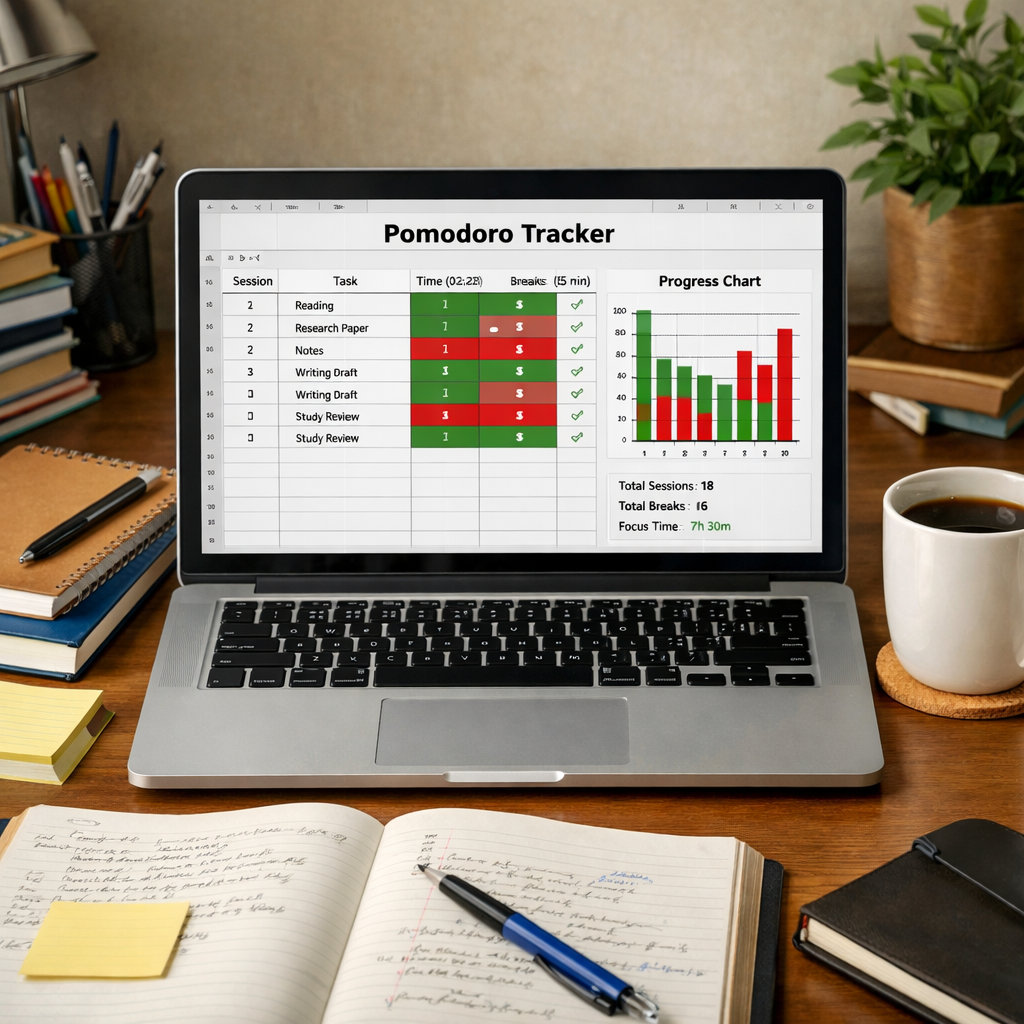
1. Capture the basics. Open a simple table in your planner or a notebook. Columns: Date, Subject, Pomodoro Length, Break Length, Observation.
2. Score the sprint. Give each Pomodoro a 1‑5 rating for focus (1 = scattered, 5 = laser). Add a quick note like “students whispered during the last 5 min” or “energy high after stretch.”
3. Review in batches. At the end of the week, color‑code the scores. Green for 4‑5, yellow for 2‑3, red for 1‑2. Spot the reds – they’re the clues that something needs adjusting.
4. Adjust the timer. If a particular subject consistently lands in the yellow zone, try shortening the work block by five minutes or swapping the break activity. If the morning math block is always green, keep that length and maybe extend the afternoon science sprint.
Real‑world teacher examples
Ms. Patel, a 4th‑grade teacher in a busy charter school, noticed that her 25‑minute reading Pomodoros always ended with a red score. The kids were fidgeting, and the break felt rushed. She experimented by cutting the work interval to 20 minutes and adding a two‑minute breathing exercise. Within three days, her scores jumped to a solid 4, and the class completed the reading passage 15 % faster.
Mr. Liu, teaching high school biology, logged that his 40‑minute lab Pomodoros were consistently green, but the 5‑minute hallway walk felt too short. He extended the break to 10 minutes, letting students stretch and discuss observations. The next week, lab report drafts improved in quality, and the class reported feeling “more refreshed.”
Quick data‑driven tips
– Track at least five consecutive days before making a major change. Small sample sizes can be misleading.
– If you see a steady dip after the third Pomodoro of the day, consider a longer mid‑day reset – perhaps a 15‑minute movement break.
– Use a simple visual cue, like a traffic‑light sticker on the timer, to remind you which interval needs tweaking.
– When you adjust, keep one variable at a time. Change the work length OR the break activity, not both, so you can pinpoint the cause.
Embedding the habit
Make the tracking step part of your end‑of‑day routine, just like you’d grade a few papers. Set a timer for the reflection itself – 60 seconds is enough. Over a month you’ll have a mini‑dashboard that tells you exactly when to lengthen, shorten, or switch up the break.
And remember, the goal isn’t perfection; it’s progress. Even a single tweak that saves five minutes of off‑task chatter adds up over a semester.
So, grab that notebook, log a few numbers, and watch your classroom rhythm evolve into something that feels almost automatic.

Conclusion
So you’ve walked through setting up the timer, carving lessons, and tracking progress – how does it all feel?
Honestly, the biggest win is noticing the shift from “I’m just surviving the day” to “I actually have control.” When the timer dings and you see a completed sprint, that’s a tiny victory you can hand to yourself and your class.
What should you do next? Grab a notebook, jot down the first three micro‑goals for tomorrow, and set a single Pomodoro right after the morning bell. Keep the break cue simple – a stretch, a sip of water, a quick joke.
Remember, the rhythm isn’t set in stone. If a 25‑minute block feels too tight for a science lab, slide to a 35‑minute sprint and give a longer walk‑out break. Adjust one variable at a time, and let the data you log guide you.
In our experience at Focus Keeper, teachers who treat the timer as a habit‑loop partner report steadier classroom flow and fewer end‑of‑day headaches. It’s not magic; it’s consistency.
Give it a week, watch the pattern emerge, and you’ll see how to use pomodoro timer for teachers become a natural part of your teaching toolkit. Ready to make the next bell your ally?
FAQ
What’s the best way to start using a pomodoro timer for teachers?
Begin with a single 25‑minute sprint during a low‑stakes activity, like a warm‑up reading. Write a clear micro‑goal on the board – for example, “finish the first paragraph of the science prompt.” Set the timer, let it run, and when it dings, give the class a five‑minute stretch break. After the break, repeat the cycle with a new micro‑goal. This low‑pressure start lets you and the kids feel the rhythm without overwhelming anyone.
How can I adjust the timer length for different subjects?
Subjects that need hands‑on work, like labs or art projects, often benefit from a 35‑ to 40‑minute block followed by a longer ten‑minute break. For quick‑fire tasks such as vocab drills or math fact fluency, stick to the classic 20‑minute sprint and a three‑minute reset. Try one variable at a time – either the work interval or the break length – and note how focused the students stay. Over a week you’ll see which combo clicks for each subject.
What should I do if a class loses focus before the timer ends?
If attention drifts, pause the timer and ask a quick check‑in: “What’s one thing you’ve gotten done so far?” Then give a two‑minute micro‑break – a stretch, a deep breath, or a quick joke. Once the mini‑reset is done, restart the original timer where it left off. The pause respects the students’ mental fatigue while preserving the overall sprint structure.
How can I involve students in choosing break activities?
Create a “break bank” with 6–8 simple ideas written on sticky notes – a hallway walk, a desk‑shake, a one‑sentence summary game, etc. Let the class vote each week on which activity to use. When a student leads the chosen break, they feel ownership, and the whole room is more likely to transition back to work quickly. This collaborative approach also keeps the breaks fresh and prevents boredom.
Is it okay to use a digital pomodoro app in the classroom?
Absolutely. A digital app can log each sprint, making it easy to review patterns later. Just project the countdown so everyone sees it, and mute any notification sounds that might distract. If you prefer a tactile feel, pair the app with a physical timer for visual impact. The key is consistency – the timer, whether digital or analog, should be a shared cue for the whole class.
How do I track progress without adding extra paperwork?
Keep a small table in your planner: Date, Subject, Pomodoro Length, Focus Rating (1‑5), and a one‑sentence note. Spend 30 seconds after each sprint to jot the rating. At week’s end, glance at the colors – green for 4‑5, yellow for 2‑3, red for 1‑2 – and adjust the next day’s intervals accordingly. This quick habit builds a data‑backed rhythm without stealing teaching time.