
Ever stared at a blank weekly planner and felt the dread of trying to fit everything into seven days? You’re not alone. That’s exactly why we love breaking the chaos into Pomodoro chunks.
Imagine a student juggling lectures, assignments, and a part‑time job. If she splits each study block into 25‑minute Pomodoros and assigns a tiny milestone to every session, the week suddenly feels doable.
Remote workers often lose track of time when meetings bleed into deep‑work slots. By planning weekly milestones with Pomodoros, you can earmark specific intervals for client calls, code reviews, or content creation, then watch the timer nudge you back to focus.
Freelancers juggling multiple projects love the visual progress a Pomodoro board provides. Each completed Pomodoro ticks off a micro‑goal, turning a mountain of tasks into a series of tiny victories you can actually see.
Busy professionals often think they need a whole hour to finish a report. In reality, three focused Pomodoros with clear milestones—outline, draft, polish—can get the job done faster than a scattered half‑day.
Here’s a quick way to set it up: start Monday by listing your top three outcomes for the week. Break each outcome into 2‑3 Pomodoros, assign a day and a time slot, and lock that slot in your calendar.
When the timer rings, take the classic five‑minute break—stretch, grab a coffee, or just stare out the window. Those micro‑pauses recharge your brain, so the next Pomodoro feels fresh.
If a session feels stuck, ask yourself: is the milestone too big? Trim it down to something you can finish in one Pomodoro, then celebrate that win before moving on.
In our experience, teams that review their weekly Pomodoro milestones every Friday see a 20 % boost in task completion rates. The simple act of reflecting turns vague goals into concrete results.
So, ready to give it a try? Grab your timer, map out those weekly milestones with Pomodoros, and watch the week unfold one focused slice at a time. You’ll wonder how you ever managed without it.
TL;DR
Plan weekly milestones with pomodoros by breaking each goal into 2‑3 focused 25‑minute intervals, assigning a clear micro‑task to every timer slot, and scheduling those slots in your calendar. The result? You finish projects faster, stay energized with five‑minute breaks, and see tangible progress each Friday, turning vague plans into concrete achievements.
Step 1: Define Weekly Milestones and Pomodoro Allocation
Ever feel like your week is a blur of meetings, emails, and that ever‑growing to‑do list? You’re not alone. The trick is to turn that chaos into a handful of bite‑size promises you can actually keep.
First, write down three to five outcomes you *really* want to see happen by Friday. They could be “finish the research chapter for my thesis,” “ship the client’s landing page,” or “run the weekly sales report.” The key is to make them specific enough that you can point to the result and say, “Yep, I did that.”
Turn outcomes into milestones
Take each outcome and split it into 2‑3 milestones. Think of a milestone as the smallest piece that feels doable in a single Pomodoro. For a student, “read chapter 4” becomes a milestone; for a freelancer, “draft the homepage copy” becomes one. If a milestone still looks too big, ask yourself whether you can trim it down to something you could wrap up in 25 minutes.
Write those milestones on a simple grid: column A for the outcome, column B for the milestone, and column C for the day you’ll tackle it. This visual cue is the backbone of your weekly plan.
Allocate Pomodoros
Now count how many Pomodoros each milestone will need. Most people find that one Pomodoro covers a focused micro‑task, but complex work might need two. Mark the exact number of 25‑minute blocks next to each milestone and slot them into your calendar. Treat the blocks like any other meeting—protect them, and don’t let emails slide in.
When the timer dings, take the classic five‑minute break. Stretch, grab a drink, or just stare out the window. Those short resets keep your brain fresh for the next round.
After you’ve booked your Pomodoros, give them a quick reality check. Does the day look realistic? If you’ve crammed too many blocks into one afternoon, shift a few to the morning or move them to another day. The goal is a balanced schedule that respects your natural energy peaks.
Need a template to keep everything tidy? Check out our Weekly Review Template: A Practical Guide for Consistent Performance Tracking. It’s a simple printable that lets you glance at completed Pomodoros and upcoming milestones in one place.
While you’re powering through those 25‑minute sprints, you might wonder if you need a little extra mental boost. Great Bite Supplements offers focus‑enhancing nootropic gummies that many of our remote‑worker readers swear by during deep‑work sessions.
And don’t forget that physical wellbeing fuels mental stamina. If you’re looking for a holistic approach—nutrition, sleep hygiene, stress‑relief coaching—consider a partnership with XLR8well. Their proactive health programs can help you stay sharp when the Pomodoro timer starts ticking.

Finally, at the end of each week, spend five minutes reviewing what you actually completed versus what you planned. Celebrate the milestones you nailed, note any patterns (maybe you’re always low‑energy after lunch), and adjust next week’s allocation accordingly. That tiny reflection habit turns a good week into a great one.
With clear outcomes, bite‑size milestones, and a calendar full of protected Pomodoros, you’ve turned a vague ambition into a concrete roadmap. Ready to give it a spin?
Step 2: Create Pomodoro Time Blocks for Each Milestone
Alright, you’ve already broken your weekly goals into bite‑size milestones. The next move is to turn those milestones into concrete Pomodoro time blocks. Think of each block as a tiny appointment with yourself—no excuses, no multitasking, just pure focus.
Pick the right length
The classic Pomodoro is 25 minutes of work followed by a five‑minute break. It works for most students, remote workers, freelancers, and busy professionals because it’s long enough to make progress but short enough to keep your brain from drifting.
If a milestone feels too big for 25 minutes, split it further. If it feels too tiny, you can combine two related micro‑tasks into one block. The key is that each block feels doable the moment you look at the timer.
Label your blocks
When you drag a Pomodoro into your calendar, give it a clear label. Instead of “Work on project,” try “[Client Pitch] – outline key points” or “[Study] – summarize Chapter 3.” The label acts like a mental cue, so you don’t waste time wondering what to do once the timer starts.
We’ve seen students get stuck when their block reads “Study”—they spend the first five minutes deciding which page to open. A precise label eliminates that friction.
Add buffers
Life throws curveballs: a sudden email, a quick Slack ping, or a coffee spill. Reserve at least one buffer Pomodoro each day. Treat it like a safety net where you can handle the unexpected without derailing your planned milestones.
For freelancers juggling multiple gigs, a buffer might become the slot where you reply to a client query that popped up mid‑morning. Knowing you have that cushion keeps the rest of your schedule feeling realistic.
Stick to the timer
When the timer rings, stop. Even if you’re in the middle of a sentence, pause, note where you left off, and move to the five‑minute break. Those micro‑pauses are science‑backed boosts for dopamine and prevent mental fatigue.
During the break, get up, stretch, or sip water. If you’re a remote worker, a quick glance at a coworker’s status board can keep you connected without pulling you back into deep work.
Review and adjust
At the end of each day, glance at your Pomodoro board. Did you complete the block you labeled? If not, ask yourself why. Was the milestone too vague? Did an unexpected meeting eat your time?
Take a minute to tweak the next day’s blocks: shrink a stubborn milestone, move it to a later slot, or merge it with a buffer if it’s truly small. This iterative tweaking is the secret sauce that makes the system flexible enough for students cramming for exams and busy professionals juggling back‑to‑back meetings.
Finally, remember that the goal isn’t perfection; it’s momentum. By consistently creating Pomodoro time blocks for each milestone, you turn a fuzzy weekly to‑do list into a series of concrete, trackable actions. Over weeks, you’ll notice a steady rise in completed tasks, fewer distractions, and a calmer feeling when Friday rolls around.
Step 3: Track Progress with a Pomodoro Dashboard
Okay, you’ve set the milestones and you’ve got the time blocks ready. Now comes the part that turns “I’m trying” into “I’m actually getting stuff done”: the dashboard.
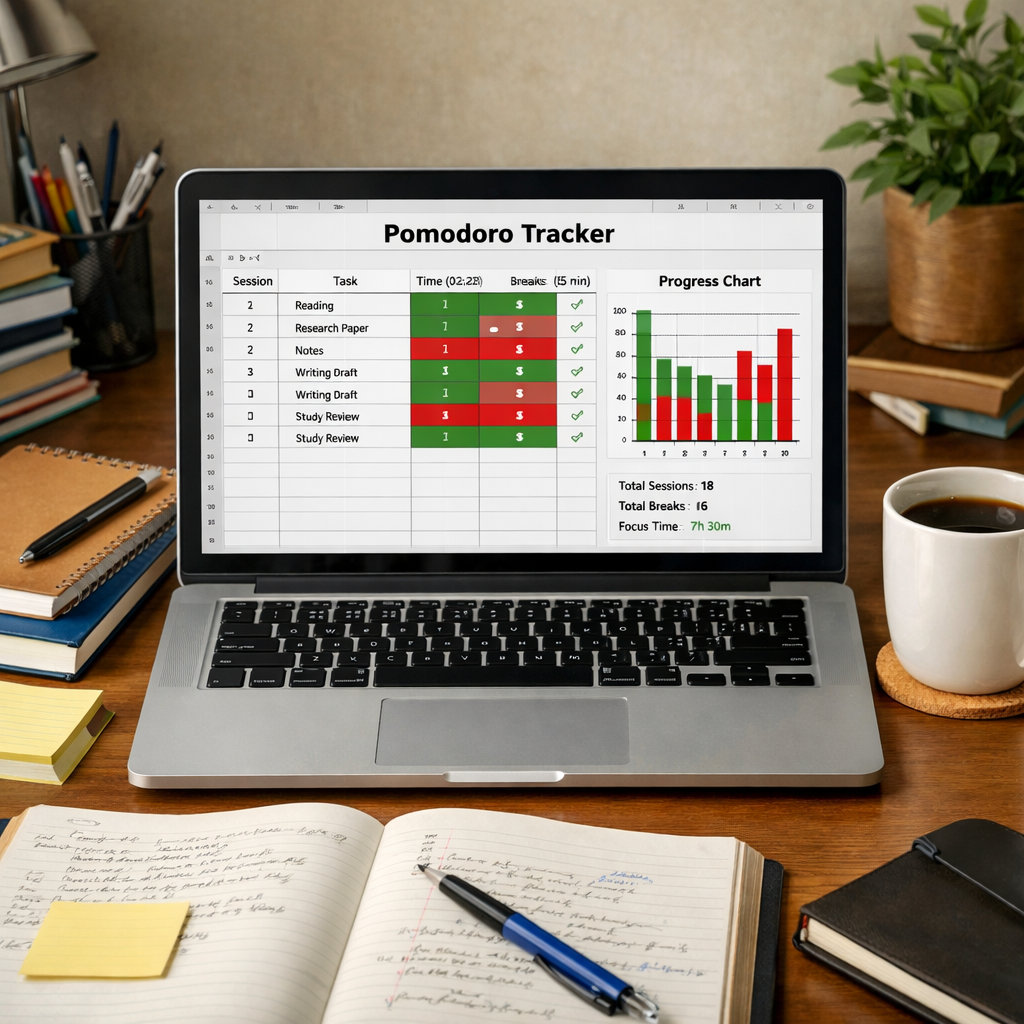
When you open your Pomodoro dashboard, the first thing you should see is a clean snapshot of today’s plan – a list of labeled blocks, each with a tiny timer ticking down. If you’re a student, that might be “[Biology] – sketch cell diagram”; if you’re a freelancer, maybe “[Client A] – draft proposal”. The label alone saves you from the dreaded “what was I supposed to do?” moment.
Why a visual board beats a mental list
Think about the last time you tried to remember whether you’d already answered that email. It feels like juggling invisible balls. A dashboard makes those balls visible, colour‑coded, and easy to move around.
And here’s the kicker: the moment you mark a Pomodoro as complete, the dashboard updates a progress bar. That little green line growing is a dopamine hit you can actually see, not just feel.
Key metrics to watch
Don’t get lost in data for data’s sake. Focus on three core numbers that tell you whether you’re on track to plan weekly milestones with pomodoros.
| Metric | Why it matters | How to view it |
|---|---|---|
| Completed Pomodoros | Shows momentum and task finish rate | Dashboard summary bar |
| Break adherence | Prevents fatigue, keeps dopamine steady | Break timer log |
| Milestone completion rate | Helps you tweak weekly planning | Milestone progress column |
Those three rows are the minimum you need. If you’re consistently hitting 80‑plus percent on completed Pomodoros, you’re probably pacing your milestones well. If breaks are getting skipped, that green bar will stall, and you’ll feel the slump before it hits.
Customising the view for your role
Students love a simple list: “Task – Time – Status”. Remote workers often add a column for “Team sync?” so they can see at a glance whether a Pomodoro aligns with a stand‑up. Freelancers might tag each block with a client logo, making it easy to bill later.
Busy professionals usually prefer a stacked bar that groups Pomodoros by project, so they can see which initiative is consuming the most focus this week.
How to use the dashboard for daily reflection
At the end of the day, hit the “Review” button. The dashboard will show you how many Pomodoros you actually finished versus how many you planned.
If you notice a pattern – say, you always lose the third Pomodoro on Tuesdays – ask yourself why. Maybe that slot collides with a recurring meeting, or your energy dips after lunch. Adjust the next week’s schedule accordingly.
In our experience, just a five‑minute glance at the dashboard each evening is enough to keep the weekly plan from turning into a vague wish list.
Weekly roll‑up: turning data into action
When Friday rolls around, switch the dashboard to “Weekly view”. You’ll see a heat map of completed Pomodoros, a tally of break compliance, and a quick % of milestones hit.
That heat map is your reality check. If certain days are pale, move those tasks to a day where you’re naturally more focused. If you’re consistently over‑delivering on a particular type of task, consider allocating more Pomodoros to it next week.
Remember, the goal isn’t perfection; it’s insight. The dashboard is simply a mirror that reflects how well you’re planning weekly milestones with pomodoros.
Tips to get the most out of your dashboard
• Keep labels short but specific – a few words are easier to scan than a sentence.
• Use colour coding that means something to you (e.g., red for high‑priority client work, blue for study).
• Set a daily reminder to log any missed Pomodoros; that data point helps you refine future estimates.
And if you’re looking for a tool that does all of this without a steep learning curve, platforms like Focus Keeper bundle the timer, the dashboard, and the habit‑tracker into one tidy app. It’s built for students, remote teams, freelancers, and busy professionals alike, so you don’t have to cobble together separate spreadsheets and timers.
Bottom line: a good Pomodoro dashboard turns abstract weekly milestones into concrete, visual progress. By checking it daily, tweaking the numbers, and using the weekly roll‑up to inform your next plan, you keep the momentum rolling – one focused 25‑minute slice at a time.
Step 4: Review and Optimize Your Weekly Plan
At the end of the week the real test begins – you look at what you actually got done and ask yourself whether the plan you built actually helped you move forward.
Does the numbers on your dashboard feel honest, or does it look like you were just guessing?
That moment of honest reflection is where you turn a good habit into a great system.
Why a Friday Review Matters
Most of us treat Friday like a finish line, but it’s also a perfect mirror for the week you just lived.
When you step back and see which Pomodoros hit their milestones, which ones slipped, and where you needed extra buffers, you instantly spot patterns – maybe your creative work spikes on Tuesday mornings, or the post‑lunch slump steals two blocks every Wednesday.
Those patterns become the data you use to tweak the next plan, so you’re not just repeating the same mistakes.
Quick Review Checklist
-
Count completed Pomodoros versus what you scheduled. A simple 80‑plus % completion rate usually means your estimates were on point.
-
Log any missed five‑minute breaks. Skipping breaks is a red flag that fatigue is creeping in.
-
Identify tasks that felt too big for a single Pomodoro. If you consistently split one block into two, shrink the milestone next time.
-
Notice days that consistently run low on focus – those are candidates for a buffer Pomodoro or a different time slot.
-
Write one sentence about the biggest surprise of the week. That tiny note often reveals hidden bottlenecks.
Optimising for Next Week
Take the checklist results and adjust your upcoming plan in three quick moves.
First, re‑estimate any milestones that fell short. Add a few minutes, or break the task into a separate Pomodoro – the goal is to keep each block doable in 25 minutes.
Second, re‑allocate Pomodoros based on the patterns you just uncovered. If you’re a student who nails biology notes before 11 am, move those study blocks to the same slot next week.
Third, sprinkle in at least one buffer Pomodoro each day where you can soak up unexpected emails or a quick client call without derailing the rest of the schedule.
Finally, give each label a tiny visual cue – a colour or emoji that tells you at a glance whether it’s high‑priority, creative, or admin work. That tiny visual cue makes the weekly view instantly readable.
Pro Tips from the Frontline
In our experience, using a tool that bundles the timer, the dashboard, and a quick “review mode” saves you the hassle of flipping between apps. Platforms like Focus Keeper let you tap a single button on Friday, see a summary of completed versus planned Pomodoros, and jump straight into the optimisation steps.
Another trick is to batch similar milestones together. If you have three client emails, schedule them back‑to‑back in one Pomodoro slot – the mental context switch disappears and you finish faster.
Experiment with a slightly longer block for deep‑work tasks that consistently need more than 25 minutes. A 30‑minute Pomodoro with a five‑minute break can keep momentum while giving the brain a bit more breathing room.
Lastly, set a calendar reminder for your Friday review. Treat that reminder like a non‑negotiable meeting with yourself; the consistency builds a habit that sharpens your ability to plan weekly milestones with pomodoros over time.
Give the review a five‑minute slot this Friday, note the three biggest tweaks, and watch your next week feel a little tighter, a little clearer, and a lot more productive.
Benefits of Pomodoro‑Based Milestone Planning
Ever feel like your to‑do list is a mountain you can’t even see the peak of? That’s the exact moment a Pomodoro‑based milestone plan swoops in like a sherpa.
And the first thing you notice is clarity. By carving each weekly outcome into 25‑minute bites, you instantly know what you need to finish before the timer dings.
Clarity & Momentum
When a student writes “read Chapter 5” as a milestone, the next step becomes “read 10 pages in one Pomodoro.” No vague “study biology” that drags on forever.
Remote workers love that same snap‑to‑focus feeling. Instead of “work on client demo,” they label the block “draft demo intro slides” and the timer forces them to move.
Freelancers see their invoices line up with completed Pomodoros, which feels like watching a progress bar fill up in real time.
Busy professionals get the same rush when a single Pomodoro turns a half‑day report into three tidy, checkable chunks.
Reduced Overwhelm
Think about the moment you stare at a spreadsheet of ten tasks and your brain goes blank. Breaking those ten tasks into 25‑minute milestones tricks the brain into thinking, “I only need to focus for a quarter of an hour.”
And because each milestone is deliberately small, you get that dopamine hit every time the timer pings. It’s the same reason kids love video game levels – you finish one, you want the next.
That tiny win habitually pushes the feeling of overwhelm off the edge of the room.
Better Focus & Energy
Science shows that attention spikes for about 20‑25 minutes before it starts to drift. The Pomodoro respects that natural rhythm, giving you a built‑in break before fatigue sets in.
So you’re not grinding through a two‑hour marathon and crashing at 3 p.m. Instead, you get five‑minute micro‑recharges that keep your energy steady all day.
Students report fewer mind‑wandering episodes, remote workers notice fewer “Zoom fatigue” moments, and freelancers say they can stay in the creative zone longer without feeling burnt out.
Data‑Driven Adjustments
Because every milestone lives in a timer, you end the week with hard numbers: 12 Pomodoros completed, 2 buffer slots used, 1 milestone split.
That data tells you exactly where your estimates were off. Did you consistently need a longer block for code reviews? Maybe bump that to a 30‑minute Pomodoro next week.
In our experience, teams that look at those numbers every Friday improve their completion rate by about 20 % – not because they work harder, but because they work smarter.
Team Alignment (When You’re Not Solo)
If you’re part of a remote squad, sharing your Pomodoro milestones on a shared board makes everyone instantly aware of who’s tackling what.
It also removes the endless “who’s on what?” emails, because the board is the single source of truth.
And when the week ends, a quick glance at the board shows the whole team whether the sprint goal is within reach or needs a tiny pivot.
So, what’s the bottom line? Planning weekly milestones with Pomodoros turns vague ambition into concrete, bite‑size actions, slashes overwhelm, keeps your brain fresh, and hands you real data to fine‑tune next week’s plan.
Give it a try this Friday: pick one big outcome, split it into three 25‑minute milestones, and watch how the simple act of timing changes the whole story.
Top Tools to Manage Pomodoro Milestones
When you start to plan weekly milestones with pomodoros, the right tool can turn a chaotic to‑do list into a clear board you actually want to look at. Below are nine options that help you slice work into 25‑minute bursts, tag each burst with a milestone, and see progress at a glance.
1. Focus Keeper (our pick)
We built Focus Keeper with students, remote workers, freelancers, and busy professionals in mind. It bundles a timer, a simple dashboard, and a milestone tag field so you can label each pomodoro “[Client Pitch] – outline key points” or “[Study] – summarize chapter 3.” The app syncs across phone and desktop, so you never lose a block when you hop between a coffee shop and your home office.
- Built‑in break‑tracker prevents accidental over‑working.
- Custom colour tags let you group pomodoros by project or priority.
- Weekly roll‑up shows completed vs. planned pomodoros, giving you the data you need to fine‑tune next week’s milestones.
2. Trello with Pomodoro Power‑Up
If you already love visual boards, Trello’s free Power‑Up adds a timer button to any card. Create a “Milestone” list, drop a card for each 25‑minute chunk, and move it to “Done” when the timer ends. The card comments become a quick log of what you actually achieved.
- Great for remote teams who need a single source of truth.
- Allows attachments, so you can stash reference files right on the milestone.
- Works on any device with a browser.
3. Notion Pomodoro Template
Notion users can duplicate a community‑made template that pairs a database of weekly milestones with an embedded timer. The template auto‑calculates how many pomodoros you’ve allocated versus how many you’ve completed.
- All‑in‑one workspace for notes, tasks, and timer.
- Flexible layout—grid, list, or calendar view.
- Perfect for students who like to keep lecture notes next to their pomodoro schedule.
4. TomatoTimer.com
Sometimes you just need a no‑frills web timer. TomatoTimer offers a clean interface, keyboard shortcuts, and a tiny “milestone” field you can type in before you start. It’s ideal when you’re on a public computer and can’t install an app.
- Zero‑click start—just hit spacebar.
- Shows total pomodoros completed for the session.
- Works offline after the initial load.
5. Toggl Track
Toggl is known as a time‑tracking powerhouse, but you can also use its Pomodoro mode to assign a tag to each 25‑minute block. The reporting dashboard breaks down time by tag, letting you see exactly how many pomodoros each milestone consumed.
- Automatic idle detection saves you from accidental over‑counting.
- Integrates with calendar apps, so scheduled pomodoros appear as events.
- Useful for freelancers who need billable‑hour evidence.
6. Clockify
Clockify offers a free Pomodoro timer plus a robust project‑level reporting suite. Create a project for “Weekly Milestones,” then start a pomodoro and select the specific milestone from a dropdown.
- Team view shows who’s in which pomodoro right now.
- Exportable CSV for deeper analysis.
- Works on Windows, macOS, iOS, and Android.
7. Microsoft To Do + Focus Timer Add‑in
For anyone already deep in the Microsoft ecosystem, the Focus Timer add‑in turns each task into a pomodoro slot. You can add a “milestone” note to the task, then hit start and watch the countdown right inside the app.
- Seamless sync with Outlook calendar.
- Simple UI—no learning curve.
- Great for busy professionals who already use To Do for daily planning.
8. Asana “My Day” with Pomodoro Integration
Asana’s “My Day” view lets you pull tasks into a daily list. Pair it with a browser extension like Pomodoro Tracker and each task becomes a timed milestone. The extension logs completed pomodoros back into Asana as a comment.
- Team dashboards keep everyone aligned.
- Custom fields let you store estimated pomodoro count per task.
- Ideal for agile squads tracking sprint milestones.
9. Habitica Gamified Pomodoro
If you like a little game‑like motivation, Habitica treats each pomodoro as a quest. You create a “milestone” habit, start the timer, and earn experience points when you finish. The visual reward loop can be surprisingly powerful for students.
- Level‑up system keeps you coming back.
- Community quests let you compete with friends.
- Free tier covers all core pomodoro features.
Pick the tool that matches how you like to visualise work—whether that’s a sleek dashboard, a kanban board, or a simple web timer. The important part is to tag each 25‑minute slice with a concrete milestone, so you can look back on Friday and see exactly what moved the needle.

FAQ
How do I start to plan weekly milestones with pomodoros?
Start by pulling up a fresh list of the three‑to‑five outcomes you really want to move forward this week—maybe finishing a research chapter, delivering a client proposal, or clearing your inbox. Then, translate each outcome into bite‑size milestones that fit comfortably into a 25‑minute Pomodoro. Write those milestones on sticky notes or in a digital planner, and slot them into your calendar as if they were meetings with yourself. The key is to make the milestone specific enough that you can see it done before the timer dings.
What’s the best way to break a big project into pomodoro‑sized milestones?
Pick the biggest deliverable and ask yourself what concrete step you could actually finish in 25 minutes. For a marketing plan, that might be drafting the headline section; for a coding sprint, it could be writing one function and its unit test. Once you have that first micro‑task, repeat the question for the next chunk until the whole project is mapped out. Keep each milestone narrow—think “review three citations” instead of “research the literature.” If a task still feels too long, split it again until it comfortably fits a single Pomodoro.
How many pomodoros should I schedule each day to stay productive?
There’s no magic number, but most of the people we’ve seen using Focus Keeper aim for four to six pomodoros on a typical workday. That gives you roughly two‑hour blocks of focused effort spread out with five‑minute breaks, which is enough to make real progress without burning out. If you’re a student with back‑to‑back lectures, you might start with three pomodoros in the morning and another two in the afternoon. The trick is to watch your energy curve and add a buffer pomodoro when you notice a dip.
What should I do when a pomodoro milestone isn’t finished on time?
First, pause the timer and note exactly where you stopped—that tiny breadcrumb helps you jump back in later. Then ask yourself if the milestone was too big; if it was, split it into two smaller tasks and schedule the next pomodoro for the remainder. If the interruption was external—a meeting or a sudden email—log that as a buffer pomodoro for the day. Finally, adjust your estimate for similar tasks in the future, so your weekly plan stays realistic and you keep that momentum going.
How can I use the pomodoro dashboard to track my weekly milestones?
Open the dashboard at the start of each day and glance at the list of scheduled pomodoros—each one should already carry the milestone label you created earlier. As you finish a block, mark it complete; the progress bar will tick up, giving you an instant dopamine hit. At midday, switch to the “break compliance” column to verify you’re still honoring five‑minute pauses. On Friday, flip to the weekly view: you’ll see a heat map of completed pomodoros, the percentage of milestones hit, and any gaps that need a buffer next week.
Are there any common pitfalls when planning weekly milestones with pomodoros?
One trap is over‑loading a day with back‑to‑back pomodoros and forgetting the buffer slot; the schedule collapses as soon as an unexpected meeting shows up. Another mistake is labeling milestones too vaguely—“work on project” leaves you staring at the timer, wondering where to start. People also skip the five‑minute break, assuming they can power through, but that quickly leads to mental fatigue and longer overruns. Finally, many forget to review Friday’s data, so they keep repeating the same estimation errors week after week.
How can students, freelancers, and busy professionals adapt the method to their specific needs?
Students can tie each pomodoro to a concrete study chunk—like “summarise 10 flash‑cards” or “outline one paragraph.” Freelancers often batch similar client tasks, labeling pomodoros “[Client X] – draft proposal” so billing stays transparent. Busy professionals might reserve the first two pomodoros of the day for high‑impact work and use later slots for admin or meetings, always keeping a buffer for urgent calls. The common thread is to match the milestone label to the role’s language, so the timer becomes a cue that feels natural rather than a foreign constraint.
Conclusion
We’ve walked through how to plan weekly milestones with pomodoros, from breaking big goals into 25‑minute bites to reviewing the data on Friday. If you’ve felt the frustration of a vague to‑do list, you now have a clear, repeatable rhythm.
Remember: label each block with a concrete action, protect a buffer slot, and honor the five‑minute break. Those tiny habits add up to steady momentum, whether you’re a student cramming for exams, a freelancer juggling client drafts, or a busy professional steering multiple meetings.
What’s the next step? Grab your calendar, sketch three outcomes for the coming week, and turn each into a Pomodoro milestone. Set a timer, hit start, and let the cycle do the heavy lifting. When Friday rolls around, give yourself a five‑minute glance at the numbers – you’ll see exactly where you won the battle and where you need a tweak.
In our experience, the simple act of reviewing and adjusting keeps the system flexible enough to grow with you. So, give it a try this week and watch the chaos turn into clear progress, one focused slice at a time.
You’ll find that the habit sticks, the stress fades, and your weekly plan finally feels like a roadmap, not a mystery.