
Ever stared at a to‑do list that feels more like a mountain than a molehill? You’re not alone—most of us set goals that sound great on paper but collapse under the weight of a busy day.
What if you could break that mountain into a series of manageable, bite‑sized climbs? That’s the heart of learning how to set realistic session goals. It’s not about dreaming big; it’s about crafting goals that actually fit the rhythm of your work, study, or creative flow.
First, take a quick inventory of what you really need to get done today. A student might need to finish three reading chapters, a remote worker could aim to clear two client emails, a freelancer may want to draft a proposal, and a busy professional might schedule a quick prep for a meeting. Write those tasks down and rank them by urgency and effort.
Next, match each task to a realistic session length. Our research shows most people stay focused for 20‑30 minutes before their attention drifts. That’s why understanding focus session durations matters—you allocate just enough time to make progress without burning out.
Now, turn those time blocks into concrete goals. Instead of “study biology,” try “read and annotate 10 pages of Chapter 4.” Instead of “work on project,” set “outline the client deliverables for 25 minutes.” This specificity gives you a clear finish line and a sense of accomplishment when the timer dings.
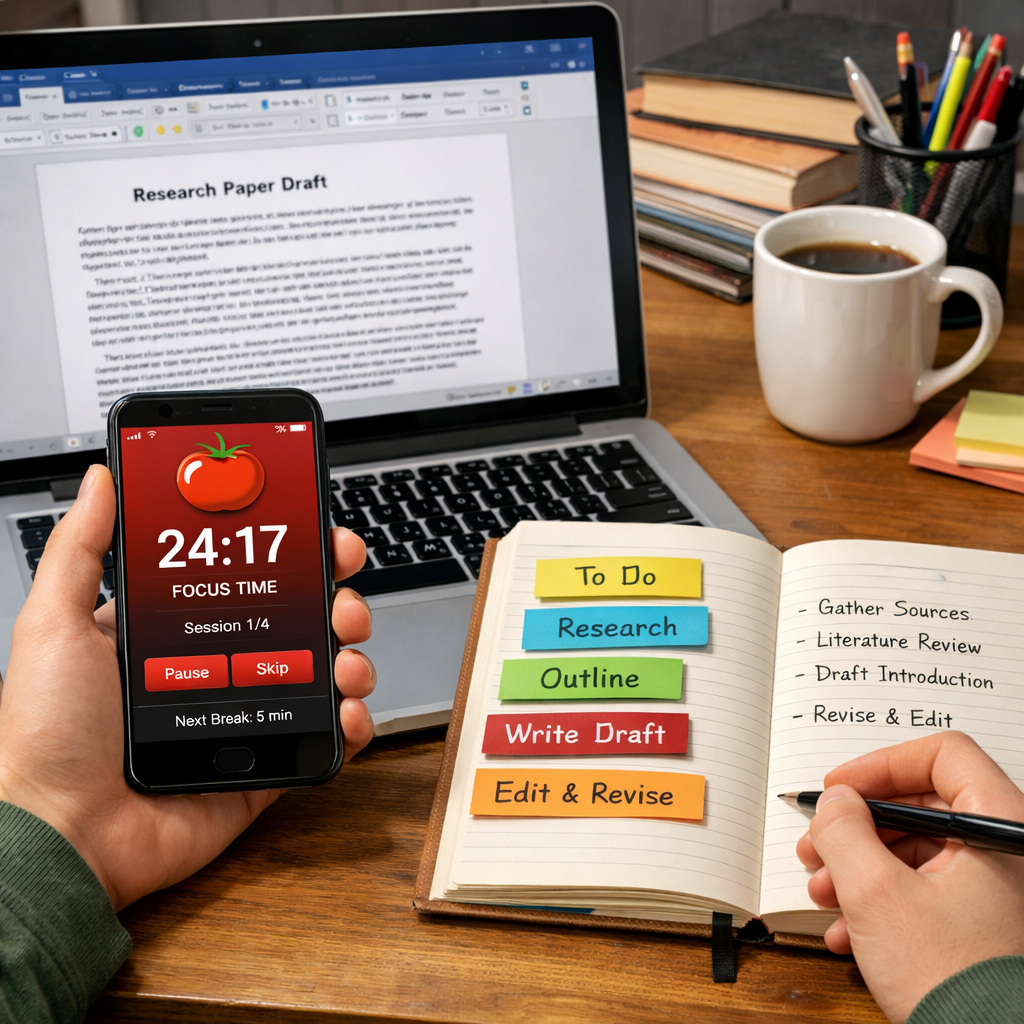
Tip: write your goal on a sticky note or in the app itself before you start. Seeing it in plain language tricks your brain into treating it as a promise you’ll keep.
Finally, reflect after each session. Ask yourself: Did I finish the goal? If not, why? Maybe the goal was too ambitious, or perhaps an unexpected interruption occurred. Jot down a quick note and adjust the next session accordingly. Over time you’ll spot patterns—like discovering you’re most alert in the morning, so you schedule your toughest goals then.
Putting these steps together creates a feedback loop that keeps you honest, motivated, and steadily moving forward. Ready to give it a try? Grab your Focus Keeper timer, set a realistic goal, and watch how those small wins add up to big results.
TL;DR
Struggling to turn vague to‑do items into bite‑sized wins? Learn how to set realistic session goals that match your natural focus rhythm, keep distractions at bay, and turn each Pomodoro into measurable progress.
We’ll walk you through picking the right time block, defining crystal‑clear tasks, and tweaking them after each session so you stay motivated and actually finish what you started.
Step 1: Define Your Session Purpose
Ever opened a fresh Pomodoro timer and felt… “What exactly am I trying to get done?” If you’ve ever stared at a blank screen wondering whether you should read a chapter, reply to a client, or just scroll social media, you know the feeling.
Defining the purpose of a session is the compass that keeps your focus from drifting. Instead of vague goals like “work on project,” pin down a single, concrete outcome that you can see yourself crossing off when the timer dings.
Here’s a quick way to nail that purpose:
1. Identify the “why” behind the task
Ask yourself: why does this task matter right now? A student might think, “I need to understand the enzyme pathway for tomorrow’s quiz.” A remote worker could frame it as, “I must clear the two client emails that are blocking the next deliverable.” The clearer the why, the easier it is to pick a focused goal.
Instead of “study biology,” try “summarize 5 key points from Chapter 4 and write a 100‑word recap.” Instead of “process emails,” try “reply to the two pending client messages and label them as ‘done.’” This tiny shift turns ambiguity into a finish line you can actually see.
3. Match the action to a realistic time block
Our data shows most people stay sharp for 20‑30 minutes before attention starts to wander. Pick a slot that fits that window—say, a 25‑minute Pomodoro. If the action feels longer, split it into two consecutive slots and treat each as its own purpose.
Does this sound like extra work? Not really. It’s like packing a lunch: you decide what you’ll eat, portion it, and then you know exactly what’s in the bag. The same principle applies to focus sessions.
4. Write the purpose where you’ll see it
Grab a sticky note, open the Focus Keeper app, or type it into a digital to‑do list. Seeing the purpose in plain language cues your brain to treat it as a promise you’ve made to yourself.
Tip: use verbs that imply completion—“draft,” “outline,” “review,” “record.” Those words signal the brain that the task has an end point.
5. Give yourself a tiny “buffer” for unexpected hiccups.
Life throws curveballs. Maybe a quick Slack ping or a doorbell rings. Build a 2‑minute cushion into your timer or note it as a “pause” in your session log. When you return, you’ll still have a clear purpose to resume.
Now, let’s see this in action.
Imagine you’re a freelancer juggling a client brief and a blog post. You open Focus Keeper, set a 25‑minute session, and write down: “Sketch the wireframe for the homepage redesign.” That single purpose tells you exactly what to click, draw, and finish before the timer ends.

When the timer rings, check the sticky note. If you’ve sketched the wireframe, celebrate. If not, note why—maybe the task needed more than 25 minutes. Adjust the next session’s purpose accordingly. Over time you’ll notice patterns: perhaps you’re most creative in the late afternoon, or you need a longer block for design work. That insight is the real payoff of defining purpose.
In our experience, students who write down a precise study goal (e.g., “highlight and summarize 3 key concepts from chapter 5”) finish their sessions 30% faster than those who just say “study biology.” The same principle works for remote workers, freelancers, and busy professionals.
So, what’s your next session purpose? Grab a note, pick a 25‑minute block, and write a single, actionable outcome. You’ll be surprised how much more you get done when the purpose is crystal clear.
Step 2: Break Down Goals into Measurable Milestones
When you’ve nailed the purpose of a single Pomodoro, the next puzzle is turning that purpose into bite‑size milestones you can actually see crossing the finish line. That’s the heart of how to set realistic session goals – you break the big ask into tiny, measurable wins.
First, look at the task you just wrote down and ask yourself: “What’s the smallest piece that still moves the needle?” If you’re studying a chapter, maybe the smallest piece is “read and highlight five paragraphs.” If you’re clearing emails, it could be “reply to two urgent messages.” By isolating the micro‑step, you eliminate the vague feeling of “I have a lot to do” and replace it with a concrete action you can start right now.
Step 1: Spot the sub‑tasks
Take your list and split each item into 1‑3 sub‑tasks. Keep each sub‑task short enough that you could finish it in one focus session, or even half of one. For a student, “draft outline for essay” becomes “write the intro paragraph” and “list three supporting points.” For a remote worker, “prepare weekly report” becomes “gather metrics for Monday‑Wednesday” and “write summary bullet points.”
Notice how each fragment feels doable – you can picture yourself actually completing it before the timer dings. That mental picture is what fuels momentum.
Step 2: Make it measurable
Now attach a number or a clear indicator of completion. Instead of “work on proposal,” write “type the project scope section (200 words).” Instead of “study biology,” write “summarize five key concepts on cellular respiration.” Numbers give your brain a concrete target and let you celebrate the win when the count is hit.
If you’re not sure what metric to use, the SMART goal framework is a handy cheat sheet. It reminds you to keep goals Specific, Measurable, Achievable, Relevant, and Time‑bound – exactly the ingredients you need for realistic session goals.
Step 3: Tie each milestone to a timer
Match every measurable piece to the length of a Pomodoro you trust. Most people stay sharp for 20‑30 minutes, so if a sub‑task feels like it will take 15 minutes, slot it into a 25‑minute session and give yourself a 5‑minute buffer for notes. If a piece looks bigger, split it again until it fits comfortably.
Here’s a quick checklist you can copy into your Focus Keeper notes before you start:
- Identify the sub‑task.
- Write a concrete, numbered outcome.
- Assign a realistic Pomodoro length.
- Note any quick “reset” action for the next session (e.g., “open the next chapter” or “pull up the inbox filter”).
Why does this work? By the time the timer rings, you’ve already ticked off a specific metric, so the sense of progress is immediate. Over a day, those tiny ticks add up to a full project, and you can look back at the list and see exactly how many milestones you conquered.
One trick our users love is a “milestone‑review” pause. After each session, spend 30 seconds checking the box, noting any roadblocks, and tweaking the next sub‑task if needed. This tiny habit turns every Pomodoro into a data point you can analyse later – no fancy spreadsheet required.
So, what’s the next move? Grab your Focus Keeper app, pick a task from your to‑do list, split it into two or three measurable steps, and set the timer. You’ll notice the anxiety melt away the moment you see “write 3 bullet points” instead of “work on presentation.”
Step 3: Align Session Length and Resources
Alright, you’ve nailed the purpose and broken the task into bite‑size milestones. The next piece of the puzzle is making sure the time you allocate actually matches the resources you have on hand. It sounds simple, but most of us either over‑promise our focus or forget to line up the tools we need, and the session ends up feeling like a sprint with a broken shoe.
Match the timer to the task’s true effort
Ask yourself, “If I had a clean desk and everything ready, how long would it realistically take to finish this micro‑step?” For a student, that might be 12 minutes to read and annotate five paragraphs. For a remote worker, maybe 18 minutes to draft concise replies to two urgent emails. If you guess 25 minutes and the task only needs half that, you’ll waste precious focus time waiting for the timer to run out.
In our experience, a quick sanity check works wonders: write the estimated minutes next to the milestone, then compare it to the standard Pomodoro slot (usually 25 minutes). If it’s under 15 minutes, consider bundling two micro‑steps into one session. If it’s over 30 minutes, split it again. This keeps each block snug and prevents the dreaded “I’m stuck halfway” feeling.
Gather your resources before you start
Imagine you’re about to dive into a design mock‑up, but the file is buried in a folder you can’t find. You’ll waste the first five minutes hunting, and the session’s momentum is already gone. That’s why a brief “resource checklist” is a game‑changer. Open the relevant documents, tabs, or apps, and keep them within arm’s reach.
Students, pull up the textbook PDF and a blank note page. Remote workers, have the email thread and any reference links open in separate windows. Freelancers, line up the project brief, a template, and any research notes. Busy professionals, queue up the meeting agenda and any data charts you’ll need. A minute spent prepping saves several minutes of distraction later.
Factor in mental energy, not just clock time
We all know that our brains aren’t linear machines. After a deep‑focus sprint, you might feel a dip in energy, especially if you’ve been on video calls all morning. If you’re planning a session that requires heavy cognitive load—like writing a proposal outline—consider a slightly shorter block (20 minutes) followed by a 5‑minute micro‑break. The break can be as simple as stretching or glancing at a calming screen.
Conversely, a low‑effort task like sorting files can safely stretch to a full 30‑minute slot, because the mental demand is lower. Aligning session length with the type of effort helps you stay in the sweet spot of productivity without burning out.
Use the timer as a resource manager
When the timer starts, treat it like a mini‑project manager. The countdown reminds you not only to work, but also to keep the right tools at hand. If you notice you’re reaching for a document that isn’t open, pause, grab it, and note the distraction. Over time you’ll build a personal “resource map” that tells you, for example, that chapter 4 always lives in your cloud drive, or that client‑X’s invoice template sits in a specific folder.
This habit turns each Pomodoro into a feedback loop: you learn what resources you truly need for each type of session and can pre‑stage them next time. The result? Less time wasted, more time spent ticking off milestones.
Quick checklist before you hit start
- Estimate the exact minutes the micro‑step will take.
- Adjust the Pomodoro length or bundle steps to fit a 20‑30 minute window.
- Open every document, app, or link you’ll need.
- Identify the mental intensity and decide if a short break is warranted.
- Write a one‑line resource reminder in your Focus Keeper notes.
Give this checklist a try with your next session. You’ll notice the timer feels less like a ticking bomb and more like a well‑tuned engine, propelling you forward with the right fuel at the right speed. That’s the sweet spot of how to set realistic session goals: aligning length, energy, and resources so every 25‑minute sprint ends with a clear win.
Step 4: Apply SMART Criteria to Each Goal
Alright, you’ve already sized the task and lined up your resources. The next move is to give each micro‑goal a little structure so it feels both doable and meaningful. That’s where the SMART framework comes in.
What does SMART actually mean?
Think of SMART as a quick sanity check you run before you hit the timer. Each letter stands for a trait your goal should have: Specific, Measurable, Achievable, Relevant, and Time‑bound. It sounds fancy, but the questions are simple enough to ask in a coffee‑break.
Break it down, one letter at a time
Specific: Who, what, where, and why? Instead of “work on the project,” try “draft the client scope section for Project X.” You instantly know what you’re reaching for.
Measurable: How will you know it’s done? A number or clear sign works best – “write 200 words” or “create three bullet‑point deliverables.” That little metric keeps you from wandering.
Achievable: Is the goal realistic for a single session? If you’re a student who usually reads 10 pages in 30 minutes, aiming for 50 pages will just frustrate you. Scale it to what your focus rhythm actually supports.
Relevant: Does this step move the bigger picture forward? A freelancer might be tempted to tidy their inbox, but if the client deadline is tomorrow, the scope draft is the priority.
Time‑bound: Tie it to the Pomodoro length you’ve set. “Complete the draft in a 25‑minute block” gives you a hard stop and a built‑in cue for a break.
Quick SMART checklist for your next session
- Write the goal using the five questions above.
- Match the answer to a 20‑30 minute window.
- Put the sentence on a sticky note or in Focus Keeper’s notes field.
Does that feel a bit much? Here’s a cheat‑sheet table you can copy‑paste into your app.
| SMART Element | Key Question | Example for a 25‑min Session |
|---|---|---|
| Specific | What exactly will you do? | Draft the project scope section for Project X. |
| Measurable | How will you know it’s complete? | Write 200 words or three bullet points. |
| Achievable | Is it realistic for one Pomodoro? | Based on past sessions, you can write ~250 words in 25 minutes. |
| Relevant | Does it advance your main objective? | Scope draft moves the client proposal forward. |
| Time‑bound | What’s the deadline? | Finish within this 25‑minute timer. |
Take a moment now: picture the goal you’re about to tackle. Does it tick all five boxes? If something feels fuzzy, tighten it up. Maybe you need to split a “research market trends” task into “list three key trends” – that’s a cleaner, more measurable slice.
In our experience, students who rewrite their study targets with SMART language see a noticeable boost in completion rates. Remote workers report fewer mid‑session stalls because the “time‑bound” cue forces a natural pause for a micro‑break.
And don’t forget the power of reflection. After the timer dings, glance at your note: did you hit the specific target? If you fell short, ask why. Maybe the goal was too ambitious, or perhaps you got distracted by a notification. Jot a quick tweak for the next round – “shave 20 words off the draft” or “add a quick outline step.”
So, what’s the next step? Open Focus Keeper, start a fresh Pomodoro, and write a SMART‑styled goal in the notes field. Keep it short, keep it real, and watch how that clarity turns a vague intention into a concrete win.
Step 5: Review, Adjust, and Track Progress
Okay, you’ve just let the timer ding and you’ve got a fresh snapshot of what you actually got done. That moment is pure gold – it tells you whether the goal you set was realistic or whether you need a tweak.
Take a quick “post‑mortem”
Grab the note you wrote before you started. Did you cross the finish line, or did you stop halfway? Jot a one‑sentence verdict: “Finished 3 flashcards” or “Only got half the outline.” Keep it blunt; you’ll thank yourself later when the list of vague feelings starts to pile up.
And ask yourself a simple why: were you distracted, was the task bigger than you thought, or did you simply run out of mental energy? Write that reason next to the verdict. It doesn’t have to be a novel – a phrase like “email pinged me” or “needed more data” is enough.
Adjust the next goal on the fly
Now look at the next block on your to‑do list. If you missed the target because the milestone was too ambitious, shrink it. Instead of “draft full proposal,” try “write the intro and list three deliverables.” If the problem was a distraction, add a tiny buffer: “clear inbox first, then start writing.”
For students, that might mean turning “read chapter 5” into “summarize two sections and create three quiz questions.” Remote workers could change “reply to all client emails” into “reply to two priority emails, then flag the rest.” Freelancers often benefit from splitting “design mock‑up” into “choose color palette” and “sketch layout.” Busy professionals can break “prepare board meeting” into “outline agenda” and “draft three talking points.”
Track the patterns
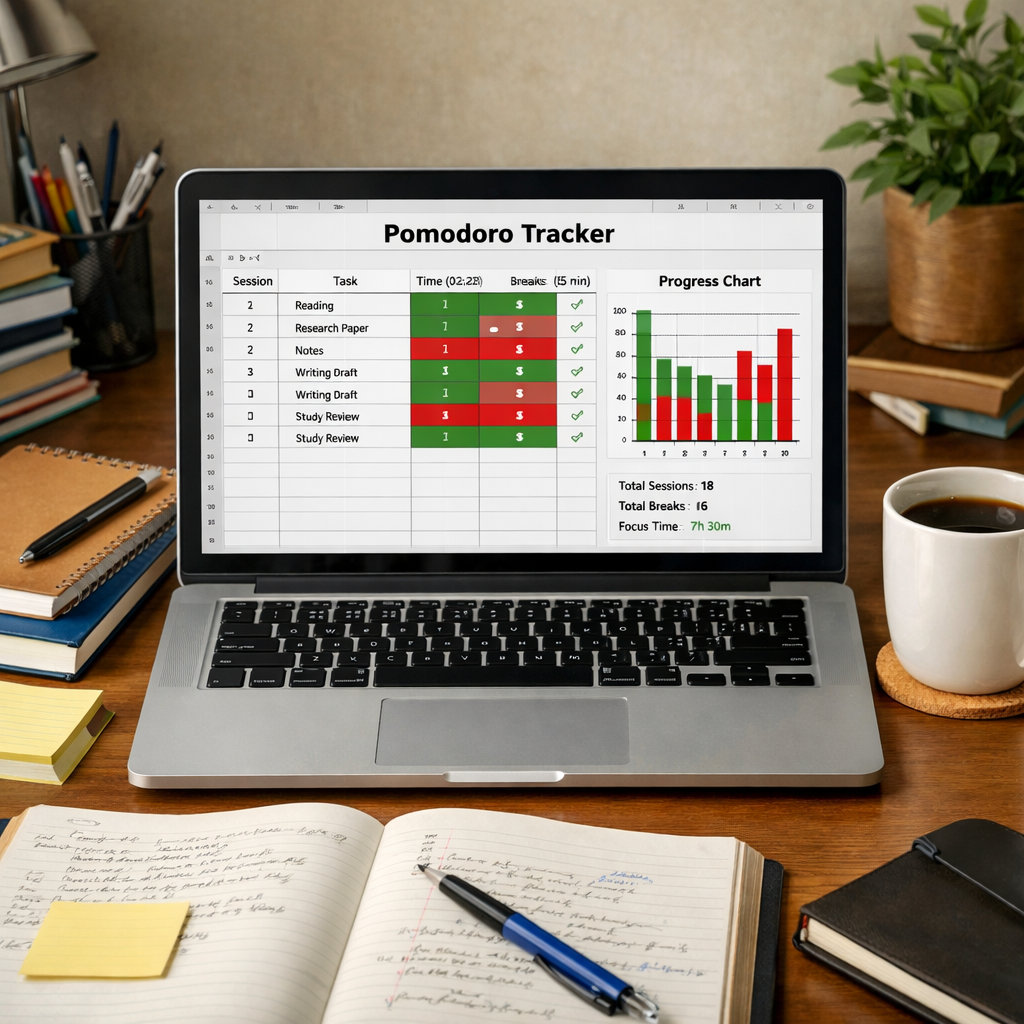
Every few sessions, pull out all those one‑sentence verdicts and reasons. You’ll start seeing trends – maybe you’re most productive in the morning, or maybe certain types of tasks always need a five‑minute prep buffer. Write those patterns on a separate “trend sheet” or a simple spreadsheet.
When you spot a pattern, turn it into a rule of thumb. Example: “If a task involves data analysis, schedule a 20‑minute session and add a 5‑minute break afterward.” Rules like that become your personal productivity playbook.
Another low‑tech option is a visual tracker. Draw a tiny column for each day on a piece of paper, and shade in a block every time you hit a goal. The growing bar of green squares is a quick morale boost that says, “Hey, you’re actually moving forward.”
Use Focus Keeper’s built‑in tracking features
In the app, each completed Pomodoro can be tagged with a label – “study,” “email,” “design,” etc. After a week, filter by label and see how many minutes you’ve devoted to each category. That data tells you if you’re over‑investing in low‑impact work or neglecting your biggest priorities.
What we’ve seen in our own user community is that people who regularly review and tag their sessions end up with a 15‑20% boost in goal‑completion rates. The habit of logging isn’t about bureaucracy; it’s a mirror that shows you exactly where your focus is landing.
Actionable checklist for today’s review
- Look at the note you wrote before the timer.
- Mark “Done” or “Partial” and add a one‑line why.
- Rewrite the next goal to be a bit tighter or add a buffer.
- Log the session label in Focus Keeper.
- Every 5 sessions, glance at your trend sheet and note one pattern.
Give yourself a minute right after each Pomodoro to run through this checklist. It feels like a tiny ritual, but over a month it compounds into a powerful feedback loop that keeps your goals realistic and your progress visible.

So, what’s the next move? Open your Focus Keeper app, finish the current session, then hit pause and do the five‑step review. You’ll notice the vague “maybe I’ll get to it later” feeling fading away, replaced by a clear sense of what you’ve actually achieved and what you’ll tackle next.
Conclusion
So there you have it – a clear path from a vague to‑do list to a series of bite‑sized wins you can actually see crossing the finish line.
We’ve walked through defining a purpose, breaking it into measurable milestones, matching the right session length, polishing it with SMART criteria, and finally reviewing the outcome. Each step builds a feedback loop that keeps you honest and motivated.
Think about the last time you felt stuck halfway through a Pomodoro. What changed when you wrote a concrete, numbered outcome? That tiny shift is what turns distraction into focus.
Now’s the moment to put the checklist into practice. Open your Focus Keeper app, set a 25‑minute timer, and write a single, SMART‑styled goal in the notes field. After the timer dings, spend a minute noting “Done” or “Partial” and the reason why.
Do this for five sessions, glance at your trend sheet, and you’ll start spotting patterns – maybe you crush creative work in the morning or need a five‑minute buffer for data pulls.
When those patterns surface, tweak your next goals accordingly. The more you iterate, the tighter your session goals become, and the more momentum you’ll build.
Ready to see the difference? Give the five‑step review a try today and watch vague intentions melt into real progress.
FAQ
What’s the first step when figuring out how to set realistic session goals?
Start by asking yourself what you actually want to finish in the next 20‑30 minutes. Write that intention on a sticky note or in the Focus Keeper notes field before you hit start. The moment you turn a vague idea into a concrete sentence – like “outline three bullet points for the client brief” – you give your brain a clear target to chase.
That tiny act of naming the goal creates a mental contract. It’s the difference between drifting and having a finish line you can see, which is why the very first move matters more than the length of the timer.
How long should a focus session be to keep my goals realistic?
Most people stay sharp for about 20‑30 minutes before attention starts to wander. If you notice you’re losing focus after fifteen, try a shorter 20‑minute block. If you breeze through a micro‑task in ten, consider bundling two steps into a single session. The sweet spot is the length that lets you finish the goal without feeling rushed or bored.
Experiment for a week: record how many minutes it actually takes to complete a typical micro‑step. Then match future sessions to that sweet spot. You’ll end up with session lengths that feel natural, not forced.
Can I use the SMART framework for each session goal?
Absolutely. Take a quick look at the five letters: Specific, Measurable, Achievable, Relevant, Time‑bound. Turn a generic “study biology” into something like “summarize five key concepts from Chapter 4 in 20 minutes.” Now you know exactly what success looks like, you can count it, and you’ve tied it to the timer.
Applying SMART doesn’t have to be a heavy process – just a quick mental checklist before you start. It adds clarity without slowing you down, and those tiny checkpoints keep the goal realistic.
What common mistakes should I avoid when setting session goals?
One big pitfall is packing too much into one Pomodoro. If you aim to “write a whole report,” you’ll likely stop halfway and feel defeated. Another is being vague – “work on project” gives no direction. Finally, ignoring the need for resources leads to wasted minutes hunting files. Keep goals bite‑sized, concrete, and resource‑ready.
When you catch these habits early, you’ll stop the cycle of disappointment and start seeing steady progress instead of endless scrolling.
How do I track progress and adjust my session goals over time?
After each timer dings, glance at the note you wrote and mark it as “Done” or “Partial.” Jot a brief why – maybe a distraction or an underestimated task size. Over five‑to‑seven sessions, pull those notes together and look for patterns: time of day, task type, or recurring interruptions.
Those patterns become your personal data set. Use them to shrink overly‑ambitious goals, shift tough work to your peak hours, or add a quick prep step for recurring distractions. The review loop turns raw effort into actionable insight.
Do different types of work need different session goals?
Yes. A student might set a goal like “annotate three paragraphs and write two flashcards,” while a freelancer could aim for “draft the project scope outline (200 words).” The core idea stays the same – a clear, measurable outcome – but the content reflects the work’s nature. Adjust the granularity to match the mental load: creative tasks often need shorter bursts, analytical work can stretch a bit longer.
Tailoring goals to the type of work keeps the process feeling natural rather than forced, and it helps you stay motivated across varied responsibilities.
How can Focus Keeper help me stay on track with realistic session goals?
Focus Keeper gives you a simple timer paired with a notes field, so you can write your goal right where you start the session. The app also lets you label each Pomodoro, making it easy to filter later and see how much time you spent on studying versus client work.
That built‑in tracking turns every session into a data point without needing a separate spreadsheet. Over time you’ll spot trends, tweak goals, and keep your session planning realistic and effective.