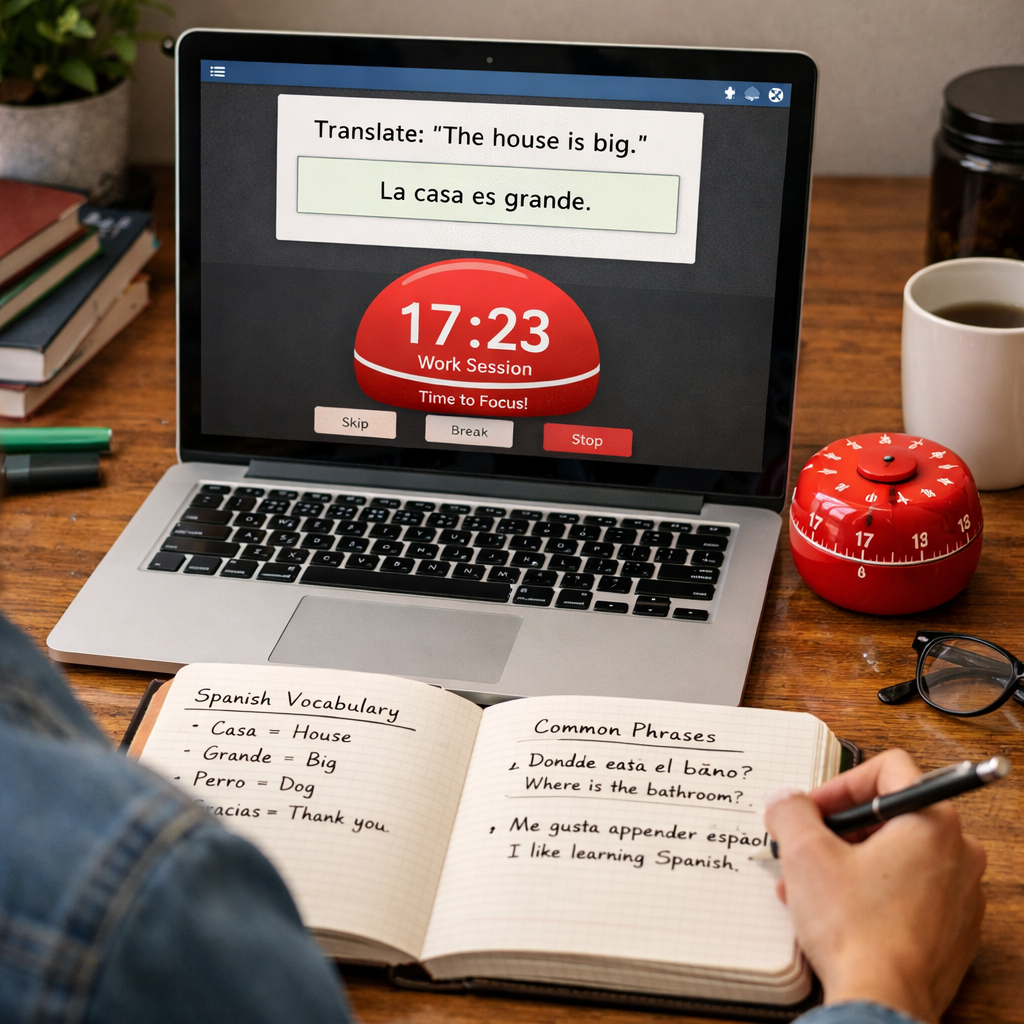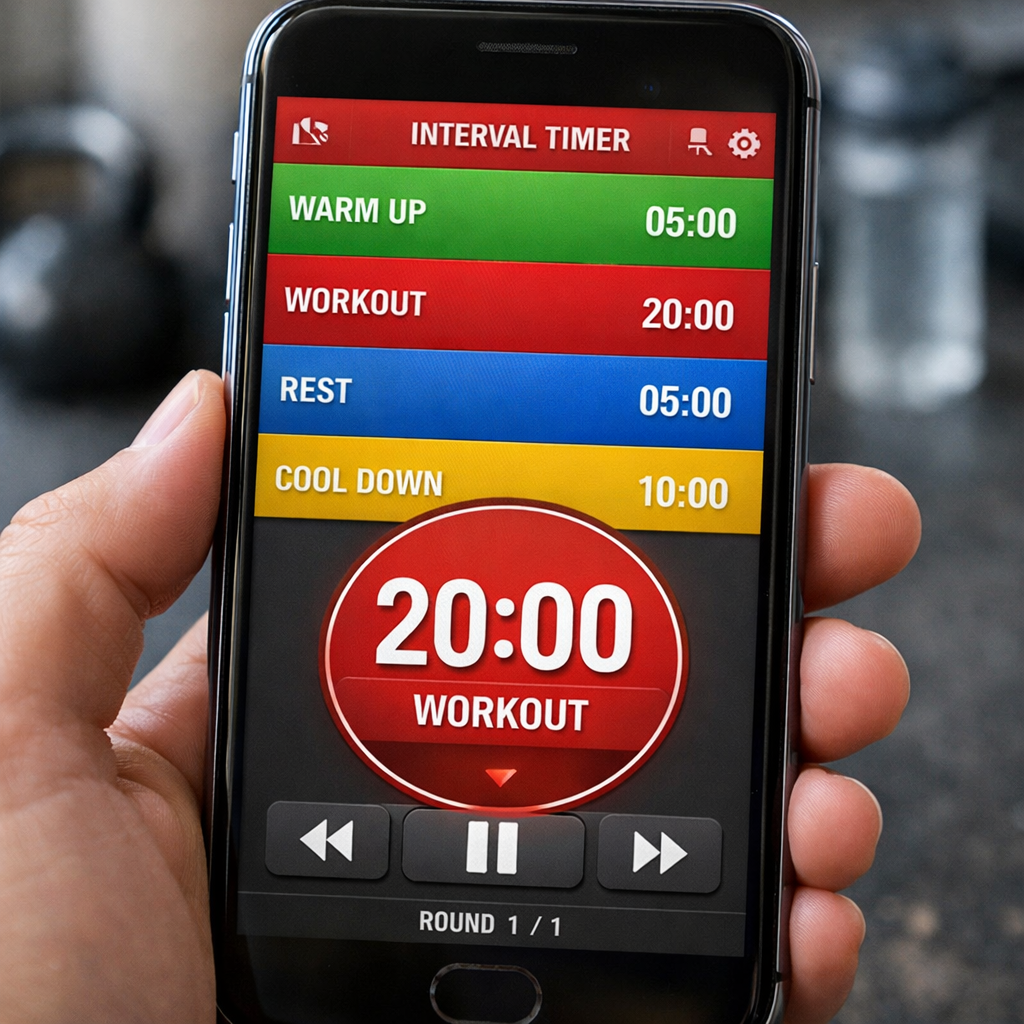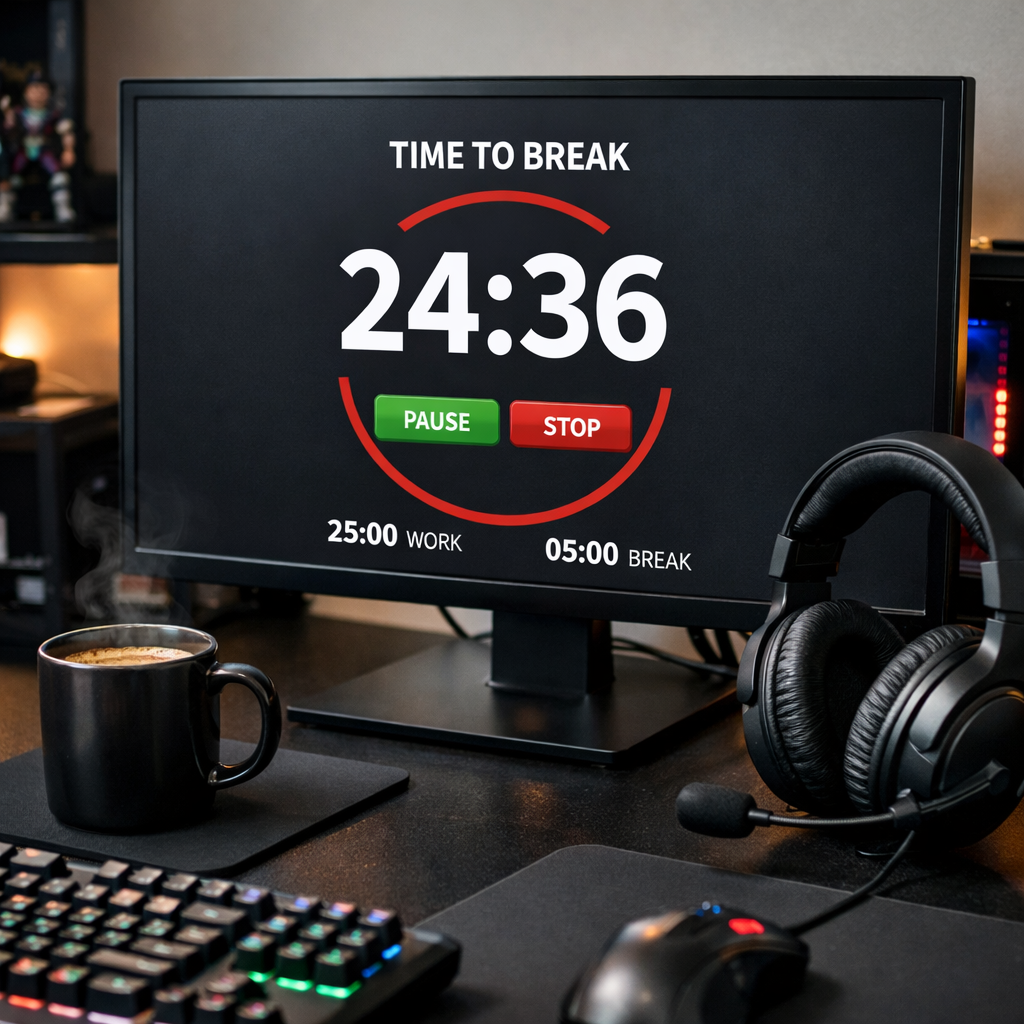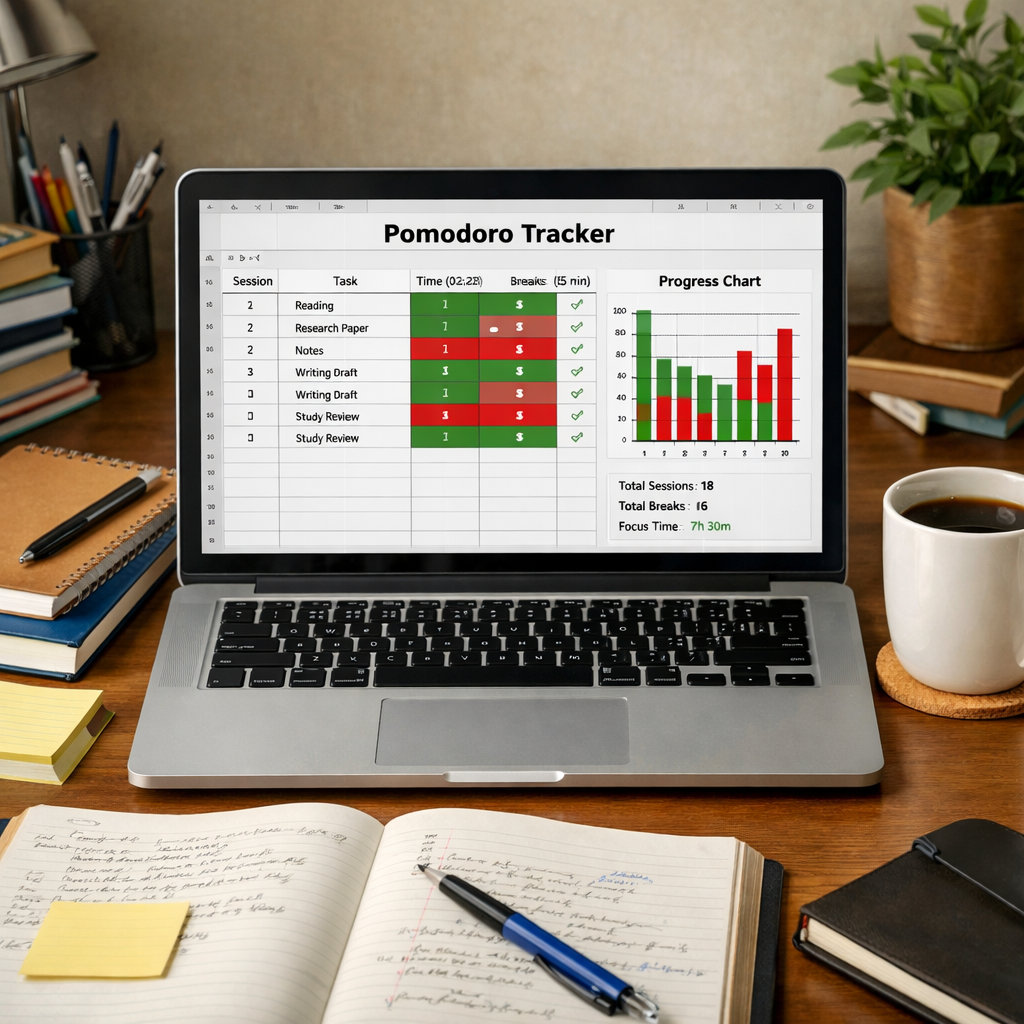

In today’s world, it feels like our attention is always being pulled in a million directions. It’s tough to get anything done without getting sidetracked. That’s where time management techniques come in handy. We’re going to look at the pomodoro 50 10 method, which is a bit different from the usual way people do it. It’s all about finding a rhythm that works for you to really focus and get stuff done.
Key Takeaways
- The pomodoro 50 10 technique involves working in 50-minute focused bursts followed by 10-minute breaks.
- This longer work interval is designed to support deeper concentration and tackle more complex tasks.
- Regular, restorative breaks are just as important as the work periods for preventing burnout.
- Adapting the 50/10 timing to your personal energy levels and task demands can boost productivity.
- Managing interruptions effectively is vital to protecting your focus during the 50-minute work sessions.
Understanding the Pomodoro 50/10 Technique

The Core Principles of Focused Work Intervals
The Pomodoro 50/10 technique is built on a simple idea: work in focused bursts, then take a real break. It’s not about working non-stop until you drop. Instead, it’s about training your brain to concentrate intensely for a set period, knowing that a break is coming. This method helps you fight off that feeling of being overwhelmed by big projects. By breaking things down into manageable chunks, you make tasks seem less daunting. The whole point is to make your work time more effective, not just longer.
- Work in dedicated blocks: Commit to a specific task for the entire work interval.
- Embrace the break: Use breaks to truly disconnect and recharge.
- Track your progress: Acknowledge each completed interval.
The key is to treat each work interval as a commitment. When the timer is on, you’re all in on that one task. No checking emails, no scrolling social media. Just pure focus.
Why the 50/10 Ratio Enhances Deep Work
So, why 50 minutes of work and 10 minutes of break? It’s a bit different from the classic 25/5, and many find it works better for tasks that require sustained concentration. Think about those longer projects where you really need to get into a flow state. A 50-minute block gives you enough time to really dig into the material without feeling rushed. Then, that 10-minute break is a proper chance to step away, clear your head, maybe grab a coffee or do some quick stretches. It’s about finding a rhythm that matches how our brains naturally work, allowing for deep concentration followed by genuine recovery.
Here’s a look at how the intervals stack up:
| Interval Type | Duration |
|---|---|
| Focused Work | 50 minutes |
| Restorative Break | 10 minutes |
This structure helps prevent mental fatigue that can creep in with shorter, more frequent breaks. It allows for a deeper immersion into your work.
Adapting Time Blocks for Peak Performance
While 50/10 is the focus here, it’s important to remember that this isn’t a one-size-fits-all solution. Your personal energy levels and the nature of your tasks might mean you need to tweak things. Some days, you might find you can focus for longer, or maybe you need slightly shorter work periods. The goal is to experiment and find what makes you most productive. Don’t be afraid to adjust the 50/10 split if it’s not quite hitting the mark. Maybe you discover that 45/15 works better for your specific workflow, or perhaps you need a longer break after two 50-minute sessions instead of just one. It’s about listening to your body and mind and making the technique work for you, not the other way around.
Implementing the Pomodoro 50/10 for Maximum Productivity
Structuring Your Workday with Extended Sessions
So, you’ve got the hang of the basic Pomodoro idea, but maybe those 25-minute bursts feel a little short for really getting into the zone. That’s where the 50/10 split comes in. It’s about giving yourself a more substantial chunk of time to tackle tasks that need a bit more sustained focus. Think of it like settling into a good book; you don’t want to be interrupted every few pages. With 50 minutes of dedicated work, you can really dive into complex problems, write longer pieces, or code without constantly switching gears.
Here’s a way to map out your day:
- Morning Deep Dive: Start your day with your most demanding task. Schedule two or three 50-minute sessions back-to-back, with short 10-minute breaks in between. This is prime time for your brain.
- Afternoon Flow: Use the afternoon for tasks that require focus but might not be as mentally taxing. You can stick to the 50/10 rhythm or even mix in some shorter 25/5 sessions if your energy dips.
- Task Batching: Group similar tasks together. Instead of doing one 50-minute session for emails, then another for planning, try to dedicate a block to just one type of activity. This reduces context switching.
The key is to be intentional. Don’t just let the timer dictate your day; use it as a tool to structure your energy and attention where it matters most. It’s about creating a rhythm that works for you, not against you.
Maximizing Restorative Breaks for Cognitive Recharge
Those 10-minute breaks aren’t just filler; they’re as important as the work periods themselves. If you’re spending your break scrolling through social media or checking emails, you’re not really resting your brain. You’re just switching from one type of mental input to another. The goal here is to give your mind a genuine break so it can come back refreshed and ready for the next 50-minute sprint.
What to do during your 10-minute break:
- Move Your Body: Stand up, stretch, walk around the room, or step outside for a few minutes. Getting your blood flowing can do wonders.
- Hydrate and Snack: Grab a glass of water or a healthy snack. Avoid sugary things that can lead to a crash later.
- Mindful Moment: Close your eyes and focus on your breathing for a few minutes. Or, simply look out a window and let your gaze wander. Give your eyes a rest from screens.
- Quick Tidy: Spend a couple of minutes tidying your workspace. A clean environment can lead to a clearer mind.
Integrating the Pomodoro 50/10 into Your Workflow
Making the 50/10 technique a regular part of your routine takes a little practice. It’s not about being perfect from day one, but about consistent effort. Start by picking one or two tasks a day to apply the 50/10 method to. See how it feels. Are you getting more done? Are you less stressed?
Here’s a simple way to start:
- Identify Your Target Task: Choose a task that typically takes a good chunk of time and requires concentration.
- Set Your Timer: Use a physical timer if possible. It helps create a clear boundary and reduces the temptation to check your phone.
- Work with Intent: Focus solely on the task for the full 50 minutes. If distractions pop up, jot them down quickly and get back to it.
- Respect the Break: When the timer rings, stop immediately. Use the full 10 minutes to step away and recharge.
- Repeat and Reflect: After a few cycles, take a moment to see how you feel and what you accomplished. Adjust as needed for the next day.
It might feel a bit rigid at first, but the structure is what helps build momentum and prevents that feeling of being overwhelmed. You’re essentially training your brain to focus for longer periods and to appreciate the rest when it comes.
The Science Behind Sustained Focus
It’s easy to just say "work for 50 minutes, break for 10," but there’s some real brain science backing why this rhythm actually works for keeping you sharp.
Leveraging Ultradian Rhythms for Energy Management
Our bodies and brains don’t run on a constant energy level. We naturally go through cycles, typically lasting about 90 to 120 minutes, where our alertness and ability to concentrate peak, and then dip. These are called ultradian rhythms. The 50/10 technique kind of plays into this. By working in focused bursts of 50 minutes, you’re generally hitting that sweet spot of peak cognitive function. Then, the 10-minute break is perfectly timed to catch that natural dip before it becomes a full-blown energy crash. It’s like catching a wave instead of fighting the tide.
- Peak Alertness: You’re at your best for focused tasks.
- Slight Dip: Energy starts to wane naturally.
- Restorative Break: A short pause helps reset before the next cycle.
Combating Procrastination with Timeboxing
Ever stare at a huge project and just freeze? That’s your brain saying "whoa, too much." Timeboxing, which is essentially what the Pomodoro 50/10 is doing, breaks down big, scary tasks into smaller, manageable chunks. Knowing you only have to focus intensely for 50 minutes makes it much easier to start. It’s like saying you’ll just walk for 50 minutes, not run a marathon. The timer acts as a commitment device. You agree to work on that specific task for that specific time, and nothing else. This external deadline helps prevent work from expanding to fill all available time, a phenomenon sometimes called Parkinson’s Law.
The simple act of setting a timer and committing to a specific task for a defined period can trick your brain into overcoming inertia. It shifts the focus from the overwhelming entirety of the task to the achievable goal of completing the current work interval.
The Psychological Impact of External Timers
Using a physical timer, or even a dedicated app that mimics one, has a psychological effect. It creates a clear boundary between work and rest. When that timer is ticking, it’s a signal to your brain: "Okay, time to concentrate." When it rings, it’s a signal to switch gears and truly disconnect for a bit. This external cue helps train your brain to enter a focused state more readily and to disengage more effectively during breaks, which is key for preventing mental fatigue and burnout over the long haul. It removes the guesswork and the constant internal debate about whether you should be working or resting.
Mastering Interruptions During Pomodoro 50/10
Interruptions are the arch-nemesis of focused work, and the 50/10 technique is no different. When you’re deep in a 50-minute work block, the last thing you want is something pulling you out of that zone. But let’s be real, life happens. People interrupt, your own brain wanders, and notifications ping. The trick isn’t to eliminate interruptions entirely – that’s nearly impossible – but to manage them effectively so they don’t derail your entire session. It’s about building resilience into your workflow.
Strategies for Handling Internal Distractions
Sometimes, the biggest interruptions come from inside your own head. You suddenly remember you need to buy milk, or a random song gets stuck on repeat. These internal nudges can be surprisingly disruptive. The key is to acknowledge them without letting them take over.
- Jot it down: Keep a notepad or a digital note-taking app handy. When a thought pops up that isn’t related to your current task, quickly write it down. This gets it out of your head and assures you that you won’t forget it. Then, immediately return your focus to the task at hand.
- Mindful awareness: Practice noticing when your mind starts to drift. Don’t judge yourself for it; just gently guide your attention back to your work. It’s like training a muscle – the more you do it, the stronger your focus becomes.
- Task switching cost: Understand that every time you switch tasks, even for a moment, it takes time and mental energy to get back into the flow. Minimizing these internal switches is vital for maintaining momentum.
The goal isn’t to achieve a perfectly silent mind, but to develop the skill of returning to your intended focus after a distraction, no matter how small.
Techniques for Managing External Interruptions
External interruptions, like a colleague stopping by your desk or an urgent email, require a slightly different approach. You need to protect your work time without being rude or completely shutting people out.
- The "Inform, Negotiate, Call Back" method: This is a classic for a reason. When interrupted, quickly inform the person you’re in a focused work session. Negotiate a time to talk later (e.g., "Can I get back to you during my break in 20 minutes?"). Then, make sure you actually call them back or follow up at the agreed-upon time. This respects their need and your work block.
- Visual cues: Sometimes, a simple visual signal can help. Wearing headphones, even if you’re not listening to anything, can signal that you’re in deep work mode. You can also use a small sign on your desk if you’re in an office environment.
- Pre-emptive communication: If you know you’ll be in a long 50-minute session, let your immediate team know beforehand. A quick message like, "Heads up, I’m doing a deep work block until 10:30 AM, will check messages after," can prevent many interruptions before they even start.
Protecting Your Flow State During Deep Work
Your flow state is that magical zone where you’re completely absorbed in your work, time seems to melt away, and productivity soars. Interruptions are the biggest threat to this state. The 50/10 technique is designed to help you get into and stay in flow for longer periods. Protecting it is paramount.
- Batching interruptions: Whenever possible, try to group your responses to external interruptions. If you can, save non-urgent questions or requests until your 10-minute break. This allows you to address them without breaking your concentration mid-task.
- Digital hygiene: Turn off non-essential notifications on your phone and computer. Social media alerts, news updates, and even some email notifications can be major flow-killers. Consider using website blockers or focus apps during your work intervals. This is a key part of making the Pomodoro Technique work for you.
- Scheduled check-ins: If you absolutely must be available, schedule brief check-in times outside of your Pomodoro blocks. This way, people know when they can reach you, reducing the likelihood they’ll interrupt you when you’re in the zone.
Advanced Pomodoro 50/10 Strategies
Customizing Intervals for Complex Tasks
So, you’ve gotten the hang of the 50/10 rhythm and it feels pretty good. But what happens when you’re staring down a really big, complicated project? Sometimes, the standard 50-minute work block just isn’t quite enough to get into the zone, or maybe you find yourself finishing early and feeling a bit restless. That’s where customizing your intervals comes in. Think about your own energy levels and the nature of the tasks. For tasks that require deep, sustained thought, like writing a complex report or coding a new feature, you might find that longer work periods, say 75 or even 90 minutes, followed by a proportional break (like 15-20 minutes), work better. It’s all about finding that sweet spot where you can really immerse yourself without hitting a wall.
Here’s a quick look at how you might adjust:
- Deep Dive Tasks: Consider 75/15 or 90/20 minute cycles. This gives you more uninterrupted time to really dig into challenging work.
- Moderate Complexity: Stick with the 50/10, or perhaps try 60/12 if you feel you need a little more time.
- Quick, Focused Bursts: For tasks that are less demanding but still need attention, you might even shorten the work interval slightly, maybe to 40 minutes, with a 10-minute break.
The key is experimentation to find what truly aligns with your personal productivity peaks.
Utilizing Technology to Enhance Your Pomodoro
While a simple kitchen timer can be effective, there’s a whole world of tech out there that can take your Pomodoro 50/10 practice to the next level. We’re not just talking about setting an alarm on your phone, which can often be a gateway to distractions. Think about apps designed specifically for focus. Many of them integrate task management, allowing you to assign Pomodoros to specific tasks. Some even block distracting websites or apps during your work intervals. There are also ambient sound apps that can help mask background noise and create a more conducive work environment. It’s about using technology as a tool to support your focus, not as another source of interruption.
Scaling the Pomodoro 50/10 for Team Productivity
Bringing the Pomodoro 50/10 into a team setting can be a game-changer, but it requires a bit of coordination. Imagine everyone on your team working in focused sprints simultaneously. This can create a shared sense of momentum and accountability. One popular method is the "Silent Pomodoro" session, where team members join a video call with mics muted. This visual presence, even without talking, can help people stay on track and feel connected. It’s also a great way to manage different time zones – people can join for their active work hours. Communication during these sessions needs to be planned; perhaps a quick chat message for urgent things, or deferring non-urgent questions until a designated team break or sync time. Clear guidelines on how to signal availability or unavailability are super important for this to work smoothly.
When implementing Pomodoro 50/10 with a team, establishing clear communication protocols is paramount. Decide beforehand how urgent issues will be handled and when non-urgent discussions can take place. This prevents the focused work intervals from being constantly broken by team chatter.
Common Pitfalls and Expert Solutions

Even with the best intentions, sticking to the Pomodoro 50/10 technique can be tricky. Life happens, right? We all run into a few snags along the way. The good news is, most of these issues have pretty straightforward fixes.
Avoiding Burnout by Respecting Breaks
One of the biggest mistakes people make is treating those 10-minute breaks as optional. You finish a task right as the timer goes off, and think, "Just five more minutes to wrap this up." This is a fast track to burnout. Your brain needs that downtime to actually process information and avoid getting overloaded. Pushing through breaks means you’re not really getting the full benefit of the technique, and you’ll likely feel drained much faster.
- Don’t skip breaks: Even if you’re in the zone, stop when the timer signals. The work will still be there after your break.
- Use breaks wisely: Step away from your screen. Stretch, grab some water, or just stare out the window. Avoid checking emails or social media, as this just keeps your brain engaged.
- Listen to your body: If you’re feeling particularly tired, consider taking a slightly longer break or even an extra short one. The goal is sustainable productivity, not just ticking boxes.
The Importance of a Physical Timer
While phone apps are convenient, they can also be a major source of distraction. Notifications pop up, tempting you to check something "real quick." This is where a dedicated physical timer really shines. It creates a clear boundary between your work and your distractions. Having a tangible object that you set and watch tick down can really help reinforce the ritual of focused work. It’s a simple change, but it makes a big difference in keeping your attention where it needs to be. Many find that using a physical timer helps them commit to the Pomodoro Technique more seriously.
A physical timer acts as a dedicated tool for focus, separating your work sessions from the digital noise that often surrounds us. It’s a small step that can significantly protect your concentration.
Batching Similar Tasks for Efficiency
Trying to switch between vastly different tasks within a single 50-minute block can be really inefficient. Your brain has to re-orient itself each time, which wastes time and mental energy. A smarter approach is to group similar tasks together. For example, dedicate one 50-minute session to answering emails, another to writing reports, and a third to making phone calls. This allows you to get into a rhythm and maintain momentum. It’s about working smarter, not just harder, by minimizing context switching. This method helps you get more done without feeling like you’re constantly starting over.
Wrapping Up
So, that’s the 50/10 Pomodoro technique. It’s not some magic bullet, but it’s a solid way to get more done without feeling totally drained. You just set your timer for 50 minutes of work, then take a good 10-minute break. It sounds simple, and honestly, it is. But sticking to it is where the real win is. Give it a shot for a week and see how it feels. You might be surprised at how much more focused you can be when you’re working with your time, not against it. It’s all about finding a rhythm that works for you and your brain.
Frequently Asked Questions
What’s the main idea behind the Pomodoro 50/10 technique?
It’s like breaking down your big tasks into smaller, more manageable chunks. You work super hard and focused for 50 minutes, then take a nice 10-minute break to relax your brain. This helps you get more done without getting tired or bored.
Why is the 50-minute work time and 10-minute break time good?
This special timing helps your brain stay sharp. Working for 50 minutes lets you get into a deep focus, and the 10-minute break gives your mind a real rest so you’re ready to focus again. It’s better than working for a really long time without stopping.
Can I change the times if 50/10 doesn’t work for me?
Yes! While 50/10 is great, you can totally adjust it. Some people like 25 minutes of work and 5 minutes of break, or maybe 90 minutes of work and 20 minutes of break. The important thing is to find what helps you focus best.
What’s the best way to spend my 10-minute break?
During your break, try to step away from your screen. You could stretch, walk around a bit, grab some water, or just close your eyes for a minute. The goal is to give your brain and eyes a real rest from working.
What if I get interrupted while I’m working?
If a thought pops into your head, quickly write it down to deal with later. If someone interrupts you, politely tell them you’re busy and suggest talking when your break time comes. The idea is to protect your focus time as much as possible.
Is this technique good for people who get distracted easily?
Definitely! The Pomodoro 50/10 technique is excellent for people who find it hard to concentrate. By breaking work into timed sessions and having scheduled breaks, it makes tasks feel less overwhelming and helps build focus over time.