
Ever stared at a stack of lecture notes and felt the panic rising, wondering how on earth you’ll get through it all before exam day? You’re not alone—most students hit that wall, and the good news is there’s a simple rhythm that can turn that chaos into a steady groove.
Enter the pomodoro routine for exam revision. It’s basically a timer‑driven sprint: 25 minutes of laser‑focused study followed by a 5‑minute brain‑break. Those short bursts keep your mind from wandering and stop fatigue from building up. Think of it like interval training for your brain.
Many students find that after three pomodoros they can recall key concepts without the usual mental fog. One common trick is to jot a quick summary during the 5‑minute break, so the next session starts with a fresh mental slate. It’s a tiny habit that adds up quickly.
Here’s a step‑by‑step starter you can try tonight: 1️⃣ Pick a subject or chapter you need to master. 2️⃣ Set your timer for 25 minutes and dive in, ignoring notifications. 3️⃣ When the timer rings, stand, stretch, grab a glass of water, or do a brief mindfulness breathe. 4️⃣ Write down one takeaway from that session, then reset the timer. Repeat four cycles, then treat yourself to a longer 15‑minute break. By the end of the evening you’ll have covered a solid chunk while your brain stays fresh.
If you’re curious about the nuts and bolts of how the method works, check out What is pomodoro technique method? – it breaks down the timing structure and why those 5‑minute pauses matter for memory consolidation.
To keep that focus sharp, some students pair pomodoros with a small dose of focus‑enhancing nootropic gummies – they’re designed to support mental clarity during those intense study bursts. You can learn more about options like that at Great Bite Supplements.
TL;DR
The pomodoro routine for exam revision lets you break study sessions into focused 25‑minute bursts with short 5‑minute breaks, keeping your brain sharp and preventing burnout.
Try four cycles, jot a quick takeaway during each break, and watch your recall improve while staying energized for the next round in just an evening.
Step 1: Set Up Your Pomodoro Timer and Study Space
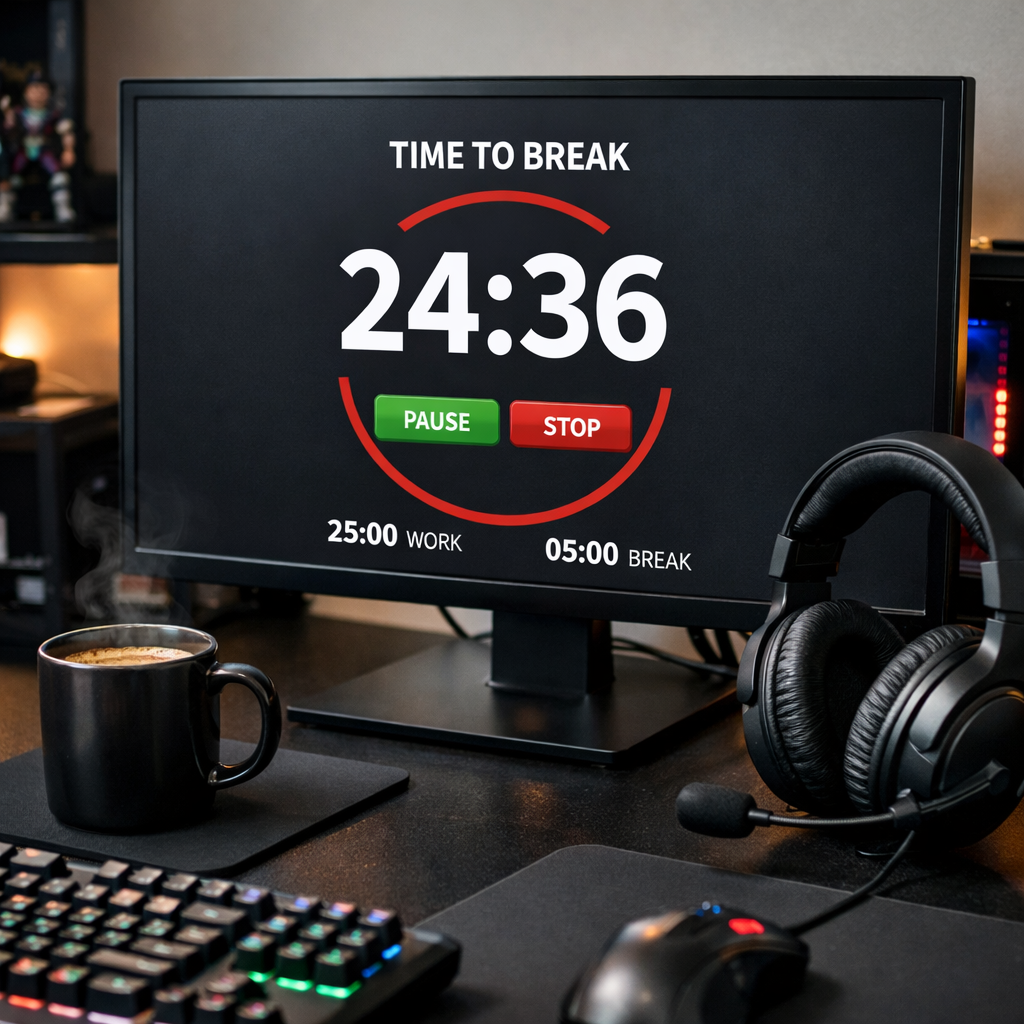
First thing’s first: you need a timer that actually works. Whether you grab your phone, a kitchen timer, or the timer built into the Focus Keeper app, set it for a solid 25 minutes. Don’t fiddle with notifications – silence them, put the phone on Do Not Disturb, and make sure the alarm is loud enough to snap you out of a daydream.
Next, carve out a study nook that tells your brain, “Okay, this is the focus zone.” A clean desk, good lighting, and a comfy chair are basics. If you’re sharing a room, a simple “Do not disturb” sign (or a pair of noise‑cancelling headphones) can save you from the inevitable hallway traffic.
Speaking of headphones, ever wonder how to keep them clean so they don’t distract you with weird noises? A quick read on how to clean ear plugs walks you through a hassle‑free routine that takes less than two minutes – perfect for the five‑minute break between pomodoros.
Now, let’s talk ergonomics. Position your screen at eye level, keep your elbows at a 90‑degree angle, and place a water bottle within arm’s reach. Little tweaks like these keep fatigue at bay and let you stay in the flow for the full 25‑minute sprint.
Got a cluttered desk? Try the “one‑in, one‑out” rule: for every new notebook or pen you bring in, remove something you don’t need. It’s a tiny habit that makes a huge difference when you’re racing against the clock.
And don’t forget the ambient environment. A splash of natural light or a soft lamp can boost mood, while a small plant adds a breath of fresh air. If you’re into tech, a smart desk lamp that adjusts colour temperature can keep your eyes comfortable during late‑night study sessions.
Once your space feels right, fire up the timer and dive in. The first few minutes might feel shaky – that’s normal. Trust the method: the timer creates a gentle pressure that keeps procrastination at bay.
Here’s a quick visual guide to help you set up:
After the video, give yourself a moment to scan the room. Is there anything that could pull your attention away? Maybe a stray charger cable or a sticky‑note that’s out of place. Adjust it now, so you won’t have to during the next break.
If you’re looking for a sleek surface that resists glare and feels sturdy, check out the options from Glassology Tech. Their tempered glass desk tops are popular among students who want a modern, easy‑to‑clean workspace.
When the timer dings, stand up, stretch, and give your eyes a quick rest. A simple neck roll, a sip of water, or a five‑second gaze out the window does the trick. Then jot a one‑sentence takeaway on a sticky note – that little habit reinforces what you just learned and primes you for the next pomodoro.
Repeat the cycle four times, then reward yourself with a longer 15‑minute break. Use that time to step away from the desk, grab a snack, or do something completely unrelated. When you return, you’ll notice how much sharper your focus feels.
Setting up the timer and study space isn’t just a logistical step; it’s the foundation of a habit that can carry you through weeks of exam prep. Treat it like you would set up a gym station before a workout – the better the setup, the easier the performance.
Ready to give it a try? Grab your timer, clear a spot, and start the first 25‑minute sprint. You’ll be surprised how quickly the rhythm settles in.

Step 2: Plan Your Revision Topics and Priorities
Ever opened your course outline and felt your brain melt at the sheer number of chapters? You’re not alone—most students stare at that list and wonder where to even start. The good news is that a clear plan turns that chaos into a series of bite‑size wins, and it fits perfectly into a pomodoro routine for exam revision.
First thing’s first: grab a blank sheet (or a digital note) and write down every major topic you need to cover. Don’t stop at the headline; break each subject into the sub‑sections that actually appear on past papers. For example, instead of “Biology,” list “Cell structure,” “Photosynthesis pathways,” and “Genetic inheritance.” This tiny extra step gives you a visual map of the mountain you’re climbing.
Map the syllabus like a road trip
Think of your syllabus as a road map. Mark the “must‑see” landmarks—those high‑weight chapters that count for 20‑plus percent of the exam. Then note the side‑streets: topics you’ve already mastered or that carry low marks. When you look at the map, the route becomes obvious.
Why does this matter? Research shows that students who estimate the time needed for each task improve their overall study efficiency (learn how the Pomodoro Technique boosts focus). By turning a vague to‑do list into concrete checkpoints, you give your brain a clear target for each 25‑minute sprint.
Prioritize by weight and difficulty
Next, rank each sub‑topic on two axes: exam weight and personal difficulty. A simple 1‑3 scale works—1 for low weight/easy, 3 for high weight/challenging. Put the “3‑3” items at the top of your list; they’ll be your priority pomodoros. The “1‑1” items can slip into shorter sessions or serve as warm‑ups after a longer break.
Does this feel a bit too clinical? Imagine you’re packing for a trip. You’d put the big, heavy suitcase first, then the lighter day‑bag. The same logic applies to revision: heavy, high‑impact topics go first, lighter ones fill the gaps.
Slice topics into pomodoros
Now take each sub‑topic and ask: how many 25‑minute blocks will it realistically need? If “Photosynthesis pathways” feels like a 90‑minute beast, break it into four pomodoros: 25 minutes to outline the light reactions, 25 for the Calvin cycle, and two short sprints for practice questions and a quick recap. Write the estimated pomodoros next to the topic—this becomes your mini‑schedule.
When a task feels too big, shrink it. Instead of “Revise all of Chemistry,” write “Complete acid‑base equilibrium practice (2 pomodoros).” The narrower the focus, the easier it is to dive in without hesitation.
Build a flexible checklist
Turn your map into a living checklist. A simple table with columns for “Topic,” “Pomodoros Planned,” “Pomodoros Completed,” and “Notes” works wonders. As you finish each block, tick it off—watching the list shrink is surprisingly motivating.
In our experience, seeing progress in real time keeps the momentum going, especially when the exam deadline looms. If a pomodoro runs over or you feel burnt out, adjust the next session’s length or swap in a lighter topic. The key is flexibility, not rigidity.
And remember, the 5‑minute break isn’t just a pause; it’s a chance to reset your focus, stretch, or glance at a quick flashcard set. A well‑planned schedule treats those breaks as intentional micro‑rewards, which research from Save My Exams confirms helps sustain attention (why short breaks boost concentration).
So, what’s the next actionable step? Grab that syllabus, break it down into sub‑topics, rank each by weight and difficulty, and assign a pomodoro count. Then copy the list into a checklist app or a simple spreadsheet. When you open your timer tomorrow, you’ll already know exactly what you’re tackling—and why it matters.
Give yourself a 2‑minute sprint now: open a new note, write the first three topics for your next study session, and assign a pomodoro count to each. You’ll feel the clarity instantly, and the pomodoro routine for exam revision will start to feel like a well‑orchestrated playlist rather than a frantic scramble.
Step 3: Execute Focused Pomodoro Sessions
Alright, you’ve already mapped out what to study and how many pomodoros each chunk needs. Now it’s time to turn that plan into real‑time action. The magic happens when you sit down, start the timer, and let the focused sprint do the heavy lifting.
Set the stage, then hit start
Before you click “go,” take a quick inventory of your desk. Have your notes, highlighter, water bottle, and any quick‑reference cards within arm’s reach. Clear away anything that isn’t part of the current pomodoro – even a stray phone can become a silent distraction.
Once the space feels tidy, open your timer. If you’re using Focus Keeper, the app will log each interval automatically, which makes it easy to glance at your progress later without breaking flow.
Kick‑off the first sprint
Pick the first sub‑topic from your checklist – maybe it’s “photosynthesis light reactions.” Tell yourself, “I’m only in this for the next 25 minutes.” That mental contract keeps the brain from wandering.
During the work block, adopt a “single‑task” mindset. Resist the urge to skim ahead or check emails. If a thought pops up, jot a quick note on a scrap of paper and promise yourself you’ll revisit it in the next break.
Use the break wisely
When the timer dings, stand up. Stretch, sip water, or glance at a flashcard. The five‑minute pause isn’t just a breather; it’s a reset button for attention. Research from Birmingham City University explains that short breaks help the mind consolidate memory and maintain high‑quality focus here.
Try a micro‑movement: 10 jumping jacks, a quick walk to the kitchen, or a few deep breaths. Anything that moves blood and changes scenery will make the next sprint feel fresher.
Adjust on the fly
Sometimes a pomodoro feels too short for a dense chapter, or you finish a topic faster than expected. That’s okay – the technique is flexible. If you’re still buzzing after 25 minutes, add a five‑minute “extension” and note it in your log. If you’re burnt out, swap the next block for a lighter task like reviewing flashcards.
Remember, the goal isn’t rigid perfection; it’s consistent momentum. A missed minute here or a longer break there won’t ruin the whole day.
Track and reflect
At the end of each hour, glance at your session history. Seeing a growing list of completed pomodoros is surprisingly motivating. Jot a one‑sentence takeaway: “Explained the Calvin cycle steps” or “Solved three practice equations.” Those tiny reflections cement learning and give you a quick win to celebrate.
If you notice a pattern – maybe you’re always sluggish during late‑afternoon sessions – consider shifting your most demanding topics to your peak energy window. That small tweak can boost overall efficiency.
Wrap up the study block
After you’ve knocked out the planned pomodoros for the day, take a longer break – 15 to 30 minutes is ideal. Move away from the desk entirely: grab a snack, step outside, or do something enjoyable that isn’t screen‑based. This larger pause lets your brain consolidate the day’s work and prepares you for the next study session.
Before you close, update your checklist: tick off the topics you finished, adjust pomodoro counts for any unfinished items, and note any new ideas that surfaced during breaks. That final five‑minute admin step keeps your system tidy and ready for tomorrow.
Ready to try it right now? Open your timer, pick the first topic on your list, and commit to a single 25‑minute sprint. You’ll be surprised how quickly the momentum builds.

Step 4: Take Effective Breaks and Review
Okay, you’ve powered through a few pomodoros and the timer’s just pinged again. What do you do next? Instead of jumping straight into another sprint, hit the pause button and treat that five‑minute gap like a mini‑reset button for your brain.
Why the break matters
Science tells us that brief, purposeful pauses help consolidate memory, lower cortisol, and keep attention sharp. In our experience, students who deliberately switch gears during breaks remember more than those who stare at their notes until they’re blurry.
So, think of the break as a short, intentional detour—not a guilty pleasure binge. A quick walk, a stretch, or even a sip of water can move blood flow and give your prefrontal cortex a breather.
Pick a break activity that actually recharges
Here are three go‑to options that fit nicely into a five‑minute window:
- Physical reset – do 10‑15 seconds of jumping jacks, a neck roll, or a doorway stretch.
- Mental switch – glance at a non‑academic meme, close your eyes and breathe for four breaths, or look out a window.
- Micro‑reward – treat yourself to a piece of fruit, a favorite song snippet, or a quick doodle.
Pick the one that feels most refreshing at the moment. The key is to avoid screens; they tend to pull you back into the same mental mode you’re trying to escape.
Review: the five‑minute audit
When the break ends, spend the next minute doing a rapid review. Grab a sticky note or open a digital note and answer three quick prompts:
- What’s the single takeaway from the last pomodoro?
- Did any question or gap pop up that needs a deeper dive?
- What’s the exact next step for the upcoming sprint?
This tiny audit turns the abstract “I studied” into a concrete “I learned X, I’ll revisit Y, and I’m ready for Z.” It also builds a habit loop that reinforces the material every cycle.
Log it, don’t forget it
Our platform, Focus Keeper, automatically logs each interval, but the real power comes when you add a short note to each entry. Write something like “Calvin cycle steps nailed” or “Struggled with acid‑base equilibrium – revisit later.” Over a week you’ll see patterns – maybe you’re strongest in the morning or you always stumble on math proofs.
That insight lets you tweak the schedule: move tougher topics to your peak energy window, or allocate an extra pomodoro for recurring trouble spots.
Long break: the deeper dive
After you’ve completed a full study block (usually four pomodoros), step away for 15‑30 minutes. This isn’t a Netflix binge; it’s a purposeful change of scenery. A short walk outside, a snack, or a chat with a roommate can help your brain consolidate the day’s chunks.
During that longer pause, skim your checklist one more time. Tick off finished items, adjust pomodoro counts for any unfinished topics, and jot down any fresh ideas that emerged while you were away.
Quick table to visualise your break‑review toolkit
| Break Type | Duration | Primary Benefit |
|---|---|---|
| Physical reset | 5 min | Increases blood flow, reduces tension |
| Mental switch | 5 min | Refreshes focus, prevents mental fatigue |
| Micro‑reward | 5 min | Boosts motivation, adds pleasure |
Ready to try it right now? Set your timer, finish the next pomodoro, then give yourself one of the three break styles above. When the timer rings, grab a pen, answer the three review prompts, and log a quick note. You’ll notice the difference by the end of the day – sharper recall, less burnout, and a study routine that actually feels sustainable.
Step 5: Track Progress and Adjust Your Routine
Now that you’ve built a rhythm of study sprints and purposeful breaks, the real magic happens when you start looking at the data your sessions generate.
Do you ever finish a pomodoro and feel like you barely scratched the surface? Or maybe you close a block and realize you’ve actually breezed through the material? Those moments are clues, not accidents.
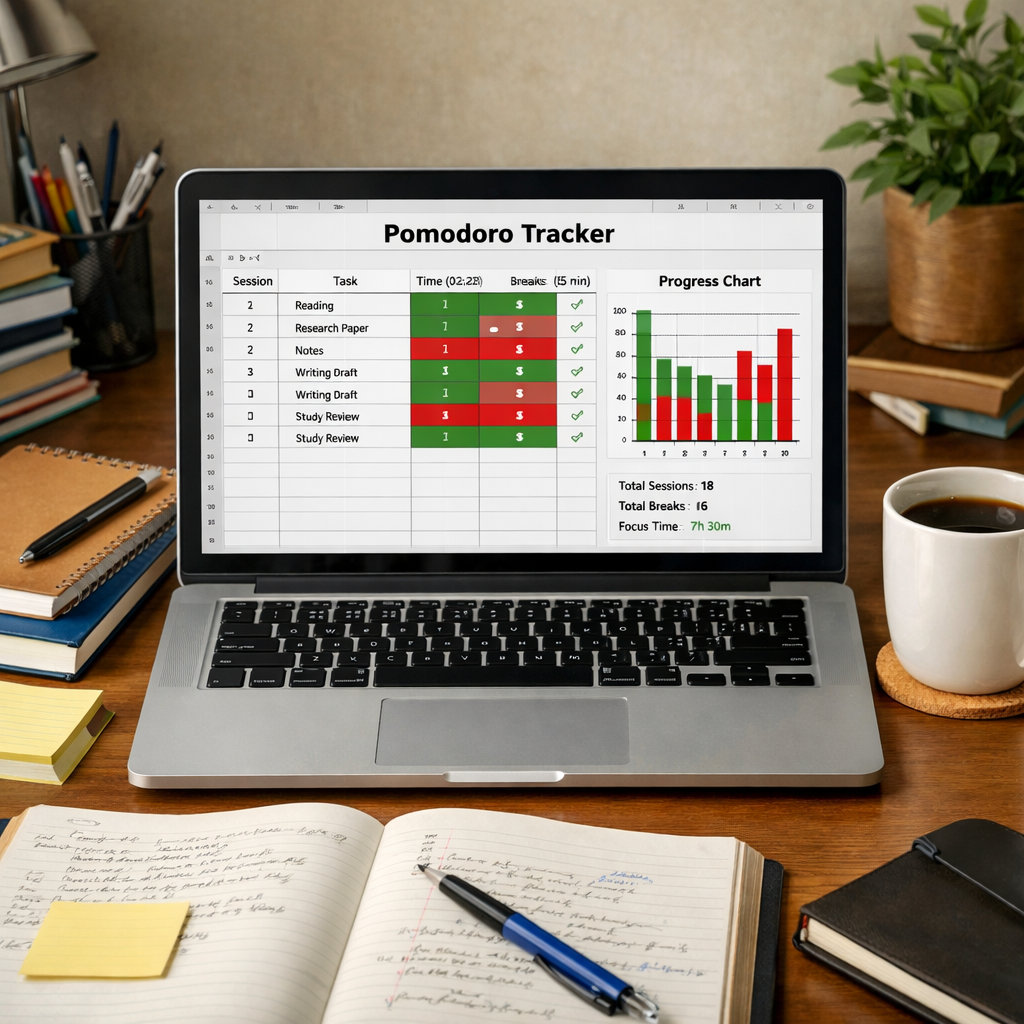
The first thing to do is grab a simple log. It can be a paper notebook, a Google Sheet, or the built‑in history feature of a pomodoro timer. Write down the date, the subject, the number of pomodoros you planned, how many you actually completed, and a one‑line takeaway.
Why bother? Because tracking creates a feedback loop. When you see that “Biology – 3 pomodoros planned, 2 completed, struggled with enzyme kinetics” you instantly know where to shift extra time.
Tip: add a quick rating from 1 to 5 for focus level. A 5 means you were in the zone, a 2 means distractions crept in. Over a week you’ll spot patterns – maybe your energy spikes at 9 am and dips after lunch.
So, what should you do with those patterns? Adjust the routine. If you notice a slump after the second pomodoro, try a longer five‑minute micro‑reward or swap the next block for a lighter task like flashcards.
Another common tweak is reshuffling the order of topics. Suppose your physics chapter on thermodynamics always drags you into a mental fog. Move it to your peak‑energy window – the time you rated 4 or 5 – and push a less demanding chapter to the afternoon.
Don’t forget to revisit your pomodoro count. The estimate you wrote on day one is just a guess. If “Cell division” took you four pomodoros instead of two, update the plan. Future sessions will be more realistic, and you’ll avoid the dreaded “I ran out of time” panic.
A quick weekly audit helps lock in the habit. Set aside 10 minutes on Sunday, open your log, and answer three questions: 1) Which subjects moved the needle on my confidence? 2) Where did I consistently rate low focus? 3) What small change can I test next week?
Here’s a mini checklist you can copy onto a sticky note: • Review logged pomodoros • Adjust topic order or duration • Add a focus‑rating tweak • Plan one experiment for next week.
If you’re a student juggling multiple courses, a visual board can be a lifesaver. Use colored Post‑its – green for completed, yellow for in‑progress, red for needs more time. When you step back, the board instantly tells you where the bottlenecks sit.
Remote workers and freelancers can apply the same principle to project tasks. Track billable pomodoros, note where you lost concentration, and shift client work to your high‑focus slots. The habit translates across any kind of knowledge work.
A word of caution: don’t become a data‑obsessed perfectionist. The goal is clarity, not paralysis. If you miss a log entry, just note it later – the pattern still emerges over time.
Finally, celebrate the wins. When you see a streak of five days where focus ratings stay at 4 or above, give yourself a small reward – a favorite snack, a short walk, or an episode of a show you love. Positive reinforcement keeps the loop moving.
Remember, tracking isn’t a one‑time setup; it’s a living part of your pomodoro routine for exam revision. Each cycle you fine‑tune, you get a little closer to studying smarter, not harder.
Step 6: Optimize for Exam Day Performance
So the big day is almost here. Your heart’s beating a little faster, the campus feels louder, and you’re wondering if all those pomodoro sprints actually mattered. Spoiler: they do. The trick now is to take the rhythm you’ve built and tune it for the exact moment you walk into the exam room.
Run a “mini‑exam” the night before
Grab a past paper, set your timer for a full 2‑hour block, and treat it like the real thing. No phone, no notes beyond what you’d normally have. When the timer dings, stop, stretch, and note how many questions you actually answered.
That quick simulation does two things: it shows you where you might still be fuzzy, and it trains your brain to shift into “exam mode” on cue. In our experience, students who run a mock under pomodoro timing report less surprise on the actual day.
Fine‑tune your pre‑exam routine
Think of the hour before the exam as another pomodoro, just without the work interval. Start with a light warm‑up – 5 minutes of gentle movement or a short walk outside. Follow with a 5‑minute breathing exercise: inhale for four counts, hold for four, exhale for six. It quiets the nervous system and steadies the focus you’ve cultivated over weeks.
Then, spend a final 10‑minute sprint reviewing your cheat‑sheet or key formulas. Keep it ultra‑focused; if you drift, the timer will remind you to snap back. The goal isn’t to cram new material, but to reinforce the neural pathways you’ve already built.
Nutrition and hydration hacks
Your brain runs on glucose, but you don’t want a sugar crash halfway through. A balanced snack – think a banana with a handful of nuts – 30 minutes before the test gives steady energy. Keep a water bottle handy; a sip every 20 minutes helps maintain concentration without the jittery buzz of caffeine.
And yes, a cup of coffee can be useful if you’re already accustomed to it. The key is consistency: don’t introduce a new stimulant on exam day.
Leverage Focus Keeper for the final push
Even on the day of the exam, the app can be a quiet ally. Set a 25‑minute “review‑only” pomodoro for the first half‑hour of the test, if your exam format allows a quick glance at the whole paper. That brief, timed skim helps you spot the easiest questions, lock in confidence, and plan the order of attack.
Because the timer is visual, it also prevents you from over‑spending time on a single tough problem. When the bell rings, move on – you can always return later if time permits.
Mind‑set tricks for the exam room
When you sit down, take a deep breath and whisper to yourself, “I’ve trained for this.” It sounds cheesy, but a simple mantra can override the brain’s alarm system that screams “stress.” If a question feels overwhelming, break it down into the same 25‑minute chunks you used while studying: read, outline, answer, review.
And remember, perfection isn’t the goal. The pomodoro method teaches you to accept incomplete cycles and keep moving forward. If you finish a section early, use the extra minutes for a quick mental reset – close your eyes, stretch, or visualize the next problem.
Post‑exam debrief (yes, even after you’re done)
After the last paper is turned in, take five minutes to jot down what worked and what felt off. Did the pre‑exam breathing help? Did a particular snack boost your stamina? Those notes become part of your next study cycle, turning every exam into a data point for improvement.
In short, the pomodoro routine for exam revision isn’t just a study hack; it’s a whole‑day performance system. By treating the exam itself like another timed sprint, you keep the same focus, energy, and confidence you’ve built over weeks. Trust the rhythm, trust your prep, and walk in ready to ace it.
FAQ
What is a pomodoro routine for exam revision and how does it work?
A pomodoro routine for exam revision is just a timed study hack: you set a timer for 25 minutes of focused work, then give yourself a 5‑minute pause. Those short sprints keep your brain from drifting and let you pack more recall into each session. After four cycles you take a longer break, usually 15‑30 minutes, to let the material settle. The rhythm mimics interval training, so concentration builds like a muscle.
How long should my study and break intervals be for a typical exam?
Most students find the classic 25‑minute work/5‑minute break combo hits the sweet spot for exam prep. It’s long enough to dive into a concept but short enough to avoid mental fatigue. If you’re cramming a dense chapter, you can stretch the work block to 30 minutes and keep the break at five. Just make sure the total cycle stays under 35 minutes so you don’t lose the momentum that the pomodoro rhythm creates.
Can I adjust the pomodoro length for different subjects?
Absolutely – the pomodoro method is flexible. For problem‑solving subjects like maths or physics, you might prefer 20‑minute bursts so you can test a few equations before the break. For reading‑heavy topics such as history or literature, 30‑minute sessions let you finish a paragraph and take notes without feeling rushed. The key is to experiment and note which interval yields the most recall; then stick with that length for the rest of the revision cycle.
What should I do during the 5‑minute breaks to stay fresh?
During the five‑minute breather, aim for activities that reset, not distract. A quick stretch, a few deep breaths, or a short walk to the kitchen can boost blood flow and clear mental cobwebs. Some students sip water or munch a piece of fruit for a steady glucose lift. Avoid scrolling social media – the visual overload can pull you back into study mode and waste the precious reset time.
How do I track progress without getting overwhelmed?
Tracking doesn’t have to turn into a spreadsheet nightmare. Most pomodoro apps, including Focus Keeper, log each session with a simple tap, so you can glance at how many cycles you’ve completed for a subject. If you prefer pen‑and‑paper, jot the date, topic, and a one‑sentence takeaway after each break. Over a week you’ll spot patterns – maybe you’re sharper in the morning or a particular chapter needs extra pomodoros – and you can tweak your plan accordingly.
Is it okay to skip a pomodoro if I’m feeling burnt out?
It’s okay to listen to your brain. If you finish a pomodoro feeling drained, pause a bit longer – maybe a 10‑minute stretch or a quick snack – before you start the next sprint. Skipping the whole cycle isn’t ideal, because consistency builds the habit, but a flexible approach prevents burnout. Just note the adjustment in your log so you can balance the total study time later in the day.
What’s the best way to use a pomodoro routine on the actual exam day?
On exam day, treat the test like one final pomodoro. Before you open the paper, set a silent 25‑minute timer in your mind and commit to tackling the easiest questions first. When the mental timer hits the halfway mark, give yourself a quick micro‑break – close your eyes, inhale deeply, and reset. That tiny pause keeps anxiety in check and lets you refocus on the tougher items without losing precious minutes.
Conclusion
You’ve just walked through every piece of the puzzle, from setting up a distraction‑free zone to fine‑tuning your break rhythm.
So, does a pomodoro routine for exam revision really move the needle? Absolutely – the tiny 25‑minute sprints keep your brain in a state of focused flow while the regular pauses stop fatigue before it even starts.
Remember the simple formula: plan a bite‑size topic, timer on, work hard, break smart, log a one‑line win. When you repeat that loop, patterns emerge. Maybe your best energy window is 9 am–11 am, or perhaps a quick walk after the second sprint revives your concentration.
In our experience, students who track those patterns with a tool like Focus Keeper see steadier progress and less last‑minute panic.
What’s the next step? Grab your syllabus, slice the toughest chapter into three pomodoros, set the timer, and give yourself a 5‑minute stretch after each. Keep a tiny note of what you nailed – that little record is the fuel for confidence on exam day.
Finally, treat the routine as a habit, not a gimmick. The more you trust the rhythm, the easier it feels to slide into focus, even when the pressure spikes. You’ve got the system; now just hit start today.