Feeling scattered lately? Like your to-do list is a mile long and you’re barely making a dent? You’re not alone. Lots of us struggle to stay on track these days. But what if I told you there’s a simple tool that can really help? We’re talking about a focus timer. It’s not some fancy new gadget, but it can seriously change how you get things done. Let’s figure out how this focus timer thing works and how you can use it to get more done.
Key Takeaways
- The Pomodoro Technique uses timed work intervals and short breaks to improve concentration and prevent burnout.
- Customizing your focus timer intervals allows you to match your personal work style and task demands.
- Integrating a focus timer into your daily routine can help break down large tasks and build better concentration habits.
- Advanced features like statistics and cross-platform sync help you track progress and manage tasks more effectively.
- Personalizing your focus experience with features like app whitelists and dedicated environments minimizes distractions.
Mastering Your Focus Timer
Getting a handle on your focus timer is the first step to really making it work for you. It’s not just about setting a clock and hoping for the best; it’s about understanding the principles behind it and tailoring it to your own rhythm. Let’s break down how to do that.
Understanding The Pomodoro Technique
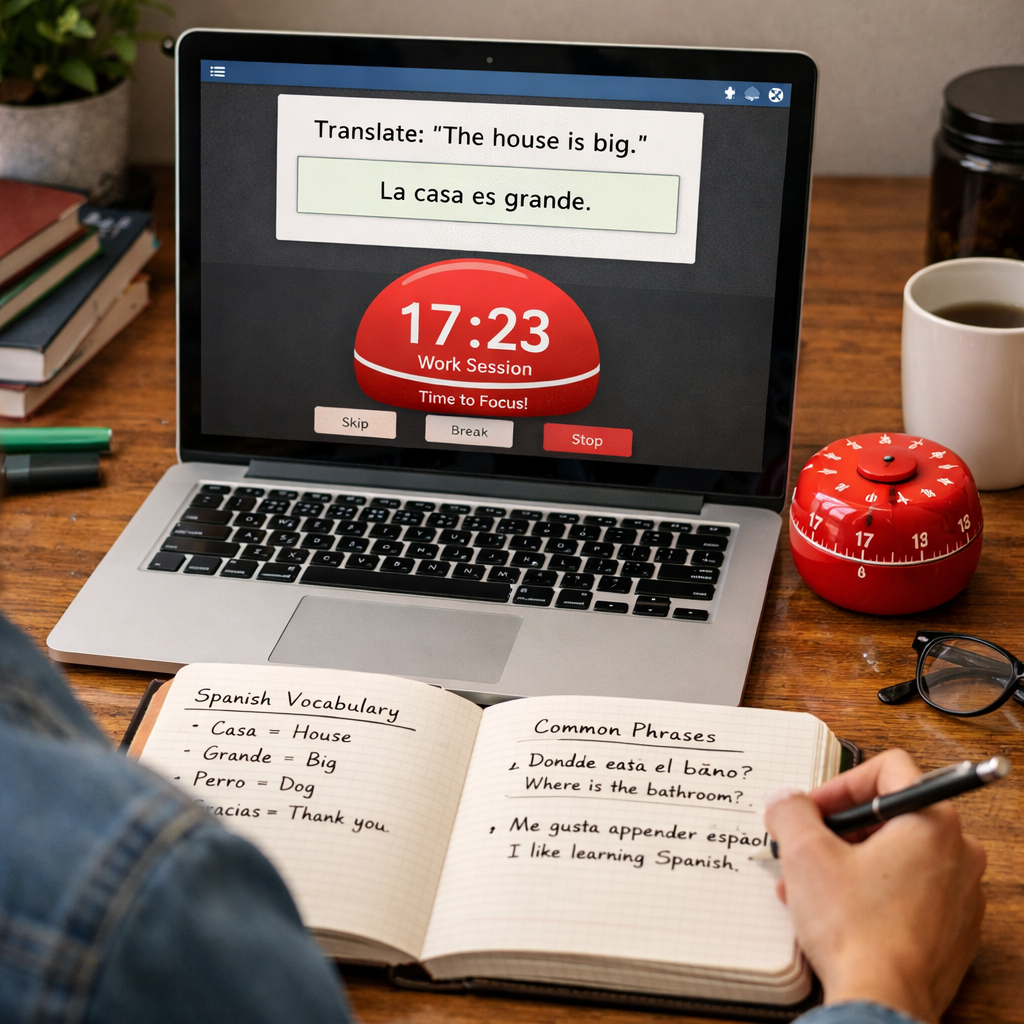
The Pomodoro Technique is a time management method developed by Francesco Cirillo. It uses a timer to break down work into intervals, traditionally 25 minutes in length, separated by short breaks. The idea is that by working in focused bursts, you can maintain higher concentration levels and avoid mental fatigue. After completing four ‘pomodoros’ (work intervals), you take a longer break, usually 15-20 minutes. This structured approach helps combat procrastination and makes large tasks feel more manageable. It’s a simple yet effective way to structure your workday.
The core idea is to work with time, not against it. By acknowledging that our attention naturally wanes, we can proactively schedule periods of intense focus followed by necessary rest.
Customizing Your Focus Timer Intervals
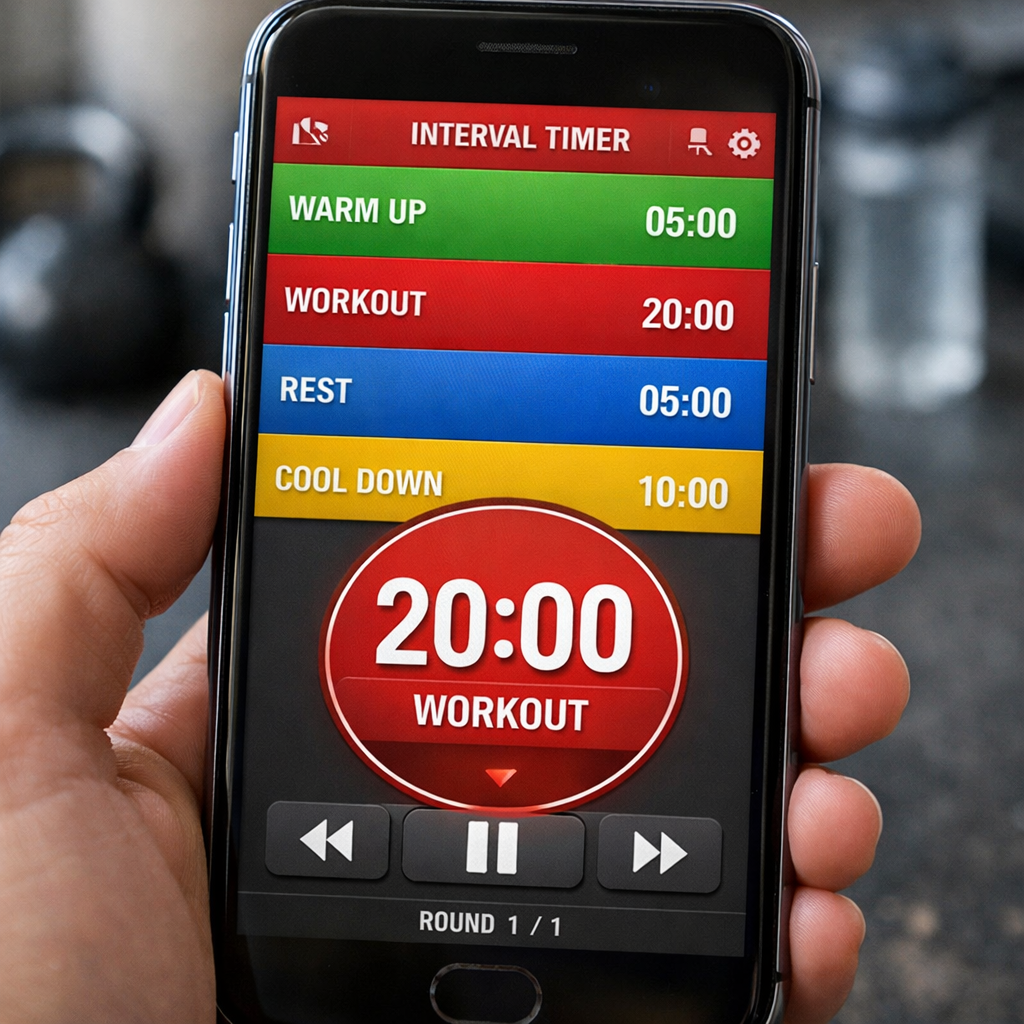
While the classic Pomodoro uses 25-minute work intervals, this isn’t a hard rule. Your optimal focus time might be different. Some people find they can concentrate for longer, maybe 45 or 50 minutes, while others do better with shorter bursts of 15-20 minutes. The key is experimentation. Try different lengths and see what feels most productive for you. Don’t forget to adjust your break times too; longer work intervals might warrant slightly longer breaks. The goal is to find a rhythm that keeps you engaged without burning out. You can easily adjust these settings within most focus timer apps to match your personal workflow.
Here’s a quick guide to experimenting:
- Start with the default: Try the standard 25-minute work, 5-minute break for a few days.
- Adjust based on task: For deep work, maybe try 45-minute intervals. For simpler tasks, 20 minutes might be enough.
- Listen to your body: If you’re feeling drained before the timer is up, take a break. If you’re in the zone, consider extending slightly (but don’t overdo it).
- Track your results: Note down how you felt and how much you accomplished with different interval lengths. This data will help you find your ideal timing.
Integrating Focus Timer With Your Workflow
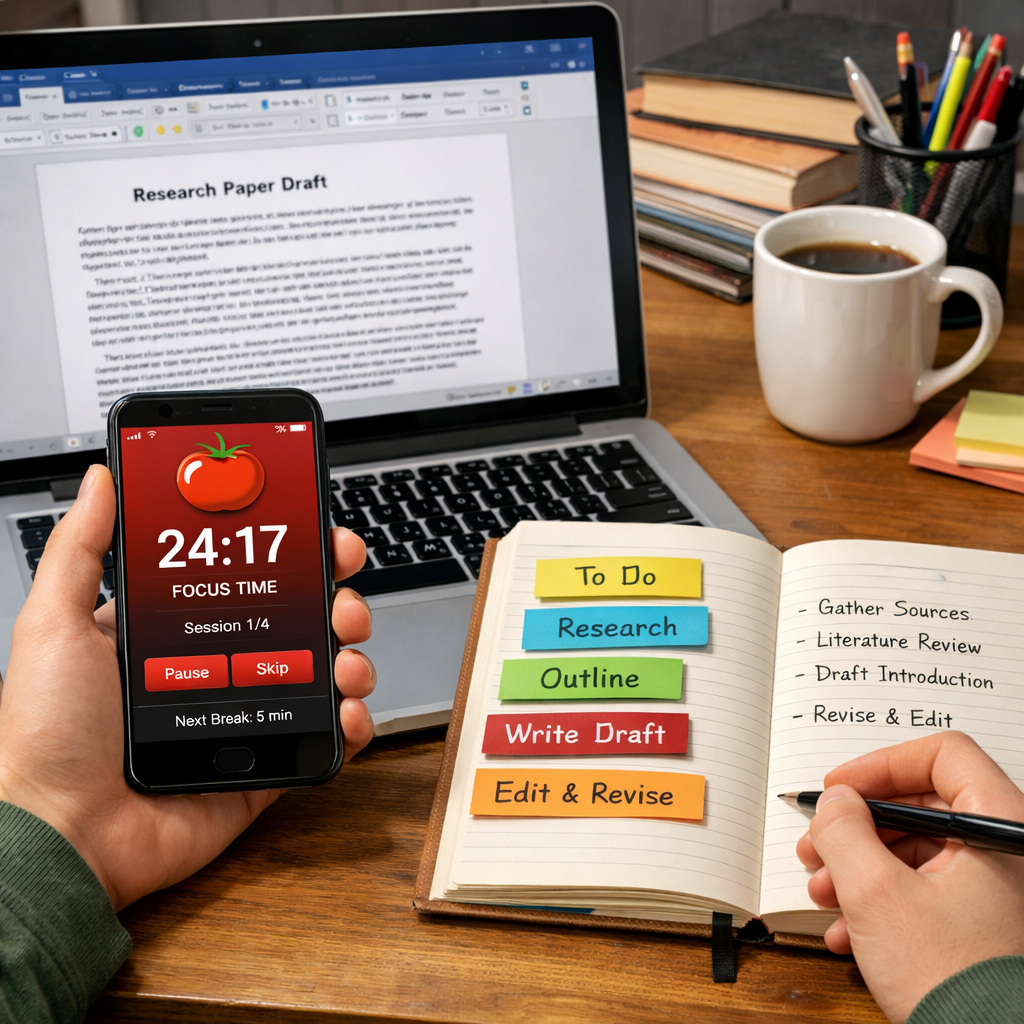
Simply having a focus timer isn’t enough; you need to weave it into your daily routine. Start by identifying your most demanding tasks and scheduling your focus sessions around them. Use your focus timer for specific projects or even just for checking emails if that’s a distraction. It’s also helpful to pair your timer with a to-do list. Before starting a session, pick one or two specific tasks you want to accomplish. This gives your focus time a clear objective. Remember to communicate your focus times to colleagues or family if you need uninterrupted periods. Making the timer a consistent part of your day, rather than an occasional tool, is where the real productivity gains happen.
Enhancing Productivity With A Focus Timer
Using a focus timer isn’t just about setting a clock; it’s about structuring your work in a way that makes sense for your brain. When you break down big projects into smaller chunks, it feels way less overwhelming. Think of it like eating an elephant – you do it one bite at a time. This approach helps you stay on track and actually see progress, which is a huge motivator.
Breaking Down Tasks For Better Focus
Large tasks can feel like a mountain. Trying to tackle them all at once often leads to procrastination or feeling stuck. The trick is to chop them up. Instead of "Write report," try "Outline report," "Research section 1," "Write section 1," and so on. This makes each step feel achievable.
Here’s a simple way to start:
- Identify the main goal: What’s the big picture?
- List all the steps: Write down everything you can think of that needs to be done.
- Break down big steps: If a step still feels too big, break it down further.
- Order the steps: Put them in a logical sequence.
This process turns a daunting project into a manageable to-do list.
Utilizing Breaks For Optimal Performance
Breaks aren’t a sign of slacking off; they’re a necessary part of working smart. Your brain needs time to rest and process information. Pushing through without breaks is a fast track to burnout and mistakes. Short, regular breaks help you come back to your work refreshed and more focused.
Consider this pattern:
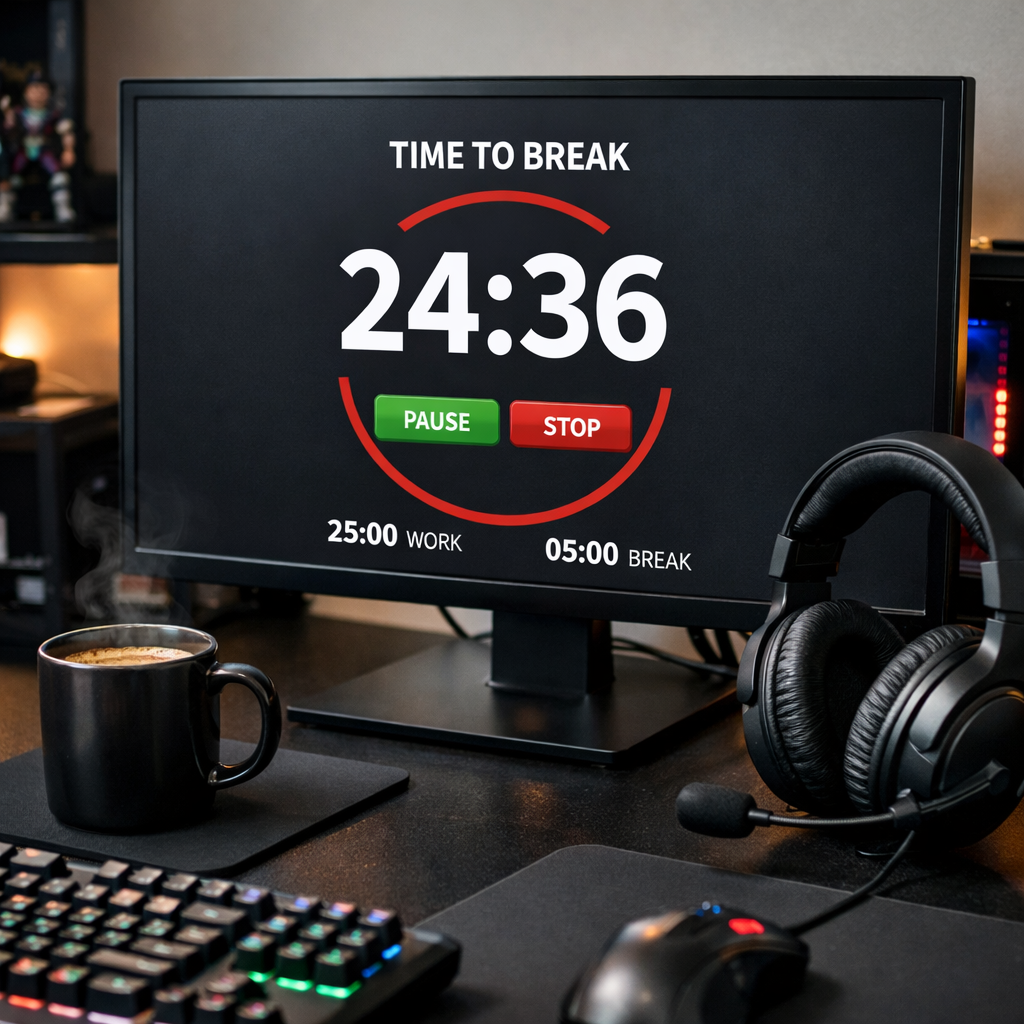
- Work Session: 25 minutes of focused work.
- Short Break: 5 minutes to step away, stretch, or grab water.
- Repeat: Do this four times.
- Long Break: 15-20 minutes to really recharge before starting the next set of work sessions.
This rhythm helps maintain energy levels throughout the day, preventing that mid-afternoon slump where you just stare blankly at your screen.
Building Concentration Habits
Consistency is key. The more you use a focus timer, the more your brain starts to associate those timed intervals with deep work. It’s like training a muscle. Over time, you’ll find it easier to get into a focused state when the timer starts.
- Start small: Even 15-minute focus sessions can build momentum.
- Be consistent: Try to use the timer daily, even on lighter workdays.
- Reflect: Notice when you feel most focused and when you struggle. Adjust your intervals or task types accordingly.
Making focus a habit takes practice, but the payoff in productivity is well worth the effort.
Advanced Focus Timer Features
In-Depth Statistics And Progress Tracking
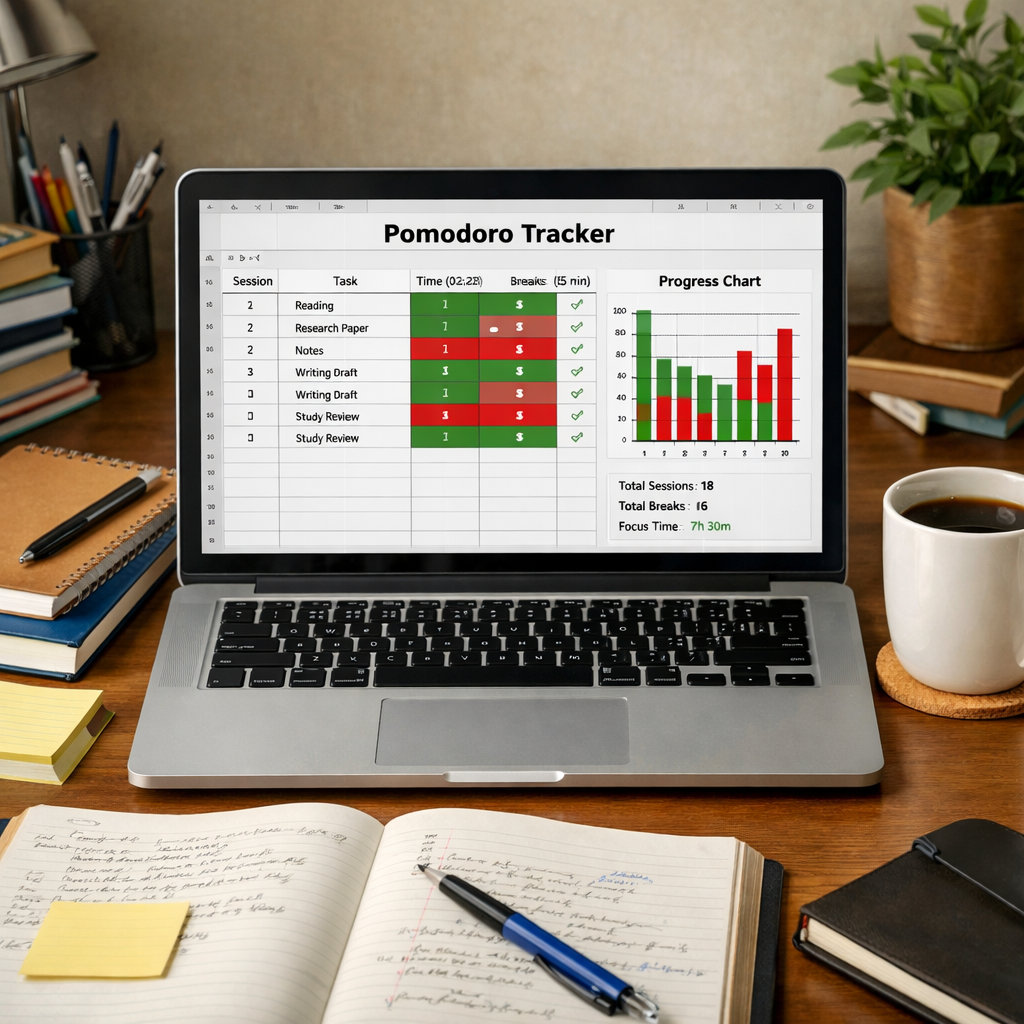
So, you’ve been using your focus timer, putting in the work, and taking those well-deserved breaks. But how do you know if it’s actually making a difference? That’s where the advanced stats come in. Most good focus timer apps will track your focused time, giving you a clear picture of your productivity patterns. You can usually see daily, weekly, and even monthly breakdowns. It’s pretty neat to see how much time you’ve actually spent in deep work versus just thinking about it.
Here’s a look at what you might find:
- Total Focus Time: A running tally of all the time spent in active focus sessions.
- Tasks Completed: How many tasks you’ve finished within your focus blocks.
- Productivity Trends: Charts showing your focus time over days, weeks, or months, helping you spot improvements or dips.
This kind of data isn’t just for bragging rights; it helps you understand when you’re most productive and what might be throwing you off your game. It’s like having a personal productivity coach looking over your shoulder, but without the awkward small talk.
Looking at your progress data can be surprisingly motivating. Seeing those numbers climb, even slowly, reinforces the habit and makes you want to keep going. It turns abstract goals into concrete achievements you can actually measure.
Task Management Integration
What if your focus timer could do more than just count down? Many apps now let you link your focus sessions directly to specific tasks. This means when you start a timer, you can assign it to, say, "Write report draft" or "Respond to emails." When the session ends, the time spent is logged against that task.
This integration is a game-changer for a few reasons:
- Clearer Task Breakdown: It forces you to define what you’re working on before you start, making tasks feel less overwhelming.
- Accurate Time Tracking: You get a real sense of how long different types of tasks actually take, which is super helpful for future planning.
- Project Costing (if applicable): For freelancers or businesses, this can be invaluable for billing clients accurately.
It’s a step up from just a timer; it becomes a mini project management tool right within your focus app.
Cross-Platform Synchronization
This is a big one if you use multiple devices. Imagine starting a focus session on your work computer, then needing to check on it from your phone while grabbing a coffee, or reviewing your progress on your tablet later. Cross-platform synchronization makes this possible.
Your focus data and task lists stay updated across all your devices. This means no more manually transferring notes or trying to remember where you left off. Whether you’re on your desktop, laptop, tablet, or even your smartwatch, your focus environment is consistent.
This feature is particularly useful for:
- Remote workers: Moving between home office and a co-working space.
- Students: Juggling study sessions on different devices.
- Anyone who likes flexibility: Being able to pick up your work wherever you are.
It really ties everything together, making your focus timer a reliable tool no matter which screen you’re looking at.
Personalizing Your Focus Experience
Making a focus timer truly work for you means tweaking it to fit your life, not the other way around. It’s about creating a digital workspace that supports your concentration, not one that adds to the noise. Think of it like setting up your favorite chair just right – a few adjustments make all the difference.
Setting Up App Whitelists
One of the biggest distractions when you’re trying to focus is, well, everything else on your device. Social media pings, email alerts, random news updates – they all pull you away. A focus timer app can help by letting you create an ‘allow list’ or whitelist. This means you can specify which apps are okay to use during your focus sessions. For example, if you need to use a specific research tool or a document editor, you can add those to your whitelist. Everything else? It gets blocked until your session is over. This is a simple but powerful way to build a digital barrier against interruptions.
- Identify essential apps: What do you absolutely need for your work session?
- Add them to the whitelist: Configure your focus timer app to permit access only to these.
- Test it out: Start a session and see if you’re still getting unwanted notifications.
Exploring Various Reminders and Sounds
Beyond just blocking apps, how the timer signals the end of a session or break is also important. Some people prefer a gentle chime, while others might need a more noticeable alarm, especially if they tend to get lost in their work. Many apps offer a range of sounds, from subtle tones to more robust alerts. You can even set custom sounds. Experimenting with different notification sounds can help you associate them with focused work and breaks, reinforcing the habit. Some apps also allow you to set specific alarms for the end of focus sessions, which is handy if you often miss the standard notification. This is especially useful if you’re trying to stick to the Pomodoro Technique and need clear signals for work and rest periods.
Creating a Dedicated Focus Environment
Personalizing your focus experience also extends to the atmosphere you create. This could involve ambient sounds, like rain or white noise, that many focus timer apps now include. These sounds can mask distracting background noise and create a more immersive work environment. Think about your physical space too – a clean desk, good lighting, and comfortable seating all contribute. When you combine these elements with a well-configured focus timer, you’re setting yourself up for success. It’s about building a routine where your environment signals to your brain that it’s time to concentrate.
The goal is to make your focus sessions as frictionless as possible. By customizing the tools and environment you use, you reduce the mental energy spent fighting distractions and can instead direct it towards your actual tasks. This proactive approach to managing your digital and physical workspace is key to sustained productivity.
Maximizing Your Focus Timer Usage
Leveraging Widgets For Quick Access
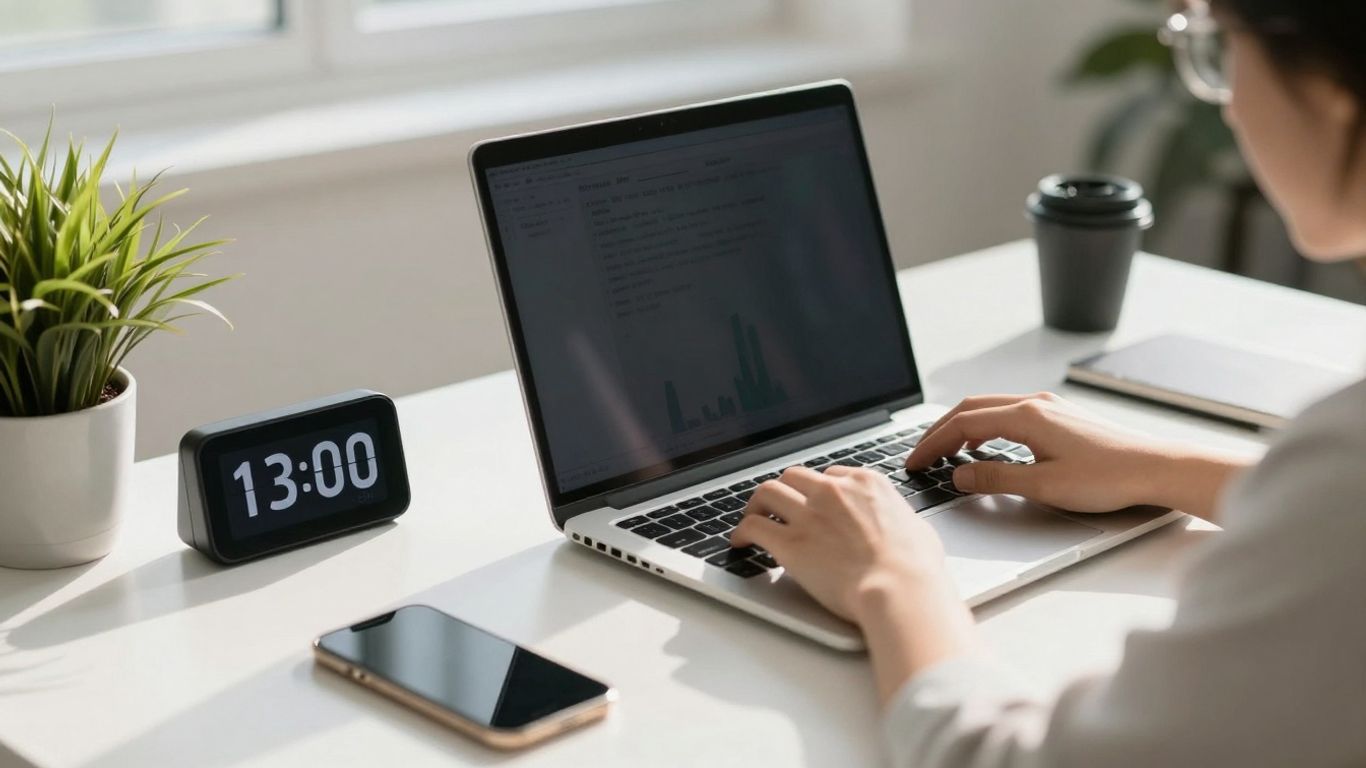
Widgets are like little shortcuts for your phone’s home screen, and they can be super handy for your focus timer. Instead of opening the whole app every time, you can just glance at a widget to see how much time is left in your current focus session. Some widgets even let you start or stop a timer right from your home screen. This means less fumbling around and more time actually working. It’s a small thing, but it really cuts down on those little interruptions that can break your concentration.
Preventing Screen Lock During Sessions
Ever been in the middle of a deep work session, only to have your screen go dark because it timed out? It’s incredibly annoying. Most focus timer apps have a setting to prevent your screen from locking while a timer is running. Make sure you turn this on! It keeps your screen active, so you can easily check the remaining time without having to tap your screen and wait for it to wake up. It’s a simple feature, but it makes a big difference in keeping your flow going.
Achieving Daily Goals With Focus Trends
Looking at your progress over time can be really motivating. Many focus timers offer reports or trend charts that show how much time you’ve spent focusing each day, week, or month. You can see if you’re hitting your targets and where you might be slacking off. It’s not about judging yourself, but more about understanding your work habits. Seeing that upward trend in your focused time can be a great push to keep going.
Here’s a quick look at how your focus time might stack up:
| Day | Focus Time (Hours) | Tasks Completed |
|---|---|---|
| Monday | 4.5 | 3 |
| Tuesday | 5.2 | 5 |
| Wednesday | 3.8 | 2 |
| Thursday | 6.0 | 7 |
| Friday | 4.1 | 4 |
Tracking your focus trends helps you spot patterns. Maybe you’re more productive in the morning, or perhaps certain types of tasks take longer than you think. This information is gold for planning your days better and setting realistic goals.
Wrapping Up Your Focus Journey
So, that’s the lowdown on using a customizable focus timer to get more done. It’s not some magic bullet, but it really does help you break down your day into manageable chunks. By setting those timers and taking proper breaks, you can stop feeling so overwhelmed and actually make progress on your tasks. Give it a shot, play around with the settings to find what works for you, and see how much more you can accomplish. You might be surprised at how much more focused you can be when you just have a little structure.
Frequently Asked Questions
What is the Pomodoro Technique and how does it work?
The Pomodoro Technique is a cool way to manage your time. You work on something for a set amount of time, like 25 minutes, and then take a short break. After a few of these work periods, you take a longer break. It helps you focus better and avoid getting tired.
Can I change the timer settings?
Yes, you can! Most focus timers let you adjust how long your work sessions and breaks are. This way, you can set it up to fit your own work style and what feels best for you.
How does a focus timer help with big tasks?
Big tasks can seem overwhelming. A focus timer helps by breaking them down into smaller, manageable chunks. You just focus on one chunk at a time, which makes the whole task feel less scary and easier to finish.
What are some advanced features to look for?
Some timers offer cool extras like tracking your progress over time with charts, connecting with your to-do lists, and syncing across all your devices like your phone and computer. This helps you see how you’re doing and stay organized.
Can a focus timer help me avoid distractions?
Absolutely! Many focus timers have features like app blockers or ‘whitelists’ where you can choose which apps are allowed during your focus time. This helps keep you from getting sidetracked by notifications or tempting apps.
How can I make sure I use the focus timer effectively every day?
To get the most out of it, try to use it consistently. Set daily goals and look at your progress trends to see how you’re doing. Using widgets for quick access and preventing your screen from locking can also make it easier to stick with it.