Ever found yourself staring at a foreign phrase, knowing you should practice but feeling overwhelmed by the endless list of vocab and grammar drills?
You’re not alone. Many language learners hit that wall where motivation fizzles and distractions creep in just when the material gets tricky. That’s exactly why a pomodoro routine for language practice can feel like a lifeline.
Think about it this way: instead of a vague “study for an hour,” you break the session into bite‑size, focused bursts—say 25 minutes of pure listening, reading, or speaking—followed by a short, guilt‑free break. Those breaks aren’t wasted time; they give your brain a chance to consolidate new words, just like a quick coffee lets a writer regroup.
In our experience at Focus Keeper, learners who pair the classic 25/5 cadence with specific language tasks report sharper recall and less mental fatigue. One student told us they finally stopped “flipping channels” during study time and started finishing a chapter of a textbook in half the usual time.
But how do you make that routine truly work for language practice? Start by choosing a single skill per pomodoro—maybe vocabulary flashcards in the first interval, then a listening clip in the next. Keep the goal crystal clear: “Learn ten new adjectives” rather than “study Spanish.” This clarity turns the timer into a coach that nudges you forward.
And here’s a little secret: use the break to do something that still nudges language exposure—listen to a favorite song, repeat a phrase aloud, or glance at a bilingual news headline. Those micro‑moments reinforce what you just studied without feeling like extra work.
So, if you’re ready to stop the endless, unstructured grind and give your language learning a rhythm that respects your attention, a pomodoro routine for language practice might just be the structure you need. Let’s dive deeper into building that routine step by step.
TL;DR
A pomodoro routine for language practice breaks study into focused 25‑minute bursts, each targeting a single skill like vocab or listening, so you stay sharp and avoid burnout.
Use breaks for micro‑exposure—listen to a song, repeat a phrase, or glance at a bilingual headline—to cement learning and keep momentum flowing.
Step 1: Set Up Your Pomodoro Timer for Language Sessions
Ever stare at a flashcard deck and feel your mind start to wander after just a few minutes? That’s the classic attention dip, and it’s exactly why a timer becomes your silent study buddy.
First, decide how long each language burst will be. The classic 25‑minute slot works for most learners, but if you’re just squeezing in a quick vocab refresh, 15 minutes can feel less intimidating. The key is consistency – pick a length and stick with it for a week, then tweak if needed.
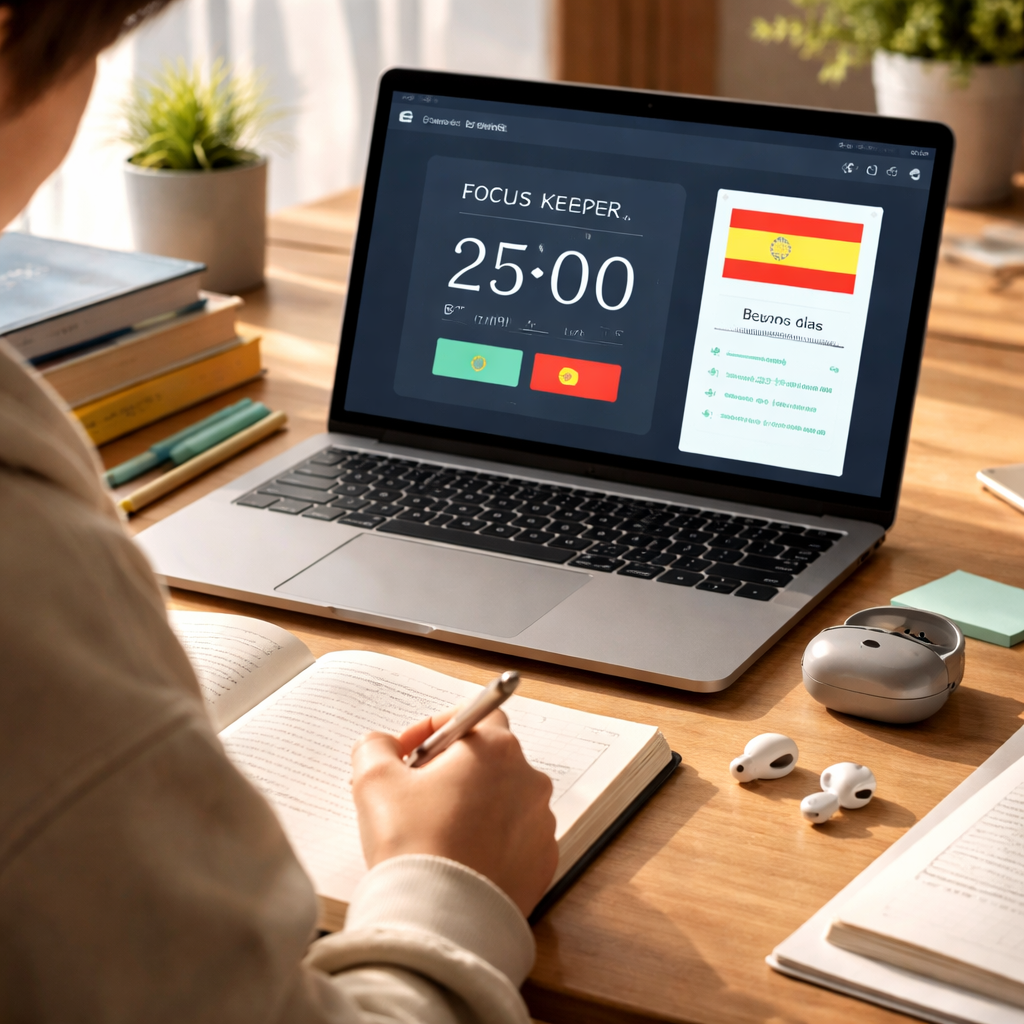
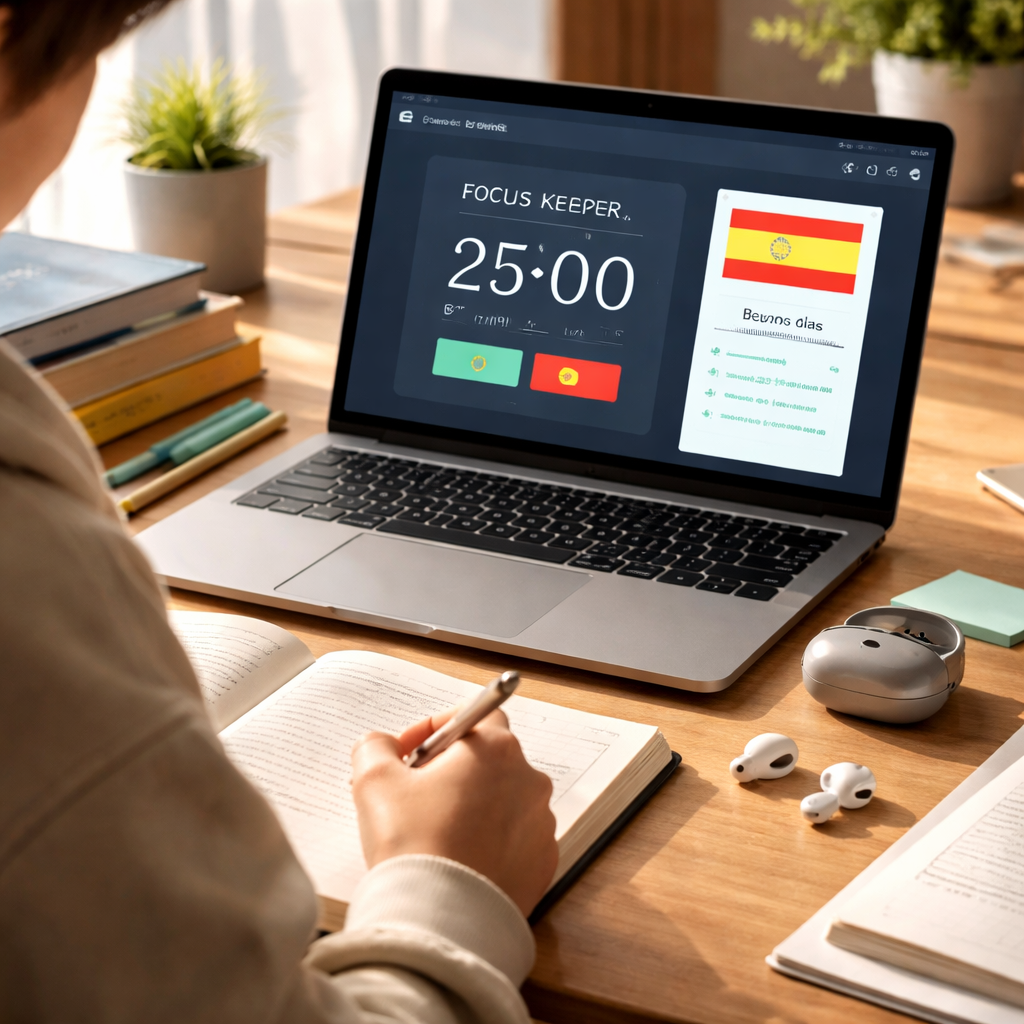
Next, pick a timer that actually respects your focus. We love the Focus Keeper app because it lets you label each interval, so you can name a pomodoro “French listening” or “German grammar.” Mastering the Pomodoro Technique walks you through those settings step by step.
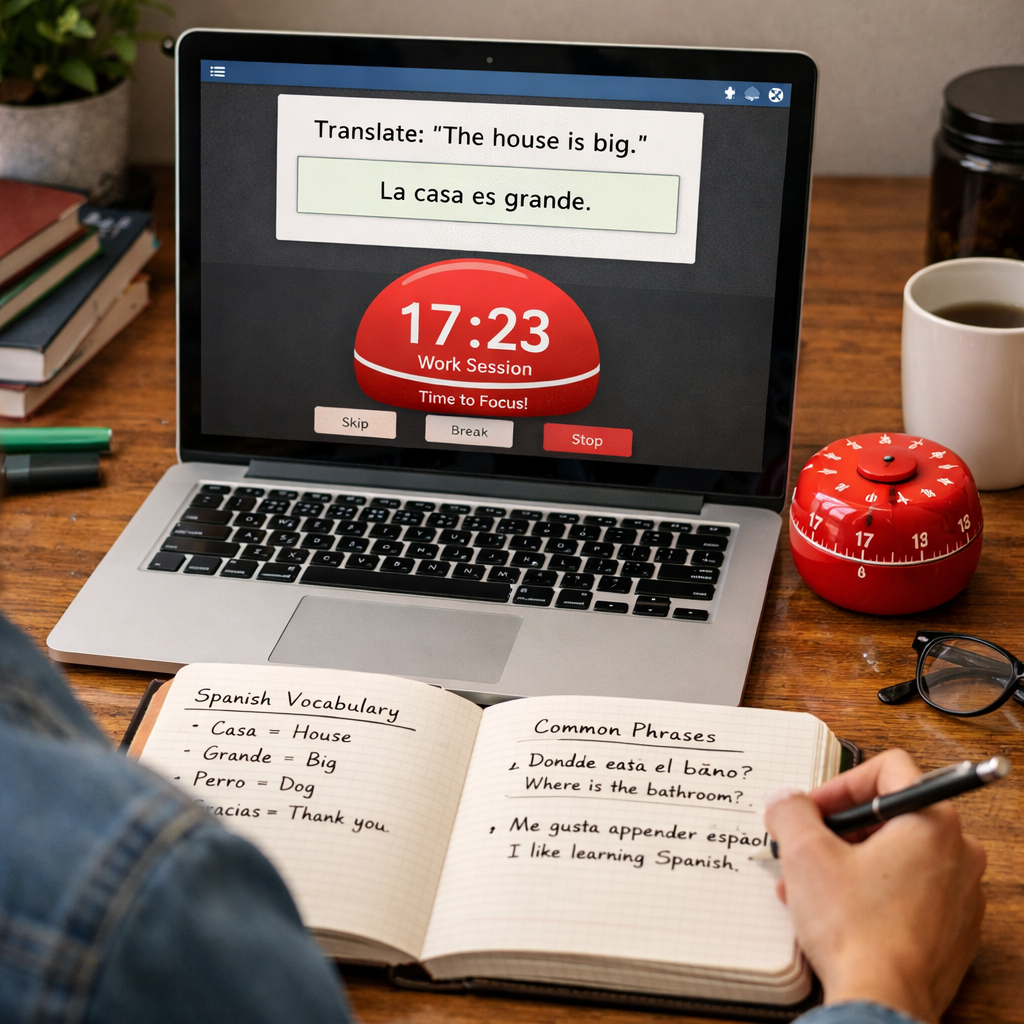
Open the app, hit “New Pomodoro,” and set the work period to your chosen minutes. Then give it a clear, language‑specific title – something like “Spanish adjectives sprint.” When the timer starts, you’ve got a clear, finite window to dive in, no more “I’ll study later.”
Adjust the break length to 5 minutes for a quick stretch, a glass of water, or a mental reset. Most apps let you toggle a soft chime or mute it entirely; choose whatever keeps you in the zone without jolting you awake.
If you find your concentration slipping after the first couple of intervals, a gentle boost can help. Many of our students pair their pomodoros with a nootropic gummy from Great Bite Supplements – the kind of focus‑enhancing formula that supports mental clarity without the crash.
And when your pomodoro calls for listening practice, good audio gear matters. Plug in a pair of reliable earbuds from Glassology Tech so you hear every nuance of the native speaker, whether you’re on a commuter train or a quiet desk.
Not every language skill fits the same 25‑minute mold. For speaking drills, you might want a shorter work slot followed by a quick recording break, whereas reading comprehension can comfortably stretch to 30 minutes. In the timer settings, create separate profiles – “Speaking Sprint,” “Reading Marathon,” “Grammar Sprint.” Assign each a distinct sound cue so your brain learns the pattern: a soft tone means it’s time to speak, a sharper beep signals reading time. This tiny customization tricks your mind into switching modes without the mental overhead of deciding what to do next.
After the timer dings, use the 5‑minute break to do a micro‑exposure activity – repeat a phrase, glance at a bilingual headline, or simply sip water while mentally replaying what you just learned. This short pause reinforces the neural pathways you just opened.
Finally, make it a habit. Write down the time you start each pomodoro in a simple habit tracker, and review your progress at the end of the week. You’ll start to see patterns – maybe you’re sharper in the morning, or certain languages need longer bursts. Adjust, iterate, and let the timer keep you honest. Give it a try tomorrow and watch your fluency climb today.
Step 2: Choose Focused Language Activities for Each Pomodoro
Now that your timer is humming, the real magic happens in the five‑minute slots you fill. The key is to keep every 25‑minute burst laser‑focused on one language skill, so your brain can dive deep without getting distracted.
Pick a single skill per Pomodoro
Ask yourself, “What’s the one thing I want to nail right now?” Maybe it’s a batch of new adjectives, a tricky listening passage, or a short writing prompt. By naming that skill up front, you give the interval a clear purpose – like a sprint in a marathon.
For students cramming for exams, a vocab‑only Pomodoro might look like: flashcards for ten target words, then a quick sentence‑building drill. Remote workers prepping for a client call could spend a session rehearsing key phrases they’ll need on the phone.
Vocabulary bursts
Grab a spaced‑repetition app or a physical deck, set the timer, and go. Write each new word on a sticky, say it aloud, and then create a mini‑sentence that ties it to something you care about – a hobby, a project, a favorite recipe. The act of linking the word to a personal context cements it faster.
Tip: after the Pomodoro, jot a tiny note about which word felt sticky and which slipped. That tiny reflection fuels the next round.
Listening sprints
Choose a 3‑minute podcast excerpt, a news bite, or a YouTube clip in your target language. Play it once, then pause and write down every phrase you understood. Replay, fill the gaps, and repeat until the timer dings.
Because the interval is short, you stay in the “just‑right” zone of challenge – not too easy, not overwhelming. The break that follows lets the brain process the audio passively, turning raw input into lasting comprehension.
Speaking drills
Set a goal like “record myself answering three interview questions” or “role‑play a coffee order with a language partner.” Use your phone’s voice memo, speak for the full 25 minutes, then listen back during the break. Notice pronunciation quirks, pause fillers, and rhythm.
Freelancers who need to pitch in another language love this: a quick, focused rehearsal builds confidence before the real client call.
Reading focused sessions
Select a short article, a blog post, or a textbook chapter that matches your level. Read actively: underline unfamiliar words, jot margin notes, and summarize each paragraph in one sentence before the timer ends.
When the break arrives, glance at a bilingual headline or a glossary – a gentle way to reinforce what you just read without starting a new task.
Writing micro‑tasks
Pick a narrow prompt – “Describe your weekend in five sentences using past tense,” or “Draft a polite email asking for a meeting.” Write continuously, ignoring perfection. The goal is flow, not flawless grammar.
After the timer, read your work aloud during the break; hearing your own sentences highlights errors you can fix later.
Mix and match these activities throughout the week. Maybe Monday you do two vocab Pomodoros, Wednesday a listening sprint, Friday a speaking drill. The variety keeps motivation high and ensures you touch every language corner.
And remember, the Pomodoro method isn’t just about timing; it’s a reward system. Each completed interval earns you a five‑minute mental breather, which you can fill with a quick stretch, a sip of tea, or a brief glance at a funny meme in the target language.
Want a bit of research backing this up? IDP explains how the Pomodoro Technique boosts concentration and retention for language learners, especially when you pair it with focused activities.
Finally, treat each Pomodoro as a mini‑experiment. If a 25‑minute reading sprint feels too long, shrink it to 20 minutes and see how your focus holds. Adjust the skill, the length, or the break activity until it feels just right for you.
When you finish the session, celebrate the tiny win – you’ve just turned a vague desire to “study French” into a concrete, repeatable habit. Keep the cycle going, and watch your language fluency grow, one focused Pomodoro at a time.
Step 3: Track Progress and Adjust Intervals
So you’ve been ticking off Pomodoros for a week. Maybe you’ve nailed a vocab sprint on Monday, a speaking drill on Wednesday, and you’re wondering if the 25‑minute cadence is still the sweet spot. That’s where tracking becomes the secret sauce – it turns a routine into a data‑driven habit.
Why tracking matters
When you write down what you actually accomplished, you give your brain a concrete reminder that progress is happening. It also surfaces patterns you’d otherwise miss, like the fact that your focus spikes after a short 20‑minute session but drops off in the last five minutes of a 30‑minute block.
In other words, tracking is the feedback loop that lets you fine‑tune your pomodoro routine for language practice without guessing.
Simple metrics to log
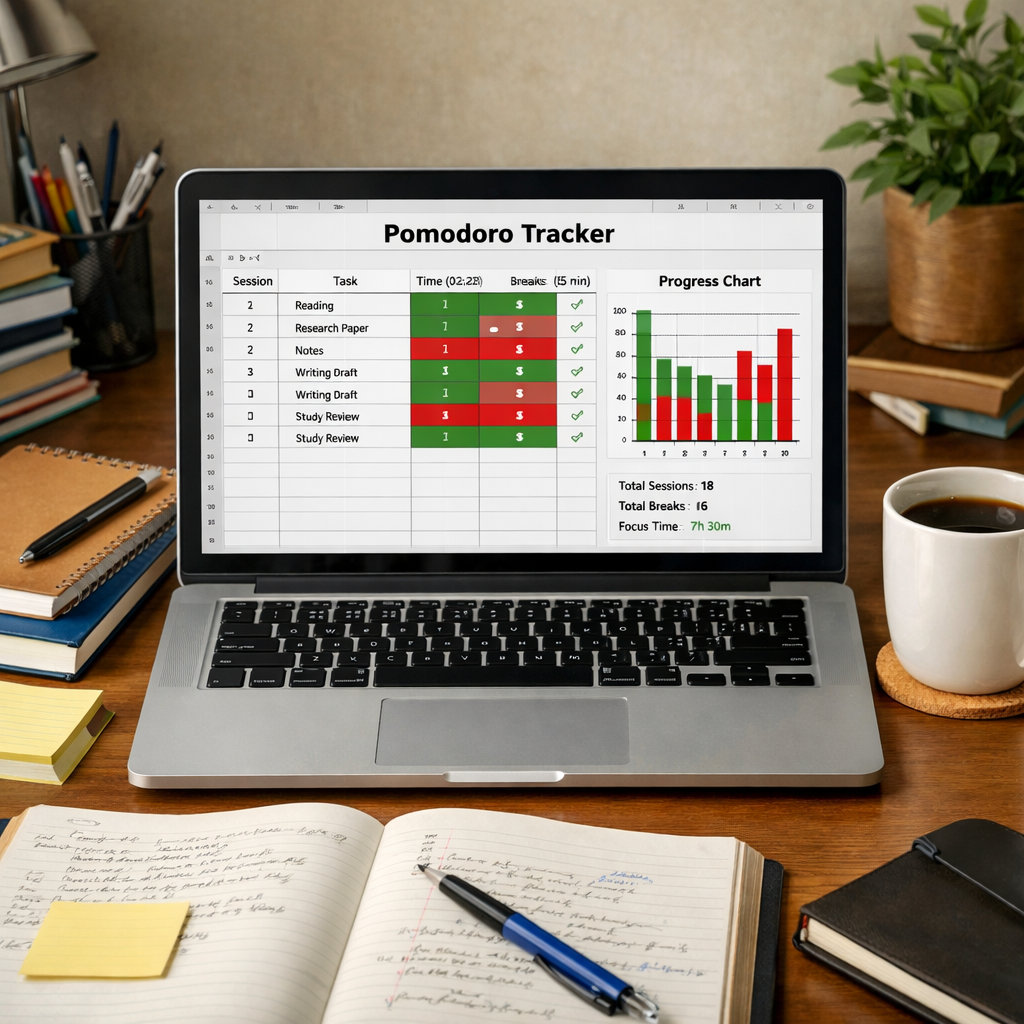
Grab a notebook, a spreadsheet, or the built‑in journal in the Focus Keeper app and note three things after each interval:
- Task type – vocab, listening, speaking, reading, or writing.
- Time length – 20, 25, or 30 minutes.
- Energy rating – a quick 1‑5 score of how alert you felt.
That’s all it takes. Over a few days you’ll see, for example, that listening sprints feel easier at 20 minutes, while writing benefits from the full 25.
Adjusting interval lengths
Once you have a handful of data points, experiment. If your energy rating consistently dips below 3 after the fifth minute of a speaking Pomodoro, shave the session down to 20 minutes and see if the rating climbs. Conversely, if you breeze through a reading Pomodoro with a 5 rating, try adding five minutes for a deeper dive.
Don’t feel compelled to stick to the classic 25/5 split forever. The goal is to match the Pomodoro rhythm to the natural ebb and flow of language acquisition.
Review and iterate weekly
At the end of each week, pull your log together. Look for trends:
- Which skill shows the highest retention (you can test that with a quick flash‑card review the next day)?
- Do certain times of day – morning vs. evening – produce higher energy scores?
- Which interval length yields the most “aha!” moments?
Based on those insights, adjust your schedule for the coming week. Maybe you’ll allocate two 20‑minute speaking blocks in the morning and a longer 30‑minute reading session after lunch.
Remember, the process is iterative. You’ll never get a perfect formula on day one, but each tweak brings you closer to a pomodoro routine for language practice that feels tailor‑made.
Quick reference table
| Metric | What to track | How to adjust |
|---|---|---|
| Energy rating | 1‑5 after each Pomodoro | Shorten intervals if rating <3 consistently |
| Retention check | Recall test after 24 h | Increase focus time for skills with low recall |
| Time of day | Morning, afternoon, evening | Schedule high‑focus skills when energy is highest |
Want some research‑backed reassurance that this tracking loop works? IDP research shows the Pomodoro Technique boosts concentration and retention, especially when you pair it with regular reflection.
Bottom line: treat every Pomodoro like a mini‑experiment. Log, analyze, tweak, and repeat. Over weeks you’ll watch your language fluency climb while the routine itself feels effortless.
Step 4: Integrate Breaks with Immersive Exposure
Alright, you’ve just finished a 25‑minute sprint of vocab flashcards and the timer’s gone off. That five‑minute pause isn’t a waste—it’s a tiny launchpad for the next language bite.
Why breaks matter
Science tells us our brain needs a brief “offline” window to shuffle newly‑encoded words into long‑term memory. Think of it like letting dough rest before you shape it; the gluten relaxes and the texture improves. In a language pomodoro, that micro‑rest gives your hippocampus a chance to file away the patterns you just practiced.
For students cramming before an exam, remote workers juggling meetings, freelancers switching clients, or busy professionals squeezing in a quick review, those five minutes can be the difference between “I barely remember that phrase” and “I can actually use it tomorrow.”
So, instead of scrolling mindlessly or grabbing a snack, turn the break into a purposeful, low‑intensity exposure.
And here’s a quick visual of what that looks like.

Pick micro‑exposures that match the skill you just trained
If you just finished a vocab block, cue a short audio clip that uses several of those words in context. A 30‑second news bite or a lyric snippet works wonders because the brain hears the same lexical items in a natural flow.
Finished a listening sprint? Flip the script: read the transcript silently, or glance at a bilingual subtitle version. The visual reinforcement cements the auditory pattern without demanding full‑on focus.
Did a speaking drill? Use the break to watch a native speaker mouth the same sentences on a muted video. You get the visual mouth movements, which help fine‑tune pronunciation without adding new cognitive load.
Keep the exposure “light” and enjoyable
Remember the break is still a break. Choose content that’s easy on the brain: a favorite song chorus, a funny meme with a caption in the target language, or a quick “word of the day” widget. If you feel the urge to dive deep, set a mental cue—“I’ll explore the full article after my next pomodoro.”
For freelancers who love podcasts during lunch, queue a 2‑minute segment that mentions industry‑specific terms you need. That way the exposure feels relevant and you stay motivated.
Turn the pause into a mini‑review
While the audio plays, grab a sticky note and jot one sentence that uses a new word you just heard. Or whisper the phrase aloud while you stretch. That tiny act of production bridges the passive exposure and active recall, boosting retention.
Another low‑effort trick: set a quick “thumbs‑up” in your pomodoro app for any word that clicked during the break. Later you can compile those thumbs‑ups into a personal flash‑card set.
Tip sheet for an immersive break
- Pick a single sense—audio, visual, or spoken—so you don’t overload.
- Limit the exposure to 30‑45 seconds; longer defeats the purpose of a break.
- Use content that aligns with your current goal (vocab, idioms, pronunciation).
- Add a tiny active step: write, repeat, or thumb‑up.
- Log what you consumed in your pomodoro journal – it helps you see patterns over weeks.
By weaving these micro‑exposures into every five‑minute pause, you transform a simple rest into a silent language‑learning booster. Your pomodoro routine for language practice becomes not just a timing trick, but a rhythm that constantly feeds your brain the right amount of input at the right moment.
Give it a try today: set your timer, finish a focused interval, and then let a favorite song lyric wash over you for the next five minutes. You’ll be amazed at how quickly those words move from “I heard it” to “I can use it.”
Step 5: Review, Reflect, and Plan Your Next Session
Congrats, you just wrapped another pomodoro interval. The timer’s gone silent, the break’s over, and now you’re staring at a blank notebook wondering, “What’s next?” That moment is actually the golden pivot where a routine becomes a habit.
Grab the data you just created
First, jot down the headline of what you tackled – maybe it was “10 German adjectives for travel” or “Spanish podcast on tech trends.” A quick bullet list of what you covered, how long you felt focused (1‑5), and any hiccups (distractions, unknown words) gives you a concrete snapshot.
Don’t over‑think it. One line per pomodoro is enough. In our experience, the act of writing it down reinforces the brain’s sense of achievement and signals the start of the reflection loop.
Ask yourself three quick questions
1. Did I hit the goal? If you set out to use ten flashcards and only got six, note why. Was the timer too short? Was the material too heavy?
2. How did I feel? Rate your energy, motivation, and any mental fog. Those numbers become patterns you can act on later.
3. What stuck? Highlight a phrase or sound that lingered. That’s a clue about what your brain is primed to retain.
Answering these three questions takes less than a minute, but it turns a random study session into a feedback‑rich experiment.
Turn reflections into a mini‑action plan
Now that you know what worked, decide the tweak for the next pomodoro. Maybe you’ll swap a 25‑minute vocab sprint for a 20‑minute listening burst because your energy rating dipped after the fifth minute. Or you could add a tiny “thumb‑up” in Focus Keeper’s journal for any word that felt sticky, so you can pull it into your spaced‑repetition deck later.
Write the tweak as a concrete sentence: “Next session: 20‑minute listening of a tech podcast, then 5‑minute repeat‑out‑loud of key terms.” Concrete language makes it easier to act.
Schedule the next block
Open your calendar or the Focus Keeper app and drop the next pomodoro slot in. Treat it like a meeting with yourself – give it a title (“Review German adjectives”) and a reminder. When the timer shows up, you won’t have to waste mental energy deciding what to do.
If you’re a student, slot the next block right after your next lecture; remote workers can align it with a natural lull between calls; freelancers might place it before a client deadline to boost confidence.
Use a weekly review ritual
At the end of each week, pull the notes you’ve been collecting. Look for trends: Which skill consistently earns a high energy rating? Which time of day feels most alert? Summarize those insights in a short paragraph and adjust your weekly schedule accordingly.
This weekly checkpoint is the bridge between day‑to‑day tweaks and longer‑term growth. It’s also a perfect moment to celebrate the tiny wins – maybe you finally mastered that tricky subjunctive form or nailed a pronunciation nuance.
Keep the momentum light
Remember, the goal isn’t to create a rigid checklist that feels like another chore. It’s to build a rhythm where review, reflection, and planning feel as natural as a coffee break. If a particular reflection step feels heavy, trim it. The pomodoro routine for language practice works best when it adapts to you, not the other way around.
So, after your next five‑minute break, pull out that notebook, answer the three questions, set one micro‑adjustment, and schedule the next interval. You’ll notice the routine becoming smoother, your retention climbing, and the whole process feeling less like work and more like a conversation you’re having with yourself.
Conclusion
We’ve walked through how a pomodoro routine for language practice can turn a chaotic study session into a series of bite‑size wins.
What you can take away right now
Pick one skill, set a 25‑minute timer, and give yourself a five‑minute micro‑exposure break. Log a quick note, rate your energy, and tweak the next block. That loop is simple enough for a student cramming for finals, a remote worker squeezing in a quick vocab burst between calls, a freelancer polishing a client pitch, or a busy professional brushing up on travel phrases.
Does it feel too rigid? Not at all. The routine bends to your rhythm—shorten the interval if you’re tired, swap a listening sprint for a speaking drill when motivation spikes. The key is consistency, not perfection.
Next step
Grab your favorite timer—our Focus Keeper app is built for exactly this kind of flow—and schedule three pomodoros for tomorrow. Write down one concrete goal for each, and watch the momentum build.
Remember, the real magic happens in the tiny pauses where the brain consolidates. Keep those breaks light, keep the goals clear, and let the pomodoro routine for language practice become a habit that sticks.
Give it a week, and you’ll see confidence grow as new words stay fresh and conversation flows easier.
FAQ
What is the best pomodoro interval for language practice?
Most learners find a 25‑minute work block followed by a 5‑minute break works well, but you can tweak it. If you’re a busy professional squeezing in a quick vocab burst between meetings, try a 20/5 split so you stay fresh. Students who can sit longer might push to 30 minutes for reading or writing drills. The key is to match the interval length to the cognitive load of the skill – shorter for speaking drills, a bit longer for deep reading.
How do I choose the right language task for each pomodoro?
Start by picking a single skill per session – vocab, listening, speaking, reading, or writing. Write a concrete goal like “learn five new adjectives” or “transcribe one podcast segment.” That specificity turns the timer into a coach. For remote workers, align the task with upcoming calls (e.g., rehearse key phrases). Freelancers can match the pomodoro to client deliverables, and students can target a chapter section. When the goal is crystal clear, the 25‑minute sprint feels purposeful.
What should I do during the 5‑minute break to reinforce learning?
Keep the break light but language‑rich. Play a 30‑second song clip that uses the words you just studied, glance at a bilingual news headline, or repeat a phrase out loud while you stretch. The idea is low‑intensity exposure – you’re not starting a new lesson, just letting the brain consolidate. If you’re at a desk, a quick glance at a “word of the day” widget works great. This micro‑exposure turns a pause into a silent study booster.
How can I track progress without getting overwhelmed?
Grab a simple notebook or the journal feature in your pomodoro app and log three things after each interval: the task type, a quick energy rating (1‑5), and a one‑sentence note on what stuck or slipped. Over a week you’ll see patterns – maybe listening sprints feel easier in the morning or vocab blocks dip after lunch. Use those insights to adjust interval length or swap skills. The log stays lightweight, so you won’t feel like you’re doing extra homework.
Is it okay to mix pomodoro with spaced‑repetition flashcards?
Absolutely. Set a pomodoro for a focused flashcard round – say 25 minutes of Anki or a physical deck. When the timer dings, take the break to review the cards you got right by saying them aloud, then return for another round. The spaced‑repetition algorithm does the heavy lifting on timing, while the pomodoro adds a disciplined focus window. Students often see retention jump because the short, intense bursts align with the brain’s natural consolidation windows.
Can I use the pomodoro technique for group language practice?
Sure thing. Schedule a shared 25‑minute session on a video call, agree on a single activity (like role‑play or dictation), and mute everyone except the speaker. When the timer ends, everyone takes a 5‑minute break to jot notes or replay a short audio clip. This structure keeps the group on track and prevents the “conversation drift” that can happen when you’re just chatting. It works for remote teams, study groups, or freelance collaborators.
What if I miss a pomodoro or get interrupted?
Don’t stress – the routine is flexible. If you get pulled into a meeting, note the interruption, finish the task later, and start a fresh pomodoro. You can also use a “catch‑up” block later in the day, perhaps a shorter 15‑minute sprint to finish the unfinished piece. The important part is the habit of returning to the timer, not achieving a perfect record. Over time, those occasional bumps smooth out as you learn when to protect your focus windows.