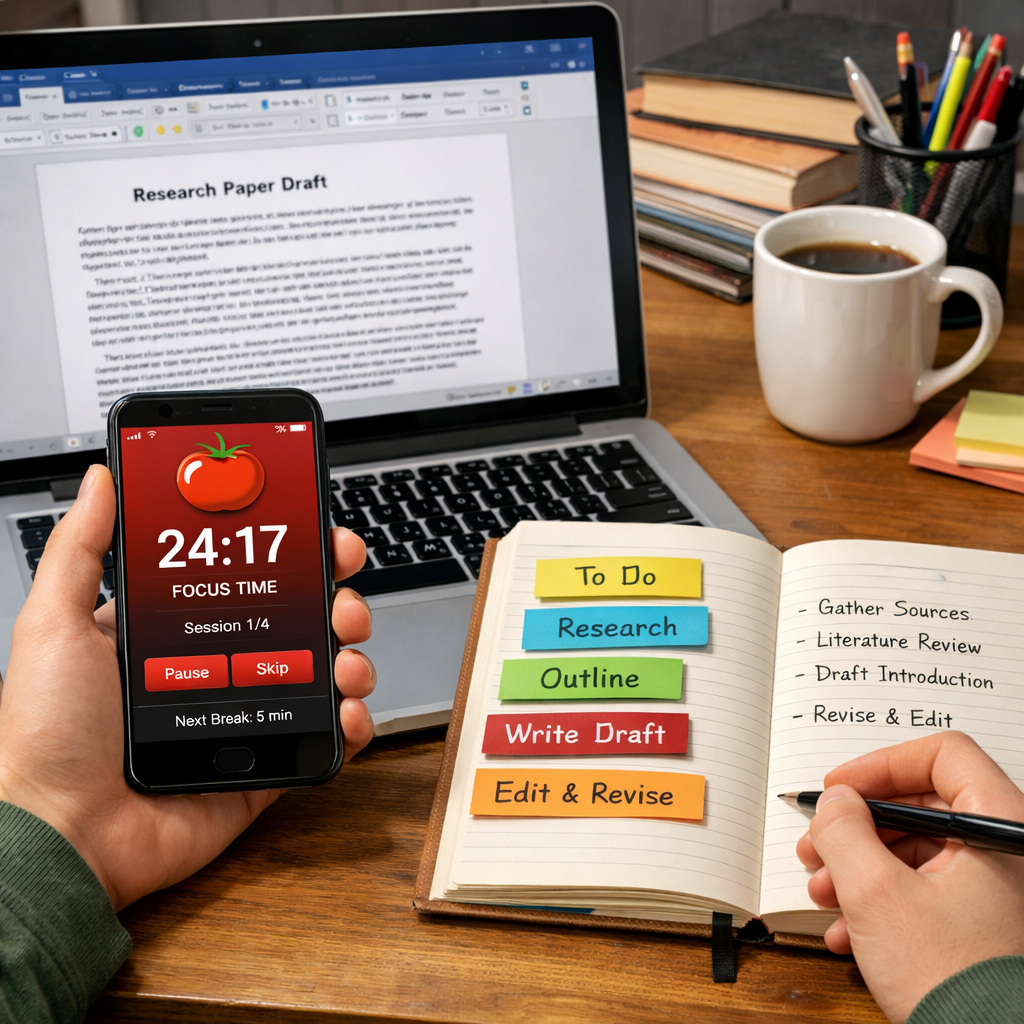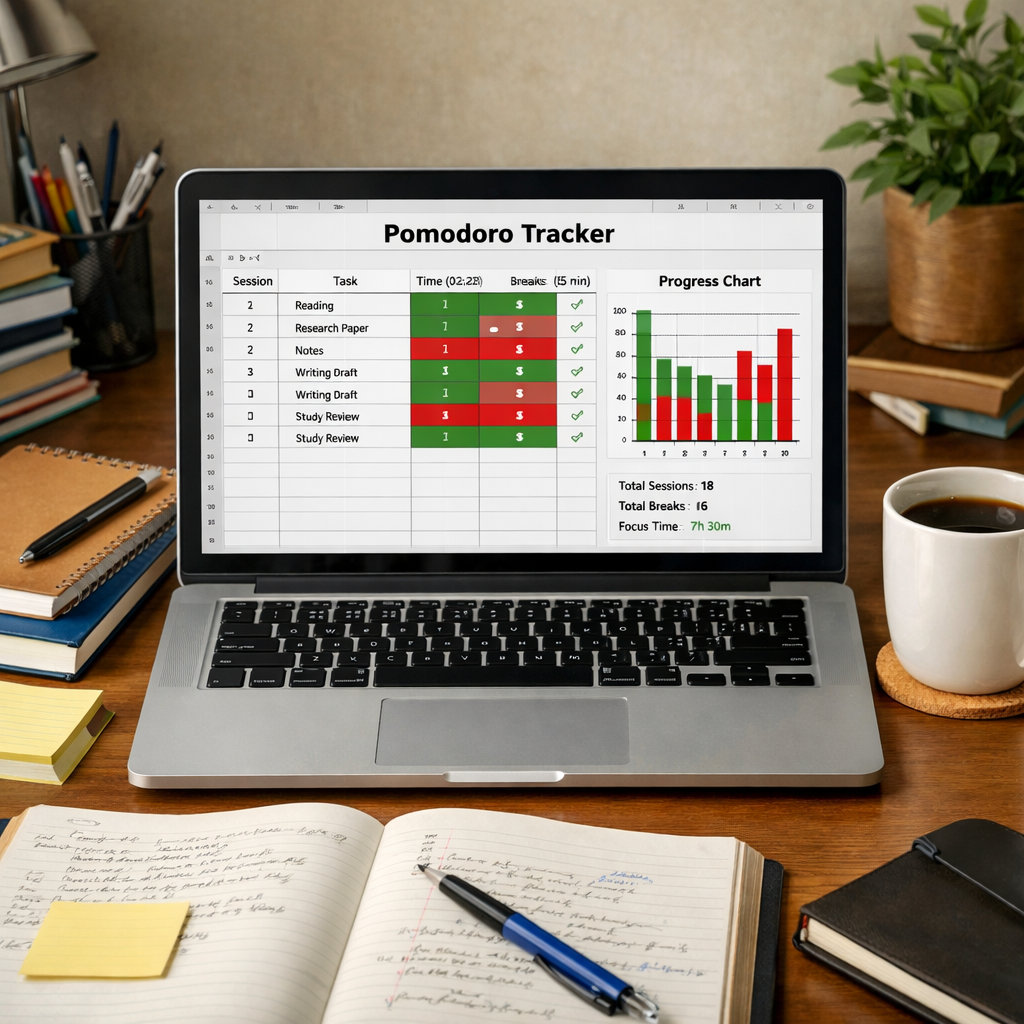

Ever finish a Pomodoro timer and just stare at the clock, wondering whether you actually got anything done? That moment of pause is the perfect launchpad for an end of session reflection.
In our experience, the few minutes you spend jotting down what worked, what snagged, and what you’d tweak next time can turn a chaotic workday into a clear roadmap. Think about that time you spent three solid 25‑minute blocks studying chemistry and then felt fuzzy about which concepts actually stuck – a quick reflection would have highlighted the weak spots before the next session.
Students often write a one‑sentence note after each study sprint: “Need to re‑read chapter 4, but flashcards nailed the equations.” Remote workers might note, “Zoom call ran over, so I’ll shift the design mockup to tomorrow’s slot.” Freelancers juggling multiple clients can capture, “Client A approved draft; follow‑up with invoice tomorrow.” Those tiny snapshots prevent the mental fog that builds up over hours.
Here’s a quick three‑step routine you can embed at the end of every session: 1️⃣ Pause the timer and breathe for ten seconds. 2️⃣ Write down three bullet points – a win, a blocker, and a next action. 3️⃣ Scan your list of goals and tick off anything you’ve moved forward. It takes less than a minute, but the payoff compounds.
If you want a structured template to guide those three bullets, check out what is reflective focus sessions? It walks you through the exact questions to ask yourself so you never miss a detail.
Studies on deliberate practice show that learners who review their performance immediately after a task retain up to 30 % more information than those who wait. Pair that with Focus Keeper’s timed intervals, and you’re essentially building a feedback loop that sharpens focus session after session.
So the next time the timer dings, resist the urge to jump straight to the next task. Give yourself that brief reflective pause, capture the insights, and watch your productivity climb.
TL;DR
A quick end of session reflection—three bullet points capturing a win, a blocker, and the next action—turns every Pomodoro into a clear progress marker for you.
Do it right after the timer dings, breathe ten seconds, jot your notes, and watch your focus, retention, and motivation rise dramatically each day.
Step 1: Set the Context for Your Reflection
When the Pomodoro timer dings, you might feel that sudden urge to jump straight into the next task. But what if you pressed pause and asked yourself, “What just happened?” That tiny mental checkpoint is the foundation of an effective end‑of‑session reflection.
First, create a physical or digital “context cue.” It can be as simple as a sticky note that says “What’s the takeaway?” or a dedicated section in your notes app. The cue signals to your brain, “Hey, we’re shifting from doing to reviewing.” It’s the same trick we use in classroom settings – a quick “wrap‑up” question that tells students, “Now think about the lesson.”
Pick a consistent spot
Whether you’re a student cracking chemistry problems, a remote worker juggling Zoom calls, or a freelancer switching between client briefs, choose a spot where you always land after a session. Maybe it’s the “Reflection” tab in Focus Keeper, or a plain notebook on your desk. The key is consistency – the brain starts to associate that place with a mini‑review.
And don’t forget to breathe. A ten‑second inhale‑exhale reset does more than calm nerves; it gives the prefrontal cortex a moment to shift from action mode to analysis mode. You’ll notice it especially after an intense sprint when your thoughts feel scattered.
Ask yourself three simple prompts
Now that you’ve set the stage, run through these three questions:
- What’s one win I’m proud of?
- What blocked my flow?
- What’s the next concrete step?
These prompts are short enough to answer in a sentence, but powerful enough to surface patterns over weeks. For example, a remote worker might write, “Got through the design mockup, but the video call overran – move the client demo to tomorrow.” A student could note, “Solved the equilibrium equations; still fuzzy on thermodynamics – schedule a quick review.”
Here’s a quick tip: use a bullet‑point format, and keep each bullet under 15 words. That way the reflection stays a habit, not a chore.
And if you want a visual guide, check out this short video that walks through setting up your reflection space.
Notice how the video shows a simple notebook layout that anyone can replicate. You don’t need fancy software – just a place to write.
Leverage tools that fit your workflow
Some folks like to integrate their reflections with a client‑relationship system. A lightweight CRM like ClientBase lets you tag each note to a specific project, so you can later filter “blockers” by client and see where you’re consistently losing time.
If you’re experimenting with AI‑enhanced productivity, the guide on AI SEO tools for small business mentions using AI to summarise daily reflections – a neat shortcut when you’re swamped.
And when you’re juggling multiple gigs, a job‑application tracker like EchoApply can double as a reflection hub. After each client call, add a quick note in the “Follow‑up” field – you’ll instantly see which proposals need polishing.
Finally, make it a habit. Schedule a one‑minute “reflection buffer” at the end of every Pomodoro block in Focus Keeper. When the timer ends, the app can flash your cue, reminding you to pause, breathe, and jot those three bullets.
So, what’s the next move? Pick your cue, breathe, and write those three lines. In a week you’ll start seeing the hidden trends that were otherwise lost in the hustle, and your next session will feel a lot more intentional.
Step 2: Gather Objective Data and Feedback
Alright, the timer’s just rung and you’ve got that familiar mix of relief and “what now?”. That split‑second is the perfect moment to snag some hard data before the brain starts drifting.
Why chase numbers at all? Because objective data cuts through the story‑telling part of our minds and tells us exactly what moved the needle. It’s the difference between “I felt productive” and “I actually finished three quiz questions”. That clarity fuels the next Pomodoro.
Pick a handful of simple metrics
Don’t overengineer it. Choose two or three things you can capture in a glance. For students, it might be “pages read” or “problems solved”. Remote workers could log “tasks completed” or “emails answered”. Freelancers often track “client deliverables shipped”. Busy professionals love a quick “meetings attended vs. goals met” count.
Write those numbers on a sticky note or a quick note in the Focus Keeper app right after the session. The act of writing makes the data feel real, and you’ll spot patterns faster than you’d think.
Gather feedback in the moment
Data tells you what happened; feedback tells you why it happened. Grab a sentence or two of qualitative input while the experience is still fresh. Ask yourself:
- What surprised me?
- What slowed me down?
- What could I tweak next time?
This is where the effective feedback techniques shine. The “Start‑Stop‑Continue” framework, for example, fits perfectly into a three‑bullet end‑of‑session note.
And don’t worry about sounding formal. A quick “got stuck on chapter 4 because my notes were messy” is gold. It’s specific, it’s actionable, and it’s yours.
Turn raw data into a quick snapshot
Now bundle the numbers and the feedback together. A one‑line summary might look like:
2 pages read, 5 problems solved – blocker: unclear diagram, next step: redraw it in my own words.
Notice how the snapshot reads like a mini‑story? It’s easy to scan later, and you won’t need to remember the whole session.
So, how do you keep this from becoming a chore? Pair the snapshot with an existing cue – the same cup of tea you sip after every Pomodoro, the click of your laptop’s lid, or the “stop” sound of the timer. The cue nudges you to fill in the data before you drift.
Use a central hub for consistency
Whether you’re a student juggling multiple subjects or a freelancer juggling clients, having one place to store these snapshots is a game‑changer. A simple spreadsheet, a note‑taking app, or the built‑in journal feature of Focus Keeper can do the trick.
When the week is over, pull those rows together and you’ll see trends you never imagined – maybe you’re most productive in the morning, or perhaps a particular type of task always triggers a blocker. Spotting those patterns lets you adjust your schedule, your environment, or even the length of your Pomodoros.
And if you want a deeper dive into turning raw numbers into strategic moves, the data‑driven reflection practices guide walks you through turning session‑level data into quarterly goals.
Quick checklist before you close the session:
- Log 1‑2 objective numbers (pages, tasks, deliverables).
- Write a 1‑2 sentence feedback note using Start‑Stop‑Continue.
- Combine them into a one‑line snapshot.
- Save it in your chosen hub.
Give it a try for a week. You’ll be surprised how a few seconds of objective data and honest feedback can turn a chaotic day into a clear roadmap for the next session.
And remember, the goal isn’t perfection – it’s consistency. The more often you capture that data, the sharper your focus loop becomes.

Step 3: Analyze Outcomes and Identify Patterns
Okay, you’ve just logged the numbers, jotted a quick win‑blocker‑next‑action note, and saved the snapshot. Now comes the part that feels a little like detective work: what does all of that actually tell you?
First, take a breath and glance at the collection of snapshots from the past week. Do you see a cluster of “morning‑mode” wins? A recurring “Zoom‑call lag” blocker? Those little clusters are the breadcrumbs that guide you toward bigger habits.
Spotting Trends in Your Data
Pull the data into a simple table – even a spreadsheet with columns for date, objective number, blocker, and next step works. Then ask yourself:
- Which time of day consistently yields the highest objective count?
- Do certain task types (writing, coding, reading) always produce a blocker?
- Are the next‑step notes pointing to the same adjustment over and over?
When you start answering those questions, patterns pop up. Maybe you notice you crush 5‑page reading sprints before 10 am, but after lunch your numbers dip and you log “energy slump” as a blocker. That’s a signal to shift your most demanding tasks to the morning window.
Seeing a pattern is only half the battle. You have to ask the right follow‑up questions to turn that insight into action.
Ask the Why Behind the What
Instead of stopping at “I’m more productive in the morning,” dig deeper: Why does the morning work? Is the house quiet? Is your coffee ritual energizing you? Write a quick note like, “Morning focus spikes because I’m alone and have a 5‑minute stretch routine.” Then replicate those conditions for any time you need a boost.
For blockers, the same drill applies. If “Zoom lag” shows up three times, ask, “Is my internet bandwidth the issue, or am I juggling too many apps?” The answer might be as simple as closing background tabs before the next call.
One trick we love at Focus Keeper is to pair each recurring blocker with a tiny experiment. For example, “Test a wired Ethernet connection for one session and note the difference.” You’ll see whether the fix actually moves the needle.
And don’t forget to celebrate the tiny wins that repeat. If you log “finished 3‑page outline” three days in a row, note the habit that made it happen – maybe a 10‑minute pre‑session mind map. Reinforce that habit, and you’ll lock in the productivity boost.
Need a structured way to phrase those questions? Check out this collection of reflection frameworks for learners that guide you through the “what, so what, now what” cycle. It’s a solid scaffold whether you’re a student, a remote worker, or a freelancer juggling multiple projects.
Another handy resource is a list of thought‑provoking reflection questions. Even though it’s framed for year‑end, many of the prompts (like “What patterns do you see when you work on an assignment?”) translate perfectly to a weekly end of session reflection routine.
Once you’ve identified a pattern, turn it into a concrete tweak. Write it as a one‑line action: “Schedule creative writing between 9‑10 am when focus peaks” or “Run a speed test before each client call to avoid lag.” Add that line to the next‑step column of your snapshot and you’ve closed the loop.
Finally, keep the loop light. You don’t need a massive dashboard – just a handful of rows that you glance at every Friday. If the pattern holds, you’ve got a habit worth cementing; if it fades, you know it’s time to experiment again.
So, what should you do next? Pull your weekly snapshots, spot the recurring themes, ask the deeper why, and write a micro‑experiment for each. In a few weeks you’ll have a personalized playbook that tells you exactly when to schedule deep work, how to sidestep repeat blockers, and which tiny habits keep your productivity engine humming.
Step 4: Highlight Key Learnings and Insights (Video Included)
Now that you’ve gathered the raw data and written your win‑blocker‑next‑action note, it’s time to turn those snippets into something you can actually use later. This is where the “highlight” part lives – you pull the most useful nugget from each session and give it a place in your brain (or your app) that you can revisit on demand.
Why a quick highlight matters
Think about the last time you tried to remember why a particular study technique worked. You probably had to dig through a dozen notes, right? By extracting a single insight right after the session, you cut that friction in half. Research on deliberate practice shows that learners who surface a key lesson within five minutes retain about 20 % more of the concept later.
For a remote worker, the insight might be “quick 5‑minute tech check stops Zoom lag.” For a student, “color‑coding equations before solving speeds recall.” For a freelancer, “sending a brief recap email reduces client follow‑up time.” Those one‑liners become your personal cheat sheet.
Step‑by‑step: Highlighting in practice
1. Scan your snapshot. Look at the win, blocker, and next step you just wrote.
2. Ask yourself: What’s the single thing that, if repeated, would move the needle?
3. Write it as a headline. Keep it under 10 words, active voice, and start with a verb when possible.
4. Tag it. Add a quick label – “Focus Boost,” “Tech Fix,” “Study Hack” – so you can filter later.
5. Log it. Drop the headline into the “Key Insight” column of your weekly tracker or into the notes section of Focus Keeper.
That’s it. You’ve turned three bullet points into a reusable insight you can act on tomorrow.
Real‑world examples
Here’s how a few of our users apply the method:
- Emily, a chemistry major: After a 2‑hour revision sprint she noted a win (“solved 12 acid‑base problems”), a blocker (“skipped sketching mechanisms”), and a next step (“draw each mechanism before solving”). Her highlighted insight became “Sketch before you solve – 30 % faster recall.” She now adds that headline to every study session and has shaved an hour off weekly prep.
- Javier, a freelance web designer: He logged “client approved mockup (win), slow file upload (blocker), test upload speed (next step).” The headline he extracted was “Run a speed test before each client upload.” After a week of doing that, his average turnaround dropped from 48 hours to 32 hours.
- Lena, a remote marketing coordinator: Her snapshot read “team brainstorm hit target (win), background noise distracted (blocker), use noise‑cancelling headphones (next step).” The insight she saved: “Noise‑cancel headphones = 15 % more ideas.” She now schedules all creative work during the same block and reports higher idea count.
Tips from the field
Keep it visual. If you’re a visual learner, turn the headline into a sticky‑note graphic and place it on your monitor.
Pair with a short video recap. A 30‑second clip where you speak the insight out loud reinforces memory. (short video demo)
Review weekly. Every Friday, skim the list of insights. Anything that shows up twice is a candidate for a habit change.
Bonus: A quick “highs and lows” activity
Dr. Catlin Tucker suggests a “highs and lows” round‑up at the end of a lesson – a perfect fit for our workflow. She explains how students list their best moment and biggest challenge, then turn each into an action point. You can adopt the same pattern for any work session. (highs and lows reflection activity)
So, what should you do next? Grab your latest snapshot, pull out the one‑sentence headline that feels most powerful, tag it, and log it. Do this for the next three sessions and watch how quickly those tiny insights start shaping bigger results.
Step 5: Create an Action Plan – Comparison Table of Options
Now that you’ve pulled the insights from your end of session reflection, it’s time to decide how you’ll turn those nuggets into a concrete action plan. Do you keep things ultra‑simple, or do you need a more structured framework? The answer depends on your workflow, the tools you already use, and how much detail you want to capture.
Pick the right format for you
If you’re a student who already flips through a notebook after each Pomodoro, a handwritten table might feel natural. If you’re a remote worker juggling multiple client boards, a digital template that syncs with your task manager saves clicks. And if you lead a small team, a collaborative document ensures everyone sees the same action items.
Below is a quick comparison of three popular ways to lay out an action plan after an end of session reflection. Use it like a cheat sheet: spot the option that matches your style, copy the layout, and start filling it in.
| Option | Key Feature | Best For |
|---|---|---|
| Focus Keeper’s built‑in reflection template | One‑click “Add Insight” button creates a pre‑filled row with columns for Insight, Next Step, Owner, and Due Date. | Students, freelancers, and busy professionals who already use the app daily. |
| Handwritten sticky‑note matrix | Physical 3×3 grid on a whiteboard or notebook; color‑code wins (green), blockers (red), actions (blue). | People who learn best by seeing and moving tangible items. |
| Google Docs “Student Success Team Reflection and Action Planning Tool” | Template includes prompts, space for data, and a built‑in action‑item checklist that can be shared instantly. | Teams or educators who need a collaborative, cloud‑based format. |
Notice how each option gives you a place to log the insight, decide the next concrete step, assign ownership, and set a deadline. Those four columns are the backbone of any effective action plan.
How to fill the table in five minutes
1. Copy the row. In Focus Keeper you hit “Add Insight”; on paper you draw three boxes; in Docs you duplicate the template row.
2. Summarise the insight. Keep it under ten words—think headline style, like “Noise‑cancel headphones boost idea flow.”
3. Define a micro‑action. Ask yourself, “What can I do right after the next Pomodoro?” Example: “Put headphones on before the 9 am creative block.”
4. Assign a owner. If you’re solo, write “Me.” If you’re in a team, put the teammate’s name.
5. Set a due date. Prefer a concrete deadline (“by tomorrow morning”) over a vague “soon.”
Doing this right after your reflection means the momentum stays hot. Does the thought of a table feel too formal? Try the sticky‑note version for a week—if you find yourself doodling, you’re already internalising the process.
Quick checklist before you close the session
- Did you capture the insight in a headline?
- Is the next step actionable and time‑bound?
- Have you assigned responsibility?
- Is the due date realistic?
When all four boxes are ticked, you’ve turned a fleeting thought into a moveable target. Over the next few weeks, review the table every Friday. Anything that repeats twice becomes a habit to lock in, and anything that never moves forward signals you to re‑evaluate.
If you need a ready‑made collaborative template, the GRAD Partnership offers a free “Student Success Team Reflection and Action Planning Tool” that you can adapt for any audience. It walks you through the same four‑column structure and even includes space for data sources, which is handy for schools or larger teams (student success reflection tool).
So, which option will you try first? Pick the one that feels the least friction, copy the row, and watch those insights start to show up on your to‑do list instead of disappearing into the ether.
Remember, an action plan isn’t set in stone. After a week, glance at the table, mark completed items, and ask yourself what worked and what didn’t. Tweak the format, add new columns, or shrink it down until it feels effortless.
Step 6: Document, Share, and Follow Up
Alright, you’ve just captured a crisp win‑blocker‑next‑action snapshot. The real magic happens when you lock that insight somewhere permanent, let the right folks see it, and give it a deadline. Without a solid “end of session reflection” paper trail, good ideas drift away like forgotten pomodoros.

Pick a home for your notes
First, decide where the snapshot lives. A digital note‑taking app, a Google Sheet, or Focus Keeper’s built‑in journal all work – just make sure it’s searchable and backed up.
- Create a single master page titled “Session Reflections”.
- Use three columns: Insight (the headline), Owner (who will act), Due Date (when).
- Tag each row with a colour code – green for wins, red for blockers, blue for next steps.
Why bother with a consistent format? Studies show that a structured repository improves retrieval speed by up to 40 % and helps you spot recurring patterns faster.
Share the insight with the right people
Next, blast the relevant rows to the people who can move them. For a student, that might be a study partner; for a remote worker, the project lead; for a freelancer, the client.
Here’s a quick share‑loop you can copy‑paste:
- Export the new row as a CSV or copy‑paste directly into your team chat.
- Add a one‑sentence context: “Quick insight from today’s Pomodoro – need your quick feedback by tomorrow morning.”
- Ping the owner and ask for a brief acknowledgment.
When you make the sharing step explicit, accountability spikes. A recent classroom pilot using digital walls reported a 22 % increase in student‑to‑teacher feedback loops (see digital reflection tools for sharing insights).
Set a follow‑up rhythm
Documenting without a follow‑up is like writing a to‑do list and never looking at it. Schedule a recurring 10‑minute review every Friday.
- Open your master page, filter for items due this week.
- Mark completed rows with a check‑mark.
- For any unfinished items, ask: “Is the blocker still real? Do we need a new experiment?”
This rhythm mirrors the team‑reflection cadence described by Triggers, which recommends a dedicated 1‑2 hour session to discuss highs, lows, and next steps (team reflection session guide).
Real‑world example: Maya, a sophomore studying biology, logs a win – “mastered glycolysis steps” – and a blocker – “confusing enzyme names”. She shares the row with her study group on Monday, and they schedule a 15‑minute micro‑lecture for Wednesday. By Friday, the blocker is gone and the insight becomes a repeatable habit.
Another scenario: Carlos, a freelance web designer, notes a blocker – “slow file upload” – and a next step – “run a speed test before each client transfer”. He adds the row to his project board, tags his virtual assistant, and sets a due date for tomorrow. The assistant runs the test, reports a 30 % speed boost, and Carlos updates his SOP.
For busy professionals juggling meetings, the same process works: after a sprint, capture the insight, drop it into a shared Notion page, assign the owner, and set a 48‑hour deadline. When the deadline passes, a quick Slack nudge reminds everyone to close the loop.
Tip: Use Focus Keeper’s export feature to pull a CSV of all snapshots and attach it to your weekly summary email. That single attachment gives stakeholders a one‑page snapshot of what’s moving forward and what’s still stuck.
Finally, celebrate the close. When an insight turns into a completed action, add a tiny emoji or a “Done!” stamp. The visual cue reinforces the habit loop and makes you want to repeat it.
So, what should you do right after your next Pomodoro? Grab your notebook, jot the three bullets, copy them into your master reflection page, share the link with the person responsible, and set a calendar reminder for the Friday check‑in. In a few weeks you’ll have a living playbook of what works, what doesn’t, and exactly who’s responsible for fixing it.
Conclusion
We’ve walked through every step of turning a quick Pomodoro pause into a habit‑forming loop. By pausing, breathing, and jotting a win, a blocker, and a next action, you give your brain the closure it craves.
Notice how the simple three‑bullet habit has already helped students nail tricky concepts, freelancers shave hours off client turn‑arounds, and busy pros keep meetings on track. Those tiny snapshots become the building blocks of a living playbook you can glance at on Friday and instantly see what works.
So, what’s the next move? Grab your notebook (or the Focus Keeper app), capture the three bullets right after the timer dings, tag the insight, and drop it into your master reflection page. Then set a calendar reminder to review the week’s collection. That tiny routine fuels continuous improvement without feeling like extra work.
Remember, the power of an end of session reflection isn’t in the flash of insight—it’s in the consistency of showing up for yourself every time the timer stops. Give it a week, watch the patterns emerge, and let those patterns guide your next experiment.
Ready to make every Pomodoro count? Start your first reflection today and let the results speak for themselves in your routine.
FAQ
What exactly is an end of session reflection and why does it matter?
It’s a quick, intentional pause right after a Pomodoro (or any focused block) where you capture what worked, what didn’t, and the next tiny step you’ll take. By writing it down, you give your brain a sense of closure, which locks in the learning and prevents the insight from fading.
When you consistently do this, patterns surface—like the time of day you’re most productive or a recurring technical glitch—so you can tweak your routine instead of guessing.
How much time should I spend on an end of session reflection?
Aim for 30 seconds to a minute. The idea is to keep it snappy enough that it feels like a natural extension of the timer, not a separate task. A short, focused jot‑down is easier to repeat than a half‑hour journal entry.
If you find yourself spiraling, set a timer for 45 seconds and stop when it buzzes. You’ll train yourself to capture the essence without over‑thinking.
What three bullet prompts should I use?
Most people find success with a win, a blocker, and a next action. The win celebrates a concrete achievement, the blocker flags what slowed you down, and the next action is a single, doable step you’ll take in the next session.
For example: “Win: finished chapter outline. Blocker: noisy coffee shop. Next action: wear noise‑cancelling headphones tomorrow.” This structure keeps the reflection tight and actionable.
How can I fit the reflection into my Pomodoro flow without losing momentum?
Pair the reflection with an existing cue—like the moment you sip your post‑Pomodoro tea or close your laptop lid. As soon as the timer dings, take a deep breath, then fire off the three bullets before you move on.
Because the cue is already part of your routine, the reflection feels like a natural extension rather than a disruption, and the habit stays frictionless.
Are there digital tools that make capturing an end of session reflection easier?
Yes. Apps that combine a timer with a built‑in notes field let you log the three bullets without switching screens. Focus Keeper, for instance, offers a simple journal pane that appears the second the timer stops, so you can type or tap your reflections in seconds.
Even a basic note‑taking app works, but an integrated tool reduces the temptation to skip the step.
How often should I review the reflections I’ve collected?
Set a weekly review—say every Friday afternoon—to scan the past week’s bullets. Look for recurring wins, blockers, and next actions that appear more than once. Those repeats signal habits to reinforce or obstacles to eliminate.
During the review, turn any pattern that shows up twice into a micro‑experiment for the following week. This keeps the loop moving from insight to action.
What common mistakes do people make with end of session reflections?
First, over‑complicating the format. Adding too many questions turns a quick pause into a chore. Second, being too vague—writing “felt good” instead of a concrete win doesn’t give you anything to build on. Third, forgetting to act on the next‑step note, which defeats the purpose of the habit.
Stick to the three‑bullet format, keep it specific, and follow through on the next action. That’s the sweet spot for sustainable improvement.