High school can feel like a whirlwind of classes, homework, and trying to remember everything. It’s easy to get lost in the shuffle and feel like you’re not making the most of your study time. That’s where a good study timer for high school students comes in. Think of it as your personal coach, helping you stay focused, manage your schedule, and actually see how much you’re getting done. We’re going to look at how these tools can make a real difference in your grades and your stress levels.
Key Takeaways
- A study timer for high school students helps you focus better during study sessions.
- Features like the Pomodoro Technique and gamification can keep you motivated.
- Syncing your timer across devices makes it easy to use anywhere.
- Tracking your progress helps you see where you’re doing well and where you need to improve.
- Using a study timer can lead to less procrastination and a better school-life balance.
Unlock Your Academic Potential with a Study Timer
High school can feel like a whirlwind, right? Between classes, homework, extracurriculars, and trying to have some kind of social life, it’s easy to feel overwhelmed. You might find yourself staring at a textbook, knowing you should be studying, but your mind just wanders off. That’s where a study timer comes in. It’s not just about counting minutes; it’s about making those minutes count.
Understanding the Power of a Study Timer for High School Students
Think of a study timer as your personal academic coach. It helps you see exactly where your time is going. You might think you spent two hours studying for that history test, but the timer might show you only had about 45 minutes of actual focused work. This awareness is the first step to making real changes. It helps you identify those moments when you’re just passively looking at notes instead of actively learning.
A study timer brings structure to your study sessions, turning vague intentions into concrete actions. It’s a simple tool that can make a big difference in how effectively you learn.
How a Study Timer Enhances Focus and Productivity
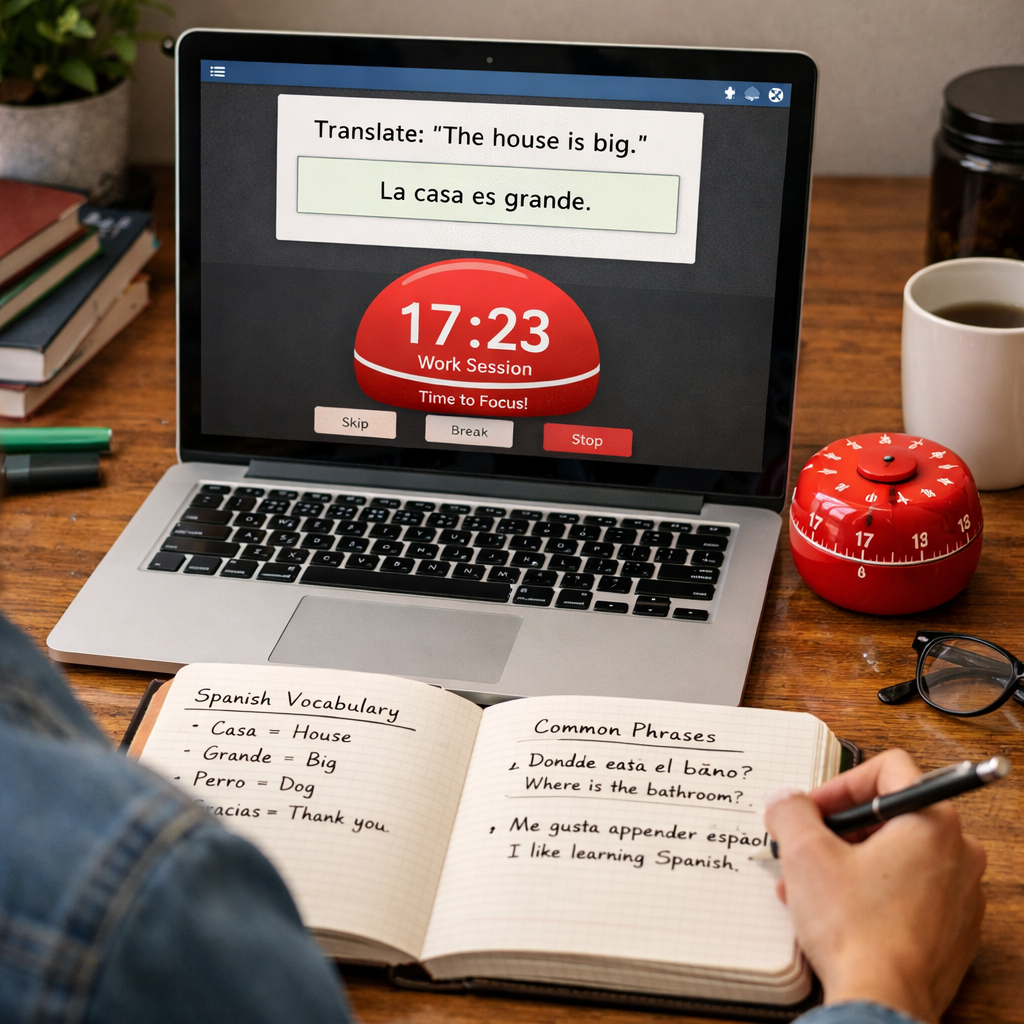
One of the biggest challenges for students is staying focused. Distractions are everywhere – phones buzzing, social media notifications, even just the urge to check what’s happening online. A study timer, especially one with a focus mode like the Pomodoro Technique, helps you create dedicated blocks of time for studying. During these blocks, the goal is to concentrate solely on your work. Knowing that a break is coming soon can make it easier to resist distractions. This structured approach trains your brain to focus for longer periods, which naturally boosts your productivity.
Here’s a quick look at how timers can help:
- Reduces distractions: By setting a timer, you commit to focusing for a specific duration.
- Breaks down tasks: Large assignments feel less daunting when broken into timed segments.
- Increases awareness: You start to notice how long tasks actually take.
- Builds momentum: Completing timed sessions creates a sense of accomplishment.
Choosing the Right Study Timer for Your Needs
Not all study timers are created equal. Some are super simple, just a basic countdown timer. Others come with more features like:
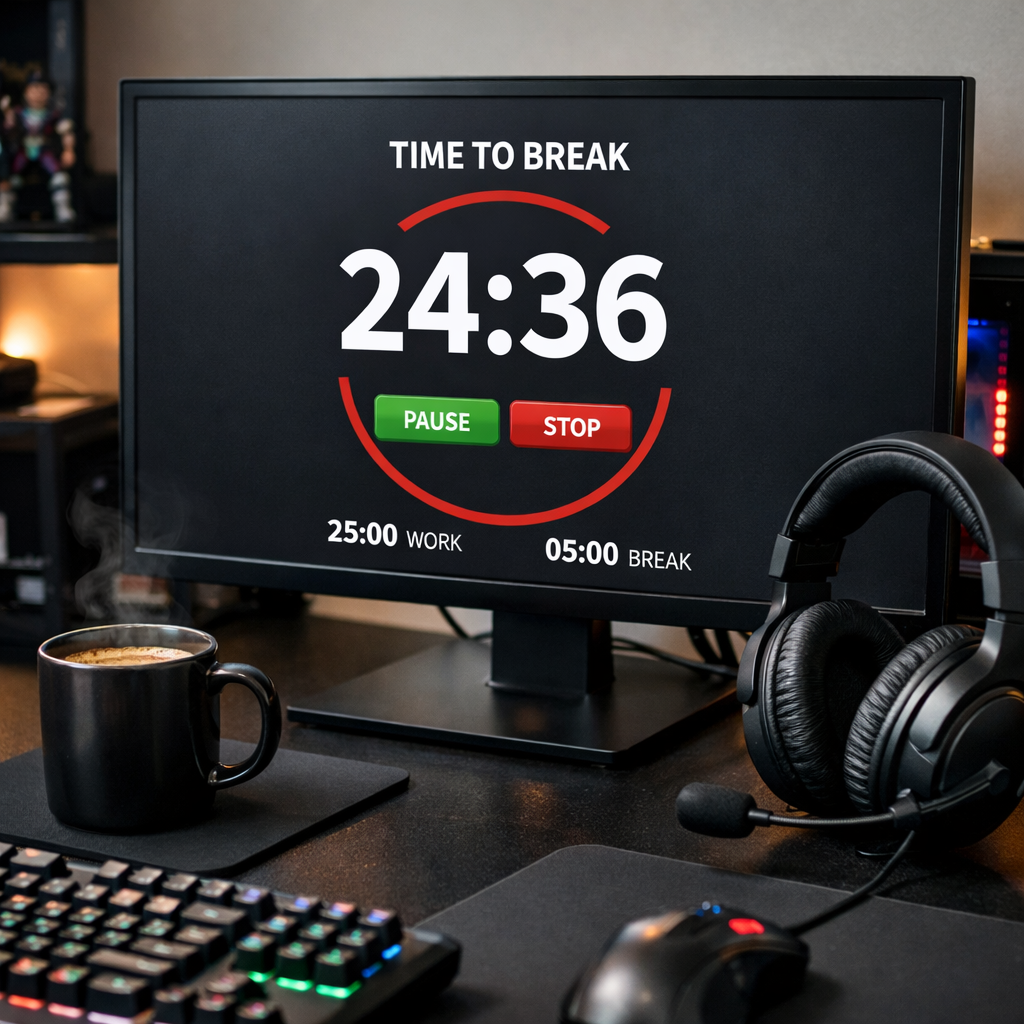
- Pomodoro timers: These use work/break intervals (e.g., 25 minutes work, 5 minutes break).
- Gamification: Features like streaks, badges, or points to keep you motivated.
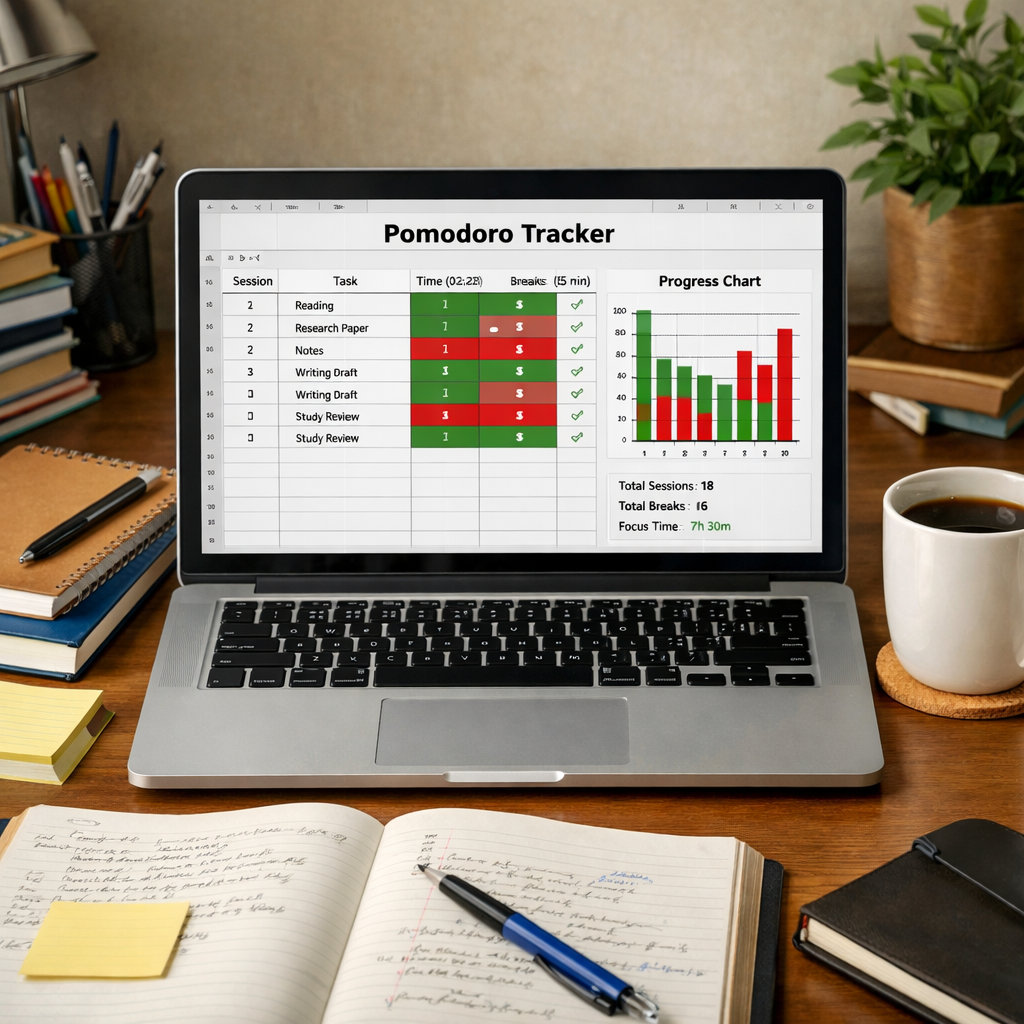
- Progress tracking: Dashboards that show how much time you’ve spent on different subjects.
- Customization: Options to set your own work/break times or color schemes.
Consider what works best for you. If you get easily distracted, a Pomodoro timer might be ideal. If you need extra motivation, look for one with gamified elements. The best timer is the one you’ll actually use consistently.
Master Your Schedule with Advanced Timer Features
Leveraging the Pomodoro Technique for Effective Study Sessions
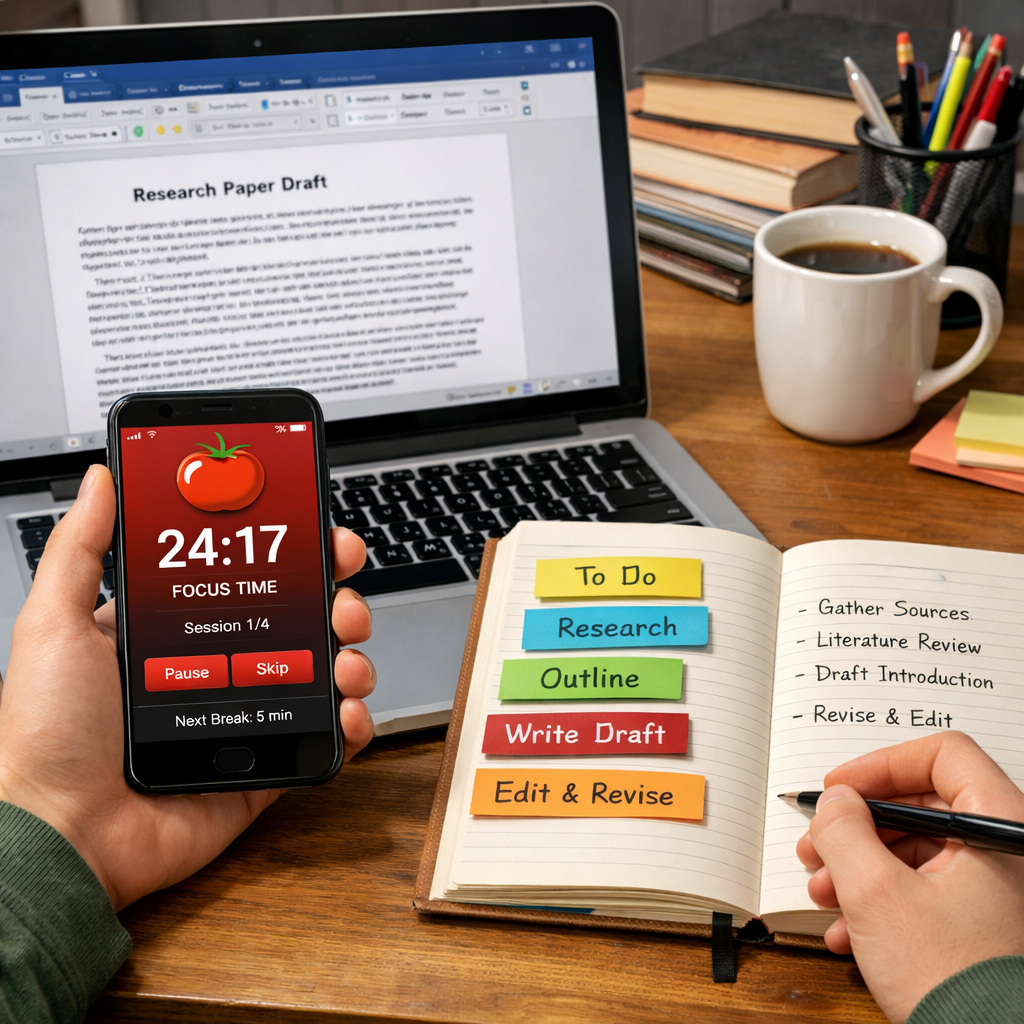
Ever feel like you’re staring at a textbook for hours but nothing’s sticking? The Pomodoro Technique might be your new best friend. It’s pretty simple: you work in focused bursts, usually 25 minutes long, followed by a short break, like 5 minutes. After a few of these "pomodoros," you take a longer break. This method helps you avoid burnout and keeps your brain fresh. It’s like sprinting through your study material instead of trying to jog a marathon.
Here’s how to get started:
- Set your timer: Pick a time, usually 25 minutes, for focused study.
- Work without distractions: This is key. Put your phone away, close unnecessary tabs, and really concentrate.
- Take a short break: When the timer goes off, step away for 5 minutes. Stretch, grab some water, but don’t get sucked into social media.
- Repeat: Do this a few times, then take a longer break (15-30 minutes).
This structured approach breaks down daunting tasks into manageable chunks, making it easier to start and maintain momentum.
Utilizing Streaks and Gamification for Daily Motivation
Let’s be real, staying motivated day after day can be tough. That’s where streaks and gamification come in. Think of it like a game: you earn points or maintain a "streak" for sticking to your study schedule. Seeing that streak grow can be surprisingly motivating. Many study timer apps include these features, giving you badges or visual cues when you hit certain milestones. It turns studying from a chore into something a bit more engaging.
Tracking Progress with Detailed Statistics and Dashboards
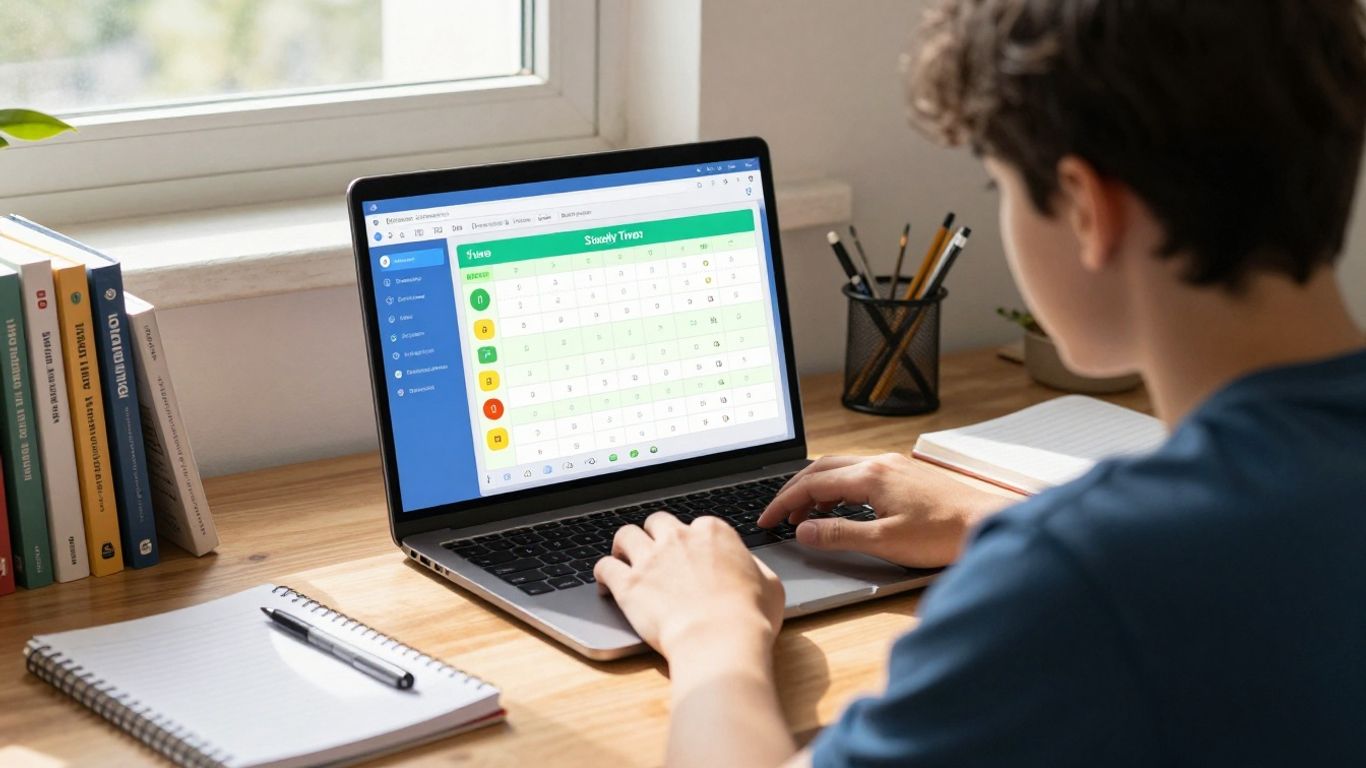
Knowing how you’re studying is just as important as when. Advanced study timers often come with detailed statistics. You can see how much time you’ve spent on each subject, identify your most productive times of day, and track your progress over weeks or months. This data is super helpful for figuring out what’s working and what’s not. A good dashboard gives you a clear, visual overview of your study habits, helping you make smart adjustments to your routine.
Integrate Your Study Timer into Your Daily Routine
So you’ve got a study timer, maybe you’ve even played around with the Pomodoro Technique. That’s great! But the real magic happens when you make it a regular part of your day, not just something you pull out when you feel like it. Think of it like brushing your teeth – you just do it, right? Your study timer can become that automatic.
Syncing Your Study Timer Across Multiple Devices
Life gets messy, and sometimes you’re on your laptop, sometimes on your phone, maybe even sneaking in some reading on a tablet. Having your study timer sync across all your devices means you never lose your flow or your progress. If you start a study session on your computer, you can pick up right where you left off on your phone if you need to move. This kind of continuity is a big deal for staying on track. Apps like MyStudyLife are built for this, letting you manage your schedule from your phone, computer, or iPad without missing a beat. It’s like having your study plan follow you around.
Customizing Your Timer for Personalized Study Habits
Not everyone studies the same way, and that’s totally fine. Your timer shouldn’t force you into a one-size-fits-all box. Most good timers let you tweak things. Maybe you find 25 minutes of focus too short, or 5 minutes of break not enough. Don’t be afraid to adjust those settings. Some apps even let you set different timers for different subjects. For instance, you might need longer focus blocks for math problems than for reading history. Experimenting with these settings is key to finding what actually works for you.
Here’s a quick look at common customization options:
- Focus Session Length: Adjust from 15 minutes to 2 hours.
- Break Length: Set short breaks (5-10 mins) and longer breaks (15-30 mins).
- Sound Alerts: Choose notification sounds or vibrations.
- Session Goals: Some timers let you set how many sessions you want to complete.
Setting Reminders for Classes and Assignments
Your study timer isn’t just for focused study blocks; it can be a lifesaver for remembering everything else. Think about it: how many times have you suddenly remembered you have a class in five minutes, or that an assignment was due today? Using your timer app to set reminders for classes, assignment deadlines, or even just to take a quick stretch break can make a huge difference. It helps prevent that last-minute panic and keeps you from missing important things. It’s like having a personal assistant for your school life, reminding you of upcoming events.
Keeping track of everything can feel overwhelming, but a good timer app acts as a central hub. It doesn’t just time your study sessions; it helps manage your entire academic day. By integrating reminders and syncing across devices, you create a consistent system that supports your learning without adding more stress.
Beyond Basic Timing: Advanced Study Timer Capabilities
Using a Study Timer to Monitor Subject-Specific Performance
Sure, knowing you studied for five hours is good, but what if you could know exactly how much time you spent on, say, calculus versus history? Advanced study timers let you break down your time by subject. This means you can see if you’re spending enough time on that tough math class or if you’re neglecting your literature readings. It’s like having a personal academic analyst.
Here’s a quick look at how you might track time by subject:
- Start a Session: Select the subject you’re about to study.
- Study: Let the timer run.
- End Session: Stop the timer and move on.
This simple process builds up data over time. You can then check reports to see where your study hours are going. Maybe you’ll find you’re spending 80% of your time on one subject and only 20% on others. That’s a clear sign you need to adjust your schedule.
Setting and Achieving Study Goals with Your Timer
Most timers just count time. The really good ones help you set goals. Think about it: instead of just studying ‘for a while,’ you can aim to complete ‘3 hours of chemistry homework’ or ‘finish reading Chapter 5 of biology.’ Your timer can then track your progress towards these specific targets.
Setting clear, measurable goals makes your study sessions much more effective. It gives you something concrete to aim for, rather than just vaguely ‘studying.’
Some apps even have features that predict how much more time you’ll need to reach your goals based on your past performance. It’s pretty neat.
Managing Exam Schedules and Revision Timetables
Exam periods can be stressful. A good study timer isn’t just for daily study; it can help you plan for the big tests too. You can input your exam dates and have the timer help you build a revision schedule. It might suggest how much time to dedicate to each subject leading up to the exam, or it can simply remind you when your next big test is coming up. This way, you’re not cramming everything in the night before. It helps spread out the work, making it less overwhelming and more effective for actual learning.
| Subject | Exam Date | Planned Revision Time | Actual Revision Time | Status |
|---|---|---|---|---|
| Mathematics | 2026-05-15 | 10 hours | 8 hours | In Progress |
| History | 2026-05-18 | 8 hours | 7 hours | In Progress |
| Physics | 2026-05-22 | 12 hours | 10 hours | In Progress |
The Benefits of a Dedicated Study Timer for High Schoolers
Look, high school is a whirlwind. Between classes, homework, extracurriculars, and trying to have some kind of social life, it feels like there’s never enough time. A dedicated study timer isn’t just another app; it’s a tool that can genuinely make a difference in how you manage everything. It helps you get a grip on your time, which, let’s be honest, can feel pretty slippery sometimes.
Reducing Procrastination and Improving Time Management
Procrastination is like that one friend who always shows up uninvited and messes things up. A study timer acts as your bouncer. By breaking down study sessions into manageable chunks, like using the Pomodoro Technique (25 minutes on, 5 minutes off), it makes starting a task less daunting. You’re not looking at an endless block of study time; you’re just aiming for the next short burst. This consistent, small progress builds momentum. You start to see how much you can actually get done in focused periods, which is a game-changer for tackling those big assignments or prepping for exams. It trains your brain to focus for set periods, making you more efficient when you actually sit down to work.
Boosting Confidence Through Consistent Achievement
Remember that feeling when you finally finish a tough assignment or ace a test you studied hard for? A study timer helps you get that feeling more often. When you consistently hit your study goals, even small ones, you build a track record of success. Seeing your progress laid out – maybe through streaks or completed sessions – is incredibly motivating. It’s like collecting badges in a game; each completed study session is a win. This builds your confidence, showing you that you can manage your workload and succeed academically. It shifts your mindset from feeling overwhelmed to feeling capable.
Achieving a Healthier School-Life Balance
This is a big one. When you’re more efficient with your study time, you actually free up time for other things. Instead of spending hours staring at a textbook without much to show for it, focused study sessions mean you can get your work done faster. This means more time for friends, hobbies, sports, or just chilling out. A study timer helps you set boundaries. You know when you’re supposed to be studying, and importantly, you know when you’re done for the day. This prevents studying from bleeding into every spare moment, which is a fast track to burnout. It helps you be present in whatever you’re doing, whether it’s hitting the books or hanging out with your friends.
The key isn’t just about tracking time; it’s about making that time count. A good study timer helps you be more intentional with your efforts, leading to better results and less stress overall.
Wrapping It Up
So, there you have it. Using a study timer isn’t some magic bullet, but it’s a really solid tool to help you get a handle on your schoolwork. Think of it like a fitness tracker for your brain – it shows you where your time is going and helps you build better habits. Whether you pick a simple app or a more detailed one, the main thing is to just start using it. You might be surprised how much more you can get done when you’re a bit more mindful of your study time. Give it a shot, and see if it helps you hit those grades you’re aiming for.
Frequently Asked Questions
What exactly is a study timer and why should I use one?
A study timer is like a special clock that helps you focus when you’re studying. It can break your study time into chunks, like 25 minutes of work followed by a short break. This helps you concentrate better and stops you from getting tired or distracted. Think of it as a tool to make your study sessions more effective and less of a drag.
How can a study timer help me stop procrastinating?
Procrastination happens when you put off tasks. A study timer makes tasks seem less scary by breaking them into smaller, manageable time blocks. Knowing you only have to focus for a short period makes it easier to start. Plus, seeing your progress can be really motivating, making you want to keep going instead of stopping.
Can a study timer really make me more productive?
Absolutely! By using techniques like the Pomodoro Method, where you work in focused bursts with breaks, you train your brain to concentrate better. This means you get more done in less time. It also helps you avoid burnout, so you can maintain your energy and focus for longer periods overall.
What are ‘streaks’ and ‘gamification’ in study timers?
‘Streaks’ are when you study for a certain amount of time every day in a row. It’s like a challenge to keep your streak going! ‘Gamification’ means making studying feel more like a game. This could involve earning badges for reaching goals or competing with yourself to beat your previous records. These features make studying more fun and give you something to aim for.
How do study timers help with tracking my progress?
Many study timers come with dashboards or reports that show you how much time you’ve spent studying, which subjects you focused on most, and when you were most productive. This information is super helpful because it lets you see what’s working well and where you might need to adjust your study habits.
Can I use a study timer for all my subjects, or just one?
You can definitely use a study timer for all your subjects! Good study timers let you track time spent on different subjects. This way, you can see if you’re spending enough time on challenging topics or if you’re neglecting a particular class. It helps you balance your study efforts across everything you need to learn.