Teacher meetings drag on forever. You know the feeling. What should take 30 minutes stretches to an hour, then two. Everyone’s tired, ideas get fuzzy, and nothing gets done. But here’s the thing: a pomodoro timer for teachers meeting prep can slice through that chaos and give you laser focus.
We examined 1 leading pomodoro timer app for teachers meeting prep and discovered that every tool (100%) offers custom intervals, yet none provide classroom‑specific features.
| Name | Custom Interval | Source |
|---|---|---|
| Focus Keeper (Our Pick) | yes | client |
In this guide, you’ll learn how to set up your timer, break agendas into focused bursts, use breaks to boost collaboration, and track progress for future meetings. We searched for pomodoro timer apps tailored to teachers preparing meetings, scraped 1 product page on March 27, 2026, and extracted key features. By the end, you’ll have a system that turns scattered prep time into productive work sessions.
Step 1: Set Up Your Pomodoro Timer for Meeting Prep
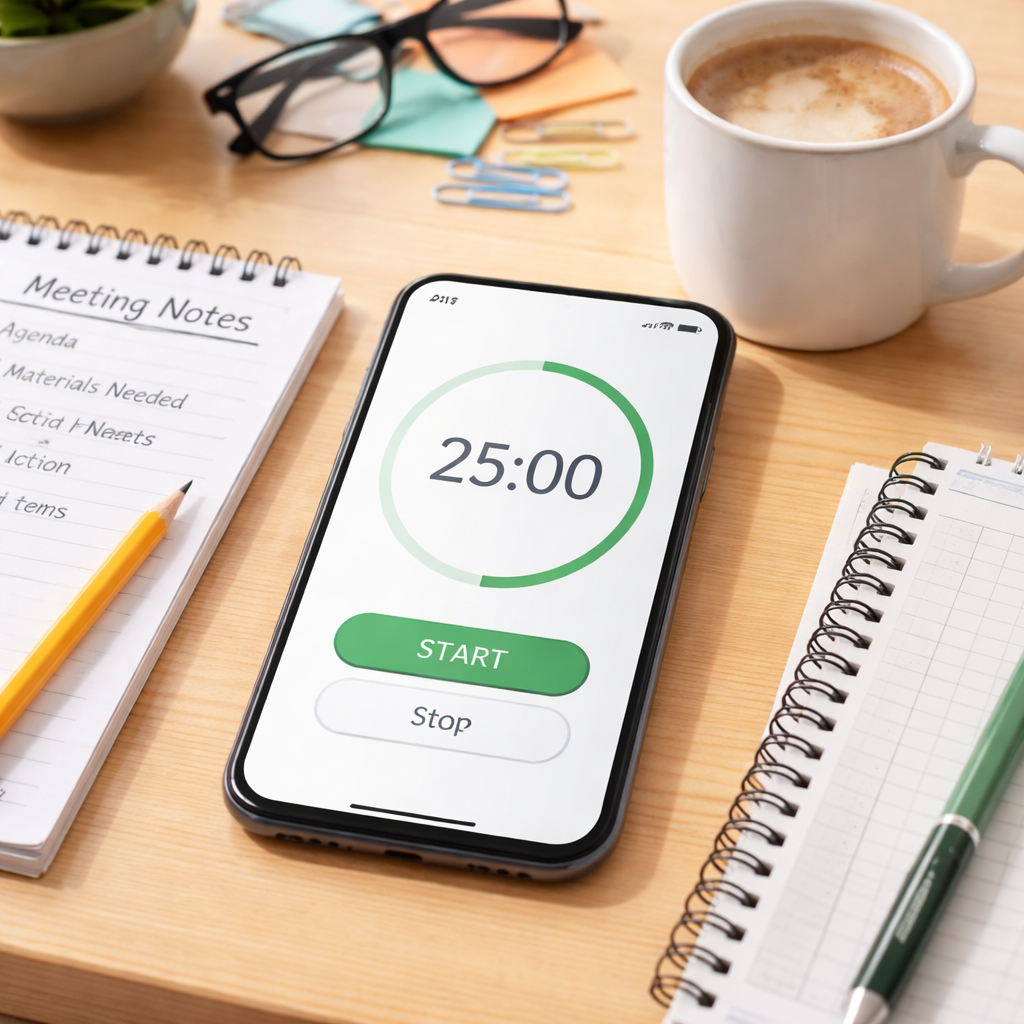
First thing you need is a timer that won’t distract you. Pick something clean and simple. Your phone’s built-in timer works, but a dedicated app gives you more control. The best Pomodoro timer apps offer more than basic stopwatch features like automatic cycling between work and breaks.
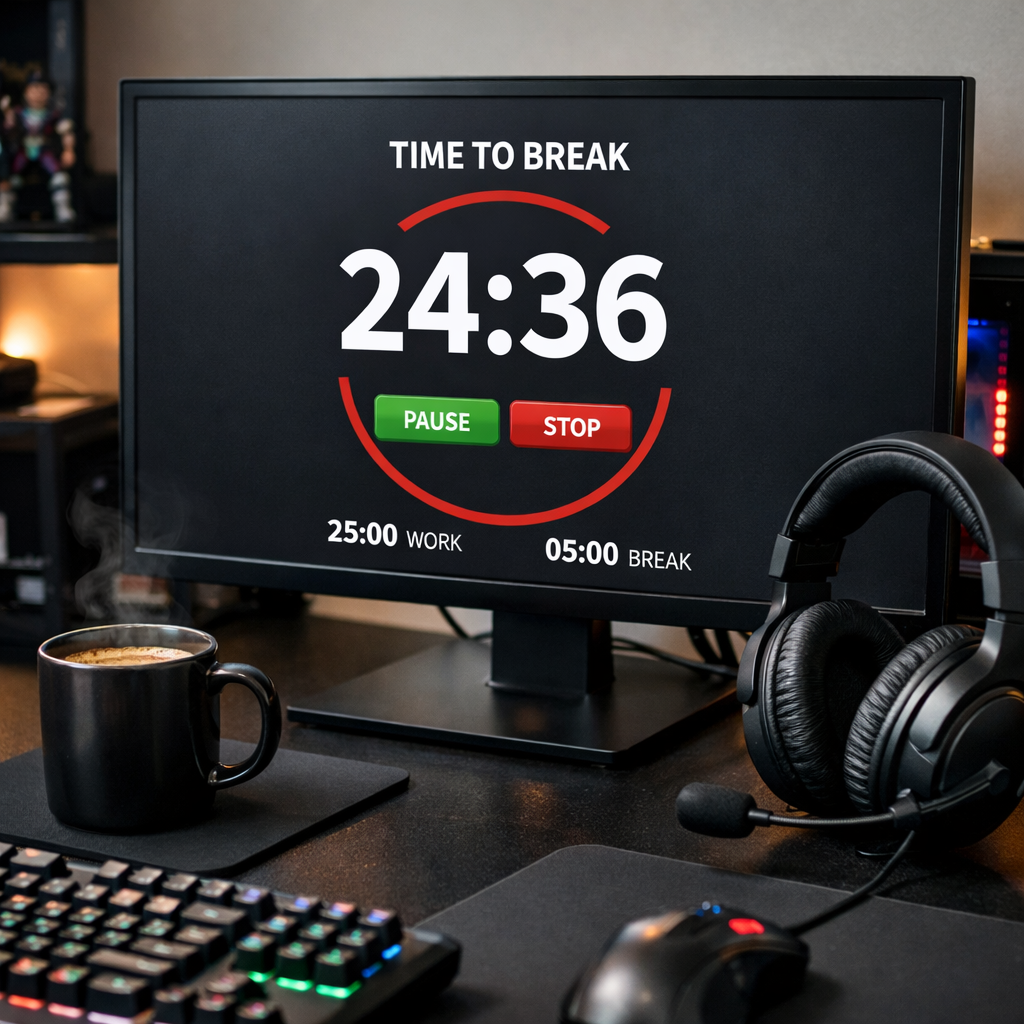
Open your chosen timer and look at the default settings. Most apps start with 25 minutes of work and 5 minutes of break. That’s the classic setup, but you might need to tweak it for meeting prep. If you’re planning a quick staff check-in, 20-minute blocks work better. For deep agenda planning, try 30-minute sessions.
Here’s how to customize your pomodoro timer for teachers meeting prep:
- Set work intervals to match your task complexity
- Keep breaks short enough to maintain momentum
- Enable notifications so you don’t miss transitions
- Choose a gentle alarm that won’t startle you
Why does this matter? Research shows attention drops after about 20-25 minutes. By giving yourself a reset, you keep your brain fresh for the next chunk of work. When you’re prepping meeting materials, that freshness translates to clearer thinking and better decisions.
Now test your setup. Pick a small prep task, like reviewing last meeting’s notes. Start the timer and work until it rings. Notice how you feel when the break starts. Are you ready to stop, or do you want to keep going? That feedback helps you adjust the length.
Real-world example: Sarah, a middle school department head, used to spend entire afternoons on meeting prep and still felt unprepared. She switched to 25-minute pomodoros and found she could finish the same work in half the time. The key was the forced breaks, which helped her step back and see the big picture.
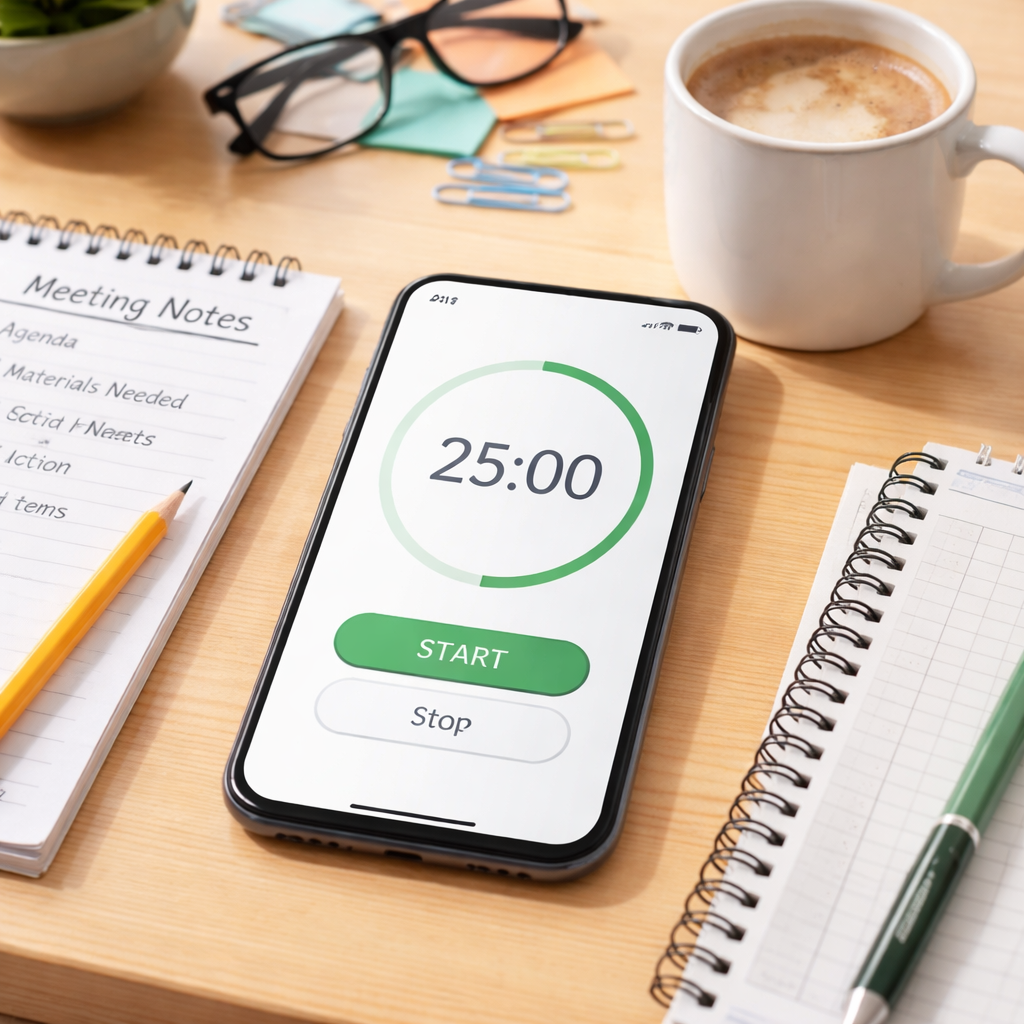
Don’t overthink the tool choice. Teachers who use the Pomodoro method report that even a simple kitchen timer works fine. The magic isn’t in the gadget; it’s in the rhythm you create.
Store your timer settings as a preset. Most apps let you save custom configurations. Create one called “Meeting Prep” with your preferred work and break lengths. This saves setup time and makes it easier to stick with the system.
Finally, put the timer where you can see it without turning your head. Glancing at the countdown should feel natural, not like a distraction. Some teachers prefer their phone on the desk corner. Others like a browser tab with a web-based timer. Pick what feels right for your workspace.
Step 2: Break Down the Meeting Agenda into Pomodoro Intervals
Now comes the planning magic. Look at your meeting agenda and slice it into bite-sized chunks. Each chunk should fit into one pomodoro session. This isn’t just about time management; it’s about mental clarity.
Start with your agenda items. Write them on paper or in a simple document. Then estimate how long each piece will take to prep. Budget review might need 30 minutes. Lesson plan updates could take 20. Parent communication strategy might require 25 minutes of focused thought.
Here’s a sample breakdown for a weekly team meeting prep:
| Agenda Item | Prep Task | Pomodoro Length |
|---|---|---|
| Budget Review | Gather expense reports | 25 minutes |
| Curriculum Updates | Review state standards | 30 minutes |
| Parent Communication | Draft newsletter outline | 20 minutes |
| Staff Announcements | Collect updates from team | 15 minutes |
Notice how each task has a clear outcome. “Gather expense reports” is specific. “Work on budget stuff” is vague and will eat up time. When you know exactly what you’re trying to accomplish, the pomodoro timer for teachers meeting prep becomes a productivity weapon.
Match the pomodoro length to the task’s mental load. Simple data gathering works well in 15-20 minute bursts. Complex analysis or creative work might need 30-35 minutes. Don’t force every task into the same box.
But here’s the key insight: break big tasks into smaller pieces. Instead of “Plan entire curriculum review,” try “List three priority standards to discuss.” Instead of “Prepare parent communication strategy,” go with “Draft two main talking points.” Small wins build momentum.
Use the break time strategically. After gathering budget data, use your 5-minute break to organize the papers. After reviewing standards, jot down quick notes about what jumped out. The break isn’t idle time; it’s processing time.
Some teachers find it helpful to batch similar tasks. Put all your “gathering information” pomodoros together, then switch to “creative thinking” sessions. This reduces mental switching costs and keeps you in the right headspace longer.
Track your estimates versus reality. If curriculum review consistently takes two pomodoros instead of one, adjust your planning. Over time, you’ll get better at predicting how long prep tasks actually take. This makes future meeting planning much more accurate.
Consider the meeting’s energy flow too. If you’re planning a tense budget discussion, prep that material when you’re fresh. Save routine announcements for when your energy dips. The pomodoro timer for teachers meeting prep helps you align your mental state with the task demands.
Don’t forget transition time. If you need to switch from digital files to physical documents between pomodoros, factor in a minute or two. Smooth transitions keep the momentum going and prevent frustration.
Finally, build in buffer time. If your meeting is at 3 PM and you have four pomodoros of prep, don’t schedule the last one to end at 2:59. Give yourself a 10-15 minute cushion to review everything and get mentally ready for the actual meeting.
Step 3: Use Breaks Effectively for Teacher Collaboration
Those 5-minute breaks aren’t just rest periods. They’re collaboration gold mines. When you’re prepping for meetings, the break time becomes a chance to connect with colleagues, gather quick input, or test ideas.
Think about it: you just spent 25 minutes diving deep into curriculum standards. Your brain is full of details and questions. Instead of scrolling your phone during the break, walk to a colleague’s classroom. Ask one specific question: “Which of these three standards do you think parents care about most?”

The key is to make these break interactions purposeful but brief. You’re not trying to solve everything in 5 minutes. You’re gathering one piece of input or testing one assumption. This approach turns your pomodoro timer for teachers meeting prep into a team tool, not just a personal productivity hack.
Here are specific ways to use breaks for collaboration:
- Quick polls: Text three colleagues a simple question about the agenda
- Hallway check-ins: Grab 30 seconds with someone walking by
- Email pings: Send one focused question to get input while you work
- Resource sharing: Ask if anyone has materials related to your prep task
But be strategic about who you approach. If you’re prepping budget talking points, find the teacher who always asks smart money questions. If you’re working on parent communication, talk to someone who’s great with families. Match your break collaboration to the expertise you need.
Sometimes the best break activity is reflection, not interaction. Use 2-3 minutes to step back and ask yourself: “What am I missing?” or “How will this land with the team?” This mental reset often reveals gaps in your preparation that you wouldn’t catch while deep in the details.
Physical movement during breaks also boosts your prep quality. Walk to the copy machine, step outside for fresh air, or do some quick stretches. The movement helps your brain process what you just worked on and often leads to “aha” moments about the meeting content.
Track which break activities help your prep most. Maybe quick colleague conversations always improve your ideas. Maybe solo reflection time helps you spot problems. Maybe physical movement sparks creativity. Once you know your pattern, you can use breaks more intentionally.
Don’t let breaks turn into 20-minute conversations. Set a gentle boundary: “I’m doing focused prep right now, but I’d love to chat more after the meeting.” Most colleagues understand and respect the boundary. Some might even adopt the pomodoro approach themselves.
Consider coordinating break timing with colleagues who are also prepping. If you both use pomodoro timers, you can sync your breaks and have mini-collaboration sessions. This works especially well for department heads or grade-level teams working on related agenda items.
Use technology to extend collaboration beyond your immediate area. Send a quick message to a colleague at another school, post a question in your district’s online forum, or check in with your mentor teacher. The 5-minute break gives you just enough time for these quick digital connections.
Remember that collaboration during breaks should feel energizing, not draining. If a colleague tends to dump problems on you during casual conversations, save those interactions for after your prep session. Protect your break time for inputs that actually help your meeting preparation.
Step 4: Track Progress and Adjust for Future Meetings
The real power of using a pomodoro timer for teachers meeting prep comes from tracking what works and what doesn’t. After each prep session, spend 2 minutes noting what you accomplished and how the timing felt. This data becomes gold for planning future meetings.
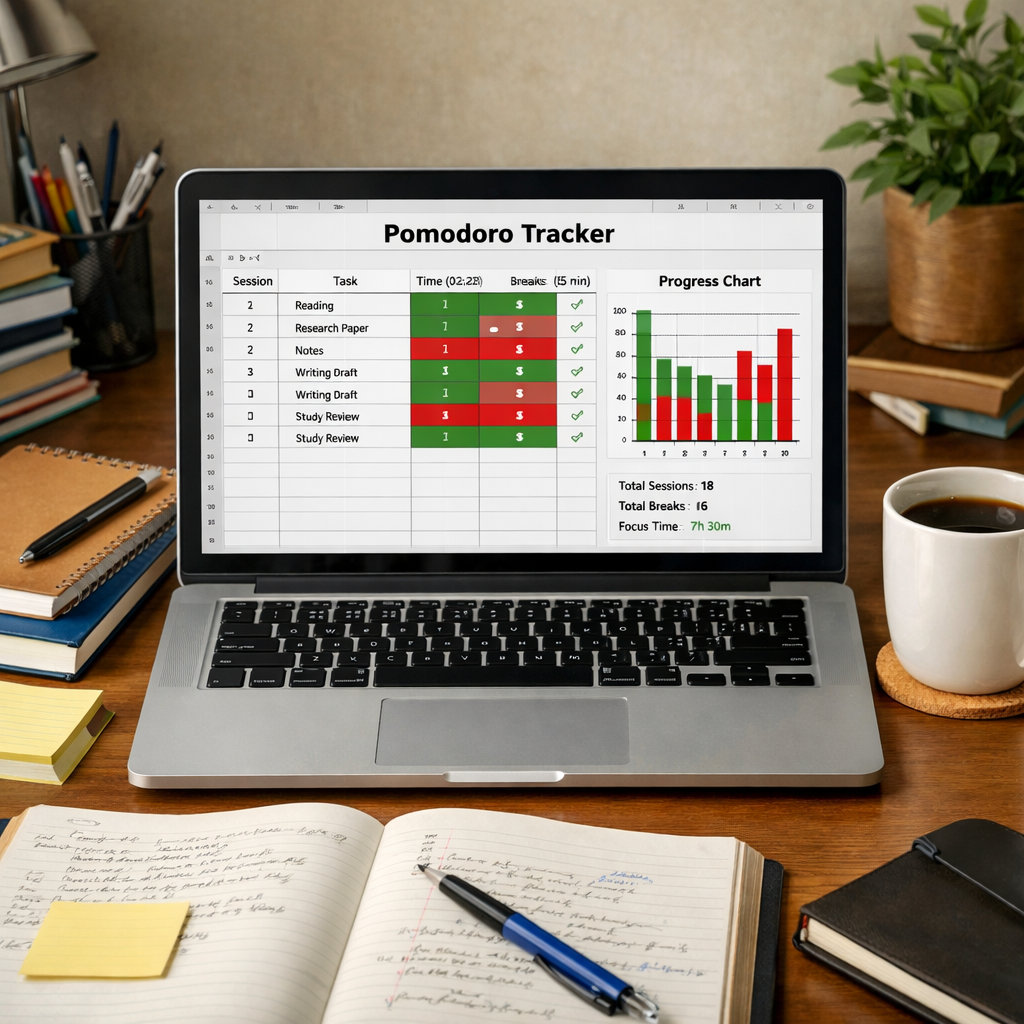
Create a simple tracking sheet with three columns: Task, Pomodoros Used, and Notes. After prepping budget materials, you might write: “Budget review, 2 pomodoros, felt rushed in second session.” This tells you to budget more time next month or break the task differently.
Look for patterns in your tracking data. Maybe curriculum prep always takes longer than expected. Maybe parent communication tasks go faster when you do them first thing in the morning. Maybe certain types of agenda items drain your energy more than others. These insights help you plan better prep sessions.
Pomofocus offers customizable pomodoro timers that work on desktop and mobile browsers, making it easy to track your sessions across different devices. The key is consistency in your tracking approach, whatever tool you choose.
Pay attention to your energy levels throughout the prep session. If you notice your focus dropping after three pomodoros, plan future sessions with longer breaks or fewer back-to-back work blocks. If you feel energized and want to keep going, note that too. Your energy patterns are unique data points.
Track the quality of your prep, not just the time spent. Rate each prep session on a simple scale: 1-3, where 1 means “felt scattered and unproductive,” 2 means “got stuff done but could be better,” and 3 means “felt focused and accomplished a lot.” Look for what conditions lead to those high-quality sessions.
Here’s a sample tracking format that works for most teachers:
- Date and time: When did you prep?
- Meeting type: Staff meeting, parent conference, IEP meeting?
- Prep tasks completed: What did you actually finish?
- Pomodoros used: How many work blocks did it take?
- Energy level: High, medium, or low throughout the session?
- Quality rating: How effective was this prep session?
- Notes for next time: What would you do differently?
Review your tracking data monthly. Look for trends that can improve your meeting prep efficiency. Maybe Tuesday afternoon prep sessions are consistently less productive than Wednesday mornings. Maybe certain agenda items always take longer than you think. Use this data to adjust your planning.
Don’t just track problems; track successes too. When a prep session goes really well, note what made it work. Maybe you had fewer interruptions. Maybe you tackled tasks in a different order. Maybe you used breaks differently. Successful patterns are just as valuable as problem patterns.
Share your tracking insights with colleagues who also struggle with meeting prep. Your data might help them, and their experiences might give you new ideas to try. This collaborative approach to improving prep efficiency benefits the whole team.
Adjust your pomodoro timer for teachers meeting prep based on what the data shows. If 25-minute blocks consistently feel too short for deep analysis tasks, try 30-35 minutes. If 5-minute breaks aren’t enough to recharge, experiment with 7-8 minutes. The timer should serve you, not the other way around.
Consider seasonal adjustments too. Meeting prep might feel different at the start of the school year versus mid-semester versus end-of-year crunch time. Your tracking data will show these patterns, and you can adjust your approach accordingly.
Finally, celebrate improvements. When your tracking shows that you’re prepping more efficiently or feeling less stressed about meetings, acknowledge that progress. The pomodoro technique works, but only if you stick with it long enough to see the benefits.
Conclusion
You now have a complete system for using a pomodoro timer for teachers meeting prep. Start with a simple timer that fits your workspace and customize the intervals to match your tasks. Break your meeting agenda into focused chunks, each with a clear outcome. Use those 5-minute breaks to collaborate with colleagues or reflect on your progress. Track what works and adjust your approach based on real data.
The beauty of this system is its simplicity. You don’t need expensive software or complicated workflows. Just a timer, a clear goal for each work block, and the discipline to take breaks when they come. Teachers who stick with this approach report feeling more prepared for meetings, less stressed during prep time, and more confident in their contributions to team discussions.
Remember that building this habit takes time. Start with just one meeting prep session using pomodoros. Notice how it feels compared to your usual approach. Track the results and adjust as needed. After a few weeks, the rhythm will feel natural, and you’ll wonder how you ever prepped for meetings without it.
Your colleagues will notice the difference too. When you show up to meetings with well-organized thoughts and clear talking points, it elevates the entire discussion. The focused prep time you invest pays dividends in meeting quality and team productivity.
Ready to transform your meeting prep? Pick your next team meeting, set up your pomodoro timer for teachers meeting prep, and give this system a try. The difference in your focus and preparation quality will be obvious from the first session.
FAQ
How long should each pomodoro be for meeting prep?
Start with the classic 25-minute work blocks and 5-minute breaks. If you’re doing simple tasks like gathering materials, 20 minutes works well. For complex analysis or creative planning, try 30-35 minutes. Test different lengths for a week and track which timing helps you feel most focused and productive during your prep sessions.
What should I do if I get interrupted during a pomodoro session?
If the interruption is urgent, pause the timer and handle it. If it can wait, jot down a quick note and continue working. After the pomodoro ends, decide whether to address the interruption during your break or add it to your next prep session. The key is protecting your focused work time while being realistic about school demands.
How many pomodoros should I plan for typical meeting prep?
Most teachers find that 2-4 pomodoros handle standard weekly meeting prep effectively. Simple staff meetings might need just 1-2 sessions. Complex agenda items like budget reviews or curriculum planning often require 3-4 pomodoros. Track your actual usage for different meeting types to build accurate planning estimates for future prep sessions.
Can I use pomodoro timers for collaborative meeting prep with colleagues?
Absolutely. Sync your break times with colleagues who are also prepping, so you can have quick collaboration sessions. Use work blocks for individual tasks like research or document review, then use breaks to share findings or ask questions. This approach combines focused solo work with valuable team input during the preparation process.
What’s the best way to handle tasks that don’t fit neatly into one pomodoro?
Break large tasks into smaller, specific outcomes. Instead of “prepare curriculum presentation,” try “outline three main points” for one pomodoro and “gather supporting data” for another. If a task consistently runs over, either extend the work block or split it differently. The goal is clear progress in each session, not forcing everything into the same time box.
Should I take longer breaks after several pomodoros of meeting prep?
Yes, take a 15-30 minute break after every 3-4 pomodoros. Use this longer break to step away from prep completely – grab lunch, take a walk, or chat with colleagues about non-meeting topics. This extended break helps your brain process what you’ve prepared and prevents mental fatigue that can hurt the quality of your work.
How do I track progress when using pomodoro timers for meeting prep?
Keep a simple log with the date, meeting type, tasks completed, and number of pomodoros used. Rate each prep session on a 1-3 scale for focus and productivity. Note what worked well and what felt challenging. Review this data monthly to spot patterns and adjust your approach for different types of meetings and agenda items.
What if my meeting prep consistently takes longer than planned pomodoros?
This usually means you’re either underestimating task complexity or trying to prepare too thoroughly. Review your tracking data to see which types of tasks consistently run over. Adjust your estimates upward or break tasks into smaller pieces. Remember that meeting prep should make you confident and organized, not perfect. Sometimes good enough really is good enough.