Feeling swamped by endless to-do lists and constant interruptions? You’re not alone. In today’s fast-paced world, it’s easy to feel like you’re just reacting to whatever pops up next. But what if you could actually take control of your day, get more done, and feel less stressed about it? That’s where calendar time blocking comes in. It’s a simple yet powerful way to structure your time, making sure your most important tasks get the attention they deserve. Think of it as giving your calendar a clear plan, rather than just letting it fill up randomly.
Key Takeaways
- Calendar time blocking means assigning specific time slots on your calendar for particular tasks or activities, turning your to-do list into a scheduled plan.
- This method helps you focus on one thing at a time, reducing distractions and boosting your productivity significantly.
- To start, identify your priorities, estimate how long tasks will take, and build in buffer time for unexpected events.
- Advanced techniques like dynamic blocking and meeting lanes help create flexible yet structured schedules.
- Using digital tools and setting clear boundaries for personal time are vital for making calendar time blocking work long-term and preventing burnout.
Understanding The Power Of Calendar Time Blocking
What Is Calendar Time Blocking?
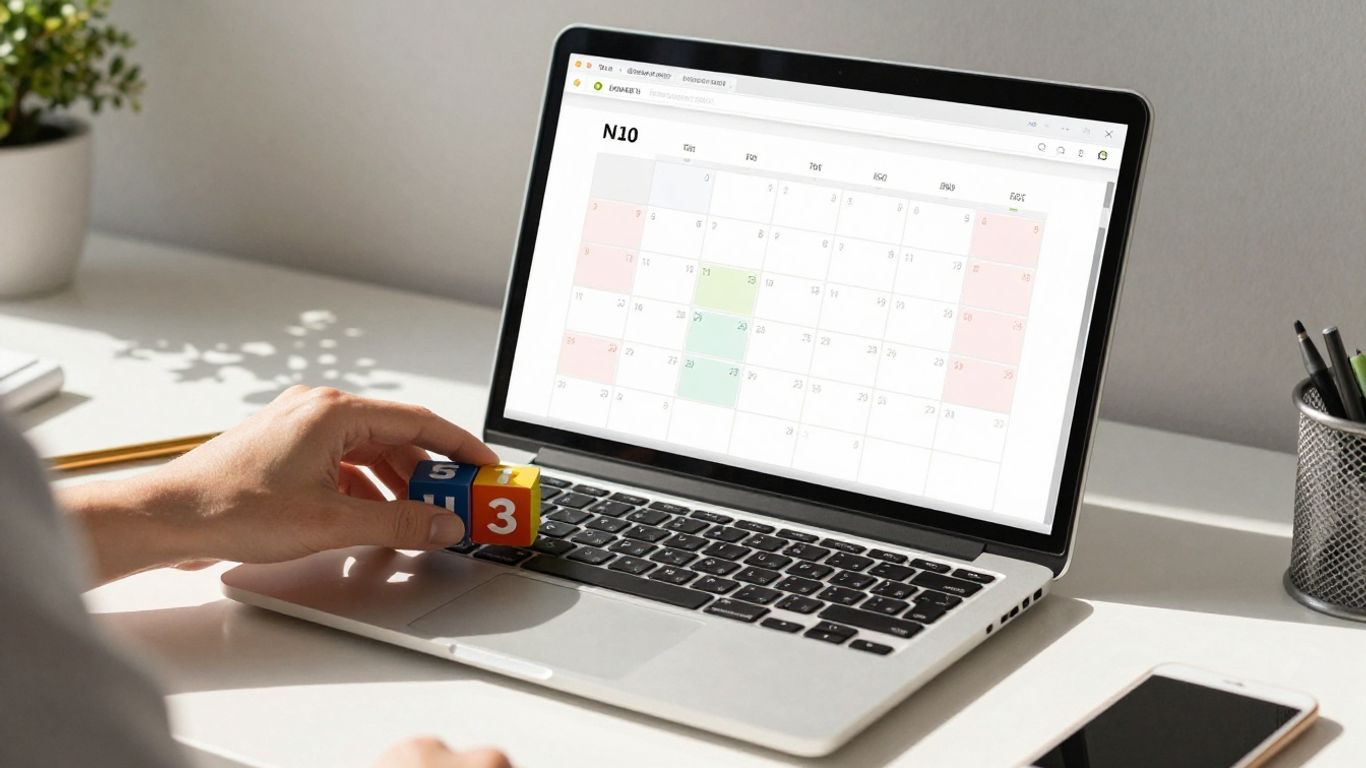
So, what exactly is calendar time blocking? Think of it like this: instead of just having a to-do list floating around, you’re actually assigning specific times on your calendar for each task. It’s about taking your daily or weekly tasks and slotting them into dedicated chunks of time. So, instead of a vague "work on project X" on your list, your calendar might say "9:00 AM – 10:30 AM: Draft Project X proposal." It’s a way to get really intentional about where your time goes, day by day.
Why Calendar Time Blocking Is Essential For Modern Professionals
In today’s world, our days can feel like a constant juggling act. Emails ping, messages pop up, and meetings seem to fill every available gap. It’s easy to feel like you’re busy all day but not actually getting the important stuff done. Time blocking helps cut through that noise. It’s a strategy that helps you regain control and focus on what truly matters, aligning your attention with your actual intentions. For many of us, it’s the difference between feeling overwhelmed and feeling in command of our workday. It’s particularly helpful if you find yourself trying to do too many things at once or if you just need a clearer picture of where your hours are disappearing.
The Proven Benefits Of Intentional Scheduling
When you start scheduling your time with purpose, some pretty great things start to happen. You’re not just reacting to whatever comes your way; you’re proactively deciding what gets your attention and when. This can lead to a significant boost in how much you actually accomplish.
Here are some of the key advantages:
- Increased Focus: By dedicating specific blocks for tasks, you minimize distractions and can get into a state of deep work more easily.
- Better Prioritization: You’re forced to think about what’s most important and allocate time accordingly, rather than just tackling the easiest or loudest task first.
- Reduced Stress: Knowing what you need to do and when you’ll do it can significantly lower anxiety and the feeling of being constantly behind.
- Improved Work-Life Balance: You can actually schedule in personal time, breaks, and downtime, making sure those things don’t get pushed aside.
When you start to see your calendar not just as a schedule of appointments, but as a map of your intentions, everything changes. It becomes a tool for directing your energy where it will have the most impact, both professionally and personally. This shift from passive acceptance to active direction is where the real power lies.
Mastering The Fundamentals Of Calendar Time Blocking

Okay, so you’ve heard about time blocking and you’re ready to give it a shot. That’s awesome! But before you start filling every single minute of your day, let’s talk about getting the basics right. It’s not just about drawing lines on a calendar; it’s about making those lines work for you.
Prioritizing Your Daily Tasks Effectively
First things first, you can’t block out time for tasks if you don’t know what’s actually important. Trying to schedule everything without a clear idea of priorities is like trying to pack a suitcase without knowing where you’re going. You’ll just end up stuffing random things in. So, before you even open your calendar, take a few minutes to figure out what absolutely needs to get done today.
- Identify your top 1-3 outcomes: What would make today a real win? Focus on those.
- Filter ruthlessly: Drop anything that’s not urgent, doesn’t block someone else, or doesn’t directly support those top outcomes. If it can wait until next week, let it wait.
- Be specific with task names: Instead of "Work on Project X," try "Draft outline for Project X report." A clear finish line makes it easier to know when you’re done and prevents tasks from dragging on forever. If a big task can’t fit into one block, break it down into smaller, manageable milestones.
The average knowledge worker only completes about half of their planned tasks each week. Keeping your daily list focused and realistic is key to improving that number.
Estimating Task Durations Accurately
This is where a lot of people stumble. You look at your list, you look at your calendar, and you try to cram it all in. But here’s the thing: tasks rarely take exactly the time you think they will.
- Start with reasonable estimates: For focused work, aim for 60-90 minutes. Shorter tasks like responding to emails might take 20-45 minutes, and quick admin stuff could be 15-30 minutes. Don’t forget to factor in short breaks (5-15 minutes) between blocks.
- Add a little extra: If you’re new to this, it’s better to overestimate slightly than underestimate. You can always adjust later once you have real data from your own work habits.
- Don’t fill 100%: This is a big one. Leave about 10-20% of your day open as buffer time. This buffer is your lifesaver when a meeting runs over, a task takes longer than expected, or something unexpected pops up. A completely packed calendar is a fragile one.
Auditing Your Calendar For Reclaimable Time
Take a good, hard look at your calendar right now. Where is your time actually going? Most of us have meetings, appointments, and other commitments that eat up a huge chunk of our day. Time blocking isn’t just about adding new tasks; it’s also about finding space for the important work you need to do by looking at where you can make changes.
- Identify recurring time sinks: Are there meetings that could be shorter, emails that could be batched, or tasks that are consistently taking longer than they should?
- Look for opportunities to consolidate: Can you group similar tasks together? Can you shift meetings to specific times of the day (like "meeting lanes") so they don’t interrupt your focused work periods?
- Question your commitments: Are all your current meetings and commitments still serving a purpose? It’s okay to politely decline or reschedule things that no longer align with your priorities.
By getting these fundamentals down, you’re building a solid foundation for a time-blocked schedule that actually helps you get more done, without feeling completely overwhelmed.
Advanced Calendar Time Blocking Techniques For Peak Performance
Okay, so you’ve got the basics of time blocking down. You’re putting tasks into your calendar, and it’s helping. But what if you want to really dial things up, get into that zone where you’re just crushing it? That’s where these advanced techniques come in. They’re not just about filling slots; they’re about making those slots work smarter for you.
Dynamic Time Blocking For Adaptable Schedules
Rigid schedules are tough. Life happens, right? A client calls with an urgent issue, or a brilliant idea strikes that you just have to explore. Traditional time blocking can feel like a straitjacket when this occurs. Dynamic time blocking is the answer. It’s about building flexibility into your structure. Think of it like a river – it flows around obstacles, but it keeps moving forward. You protect your most important work, like deep focus sessions, but allow for more wiggle room with less critical tasks. This means if a meeting runs over or a task takes longer, you can adjust without your whole day falling apart.
- Identify your non-negotiables: These are the blocks you absolutely protect – think deep work, strategic planning, or important client calls.
- Categorize tasks by flexibility: Some tasks are fixed (meetings), others are flexible (responding to emails), and some are adaptable (project work that can shift).
- Build in buffer time: Always leave a little breathing room between blocks. This isn’t wasted time; it’s your insurance policy against the unexpected.
- Use smart tools: Many digital calendars now offer features that help you reschedule blocks automatically when changes occur, making dynamic blocking much easier.
The goal here isn’t to have a perfect, unbroken schedule. It’s to have a schedule that can bend without breaking, allowing you to stay productive even when things get a little messy.
Implementing Meeting Lanes For Focused Collaboration
Meetings can be productivity killers if they’re scattered all over the place. You’re constantly switching gears, losing your train of thought. Meeting lanes are a game-changer. You designate specific times or days for meetings. This way, you can group all your collaborative work together, leaving the rest of your week open for focused, individual tasks. It creates predictable patterns for your team and for yourself.
- Cluster meetings: Try to put most of your meetings on Tuesdays and Thursdays, for example.
- Communicate your lanes: Let your team know when you’re generally available for calls and when you’re in deep work mode.
- Be mindful of meeting length: Keep them as short and focused as possible.
Batching Similar Tasks To Minimize Context Switching
Switching between different types of tasks is like trying to run a marathon and then immediately doing a sprint. It’s exhausting and inefficient. Batching means grouping similar tasks together and doing them all at once. So, instead of checking emails every hour, you set aside a specific block for email. Same goes for administrative work, creative brainstorming, or even making phone calls. This allows your brain to stay in one mode for longer, which means you get more done, faster.
Here’s a quick look at how batching can work:
| Task Type | Batching Strategy |
|---|---|
| Email/Messages | 2-3 dedicated blocks per day |
| Admin Tasks | 1-2 blocks per week |
| Creative Work | Longer, protected blocks during peak energy times |
| Calls/Follow-ups | Grouped into a single block |
By using these advanced techniques, you’re not just managing your time; you’re actively designing your day for maximum output and mental clarity. It takes practice, but the payoff in productivity and reduced stress is huge.
Leveraging Digital Tools For Enhanced Calendar Time Blocking
Okay, so we’ve talked about the ‘why’ and ‘how’ of time blocking. Now, let’s get real about making it actually work in our busy lives. The truth is, just scribbling blocks on a paper calendar isn’t going to cut it for most of us anymore. We need tools that can keep up.
Designing Comprehensive Digital Planners
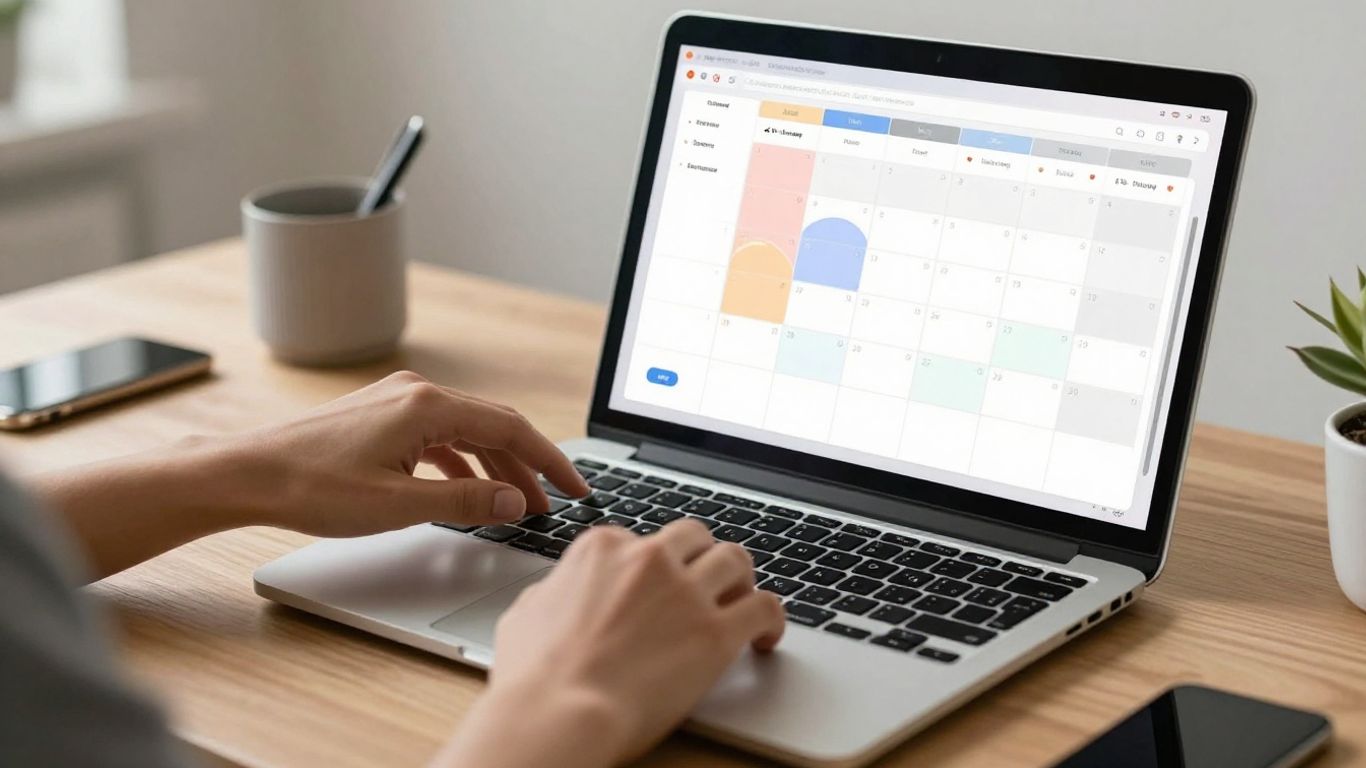
Forget those basic calendar apps. We’re talking about digital planners that are basically command centers for your day. These aren’t just for scheduling meetings; they can link your tasks, track project progress, and even help you see how your time is allocated across different goals. Think of them as a way to manage your entire workflow, not just your appointments. Many of these planners let you switch views – see your day, your week, or even your month at a glance. This helps you spot where your time is going and if it lines up with what you want to be doing.
- Visualizing your schedule from multiple angles: Daily focus, weekly project breakdown, monthly goal tracking.
- Automating routine planning: Some tools can automatically create time blocks based on project deadlines or how much time a task usually takes.
- Connecting with other apps: They often link up with your email, messaging, and project management software, so everything talks to each other.
Utilizing AI For Intelligent Time Allocation
This is where things get really interesting. AI is starting to do some heavy lifting for us. Instead of you manually slotting in every single task, AI can look at your calendar, your to-do list, and even your energy patterns (if you track them) to figure out the best times for different activities. It’s like having a personal assistant who knows your schedule inside and out. This means your focus blocks get protected, and your meetings are scheduled without you having to play calendar Tetris. It’s a big step up from just dragging and dropping blocks around when something new comes up.
AI-powered scheduling can dynamically adjust your time blocks as your day changes. If a meeting gets moved or a new urgent task appears, the AI can automatically reshuffle your schedule to accommodate it, protecting your planned focus time without you having to manually intervene.
Integrating Calendars With Project Management Platforms
This is a game-changer for anyone juggling multiple projects. When your calendar and your project management tool are linked, your tasks and deadlines from the project board can automatically show up on your calendar as time blocks. This means you’re not constantly switching between apps, trying to remember what needs doing and when. It creates a single source of truth for your work. You can find some great options for this kind of integration, like tools for daily planning.
Here’s a quick look at how this integration helps:
- Tasks appear directly on your calendar: No more forgetting what you planned to work on.
- Deadlines are visible: You can see upcoming project deadlines right next to your meetings.
- Progress tracking: Some integrations allow you to update task status directly from your calendar view.
Using these digital tools isn’t about making things more complicated; it’s about making time blocking practical and effective, even when your schedule is chaotic. It’s about working smarter, not just harder.
Achieving Work-Life Balance Through Strategic Time Boundaries
It’s easy to get caught up in the hustle, right? You block out time for work, for projects, for meetings, and before you know it, your entire week is filled with professional obligations. But what about you? What about family, friends, hobbies, or just plain old downtime? Time blocking isn’t just for getting more done; it’s also for making sure you have time for everything else that matters. Without intentional boundaries, work can easily creep into every corner of your life, leading to burnout and a general feeling of being overwhelmed.
Scheduling Personal Time And Downtime
Think of your personal time and downtime as non-negotiable appointments. Just like you wouldn’t cancel a client meeting on a whim, you shouldn’t cancel your personal commitments either. This means actively blocking out time for:
- Family Dinners: Set aside a specific block each evening, or a few times a week, where work is completely off-limits.
- Exercise/Wellness: Whether it’s hitting the gym, going for a walk, or meditating, schedule it in. Treat it like an important meeting you can’t miss.
- Hobbies and Socializing: Make time for the activities that recharge you and connect you with others. This could be reading, playing an instrument, or meeting friends for coffee.
- Pure Relaxation: Sometimes, you just need to do nothing. Block out an hour or two for unstructured downtime – no goals, no tasks, just rest.
This intentional scheduling helps to establish and maintain healthy work-life boundaries. It signals to yourself and others that these times are protected and important for your overall well-being.
Creating Transition Rituals Between Work And Life
One of the trickiest parts of work-life balance is the mental shift. You finish a demanding work task, but your brain is still buzzing. Or you’re trying to relax, but work thoughts keep intruding. Creating transition rituals can help create a clear separation.
Here are a few ideas:
- The End-of-Day Shutdown: Before you officially
Optimizing Your Personal Productivity With Calendar Time Blocking
So, you’ve got the hang of time blocking, but how do you really make it work for you? It’s not just about filling every minute; it’s about making those minutes count in a way that feels good and actually gets things done. This is where we fine-tune the system to match your personal rhythm and energy levels.
Aligning Time Blocks With Energy Cycles
Think about when you’re sharpest. Are you a morning person who tackles complex problems before lunch, or do you hit your stride in the afternoon? Most people have natural peaks and valleys in their energy throughout the day. Trying to do deep, focused work when your brain is already winding down is just setting yourself up for frustration. Instead, match your tasks to your energy. Schedule your most demanding work for when you feel most alert and capable. Less critical tasks, like checking emails or doing some light admin, can fill those lower-energy periods.
Here’s a simple way to think about it:
- Peak Energy (e.g., 9 AM – 11 AM): Tackle complex projects, strategic planning, writing, or anything requiring deep concentration.
- Moderate Energy (e.g., 11 AM – 1 PM, 2 PM – 4 PM): Good for meetings, collaborative tasks, responding to messages, or less intensive project work.
- Low Energy (e.g., after lunch, late afternoon): Ideal for routine tasks, organizing files, planning for the next day, or taking short breaks.
Paying attention to your personal energy flow isn’t about being lazy; it’s about being smart. It’s about working with your natural rhythms, not against them, to get more done with less effort.
Themed Days For Focused Work
Another neat trick is to assign themes to certain days. This helps reduce the mental overhead of constantly switching gears. For example, you might designate Mondays for planning and administrative tasks, Tuesdays and Wednesdays for deep project work, Thursdays for meetings and client calls, and Fridays for wrap-ups and creative brainstorming. This approach creates a predictable structure that allows your brain to settle into a particular mode of thinking for extended periods. It’s a way to treat blocks of work time as appointments in your calendar, making them feel more concrete and protected.
Regular Review Cycles For Schedule Adjustment
Your schedule isn’t set in stone. Life happens, priorities shift, and what worked last week might not work this week. That’s why regular check-ins are so important. Set aside time, perhaps at the end of each week or even mid-week, to look at your calendar. Did your time blocks hold up? Were your time estimates accurate? What got pushed back, and why? Use this information to adjust your blocks for the upcoming days or week. This iterative process of planning, executing, and reviewing is key to continuously improving your time blocking system and making it truly your own.
Wrapping Up: Your Calendar, Your Command
So, we’ve gone over how to really take charge of your day using time blocking. It’s not just about filling up your calendar; it’s about being smart with your time so you can actually get things done without feeling totally swamped. Remember, it’s okay if your plan doesn’t work perfectly every single day. The point is to keep trying, adjust as you go, and give yourself permission to focus on what matters most. By making your calendar work for you, you’ll find more time for important tasks and maybe even a little breathing room. Give it a shot, and see how much more control you feel over your schedule.
Frequently Asked Questions
What exactly is time blocking?
Think of time blocking like making a schedule for everything you need to do, not just meetings. You divide your day into specific chunks of time for each task, like ‘work on project X’ or ‘answer emails.’ It’s like drawing boxes on your calendar for all your important activities.
Why should I use time blocking?
It helps you focus on one thing at a time instead of jumping around. This means you get more done and feel less stressed. It’s great for making sure important tasks don’t get forgotten and for avoiding distractions.
How do I know how long to make each time block?
Start by guessing how long a task will take, and then add a little extra time just in case. It’s better to give yourself a bit more time than not enough. You’ll get better at guessing with practice.
What if my schedule changes or something unexpected happens?
That’s totally okay! Time blocking isn’t about being super rigid. If something comes up, you can adjust your blocks. Some people even plan a little ‘flexible’ time for unexpected things.
Can time blocking help me have a better life outside of work?
Yes! You can schedule time for personal stuff, like exercise, hobbies, or just relaxing. By putting these things on your calendar, you make sure they get done and don’t get pushed aside by work.
What’s the best way to start using time blocking?
First, figure out what tasks are most important for the day. Then, estimate how long each task will take. Finally, put those tasks into time blocks on your calendar. Don’t try to fill every single minute; leave some breathing room!