Ever find yourself staring at a textbook, ears buzzing with a song you can’t quite place, and wondering if that music is doing more harm than good? You’re not alone. The science of sound is surprisingly personal, and the right backdrop can feel like a quiet study buddy that never complains.
So what’s the secret sauce? It’s all about tempo, texture, and that sweet spot where your brain is humming, not drowning.
Imagine a soft piano line weaving through the air, just enough to mask that rustle of pages but not enough to steal your focus. That’s the kind of music most students swear by.
But not every beat works the same for everyone. A morning of caffeine might pair best with a light lo‑fi beat, while a late‑night cram session could need a steady ambient hum.
Here’s the kicker: you can’t just jam out and hope for the best. Align your study intervals with a music rhythm that matches your Pomodoro blocks, and the flow stays tight.
What’s more, you don’t need a fancy subscription. A handful of playlists on popular streaming services already capture the right tempos—think subtle strings, gentle synth, or even ocean waves.
And if you’re juggling multiple projects or just need to stay on track, a tool that lets you set music timers alongside your study blocks can be a lifesaver.
So grab your headphones, pick a playlist that feels like a gentle nudge, and let the music do its job while you turn pages. In the next section we’ll break down the top styles that actually boost concentration.
Remember, the goal isn’t to drown yourself in noise—it’s to create a steady backdrop that keeps your mind in the zone without distracting thoughts. Try layering a low‑volume soundtrack over your Pomodoro timer, then adjust the volume until it feels like a quiet companion.
TL;DR
Need the quickest cheat sheet? Focus Keeper’s Pomodoro‑powered routine syncs with calm, low‑tempo tracks—think gentle piano, ambient synth, or ocean waves. Pair them, hit play, and let steady beats keep distractions at bay while you power through study blocks and keep focus sharp for the long haul, every session daily.
Choosing the Right Genre: Classical vs Ambient for Focus
When you’re deep in a 25‑minute Pomodoro, every beat counts. A slow string quartet can feel like a gentle hug, while a minimalist synth pad might feel like a steady breathing exercise.
So, what’s the difference? Classical tracks often come with natural crescendos and dramatic shifts, whereas ambient pieces keep the texture flat and steady.
For students who crave a touch of drama to keep the brain alive, a short concerto excerpt can spark curiosity without breaking flow. Imagine a Mozart piano solo that rises just enough to keep you alert but never pulls you into a full listening mode.
On the flip side, remote workers who sit in front of a monitor for hours usually prefer a low‑key drone. Think Brian Eno’s “Music for Airports” – it’s long, low‑pitch, and never demands your attention.
We’ve seen that pairing the right genre with the right Pomodoro length does wonders. A 10‑minute study burst is great with a quick classical piece, but a 45‑minute stretch might feel more natural with a long ambient track.
Now, let’s talk tempo. Classical music’s tempo can swing wildly; a moderate 60‑70 beats‑per‑minute (BPM) track is sweet spot for most readers. Ambient sounds, however, usually sit around 40‑50 BPM and maintain that steady pulse.
Want to experiment? Try a 10‑minute classical interlude followed by a 20‑minute ambient stretch, then circle back. The rhythm change can signal a mental reset and keep the brain from latching onto the same pattern.
Here’s a quick checklist you can use before your next study session:
- Pick a tempo: 60‑70 BPM for classical, 40‑50 BPM for ambient.
- Match the length: shorter classical pieces for quick bursts, longer ambient for marathon blocks.
- Keep the volume low: 30‑40 % of your headphone’s maximum so it stays in the background.
- Rotate tracks weekly to avoid musical fatigue.
- Pair the music with a cold brew if you’re a caffeine fan – it’s a proven boost for concentration.
Speaking of caffeine, if you’re a student or freelancer on the grind, a cup of cold brew can keep your alertness steady. Cold Brew Coffee Health: 7 Enchanted Benefits for the Adventurous Soul explains how the slow release of caffeine matches the low‑tempo flow of ambient tracks.
Now, let’s dive into the science. What is focus music playlists? – Focuskeeper Glossary notes that instrumental playlists remove lyrical distraction and help sustain focus by keeping your brain in a relaxed listening mode.
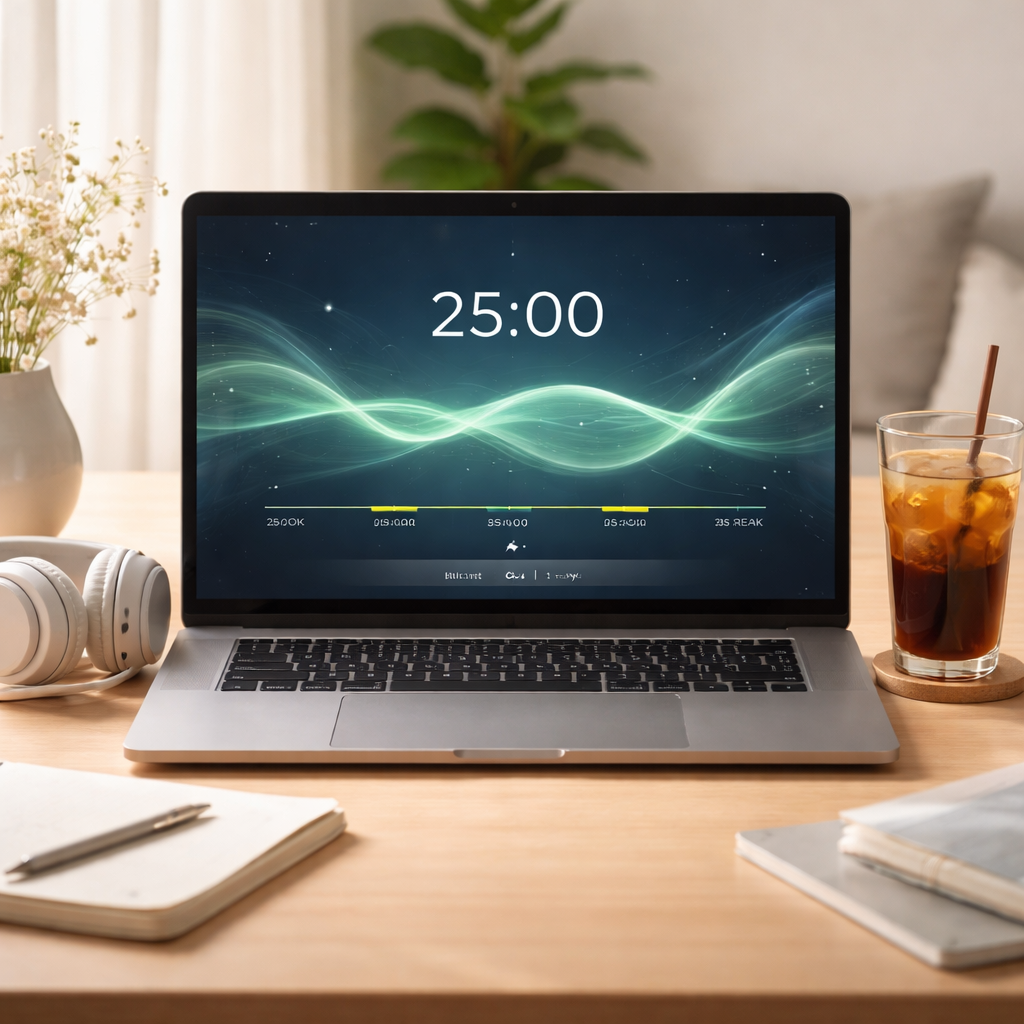
After the video, a simple visual can help cement the concept. Below is an illustration that shows how ambient tracks weave through a Pomodoro timer, creating a seamless study experience.
Remember, the goal isn’t to drown yourself in noise but to create a steady, almost invisible backdrop that nudges your brain into the right groove.
In practice, try building two separate playlists: one classical and one ambient. Use the Pomodoro timer on Focus Keeper to auto‑switch between them after each 25‑minute block. Notice how the brain adapts to the different textures and stays engaged.
Finally, keep an eye on your own responses. If your heart rate spikes during a classical track, maybe switch to a gentler piece. If you feel “static” with ambient sounds, a light piano line might be the fix.
By tuning your music to match your work rhythm, you turn background sound into a silent ally that keeps distractions at bay while you power through your study or work sessions.
Top Streaming Platforms and How to Curate Study Playlists
Let’s dive into the playground that’s been quietly boosting focus for students and remote workers alike: the streaming platforms that host the best background music for studying. We’re not just talking about Spotify or Apple Music; we’re talking about how to turn those libraries into your personal concentration coach.
1. Spotify – The Playlist Powerhouse
Spotify’s algorithm is a goldmine. Start with the “Focus” genre in Discover, then filter by “instrumental” and “low BPM.” That way you’ll get tracks that stay in the background without stealing the spotlight.
Curating tip: create a private playlist titled “Pomodoro Power.” Add the top three tracks that keep you in the zone during a test run, then loop the playlist for 25‑minute blocks. When the timer hits 5 minutes left, hit the shuffle button to keep the brain from getting bored.
2. Apple Music – Curated Calm
Apple Music’s curated “Instrumental Chill” collections are a sweet spot. Look for playlists that list the BPM range; most of them stay between 60‑80, which research shows is ideal for sustained attention.
Make a “Study Session” playlist and pin it to your library. Use the “Listen Now” feed to discover new tracks that fit the tempo—this keeps your soundtrack fresh without extra hunting.
3. YouTube Music – The Free‑For‑All Option
With YouTube Music you can search “study music playlist” and land thousands of options. The platform’s algorithm will surface videos that other users have flagged as “helpful for studying.”
Tip: use the “Create playlist” feature and add the most engaging videos. Keep the playlist’s visibility set to “private” so you can only hear what you want, no autoplay from unrelated videos.
4. Amazon Music – The “Focus” Collection
Amazon’s “Focus” playlist is a solid pick. It’s curated by a team that blends classical, ambient, and lo‑fi tracks. If you’re already in the Amazon ecosystem, it syncs nicely with your Audible library.
Build a “Morning Routine” playlist that starts with a calm instrumental, then transitions to a light ambient track during the Pomodoro breaks. The seamless flow helps maintain rhythm.
5. SoundCloud – Find the Undiscovered Gems
SoundCloud hosts a range of niche artists who produce long‑form ambient or downtempo mixes. Search “study mix” and look for tracks that run 30‑60 minutes.
Curating trick: create a “Hidden Treasures” playlist, then add any mix that feels like a study buddy. Because you control the order, you can tailor the playlist to the tasks at hand—logic work first, then creative brainstorming.
Now that you’ve picked a platform, it’s time to design the playlist. Think of each track as a building block. Here’s a quick checklist:
- Tempo consistency: stick to 60‑80 BPM for focus tracks.
- No sudden drops: avoid songs with abrupt changes in intensity.
- Loop-friendly: pick tracks that loop naturally to avoid the jarring feeling of a track ending.
- Volume level: keep your headphones at 50 dB—enough to drown out background noise but not so loud that you’re in your own world.
Remember, the goal is to make the music an invisible hand, not a loud shout. That’s how the best background music for studying turns into a reliable study companion.
After watching the short video, you’ll see a practical demo of a study playlist in action. Grab your headphones, hit play, and let the rhythm guide your Pomodoro blocks. You’ll notice your concentration lift, and the minutes feel like a breeze instead of a grind.
So, what’s the next step? Pick one platform, set up a playlist following the checklist, and run a 12‑minute test. Log how you feel—did your focus sharpen? Did you finish more in that block? Use the results to tweak the tempo or add a new track. The process is quick, and the payoff is a smoother study session every time.
Give it a go. Your brain will thank you, and you’ll be back to conquering assignments faster than you thought possible.
Comparing Top Background Music Apps: Spotify, Apple Music, YouTube Music
We’ve already mapped the rhythm of a good study track. Now let’s look at the playground that delivers those beats: the three biggest streaming services that keep our heads in the zone.
In the same way a Pomodoro timer slices time, each platform slices music into bite‑sized playlists that fit 25‑minute blocks. Which one fits your study style? That’s what we’ll break down.
Spotify – The Playlist Powerhouse
Spotify’s algorithm is built for discovery. If you type “focus instrumental” or “study lo‑fi” into the search bar, you’ll get a curated list that already matches the 60‑80 BPM sweet spot. The platform’s shuffle mode is handy for when you need variety without changing tracks.
What we’ve seen work best for students is a private “Pomodoro Power” playlist that you can loop. Spotify’s cross‑device syncing means you can start on your phone during a commute and keep the same flow on your laptop while you hit the books.
Apple Music – Curated Calm
Apple’s strength is its hand‑picked collections. The “Instrumental Chill” and “Focus” playlists list BPM ranges right on the title, so you can instantly judge if the tempo suits a 25‑minute sprint.
The platform also offers the “Listen Now” feed, which surfaces new tracks that match your listening habits. For remote workers who already use the Apple ecosystem, the seamless integration with Siri and the ability to control music via the lock screen makes turning on a study session a one‑tap affair. It’s a solid choice if you prefer a more polished library.
YouTube Music – The Free‑For‑All Option
YouTube Music shines when you’re on a budget or need a massive variety of niche mixes. A quick search for “study music playlist” pulls thousands of videos, many of which run 30‑60 minutes and loop automatically.
Because the platform relies on user tags, you’ll often find “study + background” playlists that have been labeled “helpful for studying.” The downside? Autoplay can sneak in unrelated tracks unless you set the playlist to private, which keeps the focus laser‑tight.
Quick Decision Guide
Which app should you pick for the best background music for studying? It depends on three factors: discovery speed, control, and cost.
- Discovery Speed – Spotify leads with algorithmic curation.
- Control & Integration – Apple Music scores on smooth ecosystem fit.
- Cost – YouTube Music stays free but requires a bit of curation.
Remember, a Pomodoro‑ready playlist doesn’t have to be fancy; it just needs a steady beat and minimal distractions. Whichever platform you choose, the key is to lock in a loop that matches your 25‑minute blocks and keeps your brain humming.
Comparison Table
| Feature | Spotify | Apple Music | YouTube Music |
|---|---|---|---|
| Curated Playlists | Highly algorithmic, “Focus” tags | Hand‑picked, BPM listed | Community‑tagged, vast variety |
| Cross‑Device Sync | Fast, seamless | Native to iOS/macOS | Web & app, less consistent |
| Cost | Free tier + $9.99/month Premium | $10/month (Apple Music) | Free, ads optional |
| Playlist Control | Shuffle & repeat easily | Repeat & skip with lock screen | Manual shuffle, requires privacy setting |
| Integration with Focus Keeper | Supports Spotify links in timers | Supports Apple Music via Apple Pay links | Limited direct support, use web player |
Take a quick 12‑minute test on each service: pick a playlist, loop it, and run a Pomodoro. Notice which feels most “in the zone.” That tiny experiment will tell you which platform is your best background music partner for studying.
And when you’re ready to combine music with time‑boxing, the Focus Keeper timer can sync to the chosen app, so you never miss a beat—or a break.
The Role of Sound Levels and Volume in Study Sessions
Let’s talk about the one thing that can turn a smooth study session into a noise‑filled chaos—volume.
We all know that the perfect playlist feels like a quiet companion. But if the music is louder than the thoughts you’re chasing, it becomes an unintentional distraction that steals your focus.
So, what actually makes a volume level “good” for studying? The answer is a mix of science and feel‑check. Audio experts say background sounds should sit roughly 18–20 dB below your main voice or inner dialogue so that the music supports, instead of competes.
In practice, that means keeping your headphones or speakers at about 40–50 decibels when you’re reading or writing. If you’re using a podcast‑style narration for your notes, the background track should drop a bit lower—around 30 dB—to leave room for clarity.
Why does this matter? When the background is too loud, your brain has to work harder to separate the music from the material. That extra load can actually slow your comprehension and increase fatigue.
Finding the Sweet Spot
Imagine you’re listening to a gentle piano loop while tackling calculus problems. If the piano is half your volume, the notes blend into your thoughts, making it hard to keep track of the numbers.
On the other hand, a track at 40 dB will be audible enough to mask the page‑rustling noise but quiet enough that it never draws your attention away.
Here’s a quick trick: play your chosen track at normal listening levels, then start your timer. After 15 minutes, pause and rate how much you could hear the music versus the content. Adjust until the music feels like background, not foreground.
Practical Mixing Tips for Your Study Setup
If you’re using a laptop or phone, most operating systems let you set a master volume slider. Keep it between 40–50% of the maximum—this usually lands in the 40–50 dB range for most headphones.
For desktop users, a simple tool like the Windows Volume Mixer or the Mac OS volume control can help you fine‑tune the music track separately from your system sound.
If you’re a podcast or video creator in addition to studying, check out Pure Audio Insight’s guide on background music volume. It lays out industry standards and even shows how to use side‑chain compression so the music lowers automatically when you speak.
Testing Your Levels
Set up a 12‑minute Pomodoro block with your current playlist and a set volume. At the end, jot down two things: (1) how many minutes you felt fully engaged, and (2) if you noticed any “musical itch” that pulled your attention away.
Swap the volume down by 5 dB and run another block. Compare the notes. If you find the lower volume keeps you in the zone longer, that’s your sweet spot.
Repeat this experiment every few weeks. As your ears get used to a particular level, you might need a slightly lower setting to avoid the “comfort zone” trap.
Wrap‑Up: Volume as a Silent Ally
Volume isn’t just a technical detail—it’s a quiet ally that can either boost or break your concentration.
Treat it like a fine‑tuned instrument: set it, test it, and adjust it until it feels like an invisible hand guiding you.
Remember, the goal is to have your music work for you, not against you.
Keep it low, keep it consistent, and let Focus Keeper’s Pomodoro timer sync so every beat lines up with your study rhythm.

Using Instrumental Soundscapes to Reduce Cognitive Load
Ever notice how a quiet piano line can make a 25‑minute Pomodoro feel like a walk through a library instead of a race to the deadline? That’s the magic of instrumental soundscapes.
We’re talking about more than background noise; it’s a low‑key partner that quietly nudges your brain toward focus.
So, what makes a soundscape work? Tempo, texture, and the way it folds into your thought‑stream without shouting.
Think of a gentle synth drone that swells in the background, like the hum of a refrigerator in the distance. It fills the silent gaps without taking center stage.
Research shows that instruments with a steady rhythm but no sharp peaks can keep the prefrontal cortex firing on track, which is exactly what you want when you’re crunching numbers.
And here’s a quick experiment you can run right now. Pick a playlist of instrumental tracks that sit around 60–80 beats per minute—no more, no less.
Play it at a volume that feels like a background whisper, roughly 40–45 decibels. Then, start a Pomodoro and jot down how many minutes you stay fully immersed.
If you notice your mind drifting, lower the volume by 5 dB and try again. The goal is to find a point where the music is a cushion, not a cushion‑maker.
Now, let’s layer some texture. Add a subtle string section or a field recording of rain—anything that adds depth without a beat.
The trick is to keep the music in the same tempo band while letting the instruments breathe. If one track jumps to a higher register, it can pull you out of the flow.
Do you remember the first time you tried a “study playlist” on a noisy campus? The difference between a quiet background and a distraction is razor thin.
That’s why Focus Keeper’s Pomodoro timer can sync with the music. When the timer ticks, your brain gets a subtle cue that the track is in sync with your focus rhythm.
You’ll notice that the brain’s attentional network is less likely to jump to external sounds when the internal soundtrack is predictable.
So, what’s the takeaway for students, freelancers, or remote workers? Build a short, repeatable playlist and fine‑tune the volume until it feels like a supportive hum.
Start by listening to a 10‑minute block of a single track, note how your focus changes, and adjust. Then repeat with different textures—strings, synths, nature sounds—until you find your sweet spot.
Remember, the goal isn’t to drown your thoughts. It’s to let the soundtrack glide quietly in the background, giving your brain a steady reference point while you tackle that next problem.
Try it today. Grab your headphones, hit play on your chosen instrumental, and set the Focus Keeper timer to 25 minutes. Watch the mental fog lift as the music becomes an invisible assistant.
And if you’re still unsure, keep a simple log—just the track name, volume, and how long you stayed focused. Over time that data turns into a personal playbook that works for you, no guesswork needed today.
Creating a Personalized Study Music Routine: Tips & Tricks
So you’ve found a track that feels like a quiet buddy, and you’re ready to make that rhythm your study sidekick. The trick is turning that one‑off feel-good loop into a reliable routine that sticks, even when your brain throws a curveball.
Below is a simple play‑book to build a music routine that works as smoothly as a well‑timed Pomodoro. Each step is a bite‑sized action you can test right now.
1. Pick a Core Tempo
Most science says 60‑80 BPM keeps your focus steady without hijacking your thoughts. Grab a playlist that sits in that sweet spot—think soft piano, mellow synth, or low‑fidelity beats.
Why 60‑80? It mirrors the natural rhythm your brain uses for sustained attention. If you’re a student cramming for exams, a 70‑BPM piano loop can feel like a gentle metronome in the background.
2. Lock the Volume
Set your headphones to 40–50 dB. That’s loud enough to drown out the page‑rustle but quiet enough to stay in the background. Most people find 45 dB a good middle ground.
Test it: start a Pomodoro, pause at 15 minutes, and rate how distracting the music feels on a scale of 1‑5. If you’re scoring a 4, dial it down by 5 dB.
3. Loop, Loop, Loop
Use your platform’s repeat feature so the track never ends mid‑block. A continuous loop keeps your brain from getting jolted by an abrupt change in texture.
If you’re on Spotify, hit the “repeat one” icon. On Apple Music, tap the loop button until it shows two arrows circling. The goal is a seamless soundtrack that blends into your Pomodoro ticks.
4. Create a Mini-Log
After each session, jot down three quick notes: track name, volume level, and how many minutes you stayed fully engaged. Over time, that log becomes a personal playbook—no guesswork, just data that tells you which beats actually help you power through.
5. Add Variety with Texture, Not Tempo
Once you’re comfortable with one track, experiment with a second that has a different texture but the same BPM. Swap a piano loop for a subtle ambient pad, or a lo‑fi beat for a gentle forest wind.
The key is that your brain doesn’t notice the change because the underlying beat stays constant. That way you get novelty without breaking the rhythm.
6. Sync with Focus Keeper
One of the coolest things about Focus Keeper is that it can automatically start the music at the start of each Pomodoro. You just need to add the playlist link to the timer settings.
When the timer ticks, your brain gets a subtle cue that the soundtrack is in lockstep with your focus rhythm. It’s a tiny but powerful trick that keeps distractions from creeping in.
7. Test, Iterate, Repeat
Set a 12‑minute test block for each new track. Compare how many minutes you were fully immersed, and note any “musical itch” that pulls your attention away.
Keep the test period short so you can iterate quickly—by the end of the week you’ll have a handful of tracks that consistently keep you in the zone.
8. Make It a Habit
Just like any habit, the routine sticks when it’s simple and repeatable. Schedule a 5‑minute prep before each session: pick the track, set the volume, and hit start. Your brain will start looking forward to the predictable cue.
And if you’re feeling adventurous, once you’ve nailed the core routine, try layering in a soft white‑noise track for an extra layer of focus—just keep the volume low.
Wrap‑up
Building a personalized music routine doesn’t have to be rocket science. Pick a steady tempo, lock the volume, loop your favorite track, and let Focus Keeper keep the timing tight. Over time, your log will reveal which beats actually help you power through study blocks. Now grab those headphones and hit play—your brain’s new best friend is ready to roll.
FAQ
What makes a song the best background music for studying?
What makes a song the best background music for studying? The magic lies in steady rhythm and low lyric presence. Think of a 60‑80 BPM piano loop or a subtle synth drone. They give the brain a metronome without hijacking thought. In practice, a track that repeats the same texture for 30 minutes works best; it’s predictable, so your mind stays on the task.
Can I use my favorite pop tracks as study music?
Can I use my favorite pop tracks as study music? Short answer: usually not, unless the songs are instrumental or very quiet. A catchy hook or rising chorus can pull attention away, even if you don’t sing along. If you love a song, try the instrumental version or a slowed‑down remix that keeps the beat but removes the vocal hook. That keeps the melody present but lets your brain focus.
How should I set the volume for optimal focus?
How should I set the volume for optimal focus? Aim for 40‑50 decibels—about the same level as a quiet conversation. If you’re in a noisy hallway, bump it up a touch, but never exceed 55 dB to avoid fatigue. Use a single volume control, not separate headphone and system sliders. After a 15‑minute block, rate how distracting the sound feels; dial down if you’re hearing the track more than the task.
Is ambient music better than classical for long study sessions?
Is ambient music better than classical for long study sessions? Both work, but they serve different moods. Classical, especially baroque piano, offers a gentle pulse that can improve sustained attention. Ambient tracks give a more open texture, useful for brainstorming or when you want to avoid a strict beat. If you’re tackling dense reading, lean toward classical; for creative writing, ambient may keep your mind wandering just enough.
Do I need a paid subscription to get good study playlists?
Do I need a paid subscription to get good study playlists? Not necessarily. Free playlists on Spotify, Apple Music, and YouTube already curate low‑tempo, instrumental tracks that work well for focus. The key is to filter by BPM or look for tags like “study” or “focus.” If you want a hassle‑free, algorithm‑generated mix, a premium tier can help, but many users thrive on free content alone.
Should I mix different genres in my study playlist?
Should I mix different genres in my study playlist? Absolutely, but keep the tempo consistent. A 70‑BPM piano loop can sit beside a 70‑BPM ambient pad, creating variety without breaking rhythm. Switching textures keeps your brain engaged without resetting focus. Just make sure every track is instrumental; any sudden vocal hook will reset the attention wheel.
Conclusion
We’ve taken a deep dive into the best background music for studying, from baroque piano to lo‑fi beats. The truth? It’s all about rhythm, consistency, and the little habits that keep you humming in the background.
First, pick a tempo that feels natural—60 to 80 BPM usually does the trick. Next, lock the volume at a comfortable 40‑50 decibels so the music masks noise without stealing focus. Loop the track, and you’ve got a seamless soundtrack that won’t jolt your brain.
What we see work best for students, remote workers, freelancers, and busy professionals is pairing that playlist with a time‑boxing tool. Platforms like Focus Keeper make it easy to start a Pomodoro and trigger your chosen mix right at the tick.
Try a 12‑minute test on each genre you love, jot down how long you stayed engaged, and tweak the tempo or texture until the numbers line up. That data turns into a personal playbook you can revisit whenever a new deadline looms.
So, what’s your next step? Grab a quiet track, set your timer, and let the music do the heavy lifting while you power through. You’ll find the rhythm becomes a silent partner that keeps your mind in the zone.