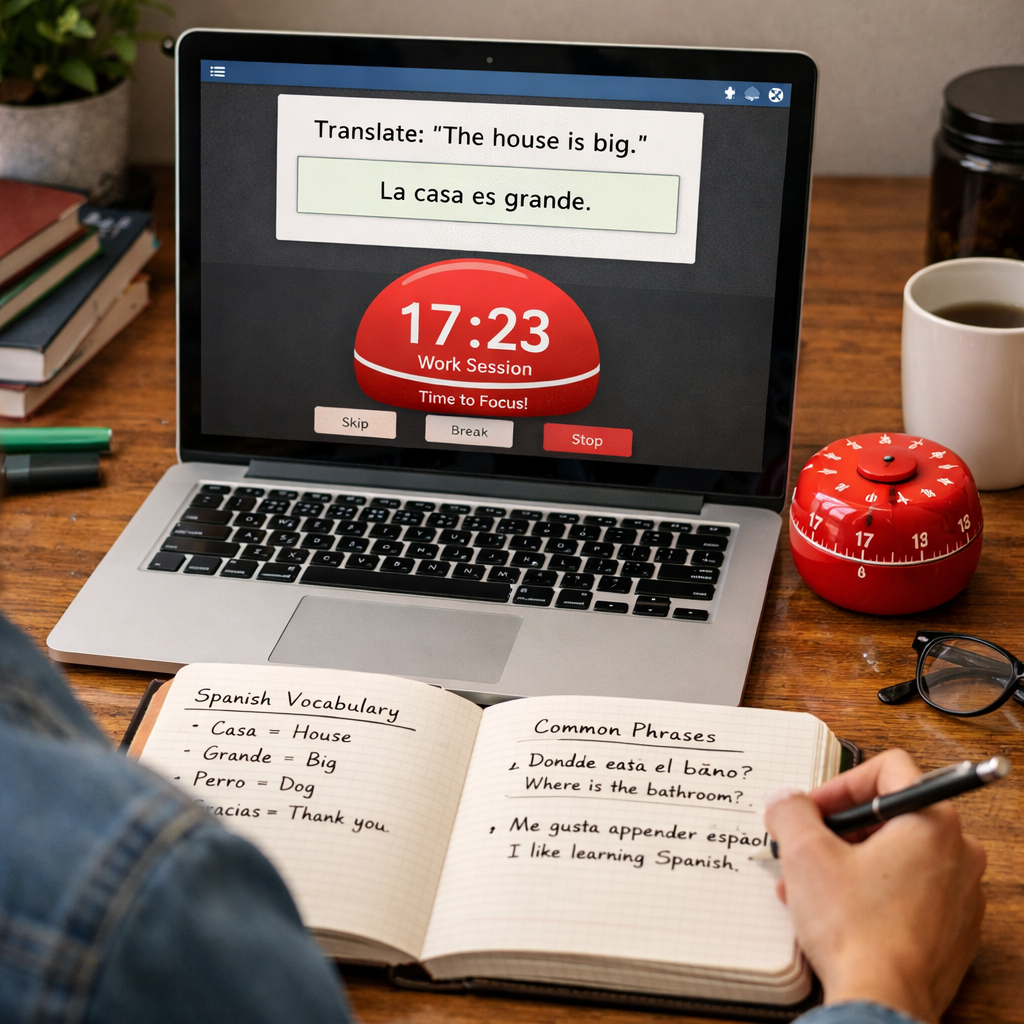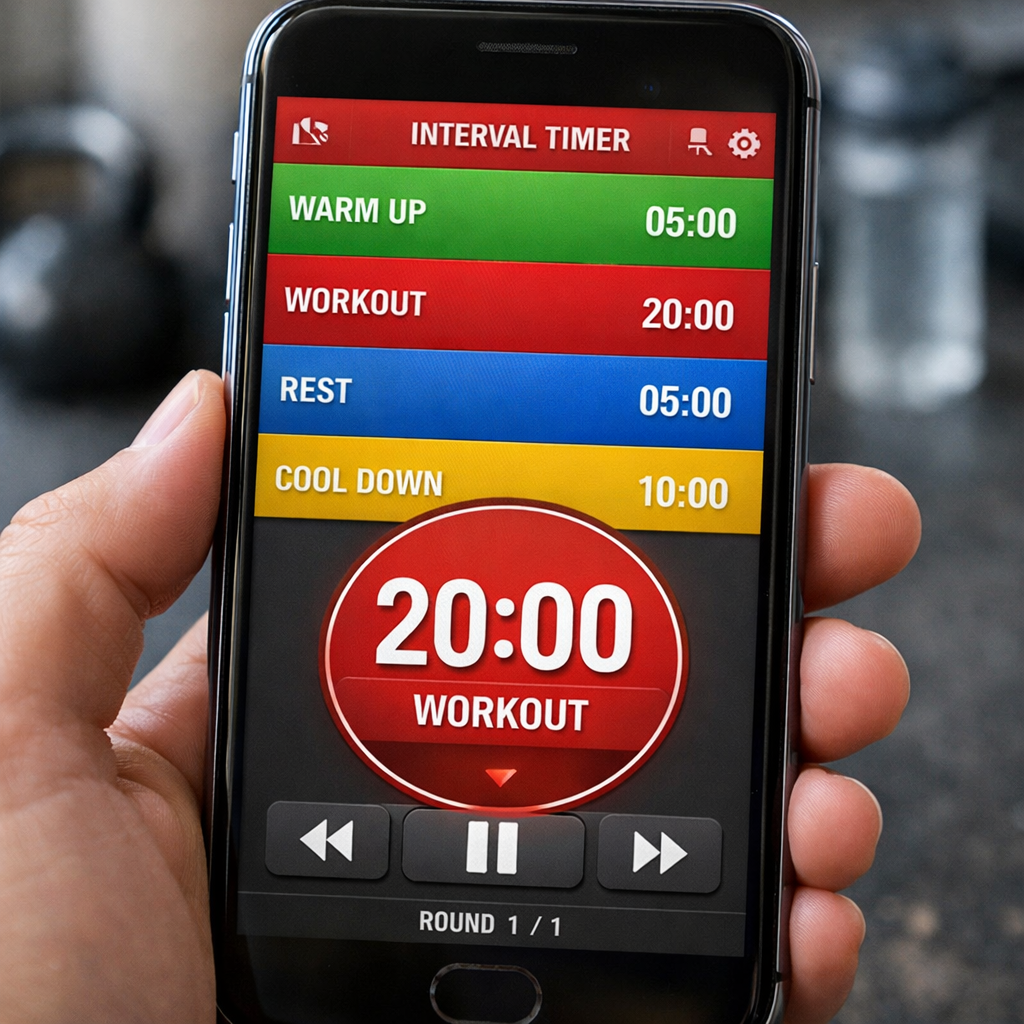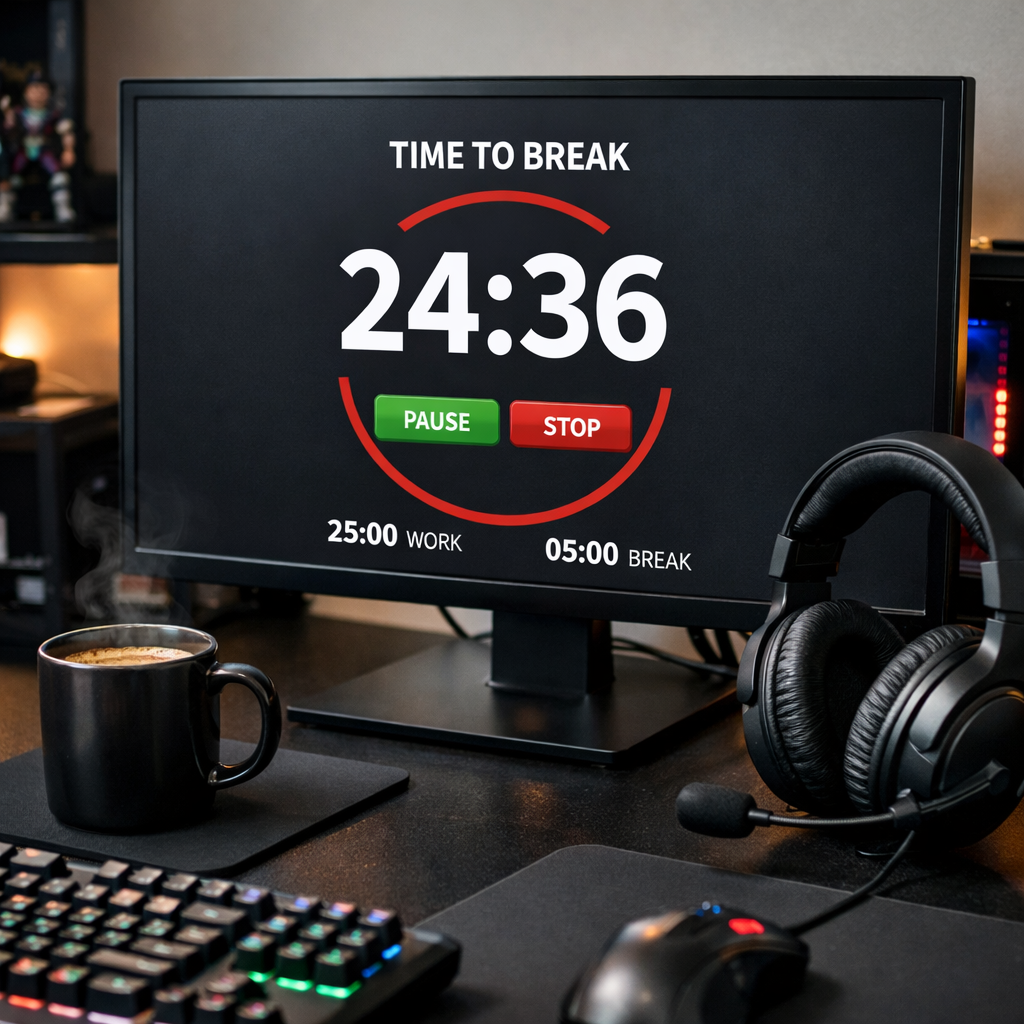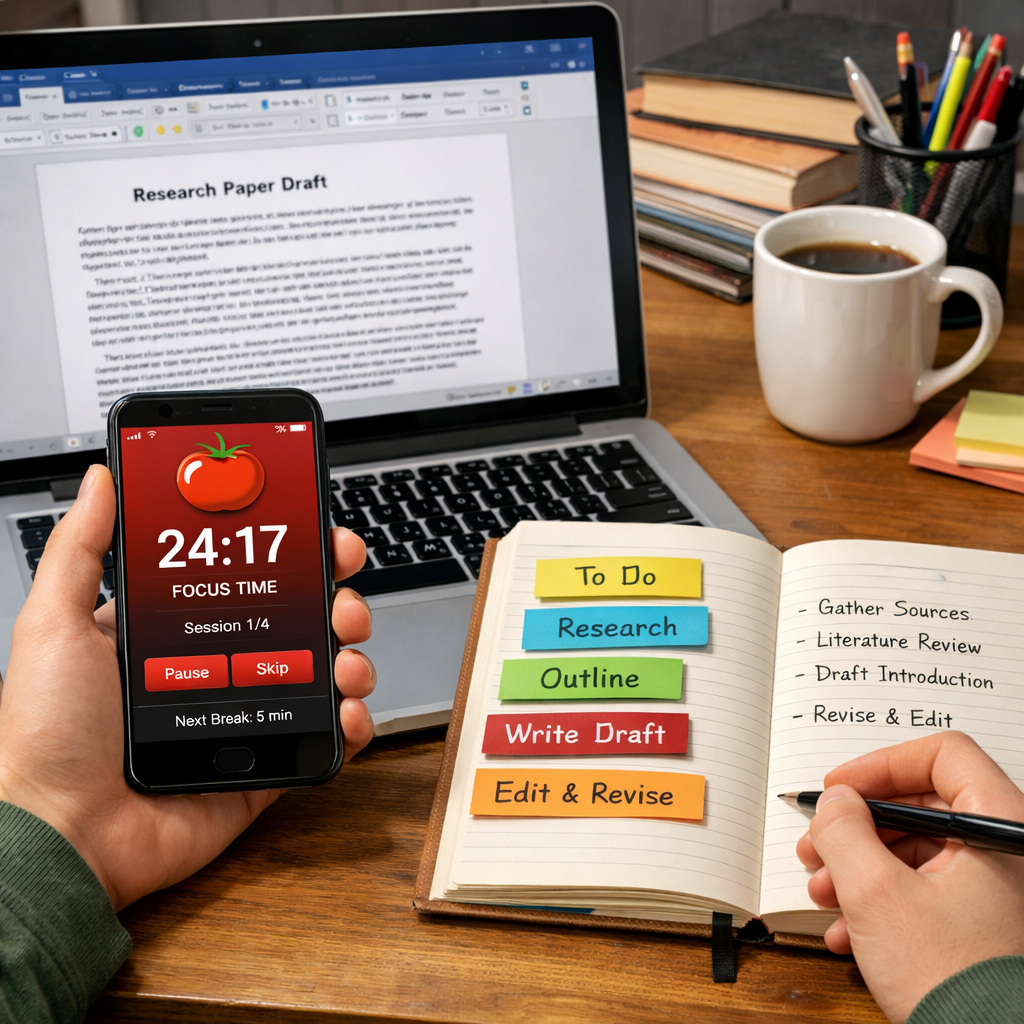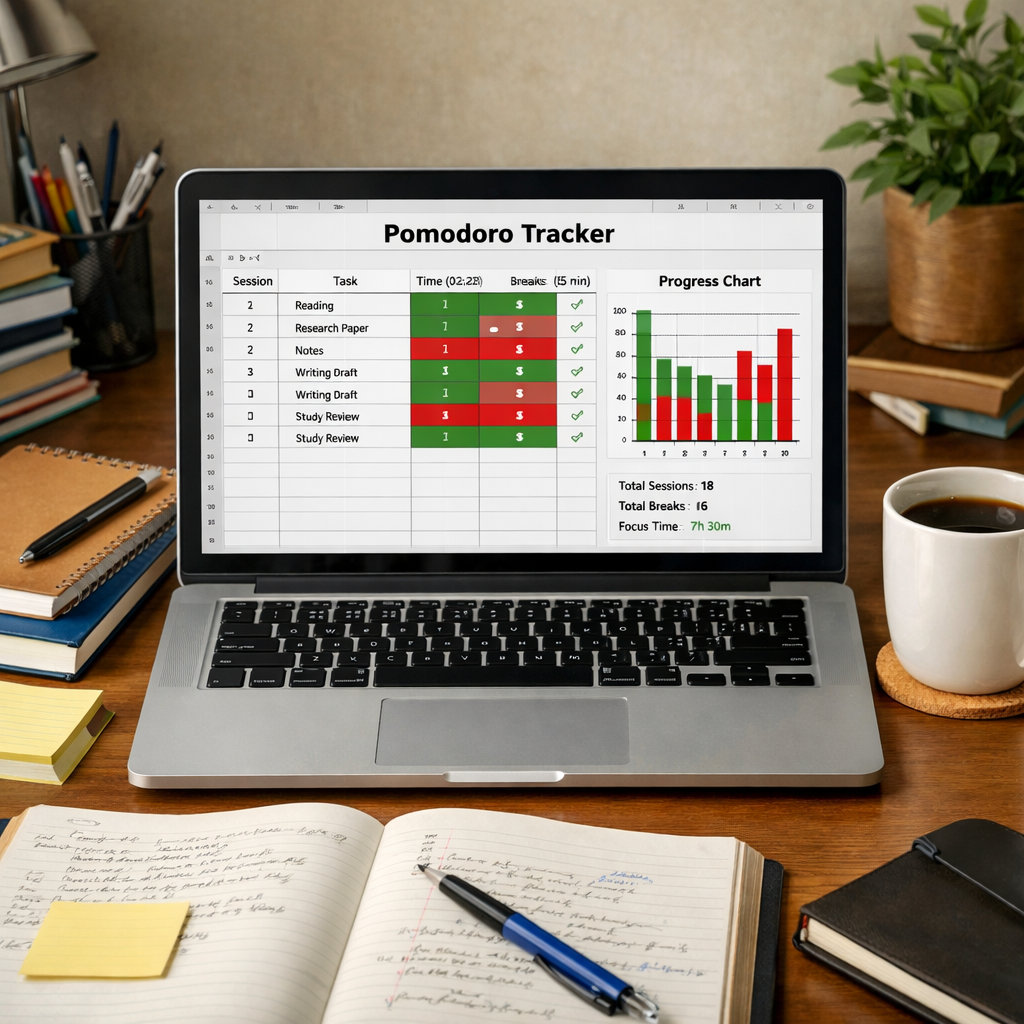

Feeling like your to-do list is a mile long and you’re barely making a dent? It’s a common problem. We all get distracted or just feel overwhelmed sometimes. That’s where a focus timer comes in. It’s a simple tool, but it can really change how you get things done. Think of it as a little helper that breaks down your work into manageable chunks. This article is all about how to use a focus timer for students to get more done without feeling totally drained.
Key Takeaways
- Using a focus timer means working in short, scheduled bursts, which helps you concentrate better and avoid getting sidetracked.
- Breaks are just as important as work time. Taking regular short breaks stops you from getting tired and helps you stay sharp.
- You can adjust how long your work sessions and breaks are to match your own rhythm and what feels best for you.
- Adding background sounds, like certain music or nature noises, can make it easier to get into a focused state.
- A focus timer works well with task lists, helping you organize your day and see what you’ve accomplished.
Understanding The Focus Timer Method
Ever feel like your study sessions just drift away, filled with distractions and a general sense of not getting much done? You’re definitely not alone. That’s where the focus timer method steps in. It’s a pretty straightforward idea, really: you break your work into specific chunks, concentrate hard during those chunks, and then take a proper break. It sounds simple, but it can make a huge difference in how much you actually accomplish and how you feel about your progress.
The Power of Structured Work Intervals
This method is all about working in focused bursts. Think of it like sprinting through your study material instead of just jogging. You dedicate a set amount of time, maybe 25 minutes, to one specific task. No checking social media, no getting sidetracked by notifications – just pure concentration. This intense focus helps you get into a flow state, where you’re really productive and tasks that usually take ages seem to fly by. It’s a technique that’s been around for a while, often associated with the Pomodoro Technique [de9f].
Balancing Productivity and Well-being
It’s not just about cramming more work into your day. The focus timer method is also designed to help you avoid feeling completely drained by the end of your study session. Those short breaks between work intervals are just as important as the work itself. They give your brain a chance to rest and reset, preventing that feeling of mental fatigue. It’s about working smarter, not just harder, and making sure you have energy left for other things.
Preventing Burnout with Regular Breaks
Burnout is a real problem, and it can sneak up on you. By building regular, scheduled breaks into your day, you’re actively fighting against it. These aren’t just quick glances at your phone; they’re intentional moments to step away, stretch, grab some water, or just do nothing for a few minutes. This consistent rhythm of work and rest helps maintain your energy and enthusiasm over the long haul. It’s a sustainable way to keep your productivity high without sacrificing your mental health.
Here’s a quick look at how the intervals typically break down:
- Work Interval: A dedicated period of focused study (e.g., 25 minutes).
- Short Break: A brief pause to rest your mind (e.g., 5 minutes).
- Long Break: A more extended break after several work intervals (e.g., 15-30 minutes).
The core idea is to create a sustainable rhythm that prevents mental exhaustion while maximizing focused effort. It’s about working with your brain’s natural attention span, not against it.
Customizing Your Focus Timer Experience
So, you’ve got your focus timer set up, but are you really getting the most out of it? The real magic happens when you tweak it to fit your specific needs. It’s not a one-size-fits-all deal, and making a few adjustments can make a huge difference in how productive you feel.
Exploring Customizable Timer Intervals
Think about how you actually work. Are you someone who can power through a task for a solid hour, or do you get fidgety after 20 minutes? Most focus timer methods suggest standard intervals, like 25 minutes of work and 5 minutes of break. That’s a good starting point, but it’s not set in stone. The key is finding the rhythm that lets you concentrate best.
- Short Bursts: If you’re easily distracted or have a lot of small tasks, try shorter work intervals, maybe 15-20 minutes. This can make starting feel less daunting.
- Longer Sprints: For deep work or complex projects, you might find 45-50 minute sessions more effective, followed by a slightly longer break.
- Experiment: The best way to find your sweet spot is to try different lengths. Keep a little note of how you felt after each session – energized, drained, or just right.
Here’s a quick way to think about it:
| Session Type | Work Interval | Short Break | Long Break (after 4 sessions) |
|---|---|---|---|
| Standard | 25 minutes | 5 minutes | 15-20 minutes |
| Short Burst | 15-20 minutes | 3-5 minutes | 10-15 minutes |
| Long Sprint | 45-50 minutes | 10 minutes | 20-25 minutes |
Finding Tools That Support ADHD Needs
If you have ADHD, the structure a focus timer provides can be a game-changer, but standard settings might not always hit the mark. Many apps are now designed with features that can really help. Look for tools that offer:
- Visual timers: Seeing a countdown bar or a progress circle can be more engaging than just a number.
- Customizable alerts: Beyond a simple beep, some timers offer different sounds, vibrations, or even visual cues to signal breaks or the end of a session.
- Minimalist interfaces: Cluttered apps can be distracting. A clean, simple design with fewer options visible at once can reduce cognitive load.
- Task integration: Being able to break down larger tasks into smaller, manageable chunks within the timer app itself can make starting and staying on task much easier.
It’s worth checking reviews or app descriptions specifically mentioning support for ADHD or focus challenges. What works for someone else with ADHD might work for you too. You can find some great options for customizing timer intervals.
Customizing Your Focus Timer Experience
Silence isn’t always golden when you’re trying to focus. For many people, a bit of background sound can actually help block out distracting noises and create a more immersive work environment. The trick is finding what works for you.
- Nature Sounds: Gentle rain, ocean waves, or forest ambiance can be incredibly calming and mask sudden noises. These are great for creating a serene atmosphere.
- Instrumental Music: Classical music, especially Baroque pieces, is often cited for its ability to aid concentration. Avoid anything with lyrics, as that can pull your attention away.
Okay, this might sound a bit superficial, but the look and feel of your focus timer can actually impact your motivation. If you’re going to be staring at an app for hours a day, you want it to be pleasant to look at. Some timers offer a range of themes, from minimalist and modern to nature-inspired or even retro. Others let you customize background colors, fonts, and even ambient soundscapes. Choosing an app with a visual style that you find calming or energizing can make the entire experience more enjoyable. It turns a functional tool into something you actually want to use, which is half the battle when it comes to building a consistent habit.
Maximizing Productivity with Advanced Features

So, you’ve got your focus timer set up, you’re rocking those work intervals, and taking your breaks. That’s awesome! But what if you want to take things up a notch? Turns out, a lot of these focus timer apps have some pretty neat advanced features that can really help you get more done. It’s not just about setting a timer anymore; it’s about understanding your own work habits and making the tool work even harder for you.
Utilizing In-Depth Statistics for Insights
This is where things get interesting. Most apps will track how long you’ve been focused, but the really good ones give you a deeper look. Think daily, weekly, and even monthly breakdowns of your focus time. You can start to see patterns – maybe you’re most productive in the morning, or perhaps those afternoon slump times are longer than you thought. This kind of data isn’t just numbers; it’s a roadmap to optimizing your schedule. You can spot when you’re hitting your goals and when you might need to adjust your approach. Understanding these patterns is key to making your study sessions more effective.
Here’s a quick look at what you might find:
- Daily Focus Time: How many hours you spent in focused sessions each day.
- Session Completion Rate: The percentage of planned focus sessions you actually completed.
- Longest Focus Streak: How many days in a row you hit your daily focus goal.
- Task-Specific Time: If you’re tracking tasks, you can see how long you spend on each one.
Tracking Progress on Individual Tasks
Once you’ve got your tasks listed, you can assign focus sessions to them. Did you spend 25 minutes working on “Draft Section 1”? Log it! Many focus timer apps let you track time spent on specific tasks. This is super helpful for a few reasons. First, it shows you where your time is actually going. You might be surprised to see how long certain tasks take. Second, it gives you a sense of accomplishment as you tick off those focused work intervals. It’s a tangible way to see your progress, not just a vague feeling that you were busy. This can really help you get a better handle on your workload and plan future assignments more realistically. You can find some great productivity apps designed for students to help with this task management.
Sharing Progress to Stay Motivated
Sometimes, just knowing you’re doing well isn’t enough. Sharing your progress can be a huge motivator. Many apps let you share your stats with friends, colleagues, or even accountability partners. Imagine getting a little cheer from a friend when you hit a new focus streak or complete a big project. It adds a social element that can make sticking with your focus routine a lot more fun and sustainable. It’s like having a little cheer squad in your pocket!
Building a system that supports you, not one that relies solely on your memory, is the goal. This includes setting reminders for when a task is due, or even just a nudge to start a specific focus session. If you have a big project deadline coming up, set a reminder a few days in advance to ramp up your focus time. Or, if you tend to forget your breaks, set a reminder for those too!
Integrating Your Focus Timer with Task Management
So, you’ve got your focus timer set up, and you’re ready to get to work. But what exactly should you be working on? That’s where linking your timer with your task management system comes in. It’s like having a map for your study sessions. Without a clear plan of what needs doing, even the best timer can feel a bit aimless.
Setting Reminders for Important Deadlines
Let’s be real, deadlines can sneak up on you. A focus timer can help you break down big projects, but you still need to know when those projects are due. Most timer apps let you set reminders. You can get a nudge a few days before a big paper is due, or even just a reminder to start your next study block. It’s a simple way to keep important dates front and center, so nothing slips through the cracks.
Connecting Your Timer to Your To-Do List
This is where the magic really happens. You write down everything you need to do, whether it’s reading a chapter, finishing a problem set, or drafting an essay outline. Then, you use your focus timer to dedicate specific blocks of time to each task. Instead of just staring at a long list, you can actively work on one item at a time. Many apps let you assign a focus session directly to a task on your list. So, you hit ‘start’ on your timer, and it knows you’re working on, say, ‘Chapter 5 Reading’.
Understanding Task Prioritization
Not all tasks are created equal, right? Some are super urgent, others are important for the long haul. Using a focus timer alongside a task list helps you figure out what to tackle first. You can categorize your tasks, maybe using a system like this:
- Urgent & Important: Needs immediate attention and has big consequences (e.g., assignment due tomorrow).
- Important, Not Urgent: Contributes to long-term goals but no immediate deadline (e.g., starting research for a paper due next month).
- Urgent, Not Important: Demands attention now but doesn’t help much with your goals (e.g., responding to a non-critical email immediately).
- Not Urgent & Not Important: Can be done later or maybe not at all (e.g., browsing social media).
By assigning focus time to your important tasks, especially those that are both urgent and important, you make sure you’re spending your energy where it counts the most. It stops you from getting bogged down in busywork.
Linking your focus timer with your task management system creates a powerful feedback loop. You know what to work on, you dedicate focused time to it, and you track your progress. This combination helps prevent tasks from falling through the cracks and provides a clear picture of your productivity over time.
Enhancing Your Study Environment
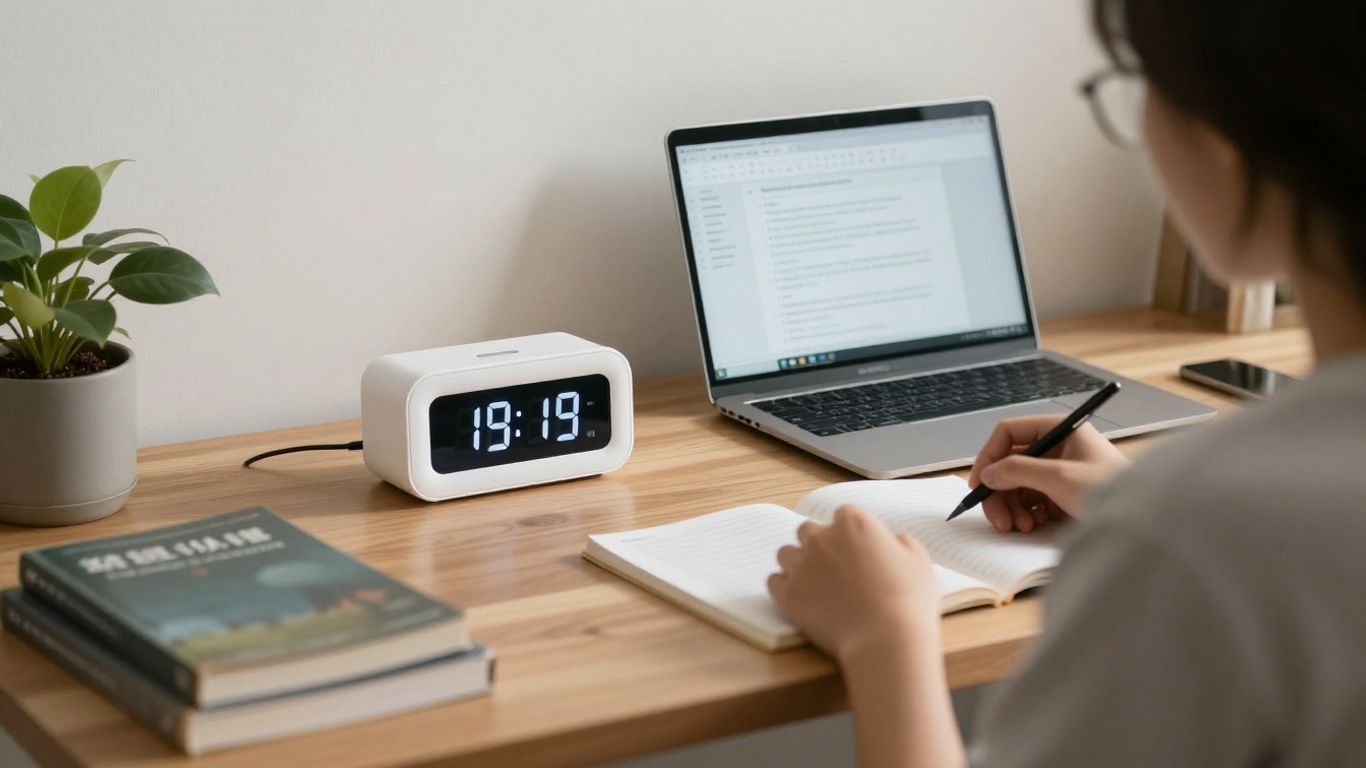
So, you’ve got your focus timer all set up, ready to tackle those study sessions. That’s awesome! But honestly, even the best timer won’t do much good if your study space is a total mess or a distraction zone. Think about it – trying to concentrate when your phone is buzzing every two minutes or you’re sitting in a cramped, uncomfortable chair? Yeah, not ideal. We need to make sure our surroundings are actually helping us focus, not fighting against us.
This is probably the biggest one. Distractions are the silent killers of productivity. They sneak up on you and before you know it, you’ve spent 20 minutes scrolling through social media instead of reading that chapter. So, what can we actually do about it?
- Find your quiet zone: This might be a corner of your room, the library, or even a specific spot at home that’s usually peaceful. The key is consistency – having a go-to spot helps your brain get into study mode faster.
- Digital detox: Seriously, put your phone on silent, or better yet, in another room. If you’re tempted by websites, look into browser extensions that block them for a set time. It sounds extreme, but it works.
- Communicate: Let people you live with know you need uninterrupted time. A simple "Hey, I’m studying for the next hour, can you try not to interrupt unless it’s urgent?" can go a long way.
Creating a dedicated, quiet space signals to your brain that it’s time to focus. It’s about setting up your environment for success, not leaving it to chance.
Okay, you’ve got the quiet. Now, let’s make that space actually work for you. It’s not just about having a desk; it’s about having the right desk and everything else you need.
- Comfort is key: Get a chair that supports your back. You don’t want to be fidgeting or aching halfway through a study block. Same goes for your desk height – make sure it’s comfortable for you.
- Light it up: Good lighting is super important. Natural light is best if you can get it, but if not, a good desk lamp that doesn’t cause glare is a must. Eye strain is a real focus killer.
- Organize your gear: Keep your textbooks, notebooks, pens, and anything else you need within easy reach. Nothing kills momentum like having to hunt for a pen or a specific page.
- Make it yours: Add a plant, a motivational quote, or a picture that makes you happy. A space you actually like being in will make you want to spend more time there.
Some people swear by complete silence, while others find it unnerving. Background sounds can actually be a great tool if used correctly. It’s all about finding what helps you concentrate and focus.
- White Noise/Ambient Sounds: Think rain sounds, coffee shop chatter (without the actual people!), or instrumental music. These can help mask sudden, distracting noises and create a consistent soundscape.
- Music (Carefully Chosen): Instrumental music, classical, or lo-fi beats often work best. Lyrics can be surprisingly distracting, pulling your attention away from your studies.
- Experiment: What works for one person might not work for another. Try different types of sounds and see if they help you get into a flow state or if they just end up being another distraction. Sometimes, a simple timer app with a gentle ticking sound is all you need.
Choosing the Right Focus Timer for Students
So, you’ve decided to give a focus timer a shot, which is awesome. But with so many options out there, picking the right one can feel a bit overwhelming. It’s not just about finding any timer; it’s about finding one that actually fits how you work and what helps you concentrate. Think of it like picking out a comfy chair – what works for your friend might not be the best fit for your back.
Cross-Platform Synchronization for Accessibility
This is a game-changer if you use multiple devices. Being able to sync your focus timer and stats across your phone, tablet, and computer means you’re never out of sync. Start a focus session on your laptop at work, check your progress on your phone during your commute, or plan your next day on your tablet. It makes the focus timer a truly integrated part of your workflow, no matter where you are or what device you’re using. This integration ensures your productivity system is always up-to-date and accessible.
Finding the Perfect Fit for Your Workflow
Most focus timers are built around the Pomodoro Technique, which usually means 25-minute work sprints followed by 5-minute breaks. That’s a solid starting point, but it’s not a one-size-fits-all deal. Some days, you might be in the zone for longer, needing 45 or even 60-minute focus blocks. Other times, especially when tackling something new or complex, shorter bursts of 15-20 minutes might be more effective. Look for apps that let you tweak these intervals. You should be able to set your work session length, your short break duration, and even the length of your longer breaks after a few sessions. This flexibility is key to making the timer work for you, not the other way around.
Here’s a quick way to think about it:
| Session Type | Work Interval | Short Break | Long Break (after 4 sessions) |
|---|---|---|---|
| Standard | 25 minutes | 5 minutes | 15-20 minutes |
| Short Burst | 15-20 minutes | 3-5 minutes | 10-15 minutes |
| Long Sprint | 45-50 minutes | 10 minutes | 20-25 minutes |
If you have ADHD, the structure a focus timer provides can be a game-changer, but standard settings might not always hit the mark. Many apps are now designed with features that can really help. This might include:
- Visual timers: Seeing a countdown bar or a progress circle can be more engaging than just a number.
- Customizable alerts: Beyond a simple beep, some timers offer different sounds, vibrations, or even visual cues to signal breaks or the end of a session.
- Minimalist interfaces: Cluttered apps can be distracting. A clean, simple design with fewer options visible at once can reduce cognitive load.
- Task integration: Being able to break down larger tasks into smaller, manageable chunks within the timer app itself can make starting and staying on task much easier.
It’s worth checking reviews or app descriptions specifically mentioning support for ADHD or focus challenges. What works for someone else with ADHD might work for you too.
Experimenting with Different Timer Options
Okay, this might sound a bit superficial, but the look and feel of your focus timer can actually impact your motivation. If you’re going to be staring at an app for hours a day, you want it to be pleasant to look at. Some timers offer a range of themes, from minimalist and modern to nature-inspired or even retro. Others let you customize background colors, fonts, and even ambient soundscapes.
Choosing an app with a visual style that you find calming or energizing can make the entire experience more enjoyable. It turns a functional tool into something you actually want to use, which is half the battle when it comes to building a consistent habit. Ultimately, the best focus timer is the one you’ll actually use consistently. Don’t be afraid to try out a few different ones. Many offer free versions or trials, so you can experiment until you find the perfect fit for your unique workflow and preferences.
Wrapping Up Your Focus Journey
So, that’s the lowdown on using a focus timer. It’s not some magic trick, just a simple way to get more done without feeling completely wiped out. Whether you go for a basic timer or one with all the bells and whistles, the main point is to set aside specific times to really concentrate. Try it out for a week and see how it feels. You might be surprised at how much you can actually accomplish when you just set a timer and get to it. It’s a small change, but it can make a big difference in your day.
Frequently Asked Questions
What exactly is a focus timer and how does it help me study?
A focus timer is like a special clock that helps you study in short bursts. You set it for a specific amount of time, maybe 25 minutes, to really concentrate on your work. When the time is up, it signals you to take a short break. This way, you can get more done without feeling worn out or bored, kind of like breaking a big homework assignment into smaller, easier parts.
Can I change how long the study sessions and breaks are?
Absolutely! Most focus timers let you decide how long your work periods and your breaks should be. This means you can set it up to work best for you, whether you focus better in short bursts or for longer stretches. It’s all about making it fit your personal style.
Why do some focus timers suggest listening to music or background sounds?
Some people find that certain sounds, like calm music or nature noises (think rain or ocean waves), help them concentrate better. These sounds can help block out distracting noises from your surroundings and create a peaceful vibe, making it easier to dive into your studies.
How can a focus timer help me manage my school tasks?
Focus timers work really well with your to-do lists. You can write down what you need to do, and then use the timer to work on one task at a time. This helps you stay organized and see how much progress you’re actually making on each assignment or project.
Are focus timers useful for students who get distracted easily, like those with ADHD?
Many students find focus timers super helpful, especially if they tend to get distracted. The clear structure of work periods and scheduled breaks gives you a plan to follow, which can make it easier to stay on track and feel less overwhelmed. Plus, some timers have features like customizable sounds that can create a better study environment.
What are ‘in-depth statistics’ in a focus timer app?
These are like detailed reports that show you how you’ve been using the timer. They can tell you how much time you spent focusing each day, week, or month, and which subjects or tasks you spent the most time on. This information is great for understanding your study habits and finding ways to be even more productive.