
Dealing with executive dysfunction can feel like trying to build something complex without a clear guide. You’ve got all the pieces, but putting them together? That’s the hard part, often leading to unfinished tasks and frustration. This article is your guide, full of practical executive dysfunction tips that actually work. We’ll look at simple ways to set up your day, manage your thoughts, and get tasks done, so you can move from feeling stuck to feeling in control.
Key Takeaways
- Setting up your space and daily habits can make things run smoother. Think of laying out clothes the night before or having your coffee ready to go. It’s about making the easy path the one you’ll naturally take.
- Using ideas from talk therapy can help you deal with negative thoughts about yourself. When you catch yourself thinking “I’m terrible at this,” you can learn to question that thought and replace it with something more helpful.
- Breaking big projects into tiny steps makes them less scary. Using notes or apps to keep track of each small piece means you won’t lose your place or forget what comes next.
- Mindfulness helps you notice what’s happening in your head without getting caught up in it. This awareness lets you choose how to react instead of just going with the first impulse.
- External tools like planners and apps are your friends. They help you remember things and keep track of what needs doing, freeing up your brainpower for the actual work.
Structuring Your Environment and Routines

Let’s be real, sometimes just getting started feels like climbing Mount Everest. That’s where structuring your environment and building solid routines comes in. It’s not about being rigid; it’s about creating a supportive framework so your brain doesn’t have to work overtime just to figure out what’s next.
Designing Your Workspace for Effortless Flow
Think of your workspace as your personal command center. If it’s a mess, your thoughts are probably going to be a mess too. The goal here is to make your environment work for you, not against you. This means setting up a space where the things you need are easy to find and the things that distract you are out of sight, or even out of mind.
- Designated Work Zones: Have a specific spot, even if it’s just a corner of a room, that’s only for focused work. When you sit there, your brain knows it’s time to concentrate. Keep only the essentials there – your computer, a notepad, maybe a specific pen. This signals to your brain, "Okay, focus time."
- Visual Cue Systems: Labels, color-coding, and simple checklists can be lifesavers. If you have a filing system, color-code those folders. Use labels on bins for household items. This cuts down on the mental energy you spend searching for things or trying to remember what goes where.
- High-Friction for Distractions: Make it a little harder to get sidetracked. If your phone is a black hole of distraction, put it in another room while you’re working. Use website blockers for social media if you find yourself endlessly scrolling. Even putting tempting snacks out of sight can make a difference.
The key to good environmental design is making it personal and being willing to adjust. What works for one person might not work for you, so it’s all about experimenting. Your environment is a tool. The goal isn’t to create a perfectly sterile or minimalist space, but to design one that actively reduces cognitive friction and supports your specific needs and workflows.
Building Habit Formation into Your Day
Habits are like autopilot for your brain. Once something becomes a habit, you don’t have to think about it as much, which frees up mental energy. This is super helpful when executive dysfunction makes decision-making feel exhausting. Building habits isn’t about willpower; it’s about making the desired action the easiest path.
- Start Small and Anchor: Don’t try to overhaul your entire life overnight. Pick one small habit, like drinking a glass of water when you wake up. Then, "stack" it onto an existing habit. For example, after you brush your teeth (which you already do), immediately drink that glass of water.
- Use Environmental Cues: Put your workout clothes by your bed the night before. Leave your keys by the door. These visual reminders act as triggers for the habits you want to build.
- Consistency Over Perfection: It’s way better to do a habit imperfectly every day than to aim for a perfect habit you only do once in a while. If you miss a day, just get back on track the next. Don’t let one slip-up derail everything. You can track your progress using habit tracking apps.
Creating a Predictable Rhythm with Time Boxing
Time boxing is basically giving specific tasks a set amount of time. Instead of just having a to-do list that feels endless, you assign blocks of time to specific activities. This helps prevent tasks from expanding to fill all available time and gives you a clear structure for your day.
Here’s a simple way to think about it:
| Activity | Time Block | Notes |
|---|---|---|
| Morning Routine | 7:00 AM – 7:30 AM | Wake up, hydrate, quick stretch |
| Focused Work 1 | 9:00 AM – 10:30 AM | Tackle your most important task |
| Break | 10:30 AM – 10:45 AM | Step away, move around |
| Email/Admin | 11:00 AM – 11:45 AM | Process messages, quick tasks |
| Lunch | 12:00 PM – 1:00 PM | Step away from your workspace |
This approach helps reduce decision fatigue because you’re not constantly deciding what to do next. It also makes tasks feel less overwhelming because you know you only have to focus on one thing for a set period. It’s a great way to manage your energy and make steady progress on your goals.
Harnessing Cognitive Behavioral Therapy
Cognitive Behavioral Therapy, or CBT, is a really practical way to deal with the mental roadblocks that come with executive dysfunction. It’s all about understanding how your thoughts, feelings, and actions are connected. When you’re struggling with things like procrastination or feeling overwhelmed, CBT helps you spot the unhelpful thinking patterns that might be getting in your way. It’s not about getting rid of difficult thoughts, but learning to handle them differently.
Challenging Negative Self-Talk
That inner critic can be loud, right? CBT gives you tools to question those harsh thoughts. Instead of just accepting "I’ll never get this done," you can learn to ask yourself: Is that really true? What’s a more balanced way to look at this? It’s about shifting from self-blame to self-compassion.
- Identify the thought: Notice when you’re being hard on yourself.
- Examine the evidence: What facts support this thought? What facts contradict it?
- Reframe the thought: Come up with a more realistic and kinder alternative.
Reframing Cognitive Distortions
Cognitive distortions are common thinking traps. Things like "all-or-nothing" thinking (if it’s not perfect, it’s a failure) or catastrophizing (expecting the worst) can really mess with your ability to get things done. CBT teaches you to recognize these distortions when they pop up. Once you see them, they lose a lot of their power.
Here are a few common distortions and how to reframe them:
| Distortion | Example Thought | Reframed Thought |
|---|---|---|
| All-or-Nothing | "I missed one deadline, so the whole project is ruined." | "I missed one deadline. I can still salvage the rest of the project." |
| Catastrophizing | "If I don’t finish this today, my boss will fire me." | "If I don’t finish this today, I’ll have to explain why and ask for an extension." |
| Mind Reading | "My colleague thinks I’m incompetent." | "I don’t know what my colleague thinks. I’ll focus on doing my best work." |
Developing Practical Coping Skills
Beyond changing your thinking, CBT also focuses on building concrete actions. This might involve breaking down big tasks into smaller, manageable steps, or developing strategies for managing your energy levels throughout the day. It’s about creating a toolkit of behaviors that help you move forward, even when things feel tough. You can find some great resources for executive function strategies that incorporate these ideas.
The goal isn’t to eliminate challenges, but to build resilience and a more effective way of responding to them. It’s a process of learning and adapting, one step at a time.
Mastering Task Management
Feeling like your to-do list is a monster you can’t possibly tame? You’re not alone. For many of us, just looking at a big project can make us freeze up. That’s where learning to manage tasks like a pro comes in. It’s not about being perfect, it’s about having a system that actually helps you get things done without feeling completely overwhelmed.
Decomposing Overwhelming Projects
Big tasks are like giant puzzles. Trying to solve them all at once is impossible. The trick is to break them down into smaller, bite-sized pieces. Think of it like this: you wouldn’t try to eat a whole pizza in one bite, right? You cut it into slices. The same applies to your work.
- Identify the Goal: What’s the final outcome you’re aiming for?
- Brainstorm Steps: List out every single action, no matter how small, that needs to happen to reach that goal.
- Sequence: Put those steps in a logical order. What needs to happen first, second, and so on?
- Estimate Time: Roughly guess how long each small step might take.
This process makes the whole project feel much less scary. You can focus on just the next small step, which is way more manageable.
Utilizing Working Memory Aids
Our brains have a limited capacity for holding information at any given moment – that’s working memory. When you’re juggling a lot of tasks, details can slip through the cracks. That’s where external aids come in handy. They act like a second brain, freeing up your mental energy.
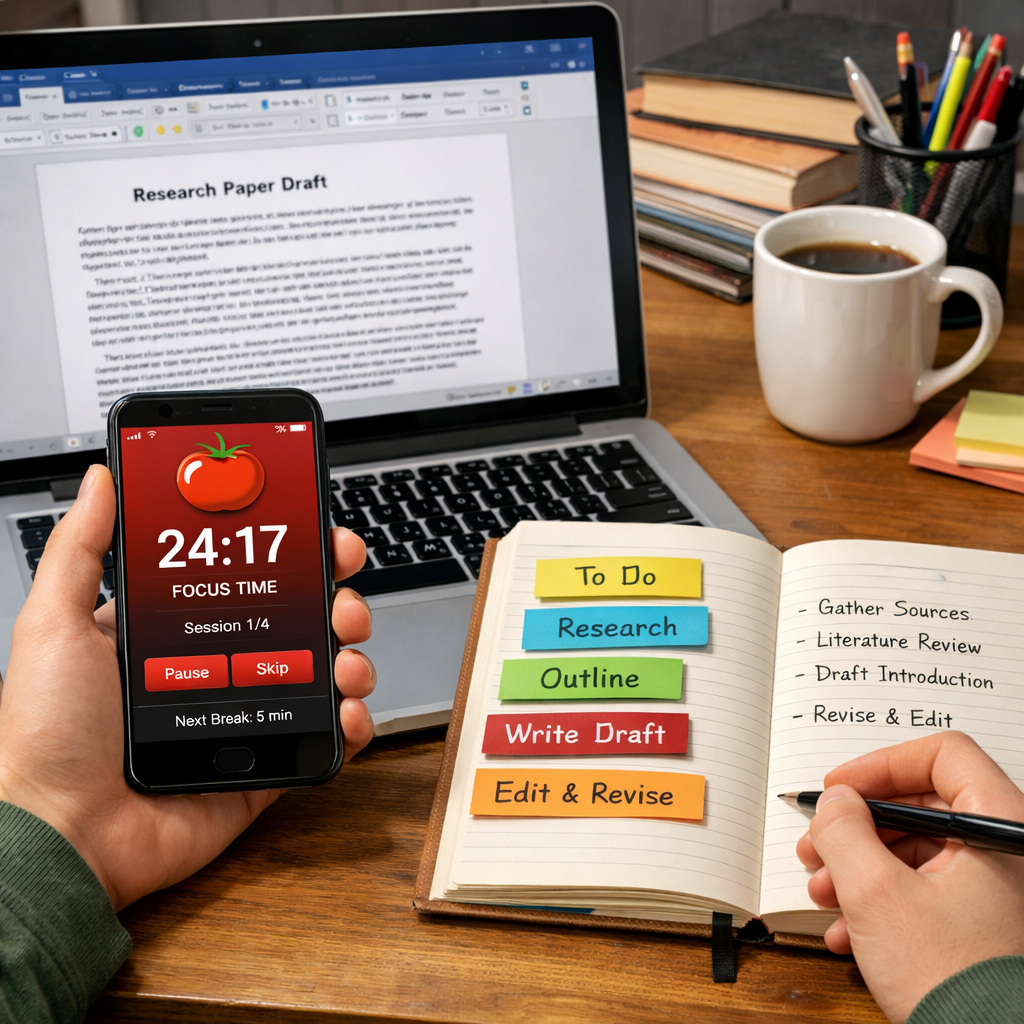
- Sticky Notes: Jot down quick reminders or the next step for a task and stick it somewhere visible.
- Checklists: Create a list of sub-tasks for a larger project. Checking things off provides a sense of accomplishment and keeps you on track.
- Digital Apps: Use task management apps that allow you to add notes, deadlines, and sub-tasks to each item.
- Voice Memos: If you’re on the go, quickly record a thought or reminder instead of trying to remember it later.
The key is to get information out of your head and into a system you trust as soon as possible. Don’t rely on your memory alone; it’s not built for that kind of constant load.
Prioritizing Tasks Effectively
Not all tasks are created equal. Some are urgent, some are important, and some are neither. Learning to sort them out is a superpower.
Here’s a simple way to think about it:
| Category | Description |
|---|---|
| Urgent & Important | Do these first. They have immediate deadlines and significant consequences. |
| Important, Not Urgent | Schedule time for these. They contribute to long-term goals but aren’t time-sensitive right now. |
| Urgent, Not Important | Delegate if possible, or do them quickly. They demand attention but don’t move your key goals forward. |
| Not Urgent & Not Important | Eliminate or do them last. They are distractions. |
By regularly looking at your task list and sorting items into these categories, you can make sure you’re spending your energy on what truly matters, rather than just what’s shouting the loudest.
Cultivating Mindfulness and Self-Awareness
Sometimes, it feels like our brains are just running wild, right? One minute you’re trying to focus on work, and the next you’re thinking about what to have for dinner, or replaying an awkward conversation from last week. That’s where mindfulness and self-awareness come in. It’s not about magically stopping those thoughts, but about learning to notice them without getting totally swept away. Think of it like watching clouds drift by – you see them, but you don’t have to jump on every single one.
Practicing Present Moment Awareness
This is all about gently bringing your attention back to what’s happening right now. It sounds simple, but it takes practice. When you’re eating, really taste the food. When you’re walking, feel your feet on the ground. When you’re talking to someone, really listen to their words. It’s about being fully where you are, instead of being lost in your head.
- Start small: Try just two or three minutes a day. Use a guided meditation app if that helps. The key is consistency, not duration.
- Focus on your breath: It’s always with you. Just notice the feeling of air coming in and going out.
- Engage your senses: What do you see, hear, smell, taste, and feel right now? Even a quick check-in can ground you.
Observing Thoughts Without Judgment
This is a big one. Our brains are constantly generating thoughts, and a lot of them aren’t exactly helpful. We might call ourselves names, worry about the future, or get stuck on past mistakes. Mindfulness teaches us to observe these thoughts like a curious scientist. You notice, "Ah, there’s that worry thought again," instead of thinking, "Oh no, I’m doomed!"
It’s about creating a little space between you and your thoughts. This space allows you to choose how you respond, rather than just reacting automatically. You learn that thoughts are just mental events, not necessarily facts.
Enhancing Self-Monitoring Skills
Self-monitoring is like having an internal check-in system. It’s about noticing what you’re doing, how you’re feeling, and what’s working (or not working) for you. When you’re better at this, you can catch yourself before you get too overwhelmed or off track. Did you just spend an hour scrolling social media when you meant to be working? Self-monitoring helps you notice that and make a different choice next time.
Here’s a simple way to practice:
- Schedule check-ins: Set a reminder on your phone a few times a day to just pause and ask, "What am I doing? How am I feeling? What do I need right now?"
- Journaling: Jotting down your thoughts and feelings can be super revealing. You might start to see patterns you never noticed before.
- Notice physical cues: Sometimes your body tells you things before your mind does. Are you feeling tense? Tired? Hungry? Paying attention to these signals can help you manage your energy and focus better.
Leveraging External Support Systems

Sometimes, trying to keep everything in your head feels like juggling too many balls at once, and inevitably, some are going to drop. That’s where external support systems come in. They’re basically tools and methods that help you offload some of the mental heavy lifting, freeing up your brainpower for more important things. Think of them as your personal brain boosters, helping you remember, organize, and manage your life more smoothly.
Implementing Organizational Tools
When your brain feels overloaded, external tools can act as a reliable second brain. These aren’t just fancy gadgets; they’re practical aids that help you capture, organize, and retrieve information without taxing your working memory. The goal is to create systems that work for you, not against you.
Here are a few ways to get started:
- The Classic Notebook: Don’t underestimate the power of a good old-fashioned notebook. Whether it’s a simple to-do list, a place to jot down ideas, or a journal, writing things down can make them feel more concrete and less likely to be forgotten. The Bullet Journal method, for example, offers a flexible framework for tracking tasks, events, and notes all in one place.
- Visual Planners and Calendars: Seeing your week or month laid out visually can be incredibly helpful. Whiteboards, wall calendars, or even digital calendar apps can give you a clear overview of appointments, deadlines, and commitments. This helps prevent double-booking and gives you a sense of control over your schedule.
- Checklists: For tasks that have multiple steps, checklists are your best friend. They break down a larger activity into manageable parts, ensuring you don’t miss anything. You can create checklists for anything from packing for a trip to completing a work project.
Building an external system you trust takes consistency and a bit of trial and error until you find what clicks. The goal isn’t to find the "perfect" tool, but to build an unshakable routine of getting information out of your head as soon as it comes in.
Utilizing Digital Task Managers
In today’s world, digital tools offer a powerful way to manage your tasks and commitments. They can sync across devices, send reminders, and help you prioritize what needs to get done. The key is to find a system that fits your workflow and that you’ll actually use regularly.
Some popular options include:
- Todoist: This app is great for creating detailed to-do lists, setting recurring tasks, and organizing projects. It’s pretty straightforward to use and has a clean interface.
- Asana or Trello: These are more robust project management tools that work well for collaborative projects or for breaking down larger, more complex tasks into smaller, trackable steps. Trello uses a visual board system, which many find helpful.
- Google Calendar/Tasks: If you’re already in the Google ecosystem, these integrated tools can be a simple and effective way to manage your schedule and to-dos. You can set reminders and link tasks directly to calendar events.
Seeking Professional Coaching
Sometimes, the challenges with executive dysfunction are deep-seated, and external tools alone might not be enough. This is where professional help can make a significant difference. A coach or therapist can provide personalized strategies and support tailored to your specific needs.
- Executive Function Coaching: Coaches specializing in executive function can help you identify your specific challenges, develop personalized strategies, and build accountability. They work with you to create systems and routines that fit your life.
- Therapy (e.g., CBT): If executive dysfunction is linked to other conditions like ADHD, anxiety, or depression, therapy can be very beneficial. Cognitive Behavioral Therapy (CBT), for instance, can help you challenge negative thought patterns and develop coping mechanisms.
- Accountability Partners: While not a professional, having a trusted friend, family member, or colleague act as an accountability partner can be surprisingly effective. Regular check-ins can help you stay on track with your goals and commitments.
Developing Cognitive Flexibility
Life throws curveballs, right? One minute you’re set on a plan, and the next, everything’s changed. For folks with executive dysfunction, this can feel like hitting a brick wall. Cognitive flexibility is basically your brain’s ability to roll with these punches. It’s about being able to switch gears, adjust your thinking, and find new ways forward when the old path gets blocked. It’s the mental agility that keeps you from getting stuck.
Adapting to Changing Plans
When your carefully laid plans go sideways, it’s easy to feel overwhelmed. Instead of seeing it as a failure, try to view it as a detour. This means acknowledging the change without letting it derail you completely. It might involve a quick mental check-in: "Okay, this isn’t what I expected. What’s the next best step given this new information?" Sometimes, it’s just about accepting that things don’t always go as planned and finding a way to move forward anyway. This skill is really about not letting unexpected events freeze you in your tracks.
Brainstorming Alternative Solutions
When one approach doesn’t work, having a few backup ideas is super helpful. This is where brainstorming comes in. Don’t just stop at the first hurdle. Ask yourself: "What are three other ways I could tackle this?" Even if the ideas seem a bit out there at first, writing them down can spark new possibilities. It’s like having a mental toolbox; the more tools you have, the better equipped you are to fix whatever comes up. This practice can really help with task management.
Reframing Challenges as Opportunities
This one sounds a bit like a motivational poster, I know, but it actually works. When something difficult happens, try to look for the silver lining or what you can learn from it. Maybe a project didn’t go as planned, but you learned a lot about what not to do next time. Or perhaps a change in schedule means you get to try something new you wouldn’t have considered otherwise. It’s about shifting your perspective from "This is a disaster" to "Okay, what can I gain from this situation?"
The key here is practice. Like any skill, cognitive flexibility gets stronger the more you use it. Start small. When you encounter minor disruptions, consciously practice adapting and problem-solving. Over time, these small wins build confidence and make it easier to handle bigger challenges when they arise. Remember, it’s not about being perfect, but about being persistent in your efforts to adapt.
Here’s a quick look at how different strategies can help:
- Task Decomposition: Breaking down big tasks makes them less intimidating, allowing for easier adjustments if one part needs rethinking.
- Mindfulness: Being present helps you notice when you’re getting stuck and gives you a moment to choose a different response.
- External Aids: Using lists or reminders can free up mental space, making it easier to consider new information and adapt plans.
Developing this mental agility is a journey, and it’s okay to take it one step at a time. Building self-care strategies into your day can also provide a stable foundation, making it easier to handle the unpredictable.
Keep Going, You’ve Got This
So, we’ve talked about a bunch of ways to make your day run smoother when your brain feels like it’s working overtime. Remember, this isn’t about becoming a perfect robot or anything. It’s more like building your own personal toolbox, picking out the tools that actually help you, and learning how to use them. Some days will be better than others, and that’s totally okay. The main thing is to keep trying different things, see what sticks, and be kind to yourself through the process. You’re learning how to work with your brain, not against it, and that’s a pretty big deal. Keep experimenting, keep adjusting, and celebrate the small wins along the way. You’re building a system that works for you.
Frequently Asked Questions
What are executive functions and why are they important?
Think of executive functions as your brain’s boss. They help you plan, focus, remember instructions, and juggle multiple tasks. They’re super important for getting things done, like finishing homework, organizing your room, or even just deciding what to eat for lunch.
How can I make my workspace less distracting?
You can set up your desk so it’s easy to work. Put away things you don’t need, keep only the important stuff out, and maybe have your workout clothes ready if that’s part of your morning. Making your space work for you means less thinking about what to do and more doing.
What is ‘time boxing’ and how does it help?
Time boxing is like giving every task a specific time slot on your schedule. Instead of a giant to-do list, you know exactly what you’ll work on and for how long. It helps you stop worrying about time and makes it easier to switch between different activities without feeling lost.
How can I handle really big projects that feel overwhelming?
The trick is to break them down! Imagine building with LEGOs. Instead of trying to build the whole castle at once, you build small parts first. Write down each tiny step on a sticky note or in an app so you don’t forget anything and can focus on just one small piece at a time.
What’s the point of mindfulness and paying attention to my thoughts?
Mindfulness is like hitting a pause button. It helps you notice what you’re thinking and feeling without getting upset about it. This helps you catch yourself when you get distracted or upset, and choose a better way to react instead of just going with your first impulse.
Can I get help if I’m still struggling with these challenges?
Absolutely! You can use tools like planners or apps to keep track of things. You can also talk to a coach or therapist who specializes in executive function. They can help you figure out what works best for you and give you extra support and ideas.