
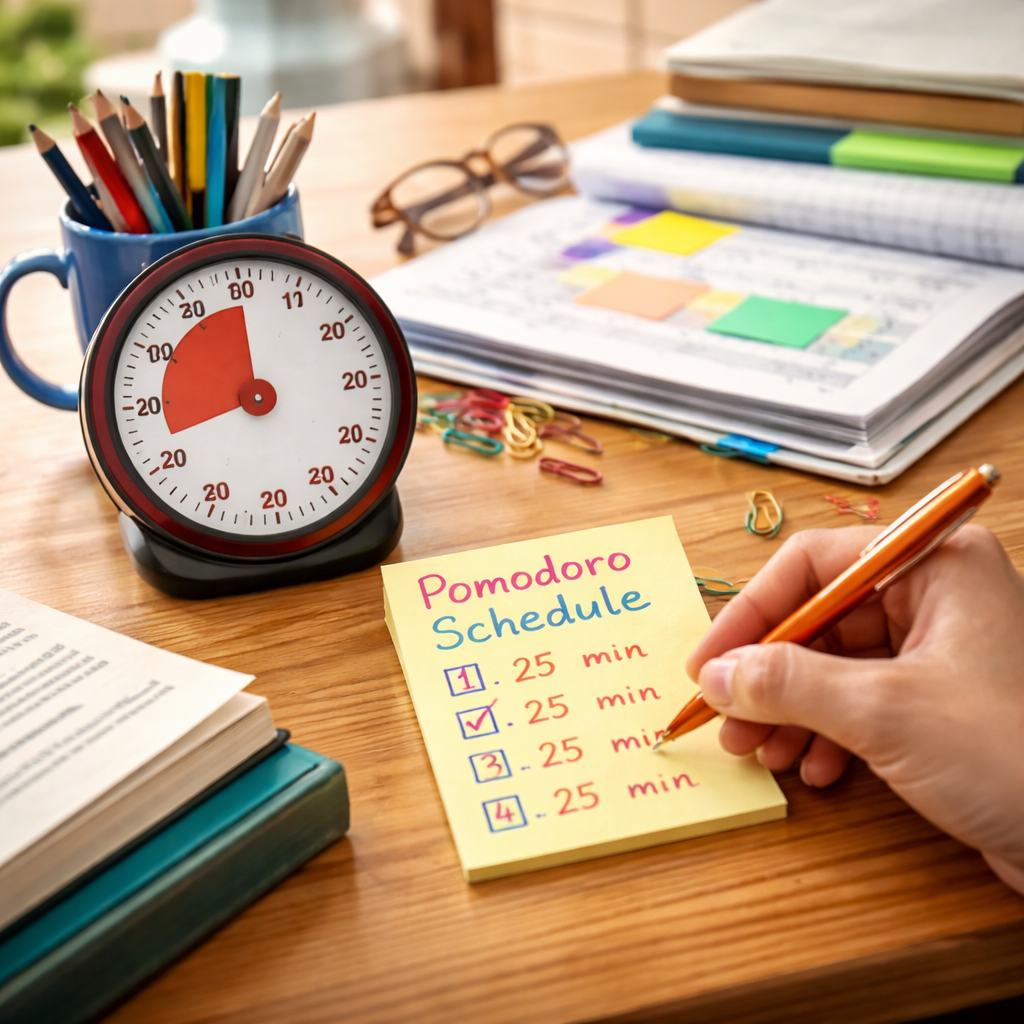
Planning a lesson can feel like juggling sand while the clock keeps ticking.
You need a simple way to split a 45‑minute block into focused bursts, then give students a breather. The Pomodoro timer for teachers lesson planning does exactly that: 25 minutes of work, 5 minutes of reset.
Start by writing your lesson goal on a sticky note. Then set a timer for one Pomodoro. When it rings, pause, ask a quick check‑in question, and note any confusion. Use that five‑minute gap to shift activities or give a short stretch.
Repeat the cycle until the class period ends. If you hit a longer activity, stretch the work slot to two Pomodoros and take a 10‑minute break. This keeps energy up and stops the drift that makes students zone out.
One practical tweak is to color‑code each Pomodoro by type – green for lecture, blue for group work, yellow for review. That visual cue helps you and the kids see the plan at a glance.
Need step‑by‑step details? Check out How to Use Pomodoro Timer in Classroom: A Practical Guide for Teachers for a full walk‑through.
Give it a try tomorrow. You’ll see smoother transitions, clearer focus, and more room for the moments that matter.
Step 1: Set Up Your Pomodoro Schedule for Class Prep
First, decide what you need to get done before the bell rings. Write the main goal on a sticky note and place it where you can see it all day. Then open your Pomodoro timer and set it for 25 minutes. The timer does the hard part – it tells you when to stop and when to start again.
When the first 25‑minute block ends, take a five‑minute breather. Walk around, ask a quick check‑in question, or jot down any part that felt fuzzy. Those short breaks keep the class from drifting.
Now look at your list and match each task to a Pomodoro slot. If a lab activity needs more time, give it two slots and plan a longer 10‑minute reset after. This way the whole period stays balanced.
Tip: use colour‑coded cards for each type of work – green for talking, blue for group work, yellow for review. It gives a quick visual cue for you and the kids.
Need extra help planning lessons? Chickytutor offers free templates that fit right into a Pomodoro flow.
After watching the video, grab a printable schedule if you like a paper backup. JiffyPrint Online lets you print simple Pomodoro grids in seconds.
Finally, keep a tiny snack nearby for the longer breaks. A quick bite can lift energy and focus. Great Bite Supps has portable protein packs that fit in a teacher’s bag.
Follow these steps, and you’ll see smoother transitions, clearer focus, and more time for the moments that matter.
Step 2: Choose the Right Pomodoro App or Tool
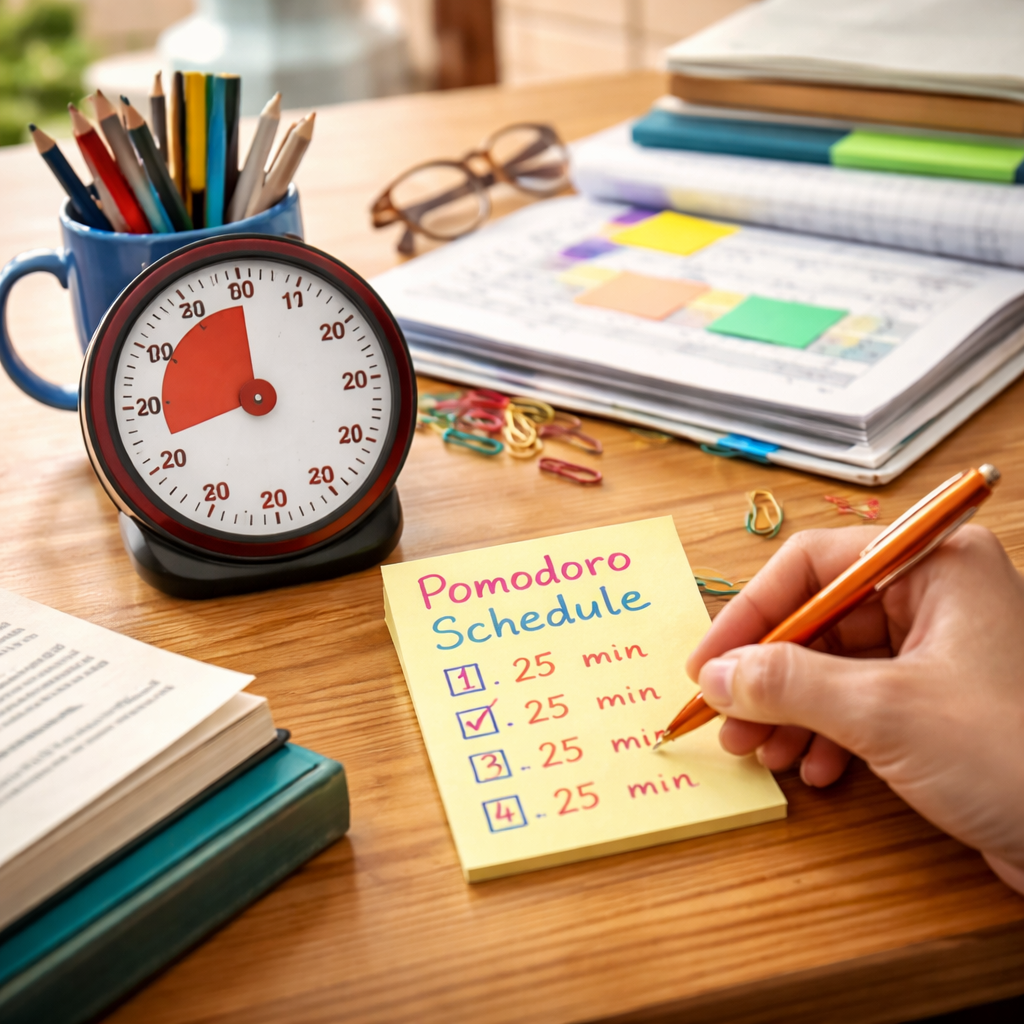
Now that your schedule is set, you need a timer that fits the way you teach.
First, ask yourself three quick questions: Does it let you set 25‑minute work blocks and 5‑minute breaks? Can it work as a pomodoro timer for teachers lesson planning? Can you pause or reset with a tap? Is the interface clean enough that you won’t spend time hunting for buttons?
If you want a tool built around the Pomodoro method, Focus Keeper is a solid pick. It offers a simple timer, visual progress rings, and a dark mode that won’t glare in a dim room. Because it’s made for teachers, you can label each block with a lesson goal and see how many cycles you’ve completed.
Other options are worth a look. A browser‑based timer like Pomodor works right in a tab, so you never need to install anything. Chrome users might like Otto, which can block distracting sites while the clock runs. The Forest app grows a tree as you work, giving a visual cue for younger students. A full comparison lives in a best pomodoro apps list that walks through features and pricing.
Here’s a quick checklist you can print and stick on your desk:
- 25/5 default or custom lengths
- One‑tap start/stop
- Clear visual cue (ring, bar, or color)
- Option to add a short note per block
Pick the app that feels the least like a hurdle. When the timer rings, you’ll know exactly what to do next, and your lesson plan stays on track.
Step 3: Integrate Pomodoro Sessions into Your Daily Lesson Planning
You can turn a hectic class period into a steady beat. The trick is to slot each Pomodoro block straight into your lesson map before you walk in.
Sketch the day in 25‑minute slices
Take your lesson goal list and give each item a 25‑minute slot. If a lab needs extra time, double the block and plan a 10‑minute break after it. Write the start time on the board so students see the flow.
Ask yourself: does this activity need a whole Pomodoro or just a quick 10‑minute check? That simple question keeps you from over‑packing.
Use the timer as a cue, not a crutch
When the timer starts, tell the class, “We work until the bell, then we reset.” The ring signals a clear end, so no one drifts.
During the break, let kids stretch, sip water, or jot one question about the last block. You’ll see focus snap back when the next ring sounds.
Adjust on the fly
If a discussion runs long, pause the timer, note the extra minutes, and add a short catch‑up Pomodoro later. The flexibility keeps the day on track without feeling rigid.
Many teachers find that treating the timer as a visual partner helps them stay in control. Teacher stories on the Pomodoro technique show how short bursts cut down scrolling and email checks, letting more time stay in the classroom.
End with a quick review
After the last Pomodoro, spend five minutes asking the class what stuck and what still feels fuzzy. That wrap‑up locks in learning and gives you a clear note for the next day’s plan.
Step 4: Track Progress and Adjust for Different Class Types
Now that the timer is running, you need a way to see how each block went. A quick note on the board does the trick. Write the date, the block number, and a one‑word vibe like “clear” or “fuzzy.”
And what do you do with that note? Turn it into a tiny log. A column for the lesson goal, a column for the timer length, and a column for the result. You can do this on a sheet of paper or in a simple spreadsheet.
Does the data tell a story? Look for patterns. If lecture blocks keep ending “fuzzy,” maybe the 25‑min slot is too long for that age group. If group work feels “busy” but not “stuck,” you might keep the length but add a 2‑minute stretch at the end.
Adjust by class type
Not every activity needs the same timer shape. Here are three common types and a tweak that fits.
| Class type | Pomodoro tweak | What to watch |
|---|---|---|
| Lecture | 25 min work, 5 min break | Check if notes are clear and if students stay seated |
| Group work | 20 min work, 5 min break | Watch collaboration flow and make sure everyone talks |
| Lab or hands‑on | 30 min work, 10 min break | Make sure safety steps are done and materials are ready |
But you don’t have to stick to the grid. If a lab needs extra safety time, add a short “prep” Pomodoro before the main one. If a reading is short, finish it in a 10‑min burst and move on.
Finally, give yourself a five‑minute debrief at the end of the day. Scan your log, spot the outliers, and write one tweak for tomorrow. That tiny habit keeps the whole class rhythm smooth.
Step 5: Share Your Pomodoro Success with Colleagues
When a Pomodoro timer for teachers lesson planning starts to click, you’ll want the whole team to feel it.
First, grab a quick snapshot of the day’s log. One line for each block, a word for the vibe – “clear”, “busy”, “fuzzy”. Keep it on a sticky note or a tiny table on the board. That visual cue lets anyone walk by and see what worked.
Turn the snapshot into a short chat
At the end of the week, set aside five minutes during a staff huddle. Hold up the note, point to the block that sparked a breakthrough, and ask: “What made this work?” Let a couple of teachers add their own tip. Keep the talk under ten minutes so it feels like a quick win, not a meeting.
Second, write the top tip on a shared digital doc that the whole department can edit. A one‑sentence note is enough – “use a 20‑minute block for group work, then a 5‑minute stretch”. Everyone can add, copy, or tweak it later.
Show the ripple effect
Pick one colleague who tried the tip in a different class. Ask them to share what changed. A short email or a quick post on the staff board works fine. When you see a pattern – more focus, fewer off‑task moments – it builds trust that the Pomodoro method is more than a gimmick.
Finally, celebrate the win. A simple “thanks for trying this” note or a tiny reward (like a coffee voucher) makes the habit stick. The more you talk about success, the easier it is for new teachers to hop on board.
For a deeper dive on how collaborative planning can boost these talks, check out this collaborative lesson planning guide.

Conclusion
Using a pomodoro timer for teachers lesson planning can turn a chaotic prep session into a smooth rhythm.
You set a clear goal, break it into 25‑minute work bursts, take a short reset, and note what worked. A quick log shows which blocks need more or less time, so you can tweak tomorrow’s plan in seconds.
Most teachers find that this habit frees up mental space and keeps students on track. If you’ve tried the steps, you’ll already see smoother transitions and fewer off‑task moments.
Ready to make planning feel less like a sprint and more like a steady beat? Grab a timer app, label each block, and start the next lesson with confidence.
Give it a go this week and notice the difference in focus and flow.
FAQ
How do I set up a pomodoro timer for teachers lesson planning?
First, pick a simple timer app that lets you set a 25‑minute work slot and a 5‑minute break. Open the app, name the first block with the lesson goal, and hit start. When the bell rings, pause, note any questions, and switch to the break timer. After the break, start the next block and repeat until the period ends. Keep the steps the same for every planning session so the routine becomes automatic.
What work‑and‑break lengths work best for different class activities?
Lecture‑style teaching often fits the classic 25/5 split because it gives enough time to cover new ideas but a quick pause to check understanding. For group work, a 20‑minute focus period plus a 5‑minute reset helps keep chatter on track. Hands‑on labs or labs can stretch to 30 minutes of work with a 10‑minute break to clean up and reset safety gear. Adjust the lengths by watching student energy levels.
How can I track what happened in each pomodoro without extra paperwork?
Use a tiny log on the whiteboard or a sticky note column. Write the block number, the activity name, and a one‑word vibe like “clear”, “busy”, or “fuzzy”. After the session, scan the notes and add a quick line to your planning sheet about what to tweak next time. This visual cue takes seconds and avoids a full spreadsheet.
What should I do if a lesson runs longer than the timer?
If the timer rings but the activity isn’t done, hit pause, jot a short note about the extra minutes needed, and add a quick catch‑up pomodoro later in the day. You can also extend the current block by a few minutes if the class is still engaged, then schedule a brief reset before moving on. The goal is to stay flexible without losing the overall rhythm.
Can I use the same pomodoro method for grading or admin tasks?
Absolutely. Treat each grading batch or email slot as its own pomodoro. Set the timer, work straight until it rings, then give yourself a short stretch or coffee break. By bundling similar tasks, you avoid hopping between different kinds of work, which keeps focus high and the workload feel more manageable.
How do I get students to respect the timer and stay focused?
Explain the timer’s purpose in plain words: “We work until the bell, then we reset.” Show the timer on the screen so everyone sees it. When the bell rings, pause the activity, thank the class for the effort, and move to the break. Consistent use builds a habit, and students soon treat the timer as a shared cue rather than a restriction.