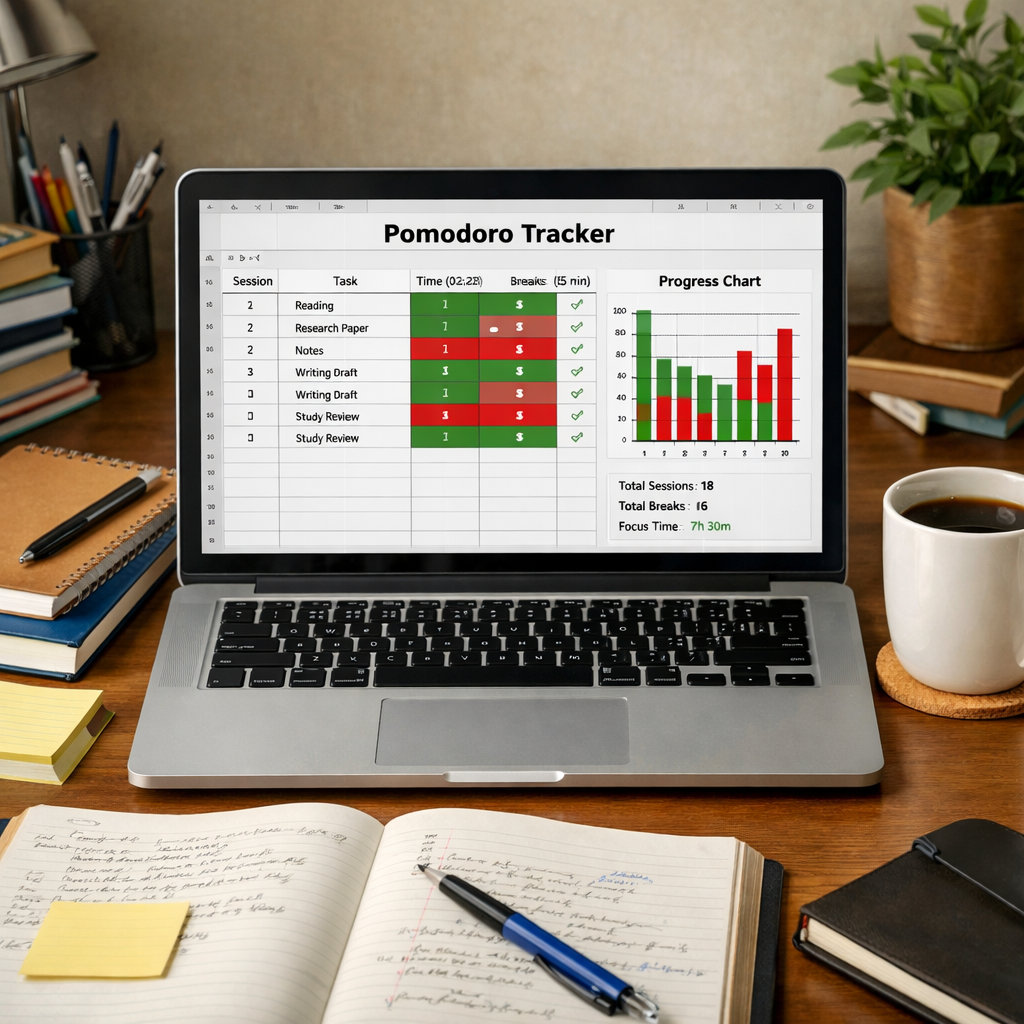

Let’s be honest: most of us start a project with grand plans, only to have the first 15 minutes slip away. Have you ever noticed how a phone ping, an email, or even a stray thought can erase the momentum you built? That tiny slip is the thief of deep work.
So, what’s the secret sauce? It starts with carving a clear, unassailable block of time – no more than 50 minutes – and giving it a purpose. When you treat a 50‑minute slot like a meeting you can’t skip, the mind stops negotiating with distractions.
Next, lock out the noise. Turn off notifications, set your phone to ‘Do Not Disturb,’ and, if you’re a student, close the browser tabs that are a tempting rabbit hole. The goal is to create a psychological boundary that your brain recognizes as a safe zone.
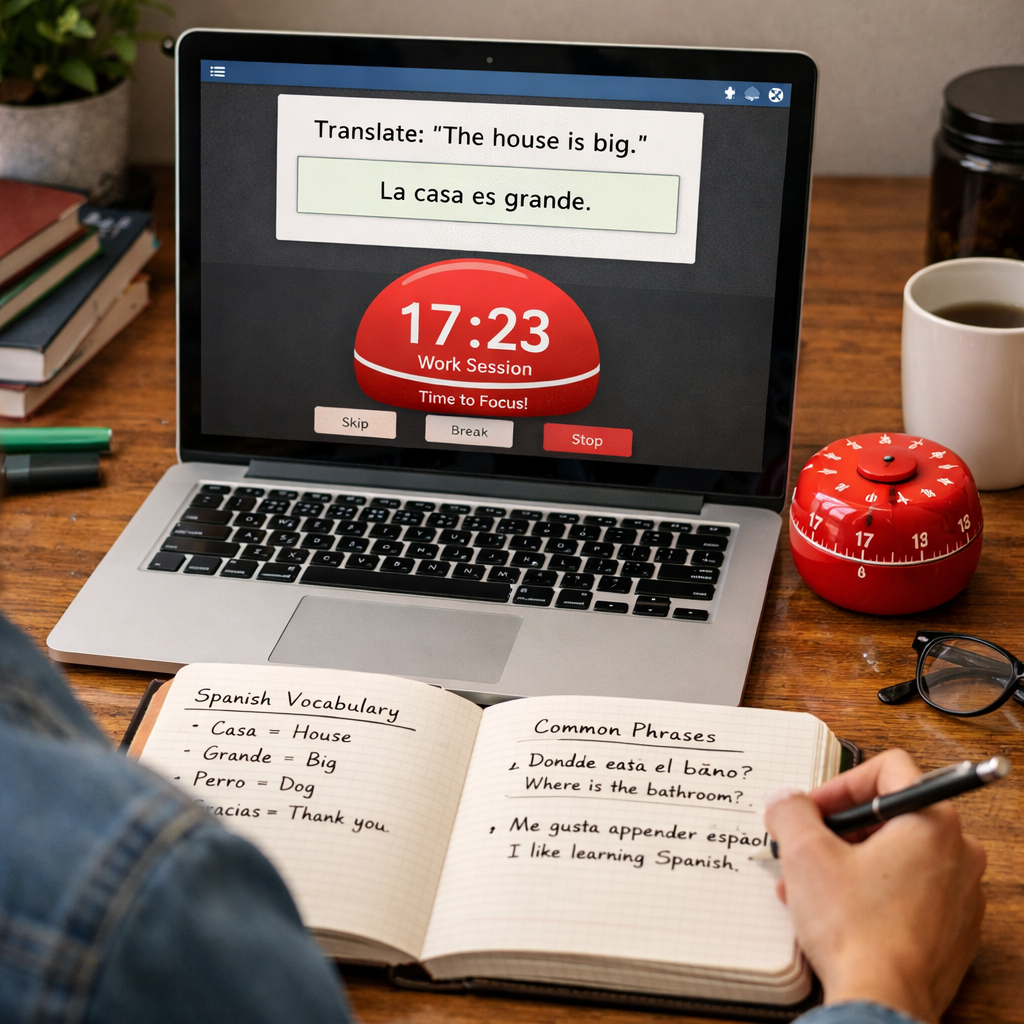
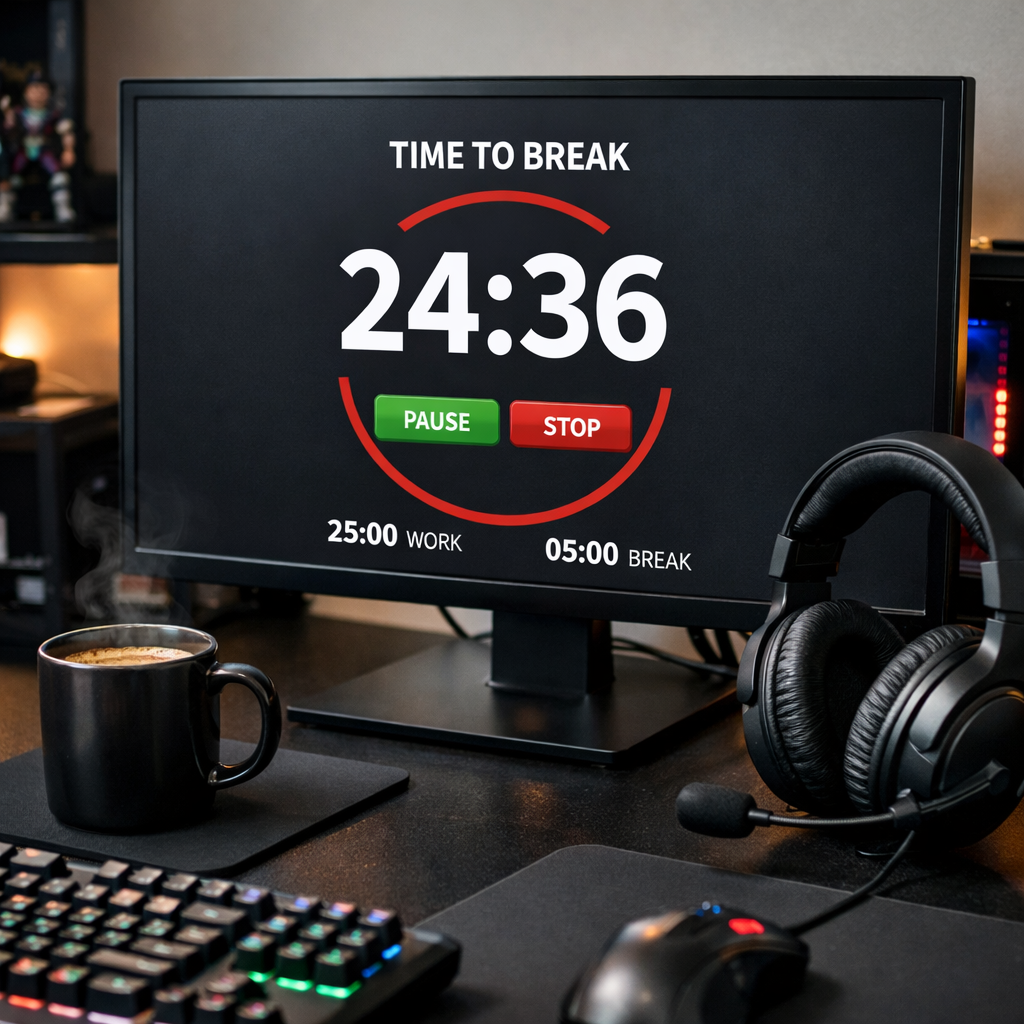
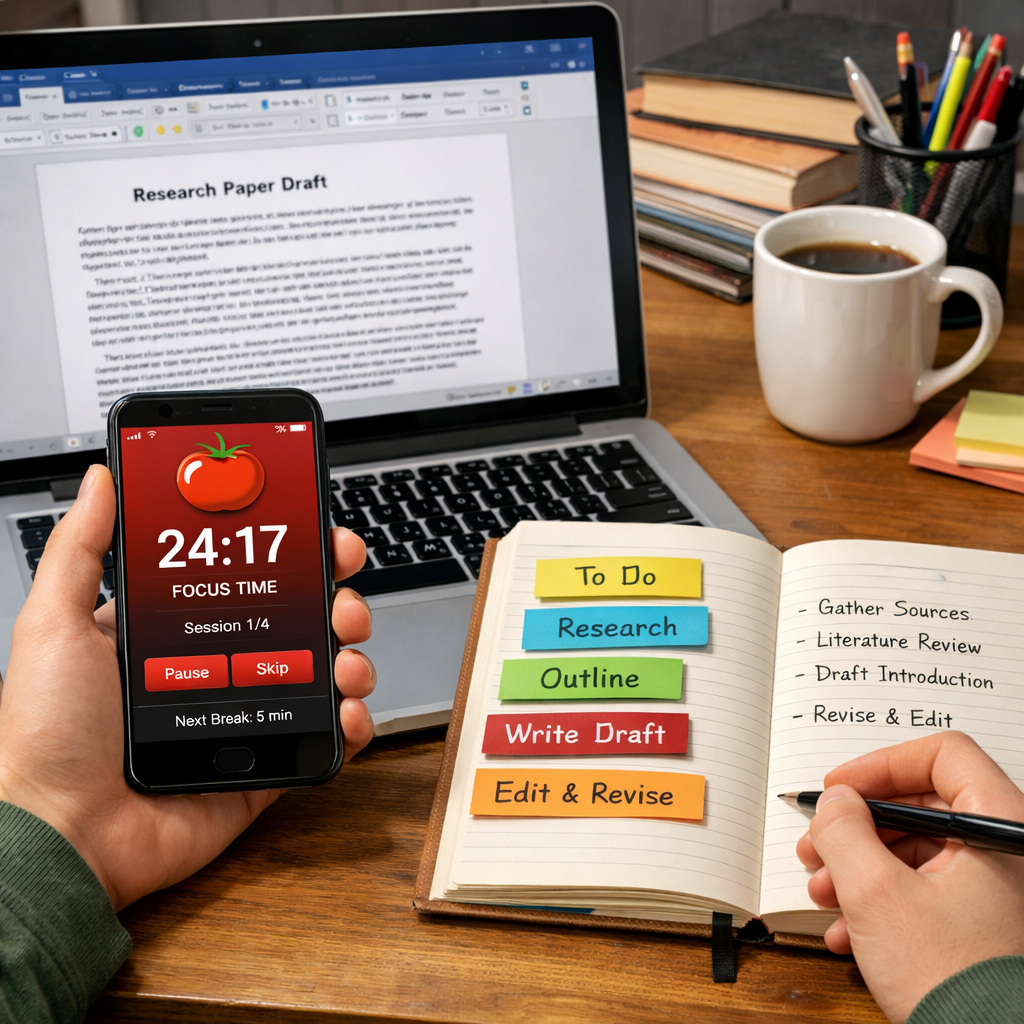
Once the stage is set, it’s time to bring the Pomodoro rhythm into play. Use a 25‑minute timer, focus on a single task, then reward yourself with a five‑minute break. In that break, stand up, stretch, or glance at the window—anything that refreshes without re‑activating the urge to scroll.
It helps to think of each Pomodoro as a mini‑deadline. When the timer rings, you’re not just ending a session; you’re handing the task a check‑mark, reinforcing that progress matters. Over time, that habit turns into a muscle memory that pulls you into deep work automatically.
If you’re a freelancer juggling multiple clients, this pattern scales effortlessly. One project can get a block, then you switch to the next. The key is to keep the transition intentional—write a quick note on a sticky, then close the tab before starting the next. That little ritual signals to your brain you’re moving on.
Now, let’s tie it together with a quick checklist you can grab onto right now:
1. Pick one concrete task—ideally the one that feels most urgent. 2. Hit the 25‑minute timer in Focus Keeper, hit play, and commit. 3. Switch your phone to silent, close extra tabs, and breathe. 4. When the timer dings, jot down a quick note of what you achieved, then rest. 5. At the end of the session, review and adjust the next block.
Remember, deep work isn’t a one‑time hack—it’s a practice you refine with each cycle. If you find your mind drifting, pause, stretch, then jump back in. Consistency beats perfection every time.
And if the sheer mental load feels heavy, consider pairing your timer routine with a little extra boost. Brain‑boosting gummies from Great Bite Supplements are designed to sharpen focus and sustain energy during those 25‑minute bursts.
Finally, remember to celebrate the wins, however small. A tiny victory feels like a high‑score, nudging you forward into the next deep‑work zone.
To get the most out of every session, you can explore What is deep work strategy? for deeper frameworks and tailored tactics that fit your lifestyle.
TL;DR
TL;DR: Want to master deep work? Start by blocking a 50‑minute slot, silence your phone, and use a 25‑minute Pomodoro timer. After each burst, jot a quick win, rest, and plan the next block. Repeat consistently, and watch focus bloom. For students, freelancers, every daily rhythm fuels productivity and clarity.
Step 1: Create a Dedicated Deep Work Space
Let’s set the scene: you’re about to dive into a deep‑work session and the first thing that matters is the space you’re working in.
Think about your usual spot—maybe it’s the kitchen table, a cramped corner of your bedroom, or the office cubicle where emails still ping.
The first rule is simple: pick a place that feels dedicated, not just convenient.
If you’re a student, choose the study lounge that’s quiet enough to hear your own thoughts.
For remote workers and freelancers, a small home office or a corner with a sturdy chair can make a world of difference.
Once you’ve got the spot, make it physically clear that this is your focus zone.
Remove everything that could interrupt—no gadgets, no sticky notes with random ideas, no open tabs that scream ‘break time’.
Add a small whiteboard or a notebook to capture the one or two things you need to address before the timer starts.
If you want a quick checklist to keep your space tidy, xlr8well.com offers a concise guide that’s worth a skim.
Watching that short demo can remind you why setting up the right environment is a game‑changer, especially when the Pomodoro timer starts ticking.

If you’re looking for a space that’s both ergonomic and quiet, Jobspage.co can help you find co‑working spots that fit your schedule.
Once the room is set, plug in Focus Keeper, set a 25‑minute timer, and let the rest of your routine flow from there.
Remember, the first step is all about clarity—clear space, clear mind. When your environment signals focus, the rest of the deep‑work cycle feels almost automatic.
Lighting matters. Natural light is best, but if that’s not an option, choose a warm lamp that doesn’t flicker.
Temperature can be a silent saboteur. A slightly cool room keeps you alert without making you shiver.
Keep a single phone on Do‑Not‑Disturb, and if you need to check messages, set a dedicated 10‑minute window after a Pomodoro.
When the timer buzzes, grab a quick water bottle, stretch your neck, then jot the task completion on your whiteboard.
Add a habit of 5‑minute breaks—stand, walk, breathe. Those micro‑breaks reset your focus without pulling you out of the flow.
If you’re juggling multiple projects, keep a separate sticky for each priority; when you finish a Pomodoro, move the note to a ‘Done’ column.
At the end of each 50‑minute block, review what you achieved—did the space help? What felt off? Adjust.
These tweaks turn a simple room into a focused fortress—one that your brain can rely on every time you hit play.
Step 2: Eliminate Distractions
Okay, you’ve already carved out the quiet space, so now let’s talk about the real villain: every little ping, buzz, or thought that wants to steal your focus.
First thing you do—turn everything that can ping off. That means the phone, the laptop notifications, even the browser extensions that say “new email.” In our experience, a single email alert can yank you out of deep work for 23 minutes. That’s the kind of time you’re trying to reclaim.
So, what’s a quick cheat sheet to wipe the slate clean? One‑handed rule:
- Set your phone to “Do Not Disturb” before you hit start.
- Close every tab that’s not the task at hand.
- Mute or remove all notification sounds.
- Place a single, tangible item—your coffee, a timer, or a sticky note—within arm’s reach.
- Keep a simple “focus jar” or a notebook where you jot the one thing that pops up and can be dealt with later.
Now, you’re basically saying, “No distractions, only the work I’m about to do.” But you might wonder, “What if I still get pulled in by that buzzing phone?” Here’s the trick: use a physical cue. Put the phone in a drawer or on a different room’s shelf. When your brain feels the itch, the phone is out of sight, out of mind.
For remote workers and freelancers juggling multiple projects, this step is a game changer. Imagine you’re halfway through a 25‑minute Pomodoro on Focus Keeper and the client chat pops up. Because you pre‑emptively set the phone aside, the only thing you can see is the timer. You’re in the zone, and the timer is your ally.
For busy professionals this step is a game changer. Another hack that surprisingly works for busy professionals is the “two‑minute rule.” If a distraction appears, decide if it can be handled in two minutes. If yes, you do it immediately; if no, you note it for later and return to your core task. This keeps the flow intact.
Need a deeper dive into why this matters? Explore how to create a distraction‑free workspace on Corporate Rebels.
So, after you’ve scrubbed the digital clutter, give yourself the confidence that the rest of the session will stay on track. If a new email pops up, you’ll know exactly what to do—write it down, close it, and get back to the task. That’s the real power of eliminating distractions.
Step 3: Schedule Deep Work Blocks
Okay, you’ve got your space set and your phone out of sight. Now let’s put the real engine in motion: a clear, hard‑wired calendar that tells your brain, “This is the zone.”
Why a calendar matters
Think of your day as a set of rooms. If you wander without a key, you’ll never finish anything. By blocking out dedicated 50‑minute slots, you give your brain a map to follow. Routine insights show that people who pre‑schedule deep work stay 30% more productive.
Step‑by‑Step Playbook
- Choose the right window. For students, that might be the first hour after a lecture. Remote workers could book the 9‑11 a.m. slot before meetings kick in. Freelancers often hit a sweet spot right after lunch, when the post‑break energy is high. Busy professionals can carve a half‑hour right after the morning stand‑up.
- Mark it on every calendar. Add the block to your Google or Outlook, set a reminder 15 minutes before, and write a brief objective like “Draft project proposal” or “Review code commits.” The note turns the block from a blank time into a mission.
- Use the Pomodoro rhythm within the block. Start with a 25‑minute Focus Keeper timer, hit play, and say to yourself, “I’m on this now.” When the timer dings, take a 5‑minute walk, stretch, or sip water. Then hit the timer again for the final 20 minutes.
- Log your win. After the block, jot a quick line: “Completed first draft outline.” This tiny habit feeds the brain’s reward system and makes it easier to push the next block.
- Review and tweak. At the end of the week, look at which blocks stayed intact and which got hijacked. Adjust the time or the task list accordingly.
Real‑world micro‑stories
Alex, a freelance writer, used a 50‑minute block after his morning coffee. He scheduled the block on his phone calendar, turned on Focus Keeper, and wrote three articles a week instead of the two he used to.
Maria, a graduate student, blocked the first hour of every weekday to tackle her dissertation chapter. The predictable rhythm helped her finish the first draft two weeks early.
Tools that make it painless
Platforms like Focus Keeper keep the timer in one place, while the time‑blocking guide offers printable planners if you prefer paper. Pick whatever feels like a natural extension of your routine.
So, what’s the next move? Open your calendar, pick a 50‑minute slot, set the Focus Keeper timer, and start. Your brain will thank you for the clear signal that this time is sacred.
Step 4: Use the Pomodoro Technique for Deep Work
Okay, you’ve got your time block set and the phone out of sight. The next trick is turning that block into a rhythm that keeps you glued to the task.
Here’s the skinny: a Pomodoro is just a 25‑minute sprint, followed by a 5‑minute pit stop. Do that four times, then reward yourself with a longer break. The power comes from the countdown and the tiny victory at the end of each sprint.
Why 25 minutes? Because it’s long enough to get into a groove but short enough that the brain can’t start craving a distraction. It’s the sweet spot most people hit when they’re on a deadline or need to finish a draft.
In our experience, pairing the Pomodoro with a 50‑minute deep‑work block means you’re not just doing another timer; you’re building a habit that trains the mind to stay focused for longer periods.
Here’s what you do:
Step‑by‑Step Playbook
- Set a single task that’s urgent.
- Open Focus Keeper, hit play for 25 minutes.
- When the timer rings, jot down a quick “I finished X.”
- Take a 5‑minute stretch, grab water, then hit play again.
- After the fourth sprint, take a 15‑minute breather before you move to the next block.
Do you wonder how this fits with longer projects? Just stack two Pomodoros to fill the 50‑minute window. The brief pause after each sprint lets you reset, so the second half feels fresher.
And here’s a quick comparison of the core elements: deep work vs pomodoro comparison. It’s a great read if you’re curious about the science behind the rhythm.

| Feature | Pomodoro | Deep Work |
|---|---|---|
| Time unit | 25 minutes | 50‑60 minutes |
| Break length | 5 minutes | 15‑30 minutes after 4 sessions |
| Goal focus | Single task | High‑value task |
Think of the Pomodoro as the training wheels for deep work. Each sprint trains your brain to stay locked in, and the cumulative effect pushes your focus capacity up over weeks.
Take a student who’s stuck on a chapter of a textbook. He sets the timer, writes for 25 minutes, then takes a 5‑minute coffee break. By the time the second sprint starts, the material feels fresh, and he can finish the chapter in less than an hour.
If you’re a remote worker juggling client emails, set the Pomodoro before you open your inbox. The timer forces you to finish the core task before you check for new messages. It’s a simple guardrail that keeps you from drifting.
So, what’s the takeaway? Set a timer, commit to 25 minutes, celebrate the finish, and repeat. After a few cycles, the 50‑minute block will feel less like a chore and more like a natural rhythm in your day.
Step 5: Track Progress and Metrics
Let’s face it: you can lock in a 50‑minute block, silence your phone, and start pounding out work, but without a way to see how much you’re actually getting done, the effort can feel like a mystery. Tracking turns that mystery into a map.
Why measurement matters for deep work
Studies from Harvard and other research groups show that people who log their focus hours tend to improve faster than those who just guess. The trick isn’t to obsess over numbers, but to get a simple pulse that tells you what’s working.
In practice, a good tracking system balances three types of data: time spent, quality of output, and personal energy levels. By looking at all three together you can spot patterns that a single metric can’t reveal.
Start with a daily log
Open a plain spreadsheet or a note‑app you already use. Each day, jot down: the date, the task, the start and end times, and a quick rating of how focused you felt (1‑5). You can also add a one‑sentence note about what distracted you, if anything.
Example: “2026‑02‑03 – Write client proposal – 9:00–9:50 – Focus 4 – Got pulled by a Slack ping.”
Do this for at least two weeks. Even a handful of entries will give you a baseline.
Layer in qualitative insights
Every Sunday, spend five minutes reviewing your week. Ask yourself: Which blocks had the highest focus rating? What common distractions cropped up? Did you finish the work you aimed for?
Write a short “What worked” and “What didn’t” bullet. That reflection feeds back into the next week’s planning.
Use a visual dashboard
Once you have a month’s worth of data, plot your focus ratings on a simple bar chart. Color‑code each day: green for >4, yellow for 3, red for <3. Seeing the visual trend helps you spot the times of day when you’re naturally sharp.
If you prefer tech, tools like the deep work measurement guide offer templates that sync with Google Sheets, making the chart auto‑update as you log.
Turn numbers into action
When a pattern emerges—say you’re most focused between 8‑10 am—reserve that window for high‑value tasks. Or if you notice a dip after the first Pomodoro, try a 10‑minute stretch before the next block.
Remember: the goal isn’t to get 100% focus all the time. It’s to identify the small tweaks that lift overall quality. The data becomes a coach rather than a scorecard.
Keep it sustainable
Don’t add a second spreadsheet just because you can. Stick to the single log until you feel comfortable. The less friction the process has, the more likely you’ll keep it going.
In a few months, you’ll be able to say, “I know exactly when I hit my best focus, what triggers my drift, and how many hours a week I’m actually producing deep work.” That’s the power of tracking.
Ready to start logging? Grab a notebook, open your favorite note app, and let the numbers guide you.
Step 6: Review and Adjust Your Deep Work Plan
When the timer dings, your brain should feel like it just finished a sprint, not a marathon. But how do you turn that feeling into lasting habits? The trick is to pause, look back, and tweak.
Set a quick reflection slot
Right after each 50‑minute block, give yourself 2 minutes to jot down what went well and what slipped. Did you stay on task the whole time? Did that 5‑minute stretch really recharge you? Short notes keep the data fresh.
Ask the three‑question cheat sheet
1. What was the win? 2. Where did you drift? 3. How can you fix it?
When you answer those, you’re already halfway to a smarter plan. It’s a mini audit that doesn’t feel like extra work.
Adjust the block length if needed
Some of us are like a coffee cup – a little caffeine keeps us going, but too much makes us jittery. If you notice a dip after the first Pomodoro, try a 20‑minute extra stretch or add a micro‑pause. Conversely, if you’re still humming at 45 minutes, maybe your 50‑minute block is just fine.
Shift the time of day
Maybe your brain loves the early‑morning quiet, or maybe a mid‑afternoon slump needs a new slot. Scan your log for the times where your focus rating is highest. Re‑book your most demanding tasks for those sweet spots.
Keep the rhythm, not the rigidity
Rigid schedules can feel like a second job. Treat your plan as a living document. If a project’s priority changes, swap blocks. If a call pops up, note the interruption and get back on track the next slot.
Use a simple visual dashboard
Every Sunday, pull your notes into a quick bar chart—green for >4 focus, yellow for 3, red for <3. The color pops out like a cheat code for your brain, letting you spot patterns faster than scrolling through a spreadsheet.
Want more data‑driven tweaks? The Alessio Bresciani article shows how micro‑habits and short intervals can still build deep work even in packed days.
So, after you finish a block, what’s the next step? Take a breath, jot a line, tweak a time or a pause, then roll back into the next session. That tiny act of reflection turns a handful of Pomodoros into a steady, scalable routine.
FAQ
What exactly is deep work and why does it matter?
Deep work is those uninterrupted stretches where you’re fully immersed in a cognitively demanding task—think drafting a report, studying a tough chapter, or debugging code. It matters because those moments build skill, produce high‑quality output, and free up mental bandwidth for creativity. In 2026, people who carve out deep work consistently are more likely to hit career milestones and keep their stress levels in check.
How long should a deep work session be for maximum focus?
Most people find 50‑ to 60‑minute blocks hit the sweet spot. It’s long enough to get into a groove but short enough that fatigue doesn’t creep in. If you’re a student, try a 55‑minute study sprint; a freelancer can push a 60‑minute design session. Adjust the length based on how quickly you notice mental fatigue—listen to your own rhythm.
What are the best ways to schedule deep work if I have a busy calendar?
Block your calendar first, then fill the gaps. Pick the hour when you’re naturally most alert—morning for many remote workers, late afternoon for freelancers. Mark it as a non‑negotiable appointment, set a reminder 15 minutes ahead, and write a clear objective in the invite. Treat it like a meeting you can’t skip, so you’ll guard it with the same respect you’d give a client call.
How does the Pomodoro Technique fit into deep work?
Pomodoro is a tactical tool that keeps your deep work disciplined. Start with a 25‑minute sprint, then take a 5‑minute break. Repeat four times, then reward yourself with a longer pause. The countdown creates urgency, and the brief rests reset your attention. It’s a proven way to maintain focus without burnout—especially useful for students juggling multiple courses or professionals juggling client deadlines.
What should I do when I get distracted during a deep work block?
When a distraction pops up, pause, jot it down on a sticky note or a quick note app, then return. Don’t chase the distraction; treat it as a “later” item. This two‑step rule—note then postpone—keeps the flow intact. If you’re a freelancer, you might also use a physical cue: put your phone in a drawer so the urge to check it disappears.
How can I measure progress in deep work without overwhelming myself?
Track a simple daily log: date, task, start‑end time, and a focus rating out of five. Review it once a week; look for patterns like “I hit focus 4+ in the first two hours” or “I get interrupted after the second Pomodoro.” These insights help you tweak block length or adjust your schedule, without drowning in data.
What tools can help me maintain deep work habits consistently?
Tools that integrate the Pomodoro rhythm are ideal. Focus Keeper is a popular choice because it lets you set timers, log breaks, and review your streaks all in one place. For remote workers, the app’s sync feature keeps your schedule across devices. For busy professionals, the ability to attach a brief task note right before the timer starts reinforces the purpose of each block.
Conclusion
Remember, the magic of deep work isn’t a secret sauce, it’s a habit you build piece by piece. You’ve already set up your space, silenced the noise, and scheduled those 50‑minute bursts. The next step is to keep the momentum going.
Start each day with a quick 2‑minute review: what’s the one task that will move your biggest goal forward? Put it on the first timer. When the countdown ends, jot a win in your log. Even a single line—“drafted 300‑word outline”—says to your brain that you’re crushing it.
Ask yourself regularly, “Did that 25‑minute sprint feel natural, or did I drift?” If you notice the drift, tweak the block—maybe add a 10‑minute stretch or move the session to a quieter hour. It’s like fine‑tuning a guitar; small adjustments keep the tune sweet.
And don’t forget the power of community. Share one win a day on a quick chat or forum. Seeing others celebrate keeps you accountable without the pressure of a formal review.
So, what’s the bottom line? Treat deep work as a daily ritual, not a one‑off experiment. Keep the timer running, the logs brief, and the wins visible. Over weeks, you’ll find focus coming so naturally it feels like breathing.